 By

The co-founder who built Nvidia into the centre of the AI boom has left his role and the board with immediate effect. The company has started a search for a permanent successor.
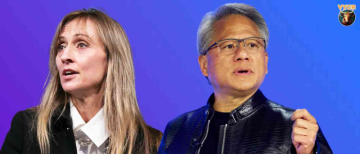
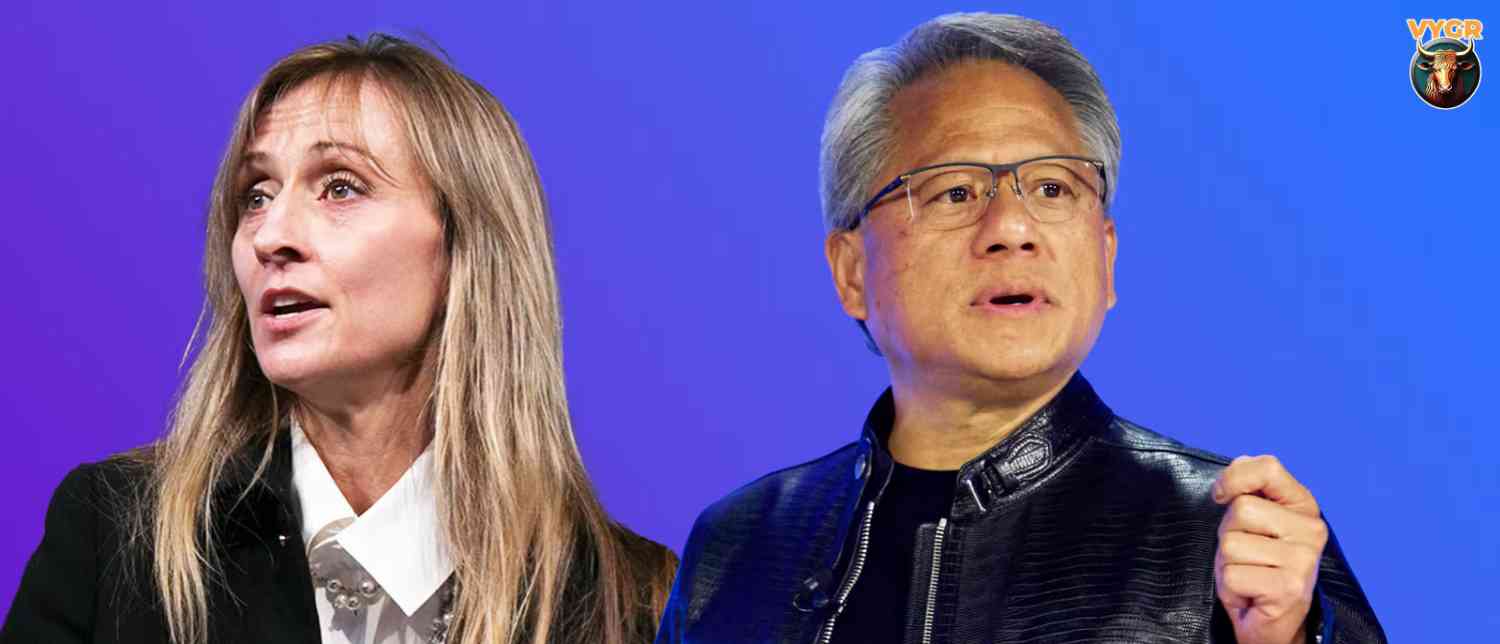
Santa Clara, California: Nvidia’s era under Jensen Huang has ended. The company announced on Thursday, November 12, that Huang has resigned as president, chief executive and board member, effective immediately, after 33 years at the helm of the chipmaker he co-founded.
Chief financial officer Colette Kress will serve as interim CEO while the board looks for a permanent replacement. For a company at the centre of the global artificial intelligence boom, it is one of the most abrupt leadership changes in recent corporate history.
What Nvidia announced
According to the company, Kress, an executive vice president and the CFO, will keep her finance responsibilities while she leads Nvidia. The board has also created a new post: Harvey C. Jones has been appointed the company’s first-ever board chair.
The search for a permanent CEO will consider both internal and external candidates. No timeline was given.
In its statement, the board said it has full confidence in Kress and the leadership team, and expects operations, customer commitments and the product roadmap to continue without interruption. Kress said she was committed to building on the foundation Huang created, and to continuing the work that made Nvidia a leader in accelerated computing and AI.
Huang, who is also Nvidia’s fourth-largest shareholder with a stake of about 3.6%, will not remain on the board.
How it came to this
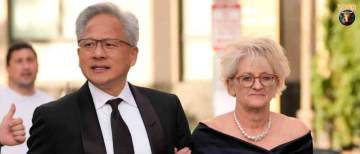
The resignation follows a turbulent week. On Sunday, Huang told employees in a memo that he had been unfaithful to his wife. The company’s board then announced an independent investigation into the matter, including whether Huang had been the target of a foreign intelligence effort. That followed reports about his relationship with a woman who US officials reportedly believe to be a Chinese spy. That claim has not been proven, and no findings from the board’s investigation have been made public.
Hours before the announcement, a media report also alleged that Huang had had a relationship with an executive who reports to him. Nvidia has not publicly confirmed that claim, and I found no statement addressing it at the time of writing.
Huang’s shares in the company and his role as the public face of the AI boom made the situation unusually sensitive. Nvidia’s stock had already fallen sharply earlier in the week, with the company losing roughly $190 billion in market value in a single session at one point.
Who is Colette Kress?
Kress is one of Nvidia’s longest-serving executives. She joined the company in September 2013 as CFO after almost 25 years in finance roles at technology firms including Cisco and Microsoft. She has been the public voice of Nvidia’s financial performance through the period when its revenue grew several-fold on the back of demand for its AI chips. In the fiscal year ended January 2026, the company reported revenue of about $216 billion.
Her appointment is explicitly temporary. The board has said the interim role lasts until a permanent CEO is named, and has not said whether she is a candidate.
What happens next
Earnings are days away. Nvidia is due to report its third-quarter results on November 17, with an investor call that afternoon. It will be the first time analysts and shareholders can question the new leadership on strategy, supply and demand, and how the company plans to manage the transition.
The search will be closely watched. Analysts are already debating who could succeed Huang. He combined the roles of technical visionary, salesman and chief executive, and replacing all three in one person will be difficult. Whether the board looks inside the company or outside will say a lot about its priorities.
The investigation remains open. The board’s review of the circumstances, including the foreign-intelligence question, has no announced timeline or scope for public disclosure. Any findings could affect both the company’s reputation and its relationships with governments and customers.
Customers and rivals will react. Nvidia’s largest customers rely on its roadmap for the next generation of chips, and its rivals will try to use any uncertainty to their advantage. The board’s message is that nothing changes day to day, but that is a claim that will be tested over the coming quarters.
Why it matters beyond Nvidia
Few companies are as closely tied to a single executive as Nvidia was to Huang. His keynotes set the agenda for the AI industry, and his relationships with governments, hyperscalers and start-ups helped shape where the technology went. His exit leaves the industry without its most recognisable champion, and raises a question that investors have been asking in recent days: how much of Nvidia’s value rests on its people and products, and how much on one man?
The company’s technology, customer base and supply chain remain in place. But for the first time in more than three decades, Nvidia will have to show that it can succeed without Jensen Huang.
© Copyright 2026. All Rights Reserved. Powered by Vygr Media.