 By
By 
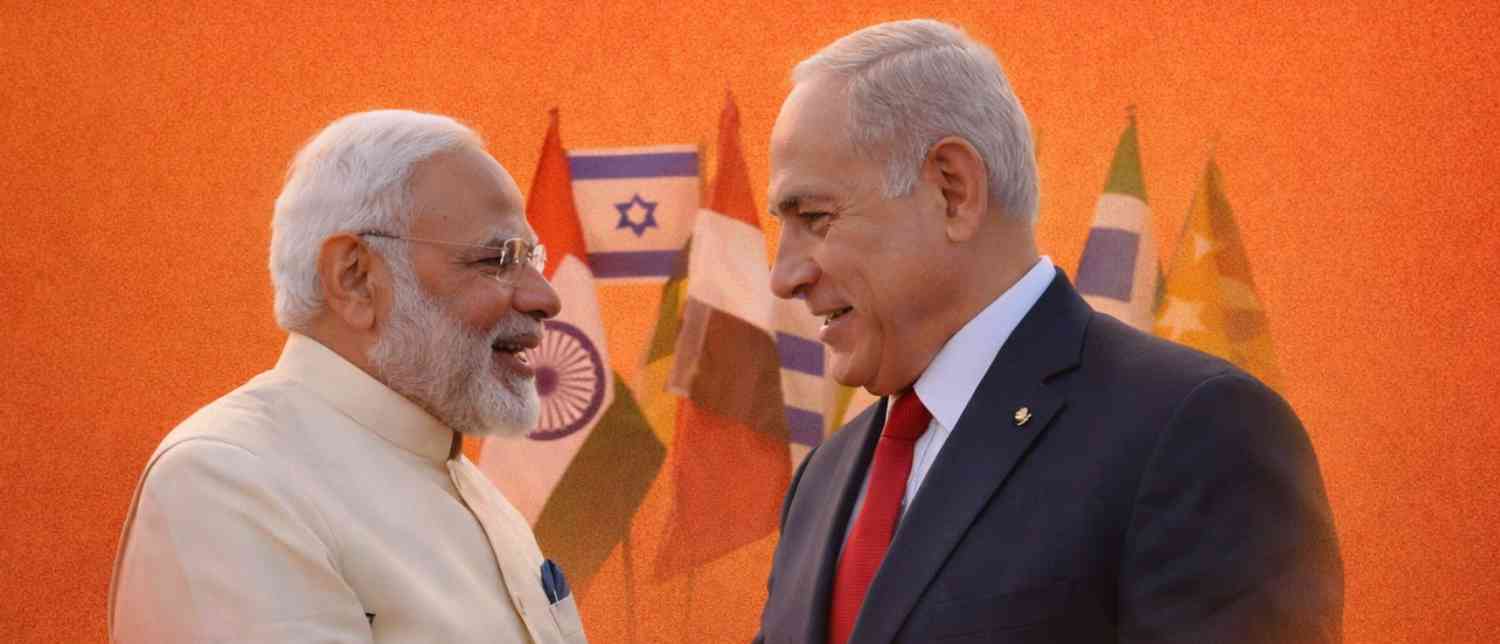
As Prime Minister Narendra Modi embarks on his two-day State visit to Israel from February 25 to 26, Israeli Prime Minister Benjamin Netanyahu has unveiled an ambitious geopolitical vision — a “hexagon” of alliances designed to counter what he calls “radical axes” in the Middle East and beyond.
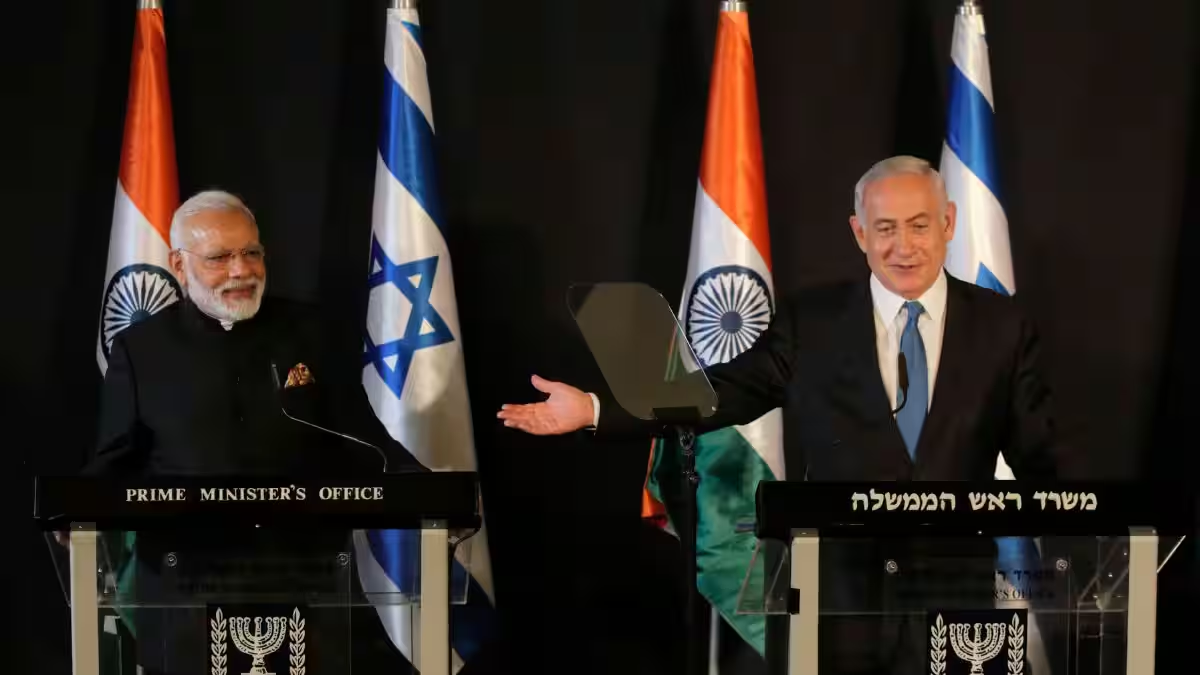
Calling India a “global power” and describing PM Modi as a “personal friend,” Netanyahu declared that ties between the two nations have “grown tighter.” But beyond diplomatic warmth lies a larger strategic calculus — one that seeks to formalise a new security and geopolitical architecture stretching across West Asia, the Mediterranean, Africa, and Asia.
What exactly is this “hexagon”? Why is India central to it? And how does it fit into the rapidly shifting alliances across the region?
What Is Netanyahu’s “Hexagon” of Alliances?
Speaking at a cabinet meeting on February 22, Netanyahu laid out his vision:
“In the vision I see before me, we will create an entire system, essentially a ‘hexagon’ of alliances around or within the Middle East.”
According to statements released by the Israeli government and foreign office, the proposed grouping would include:
-
India
-
Arab nations
-
African nations
-
Mediterranean nations, specifically Greece and Cyprus
-
Other unnamed Asian countries
At its core, the “hexagon” aims to establish what Netanyahu described as an axis of nations that “see eye-to-eye on the reality, challenges, and goals” in confronting radical forces in the region.
He identified two principal adversarial blocs:
-
The “radical Shia axis” — primarily referring to Iran and its proxies such as Hamas, Hezbollah, and the Houthis.
-
The “emerging radical Sunni axis” — pointing toward extremist formations including remnants of ISIS and other terror networks operating in Western Asia.
Netanyahu stated that Israel has “struck very hard” at the radical Shia axis and warned of the rise of a radical Sunni axis. The new framework, he suggested, would ensure resilience, long-term security, and a shared strategic future among participating nations.
Unlike previous informal alignments, this proposal signals a structured architecture — one that deepens cooperation in security, intelligence-sharing, and defence.
Echoes of IMEC: Economic Connectivity Meets Security Architecture
The hexagon concept broadly aligns with the vision behind the India-Middle East-Europe Economic Corridor (IMEC) — a connectivity initiative aimed at bolstering trade and economic development by linking India with the Middle East and Europe through integrated infrastructure corridors.
While IMEC focuses on economic connectivity, logistics, and trade flows, Netanyahu’s hexagon appears to overlay a strategic-security dimension atop similar geographic contours. The inclusion of India, Mediterranean partners like Greece and Cyprus, and Arab nations echoes the corridor’s broader map.
In effect, Netanyahu’s articulation transforms what was largely seen as economic integration into a comprehensive geopolitical doctrine.
Why Now? Regional Churn and Strategic Realignments
The timing of Netanyahu’s announcement is significant.
The Middle East (Western Asia) is currently witnessing heightened tensions:
-
Escalating friction between Israel and Iran.
-
The September 2025 signing of the Saudi-Pakistan Strategic Mutual Defence Agreement, described by analysts as an “Islamic NATO.”
-
Signals of Turkey’s interest in aligning with emerging regional frameworks.
Against this backdrop, Netanyahu has explicitly positioned the hexagon as a counterweight.
By publicly naming adversaries and formalising intent, Israel is moving beyond quiet diplomacy and informal cooperation. The initiative builds on earlier multilateral platforms such as:
-
The Abraham Accords
-
The I2U2 grouping (India, Israel, UAE, United States)
However, unlike those arrangements, the hexagon concept openly frames itself as a security counter-bloc to radical Shia and Sunni axes.
This marks a shift from economic and diplomatic normalisation toward overt strategic alignment.
India as the “Global Power” Anchor
Central to Netanyahu’s vision is India.
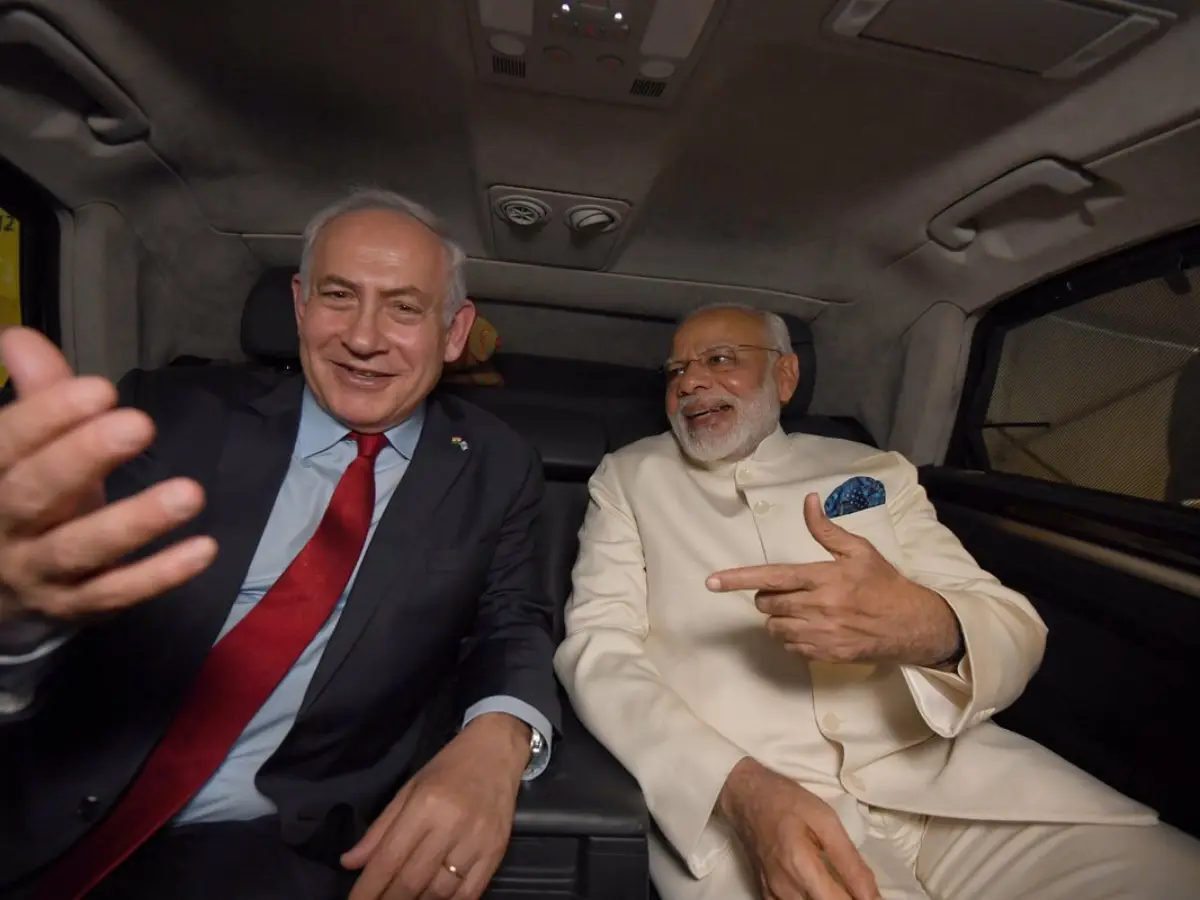
By describing India as a “global power,” Netanyahu underscored New Delhi’s rising geopolitical weight. India’s economic size, defence capabilities, technological prowess, and strategic geography make it an attractive partner for any regional security framework.
However, India’s foreign policy tradition complicates the picture.
Prime Minister Narendra Modi has consistently described India-Israel relations as rooted in trust, innovation, and a shared commitment to peace. Yet India has historically avoided rigid bloc politics. Instead, it has maintained strategic autonomy, engaging fluidly with:
-
The United States
-
Russia
-
China
-
Iran
-
Saudi Arabia
New Delhi enjoys close ties with Tehran while simultaneously expanding strategic collaboration with Riyadh. It is also deeply invested in Gulf stability due to energy security, trade, and diaspora interests.
This balancing act means that while India values its partnership with Israel — particularly in defence, agriculture, water management, cybersecurity, and innovation — it is unlikely to be drawn into overtly confrontational alignments.
Expert View: Risks of Regional Polarisation
Andreas Krieg, Associate Professor of Security Studies at King’s College London, offered a cautionary perspective in comments to Al Jazeera.
He warned that Netanyahu’s alliance “risks hardening regional polarisation,” giving Israel’s rivals — including Iran and Turkey — an easy narrative of encirclement. Such framing, he suggested, could make potential partners wary of being perceived as too closely aligned with Israel.
According to Krieg, India’s primary interests lie in defence, technology, and trade — not in advancing Israel’s broader regional ambitions.
This distinction is crucial. India may engage in security cooperation and intelligence-sharing, but it traditionally avoids joining overt anti-Iran or anti-Sunni blocs.
Modi’s Second Visit to Israel: A Diplomatic Milestone
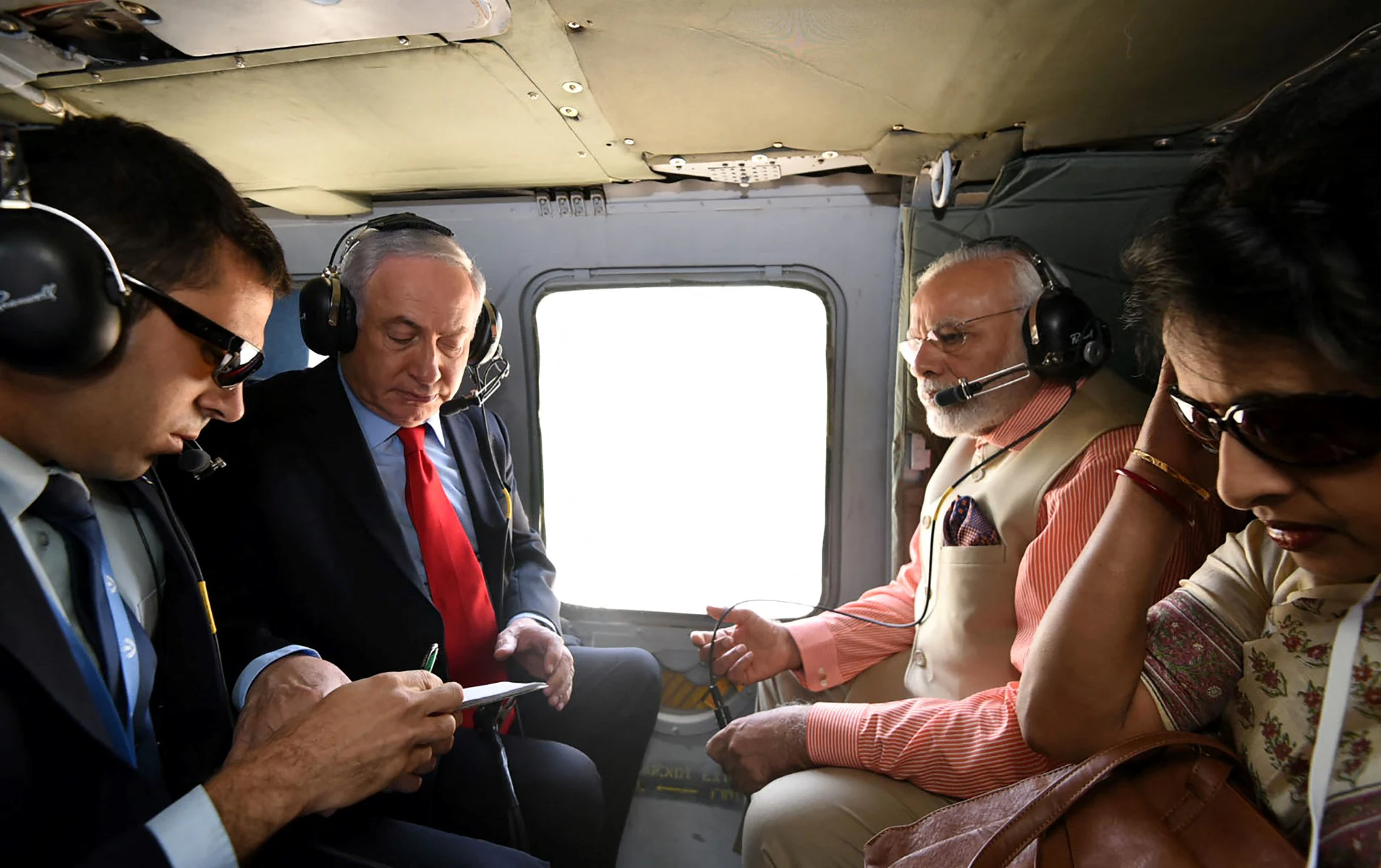
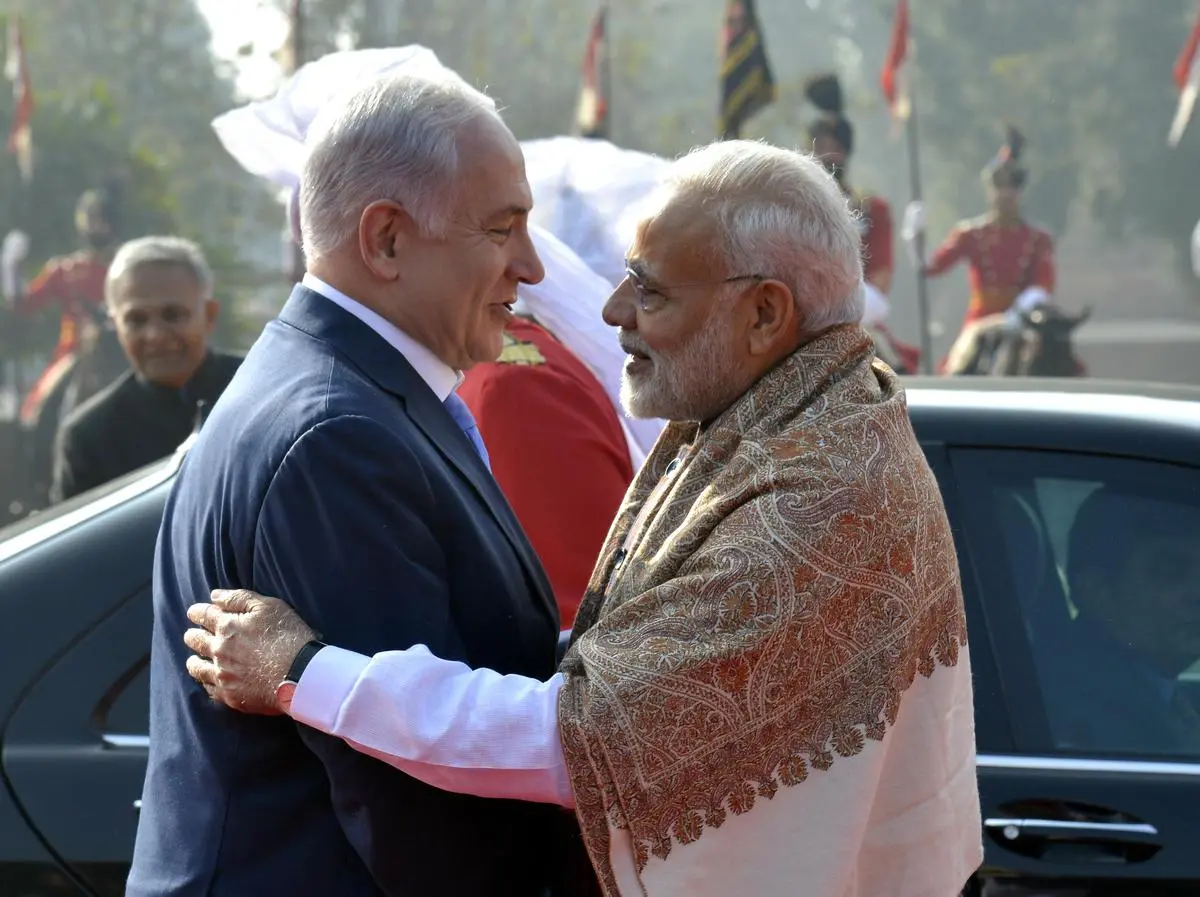
PM Modi’s visit marks his second trip to Israel, following the historic July 2017 visit — the first ever by an Indian Prime Minister to the Jewish state.
The 2017 visit was widely viewed as a watershed moment in bilateral relations. This second visit reinforces continuity and strategic deepening.
During the February 25–26 trip, Modi is expected to:
-
Participate in an innovation-focused event in Jerusalem
-
Visit Yad Vashem with Netanyahu
-
Address the Knesset (Israel’s parliament) — a rare honour
-
Meet Israeli President Isaac Herzog
Addressing the Knesset is symbolically significant. In 2015, former President Pranab Mukherjee became the first Indian head of state to address the Israeli parliament. Modi’s address would further underline the political warmth between the two democracies.
Ahead of the visit, Modi posted on X that he was “looking forward” to discussions, emphasising that India “deeply values the enduring friendship with Israel.”
Months of Diplomatic Momentum
The visit comes after sustained diplomatic engagement:
-
External Affairs Minister Dr. S. Jaishankar visited Israel.
-
Commerce and Industry Minister Piyush Goyal travelled to Israel.
-
Multiple Israeli ministers visited India.
-
Israel sent a significant government and private-sector delegation to the AI Impact Summit at Bharat Mandapam in New Delhi.
The summit highlighted growing convergence in emerging technologies, particularly artificial intelligence — a domain where both countries see strategic and commercial potential.
This expanding technological cooperation aligns with India’s broader innovation-driven growth strategy and Israel’s reputation as a start-up powerhouse.
Beyond Bilateralism: From Cooperation to Architecture
For years, India, Israel, and partners like the UAE and Greece have engaged in overlapping bilateral and minilateral frameworks. Yet these arrangements stopped short of forming a formalised security bloc.
By invoking a “hexagon,” Netanyahu has introduced a structured geopolitical blueprint.
The proposed architecture envisions:
-
Intelligence-sharing mechanisms
-
Defence cooperation
-
Strategic coordination
-
Broader political alignment
If implemented, it would extend from South Asia through West Asia to the Mediterranean, integrating African partners as well.
But whether it becomes a formal pact or remains a conceptual doctrine depends heavily on India’s response.
The Strategic Tightrope
For Israel, India’s participation would lend global legitimacy and strategic depth to the hexagon.
For India, the calculus is more nuanced.
India must balance:
-
Strategic cooperation with Israel
-
Energy and economic ties with Gulf states
-
Connectivity ambitions through IMEC
-
Relations with Iran
-
Broader engagement with the Global South
While India may deepen defence and technological cooperation with Israel, it is unlikely to abandon its long-standing policy of strategic autonomy.
In that sense, India could serve as a stabilising anchor — shaping the alliance’s tone away from overt confrontation and toward cooperative resilience.
Vision or Reality?
Benjamin Netanyahu’s “hexagon of alliances” is more than diplomatic rhetoric. It reflects a broader regional transformation — one where economic corridors, security architectures, and technological ecosystems increasingly overlap.
By naming India as a core partner, Netanyahu has acknowledged New Delhi’s rising global stature. Yet whether the hexagon evolves into a formalised strategic bloc or remains an aspirational framework will depend on how participating nations — especially India — interpret its scope.
For now, PM Modi’s visit signals continuity in India-Israel relations: trust-based, innovation-driven, and strategically pragmatic.
Whether that relationship expands into a new geopolitical hexagon may shape the next chapter of West Asian and Indo-Mediterranean politics.
With inputs from agencies
Image Source: Multiple agencies
© Copyright 2025. All Rights Reserved. Powered by Vygr Media.