 By
By 
At least 16 people have been killed and more than 50 others injured after a powerful suicide blast struck a mosque near the old Police Lines in Kohat, Pakistan's Khyber Pakhtunkhwa province, during Friday prayers on September 18. The attack began with an explosives-laden vehicle being driven into the police compound and was followed by gunfire and another explosion, turning a place of worship into the scene of a major security operation.
The blast occurred in Kohat, around 60 kilometres southwest of Peshawar, the capital of Khyber Pakhtunkhwa. The mosque was located within or immediately adjacent to a police facility, meaning both worshippers and security personnel were present when the attack unfolded.
Initial casualty figures varied as rescue teams searched the damaged site and hospitals received victims. Provincial police officials said at least 16 people were killed, including five police personnel and 11 civilians. Hospital authorities separately reported receiving 15 bodies and more than 50 injured people in the immediate aftermath. Most of those wounded were reportedly worshippers.
How the Kohat Mosque Attack Unfolded
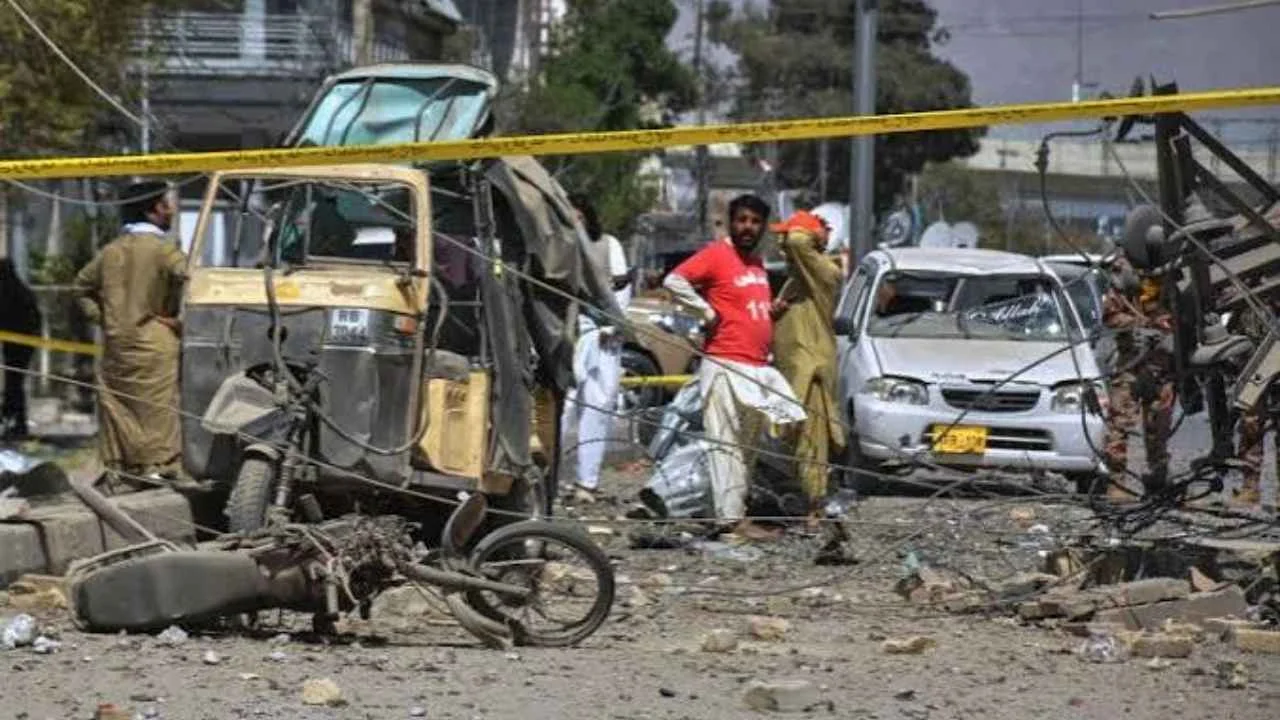
According to preliminary accounts from police officials, the attacker drove a vehicle packed with explosives towards the gate of the old Police Lines. The vehicle struck the entrance before detonating, producing a powerful blast that damaged the mosque and surrounding police infrastructure.
The explosion was followed by an exchange of fire between security forces and armed militants. Police officials also reported another suicide explosion at the Special Branch building during the confrontation.
The sequence of the attack indicates that it was not limited to a single explosion. Security forces were forced to respond to both the initial bombing and an armed assault inside the police complex, prompting a wider security operation around the area.
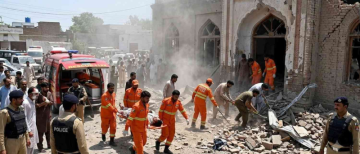
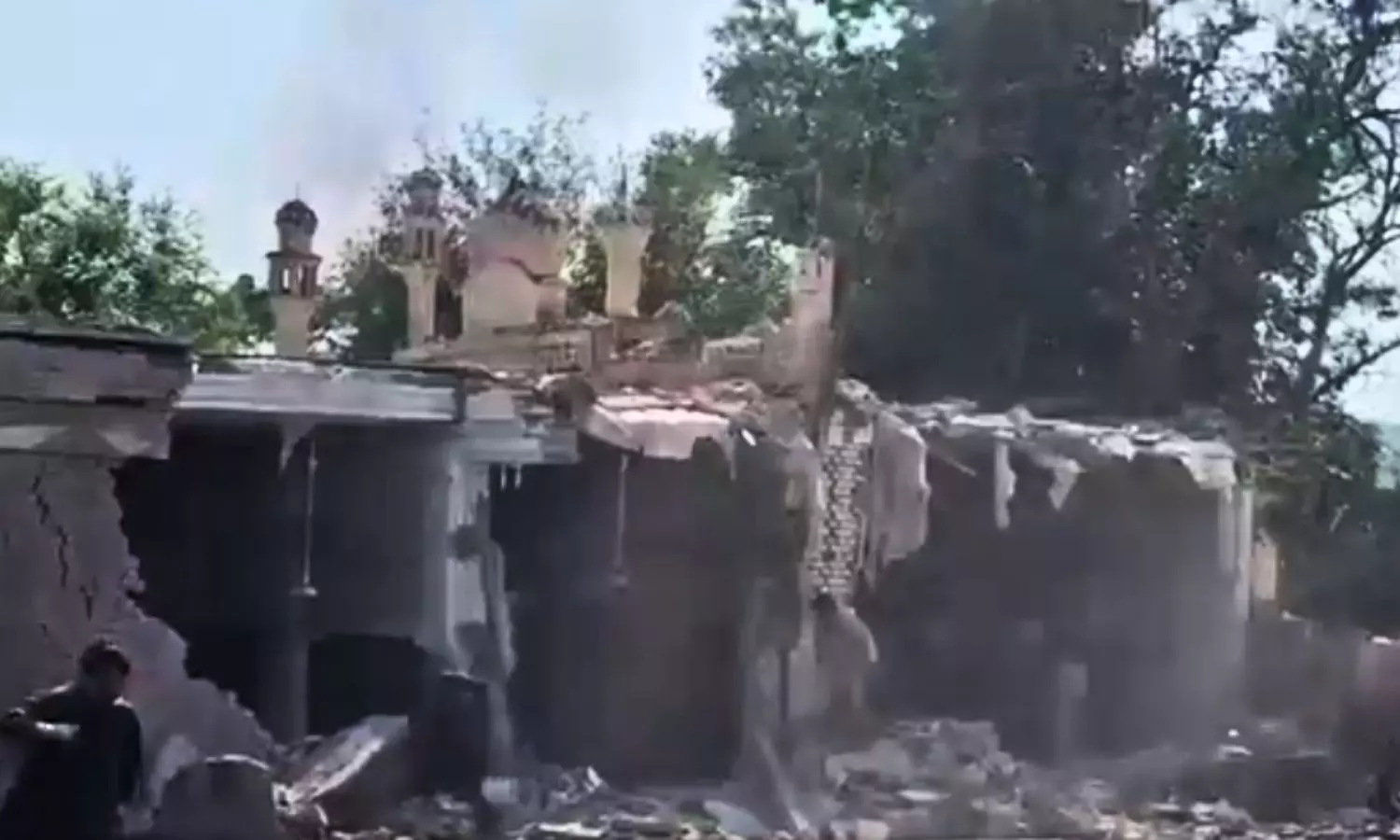
The force of the explosion caused substantial structural damage. Officials said the mosque's roof collapsed and a crater was formed outside the building. Part of the surrounding wall was also brought down, while nearby buildings were damaged.
Footage from the aftermath showed extensive destruction inside the mosque and people being evacuated from the site. Rescue teams moved injured victims to nearby hospitals as emergency medical arrangements were put in place.
Worshippers Among Those Injured
The timing of the attack significantly increased its human impact. The blast took place during Friday prayers, when the mosque was crowded with worshippers.
Rescue officials said many of those injured were people who had gathered for prayers. Hospitals in Kohat received a large number of casualties, with emergency arrangements activated to deal with the sudden influx of victims.
Rescue 1122 teams reached the area after receiving reports of the explosion and began removing the injured from the damaged compound. Additional ambulances and rescue personnel were deployed as the scale of the incident became clearer.
The combination of the blast, structural collapse and subsequent gunfire complicated the rescue effort, with security forces simultaneously securing the area while rescuers searched for victims.
Who Claimed Responsibility for the Kohat Mosque Blast?
Responsibility for the attack was claimed by Ittehad-ul-Mujahideen Pakistan, a relatively new militant alliance.
The group is described as an alliance involving the Hafiz Gul Bahadur Group, Harakat Inqilab-e-Islami Pakistan and Lashkar-e-Islam. The alliance was formed in April 2025 and has emerged among the militant groups operating in and around Pakistan's northwestern region.
The claim of responsibility is significant because the attack targeted a location closely associated with Pakistan's security apparatus while also striking worshippers during Friday prayers.
Some reports have linked the group to the wider militant landscape surrounding the Tehrik-e-Taliban Pakistan (TTP). However, the organisations involved are distinct, and responsibility for the Kohat attack should be attributed to the group that claimed it rather than assumed solely on the basis of broader militant affiliations.
Why Kohat Is a Significant Location
Kohat lies in Khyber Pakhtunkhwa, a province that has experienced repeated militant attacks in recent years. Its location places it along routes connecting several areas that have been affected by insurgent violence, including districts closer to the Afghanistan border.
The latest attack comes amid a broader period of heightened militant activity in Pakistan, particularly in Khyber Pakhtunkhwa and Balochistan.
Just a day before the Kohat bombing, a roadside explosion in nearby Hangu killed six soldiers travelling in a security convoy, according to reports. Pakistani forces subsequently carried out raids in which officials said 10 suspected militants were killed.
The sequence of incidents has heightened concerns over the continuing security challenge facing Pakistan's northwestern provinces.
Pakistan has repeatedly accused militant groups based across the Afghan border of carrying out attacks inside the country. Afghanistan's Taliban government has rejected accusations that it allows Pakistani militants to use its territory for attacks against Pakistan.
Security Forces Launch Operation After Blast
Following the Kohat mosque explosion, security forces moved to secure the police compound and surrounding area. The Kohat-Hangu Road was reportedly closed as authorities deployed additional personnel around the site.
Police officials said armed militants had entered the police lines and engaged security forces in a gun battle. Later updates from Pakistani authorities said several militants, including suicide attackers and snipers, had been killed during the operation.
The incident therefore evolved from a bombing during Friday prayers into a broader assault involving explosives, armed attackers and a prolonged security response.
Authorities also launched investigations into how the attackers were able to approach the police compound and execute the assault.
Pakistan Leaders Condemn the Attack
Pakistan's political and security leadership condemned the bombing.
President Asif Ali Zardari and Prime Minister Shehbaz Sharif expressed their condemnation and described the fight against militant violence as a national-security priority. Sharif also sought a report from authorities and directed officials to accelerate relief and rescue operations.
Khyber Pakhtunkhwa officials likewise called for action against those responsible and directed authorities to ensure that injured victims received medical treatment.
The provincial police leadership said the attack would not weaken the security forces' response to terrorism.
A Fresh Reminder of Pakistan's Security Challenge
The Kohat mosque blast has once again highlighted the continuing threat posed by militant violence in Pakistan's northwest.
The attack is particularly significant because it combined two targets that militants have repeatedly sought to strike: security personnel and crowded public spaces. By hitting a mosque during Friday prayers inside a police-linked compound, the attackers created the potential for mass casualties while simultaneously confronting security forces.
For the families of those killed, however, the broader security debate offers little immediate comfort. At least 16 people have lost their lives and more than 50 have been wounded, with many of the victims reportedly worshippers who had gathered for a routine Friday prayer.
As rescue and investigative operations continue, authorities are expected to determine the full scale of the casualties, identify all those involved and establish how the attackers reached the heavily sensitive police compound.
The Kohat bombing also adds to a growing list of attacks that have kept Khyber Pakhtunkhwa at the centre of Pakistan's struggle against militant violence. For now, the immediate priority remains treating the wounded, recovering victims from the damaged site and securing the area against any further attacks.
With input from agencies
Image Source: Multiple agencies
© Copyright 2026. All Rights Reserved. Powered by Vygr Media.