 By
By 
Prime Minister Narendra Modi delivered a strong message on terrorism at the Shanghai Cooperation Organisation (SCO) Summit in Bishkek on Tuesday, making it clear that countries cannot selectively oppose terror while overlooking those who use it as a tool of strategic influence.
With Pakistan Prime Minister Shehbaz Sharif in the audience, Modi called for the complete dismantling of the infrastructure that sustains terrorism, including its financing, recruitment networks, radicalisation channels and safe havens. At the same time, he underlined India’s broader position on the conflicts currently unsettling the world, saying wars cannot provide lasting solutions and must ultimately be addressed through dialogue and diplomacy.
The combination of the two messages gave Modi’s SCO Summit speech a distinct diplomatic character: a hard line on terrorism alongside a call for restraint and peaceful resolution of international conflicts.
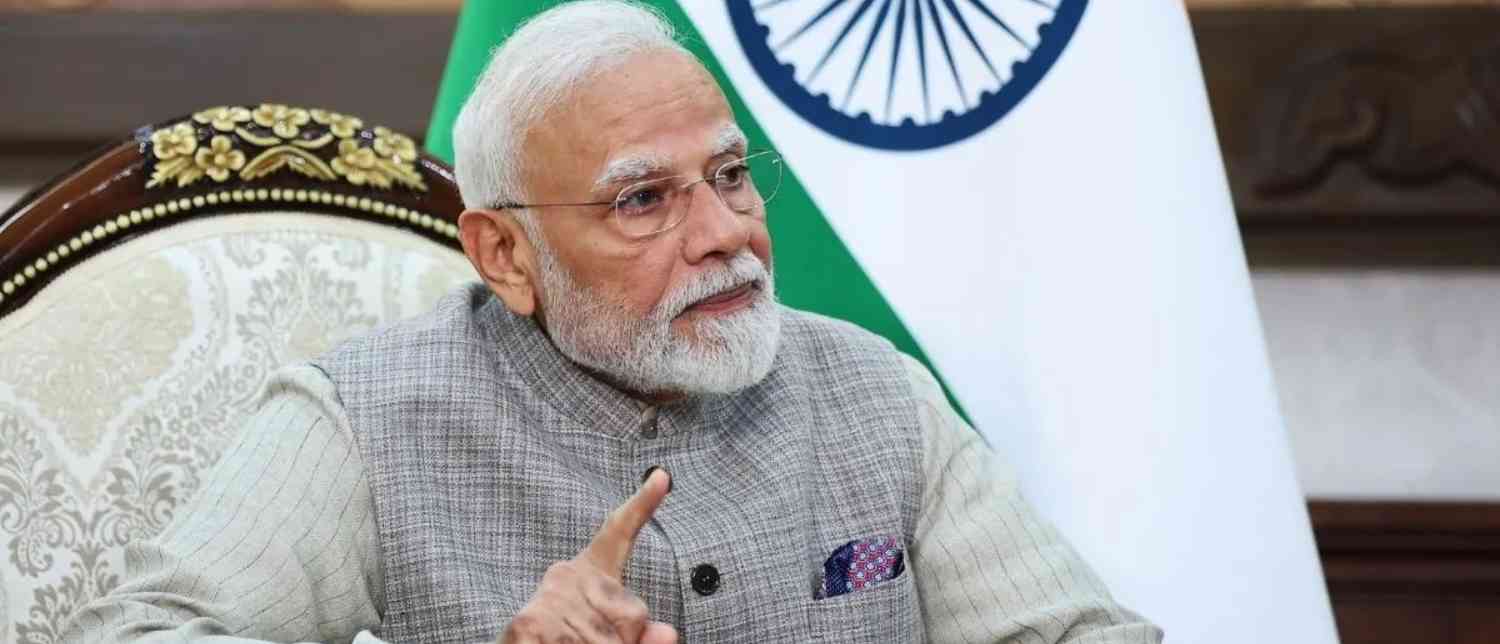
PM Modi’s strong message on terrorism at SCO Summit
Terrorism remained one of the central themes of Modi’s address as he urged SCO member states to adopt a consistent and uncompromising approach to the threat.
The Prime Minister argued that terrorism cannot be treated differently depending on who carries it out or which geopolitical interests are involved. Any attempt to distinguish between forms of terrorism, he suggested, weakens the international fight against the menace.
Modi also warned against the idea of terrorism being used as a strategic asset. His remarks were particularly significant because Sharif was present in the same gathering.
Without turning the address into a direct bilateral confrontation, Modi put the issue squarely before the wider SCO membership. His emphasis was on the need for collective action rather than selective condemnation.
According to the message conveyed in his speech, combating terrorism requires more than targeting individual attacks. The broader ecosystem that enables terror must also be dismantled.
That includes cutting off financial channels, preventing recruitment, countering radicalisation and ensuring that terrorist groups do not receive safe havens or institutional support.
The Prime Minister's position reflects a long-standing Indian argument that international counterterrorism efforts lose credibility when countries apply different standards depending on political convenience.
Shehbaz Sharif’s presence adds significance to Modi’s remarks
The presence of Pakistan Prime Minister Shehbaz Sharif gave Modi's comments an added diplomatic edge.
India and Pakistan continue to have deeply strained relations, with terrorism remaining one of the most contentious issues between the two countries. Against this backdrop, Modi's decision to focus prominently on terrorism at a multilateral forum was closely watched.
Rather than directly naming Pakistan in every reference, Modi framed terrorism as a broader international challenge requiring a unified response. This approach allowed India to put its concerns on the SCO agenda while avoiding turning the entire summit into a bilateral India-Pakistan exchange.
The setting was also important.
The SCO brings together countries with sharply different strategic interests, including India, Pakistan, China, Russia and Iran. For New Delhi, the organisation therefore provides an important platform to push its security concerns before a wider group of regional powers.
Modi's message was effectively that the international community cannot expect meaningful regional security while terrorist organisations, their funding networks and support systems continue to operate.
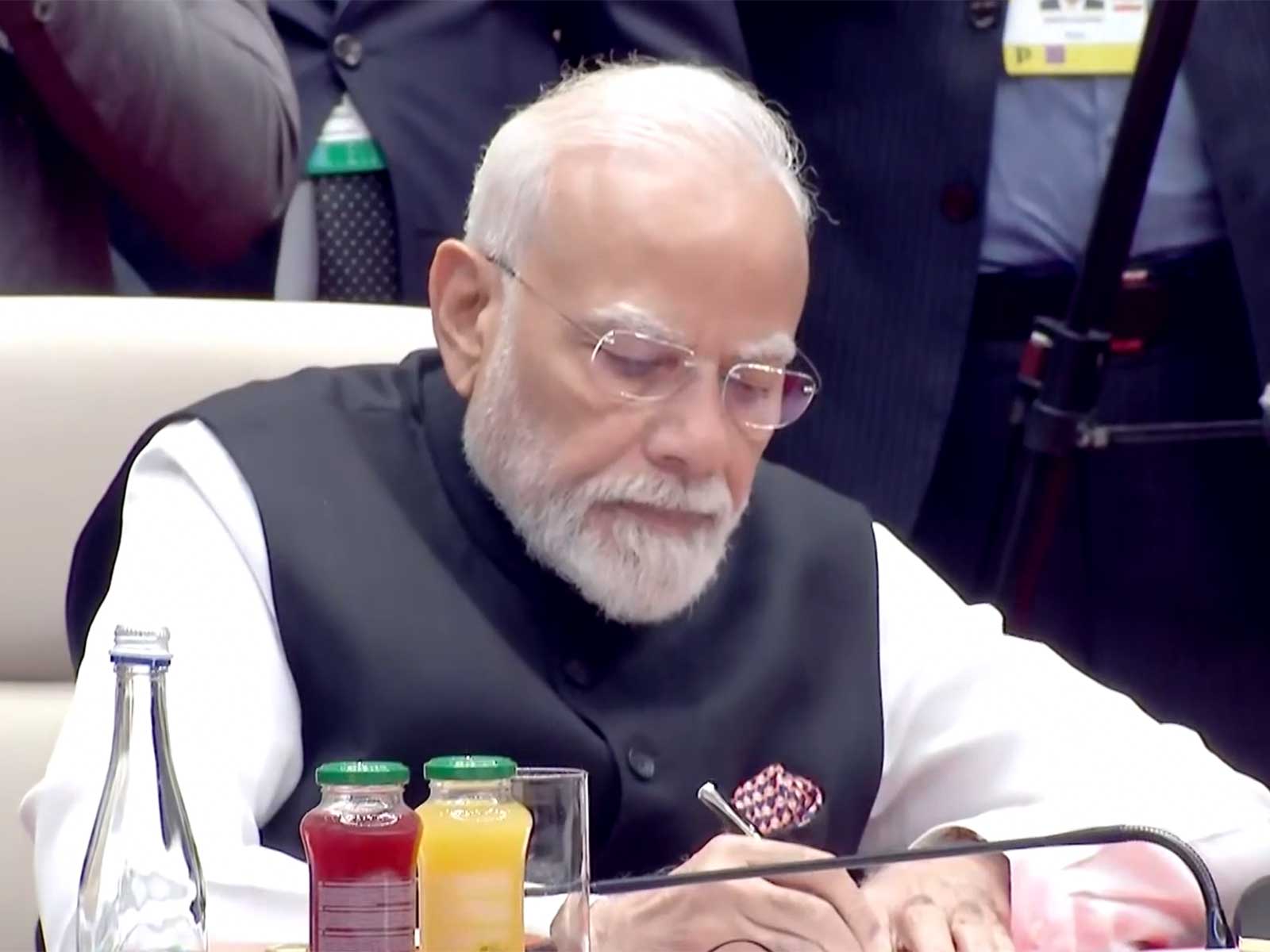
‘No solution on the battlefield’: Modi calls for diplomacy
While his comments on terrorism were uncompromising, Modi struck a different tone when discussing ongoing wars and conflicts.
He said there is no solution on the battlefield and stressed that conflicts must ultimately be resolved through dialogue and diplomacy.
His remarks came at a particularly sensitive moment for the international community, with the war involving Iran and the wider Middle East crisis adding pressure to global energy and trade networks. The continuing Russia-Ukraine conflict has also remained a major challenge to international stability.
Modi's position reflects India's broader diplomatic approach of maintaining strategic relationships with multiple sides while advocating dialogue as the route towards ending conflicts.
The Prime Minister has repeatedly argued that wars have consequences extending far beyond the countries directly involved. Disruptions to energy supplies, shipping routes, trade and global economic activity can affect nations thousands of kilometres away from a conflict zone.
At the SCO Summit, that argument acquired particular relevance because many member states are closely connected through trade, energy and transport networks.
West Asia crisis raises global economic concerns
The ongoing conflict in West Asia has emerged as a major concern for countries dependent on stable energy and commercial routes.
For India, the situation has particular significance because disruptions in the region can affect energy supplies, shipping and trade. Modi therefore used the SCO platform to underline the importance of stability and peaceful resolution.
His message was not limited to the immediate humanitarian consequences of war. It also reflected the economic risks created when major international transport and energy corridors become vulnerable.
The Prime Minister has stressed the need to protect civilian lives and infrastructure and maintain freedom of navigation and commerce.
This approach is consistent with India's interest in keeping crucial maritime and trading routes open while avoiding deeper involvement in military confrontations.
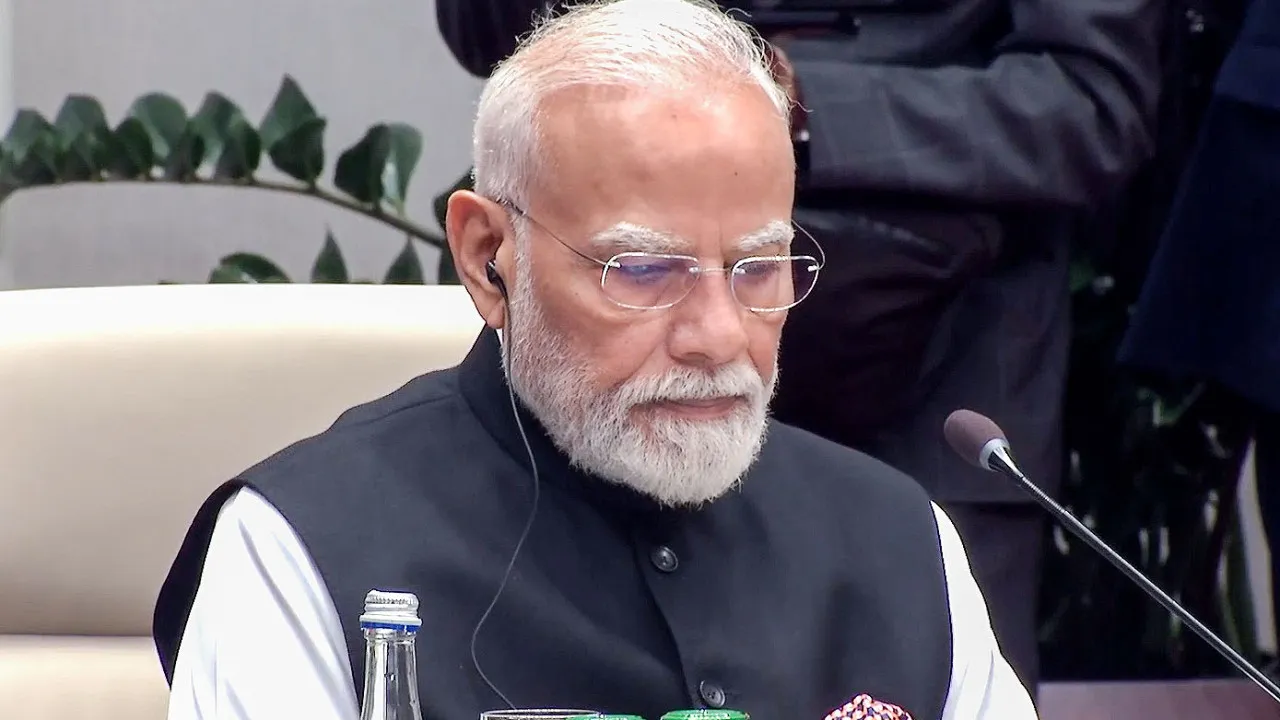
India balances security concerns with economic cooperation
Beyond terrorism and international conflicts, Modi also highlighted the importance of strengthening economic cooperation within the SCO.
The organisation includes several major economies and energy-producing countries, giving it considerable potential for greater trade and connectivity.
Modi called for stronger economic engagement, improved trade facilitation and better connections between markets. For India, the SCO is not only a security forum but also a platform through which regional economic relationships can be expanded.
The challenge, however, lies in the political differences among its members.
India and China have unresolved strategic tensions, while India and Pakistan continue to face serious security disagreements. Russia is navigating the consequences of its confrontation with the West, and Iran remains caught in a complex geopolitical environment.
Despite these differences, the SCO continues to offer a forum where competing powers can sit at the same table.
That makes Modi's approach significant: India is seeking to use the organisation to advance cooperation where possible while refusing to dilute its core security concerns.
Modi’s diplomatic balancing act
The Prime Minister's SCO Summit speech reflected a careful balance between firmness and diplomacy.
On terrorism, the message was uncompromising. Modi called for an end to selective approaches and argued that the entire terror ecosystem must be dismantled.
On wars and geopolitical conflicts, however, he advocated dialogue, diplomacy and peaceful resolution.
The apparent contrast is deliberate. India's position is that terrorism should not be legitimised or normalised as an instrument of statecraft, while disputes between nations should be addressed through diplomatic channels.
This distinction allows New Delhi to maintain a firm national-security position without abandoning its broader commitment to dialogue in international affairs.
It also reinforces India's attempt to position itself as an independent strategic power rather than aligning completely with any one geopolitical bloc.
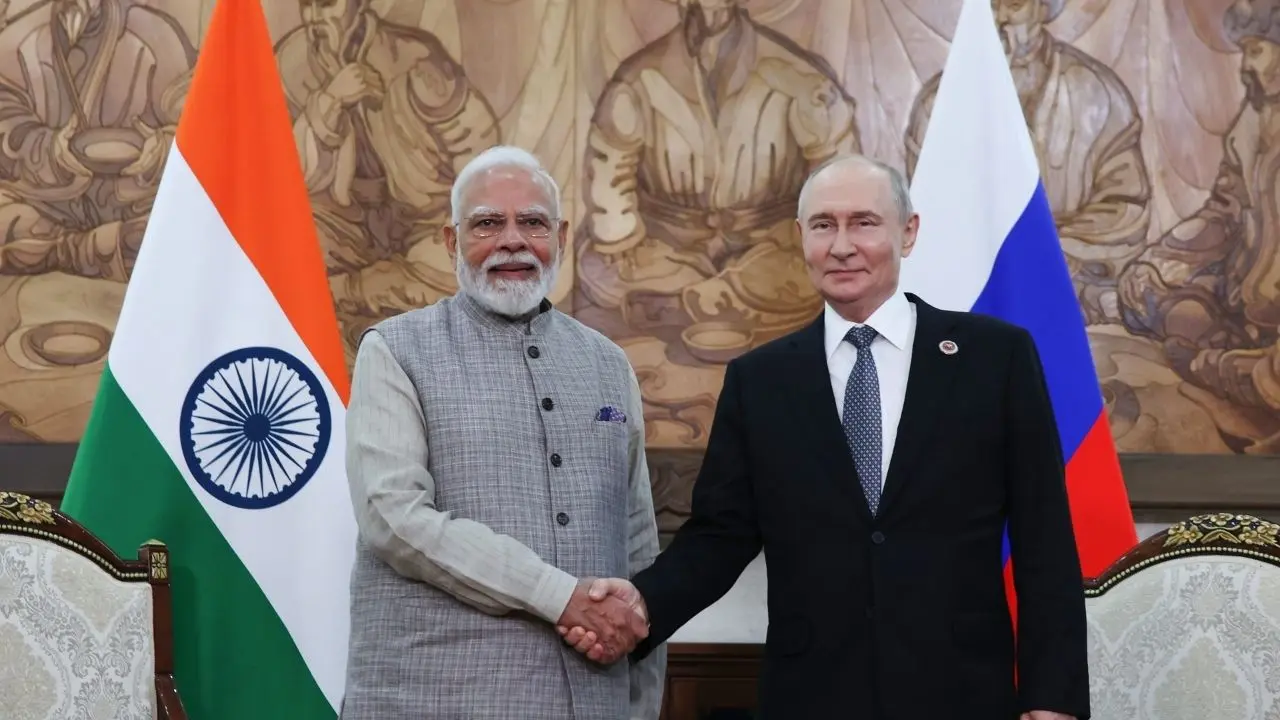
Modi meets key leaders on the sidelines
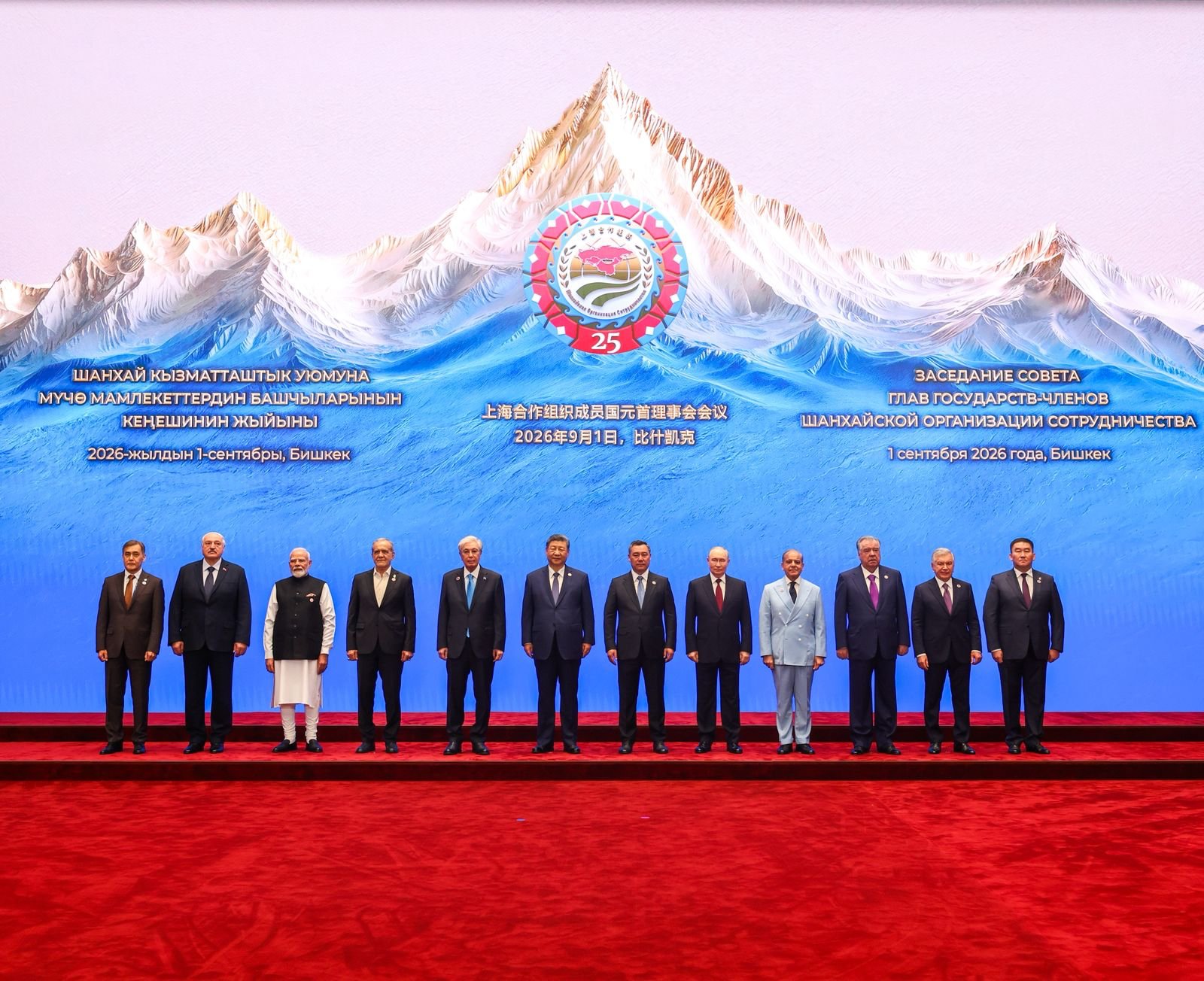
The SCO Summit also brought Modi together with several important world leaders, including Chinese President Xi Jinping and Russian President Vladimir Putin.
His interactions with major leaders were closely watched because India continues to maintain relationships with countries that themselves have competing interests.
Modi's engagement with Russia comes as the Ukraine conflict continues, while India's relationship with China remains important despite unresolved strategic differences.
The Prime Minister's diplomacy at the summit therefore extends beyond the formal speech. Each bilateral interaction forms part of India's broader effort to protect its economic and strategic interests while navigating an increasingly fragmented international order.
His meeting with Iranian President Masoud Pezeshkian was also significant given the ongoing conflict in West Asia and Iran's importance to India's connectivity and trade interests.
What Modi’s SCO speech signals for India-Pakistan ties
The terrorism-focused portion of Modi's address is likely to remain the most closely examined aspect of the summit in the context of India-Pakistan relations.
The key takeaway is that New Delhi is continuing to place terrorism at the centre of its security concerns and does not appear willing to separate regional cooperation from the issue of terror networks.
At the same time, Modi avoided allowing the SCO gathering to become solely an India-Pakistan confrontation.
That distinction matters.
India participates in multilateral organisations because it wants to advance broader strategic and economic interests. Turning every forum into a bilateral dispute could limit those opportunities. By raising terrorism as a collective international challenge, Modi ensured that India's position was placed before the entire grouping.
For Pakistan, the message was difficult to ignore, particularly with Sharif present in the room.
SCO Summit highlights India’s wider foreign policy approach
The developments in Bishkek underline the complexity of India's foreign policy in 2026.
New Delhi is confronting terrorism as a major security challenge, advocating dialogue to resolve wars, maintaining strategic ties with Russia, engaging China through multilateral forums and seeking stronger economic links across Eurasia.
These objectives can sometimes appear contradictory, but they reflect India's effort to preserve strategic autonomy.
Modi's SCO address brought those priorities together.
The message on terrorism was clear: there can be no selective approach and no acceptance of terror as a strategic instrument.
The message on global conflicts was equally clear: wars cannot provide permanent solutions, and diplomacy must ultimately take over.
For India, the SCO Summit therefore became more than another multilateral meeting. It offered an opportunity to put terrorism firmly on the regional security agenda while simultaneously presenting New Delhi's case for dialogue, economic connectivity and greater stability.
As conflicts continue to reshape global politics, Modi's intervention suggests that India intends to pursue both firmness on security and flexibility in diplomacy — a balance that is likely to remain central to its foreign policy in the months ahead.
With input from agencies
Image Source: Multiple agencies
© Copyright 2026. All Rights Reserved. Powered by Vygr Media.