 By
By 
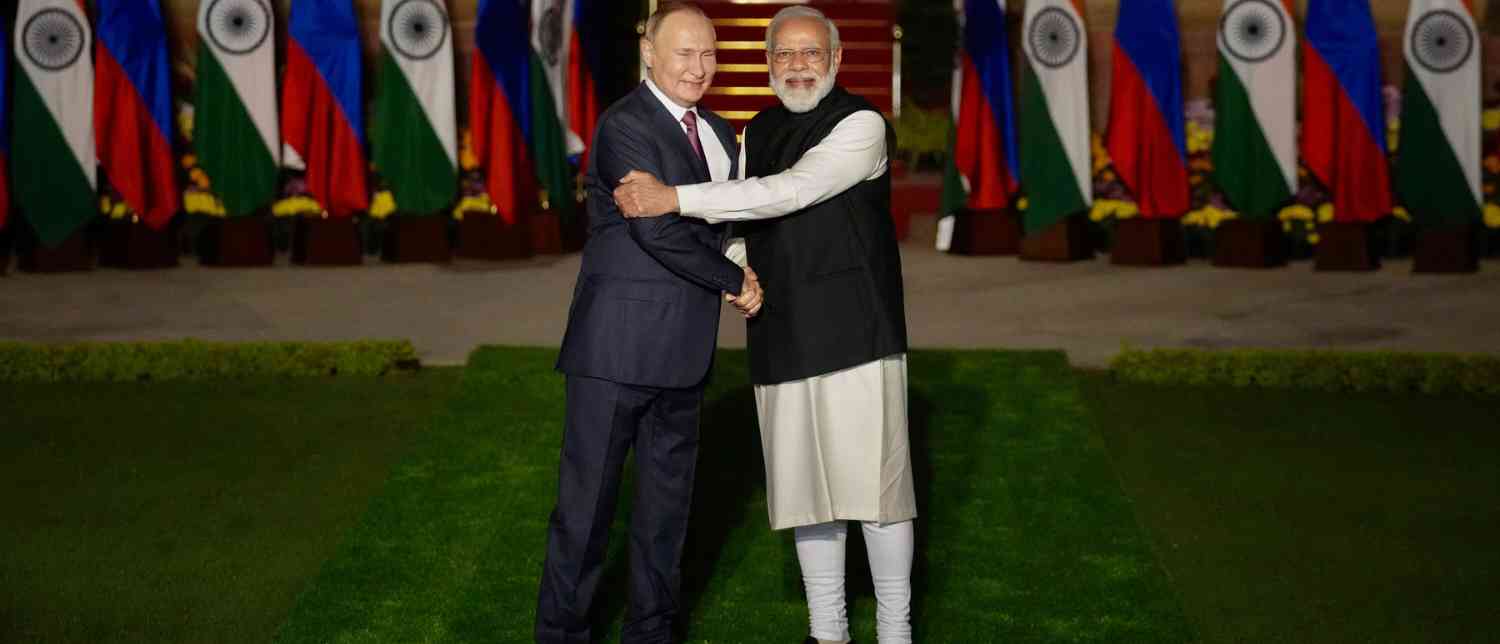
Russian President Vladimir Putin’s arrival in India this week marks a pivotal moment for global geopolitics, coming at a time when New Delhi’s long-standing strategic autonomy is being stress-tested by shifting equations with Moscow and mounting pressure from the United States. It is Putin’s first visit since the outbreak of the Ukraine conflict—an absence spanning more than four years—and one that comes with an extraordinarily complex backdrop: U.S. President Donald Trump's tariffs and sanctions threats, global oil market disruptions, and India’s delicate balancing act between its oldest strategic partner and its most consequential modern collaborator, the U.S.
While analysts worldwide are dissecting the optics, the deeper question persists: Will India scale back its dependence on Russian crude or double down on its independent foreign policy path? The answer, as experts emphasize, lies in a layered mix of energy security, defence cooperation, and the demands of diplomacy in a fractured world.
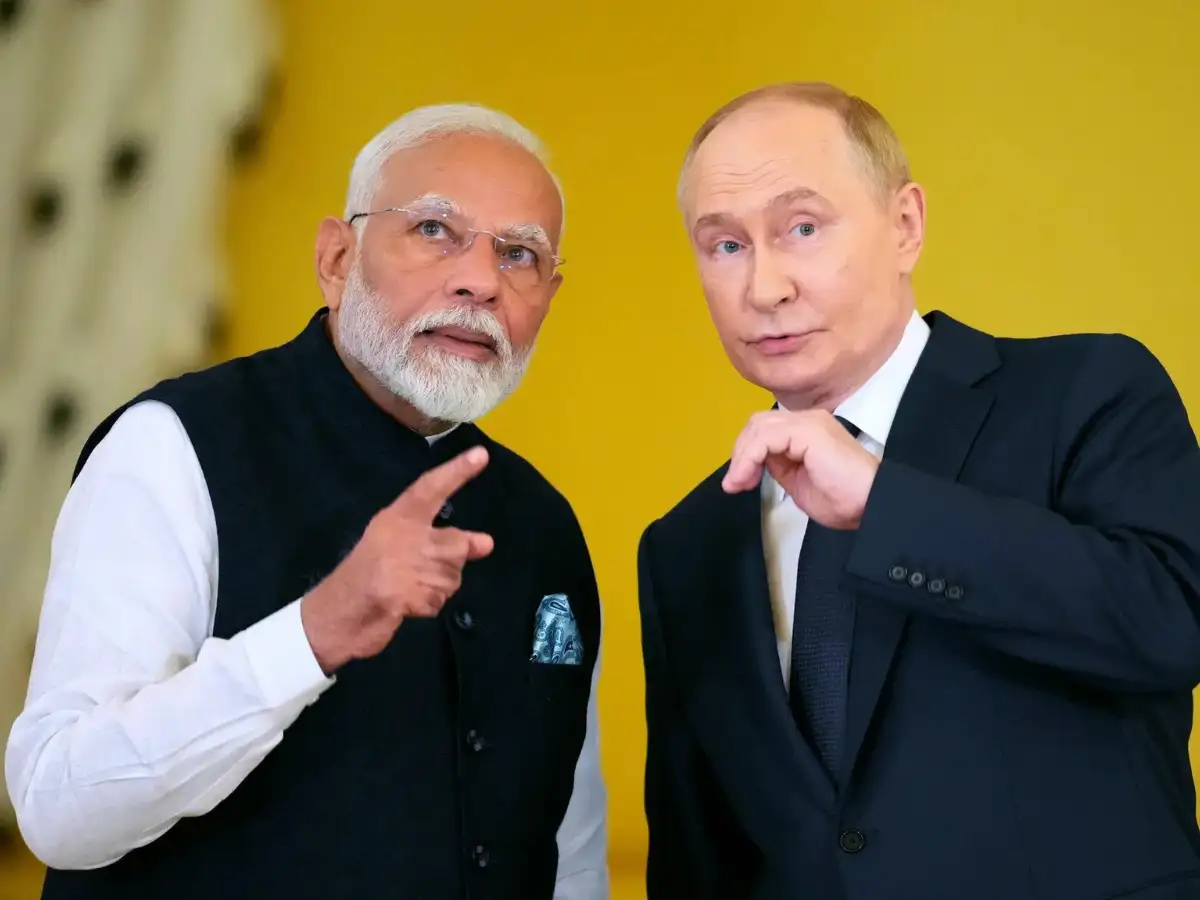
A Visit Marking Both Tension and Opportunity
According to Ajay Srivastava, founder of the Global Trade Research Initiative (GTRI), the visit marks “a crucial diplomatic milestone” because discounted Russian crude has transformed India’s energy landscape while simultaneously exposing it to new geopolitical and sanctions-related risks. The timing is critical: India is under steady U.S. pressure to reduce Russian oil imports even as Washington demands broader market access for American goods and defence equipment.
GTRI stresses that Putin’s visit is not a nostalgic revival of Cold War camaraderie but a deliberate negotiation over risk, supply chains, and economic insulation. A modest diplomatic outcome would secure existing arrangements in oil and defence. A more ambitious one could reset regional economics altogether.
A Relationship Built on Strategic History, Not Commerce
India and Russia’s resilience as partners rests on decades of strategic bonding formed in moments of crisis. During the Cold War, the U.S. backed Pakistan—even deploying the USS Enterprise during the 1971 Bangladesh War. The Soviet Union counterbalanced with military support and diplomatic cover at the United Nations.
Moscow also supported India after the 1962 war with China and continued defending India over contentious issues like Kashmir. Even after India’s 1998 nuclear tests, when the West imposed sanctions, Russia remained a reliable defence partner. Over these decades, Moscow transferred sensitive defence technologies that Western nations consistently withheld.
Today, 60–70% of India’s military platforms remain Russian-origin—an enduring indicator that the partnership was “built in conflict, not commerce,” as GTRI notes.
The Three Pillars of Contemporary India–Russia Ties
GTRI identifies energy, defence, and diplomacy as the modern pillars anchoring the relationship—although energy now dominates the agenda.
1. Energy: The Core of Modern Engagement
Russia has become India’s largest crude supplier, accounting for 30–35% of total imports. Discounted Russian crude has fundamentally reshaped India’s energy strategy.
2. Defence: A Legacy of Deep Interdependence
Russia remains the backbone of India’s military capability—from fighter jets and submarines to tanks and air defence systems. Key negotiations today involve maintenance support, spare parts, and possible future acquisitions.
3. Diplomacy: Multilateral Coordinated Strategy
Cooperation extends across BRICS, the Shanghai Cooperation Organisation, the Eastern Economic Forum, nuclear power projects, space exploration, fertilizers, and connectivity initiatives.
Even as India strengthens its relations with the U.S., EU, and Japan, it still sees Russia as indispensable for preserving strategic autonomy.
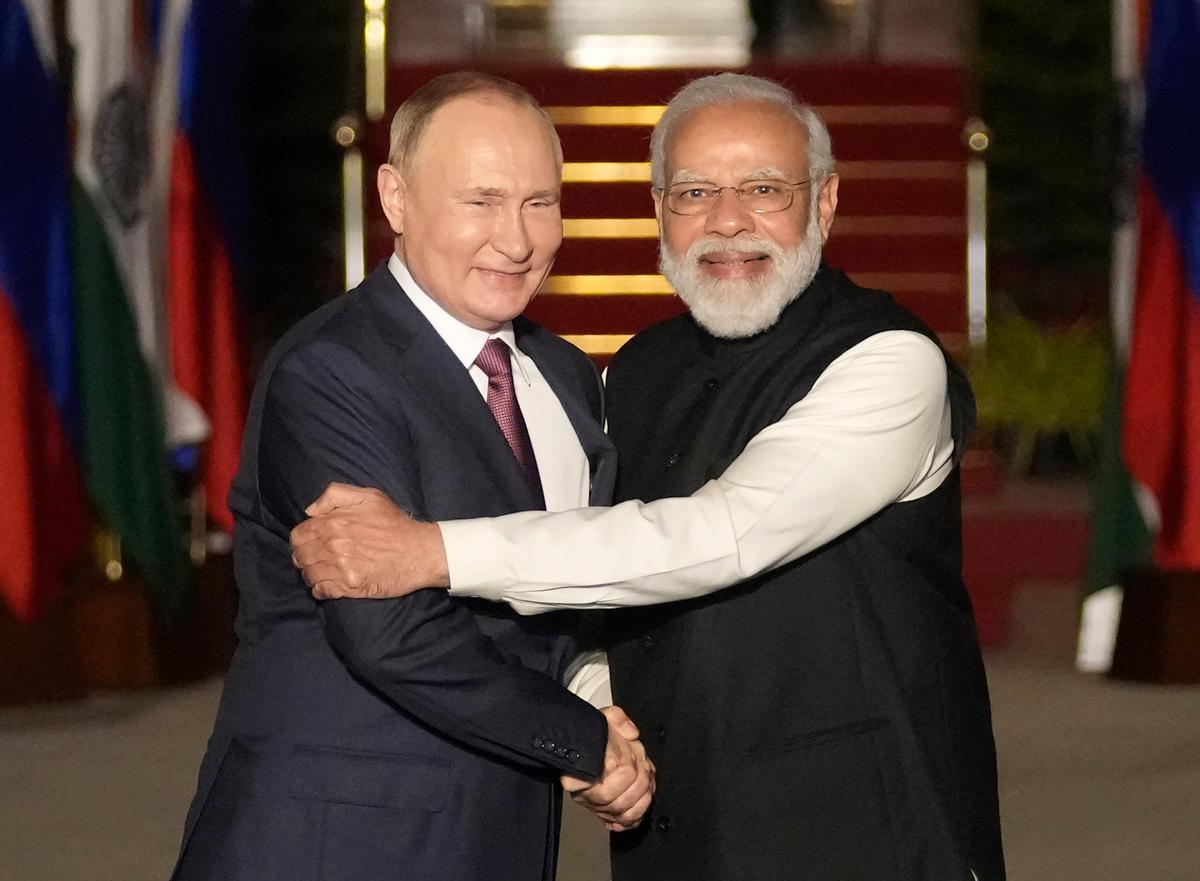
India’s Soaring Imports of Russian Crude Oil
One of the most transformational shifts since the Ukraine conflict has been India's explosive growth in Russian crude imports. The numbers tell a dramatic story:
-
2021: $2.3 billion
-
2022: $25.5 billion
-
2023: $48.6 billion
-
2024: $52.7 billion
This jump—from 1–2% of India’s crude intake pre-2021 to over 37% by 2024—has fundamentally redrawn India’s energy map.
Year-wise Indian Crude Imports From Russia (US$ Billion)
|
Year |
Import from Russia |
Total Oil Imports |
Russia’s Share |
Total Imports from Russia |
|---|---|---|---|---|
|
2017 |
1.3 |
82.1 |
1.6% |
8 |
|
2018 |
1.2 |
114.7 |
1.1% |
6.8 |
|
2019 |
1.5 |
101.9 |
1.4% |
6.2 |
|
2020 |
0.9 |
64.6 |
1.4% |
5.9 |
|
2021 |
2.3 |
106.4 |
2.2% |
8.7 |
|
2022 |
25.5 |
173.5 |
14.7% |
40.6 |
|
2023 |
48.6 |
140.4 |
34.6% |
67.1 |
|
2024 |
52.7 |
141.5 |
37.3% |
67.2 |
|
2025 (Jan–Sep) |
33.5 |
105.3 |
31.8% |
45.3 |
The Payment Puzzle
Due to Russia’s partial SWIFT exclusion, oil payments have shifted into a multi-currency model:
-
Dirhams: 60–65%
-
Rupees: 25–30% (₹60,000 crore sitting idle in Indian accounts)
-
Yuan: 5–10%
Russia prefers dirhams due to easier convertibility and better spending flexibility, while yuan is used periodically. Yet, this multi-pronged strategy remains inherently fragile, exposed to political pressures and sanctions.
GTRI expects India to pursue:
-
Long-term crude contracts with non-U.S.-sanctioned Russian majors such as Lukoil and Rosneft.
-
Expanded Indian investments in Russian oil & gas fields.
-
Nuclear cooperation beyond Kudankulam.
-
Collaboration in critical minerals and manufacturing.
-
Maritime connectivity between India and Russia’s Far East.
The Trade and Defence Imbalance: A Persistent Challenge
India’s defence relationship with Russia continues to be vital because nearly two-thirds of Indian military equipment is Russian-made. India is likely to push for:
-
Faster S-400 Triumf deliveries.
-
Assurance on maintenance and upgrades of Russian-origin platforms.
-
Long-term discussions around Russia’s Su-57 fifth-generation fighter—although any acquisition remains distant.
Trade: India’s Narrow Export Basket vs. Massive Energy Imports
India exports around $5 billion annually to Russia but imports nearly $64 billion, creating a sharply skewed trade relationship.
Indian Exports (FY24 → FY25 → FY26 H1):
-
Pharma: Significant contributor
-
Machinery: $367.8 million
-
Pharmaceuticals: $246 million
-
Organic chemicals: $165.8 million
-
Smartphones: $75.9 million
-
Vannamei shrimp: $75.7 million
-
Meat: $63 million
-
Garments: $20.94 million
These figures reflect India's limited presence in Russian consumer goods and electronics markets.
Russian Imports to India (FY24 → FY25 → FY26 H1):
-
Petroleum crude: $23.1 billion
-
Petroleum products: $2.5 billion
-
Coal: $1.9 billion
-
Fertilizers: $1.3 billion
-
Sunflower oil: $633 million
-
Diamonds: $202 million
This dependency makes the relationship highly vulnerable to fluctuations in global commodity prices.
What Could Putin’s Visit Deliver? Potential Outcomes
GTRI outlines two possible trajectories:
Scenario 1: A Cautious, Stability-Focused Partnership
Most likely, both sides will prioritize stabilizing existing ties. Possible outcomes include:
-
Confirmed timelines for defence deliveries and modernisation.
-
Long-term crude supply agreements.
-
Indian equity revival in Russian LNG fields.
-
Speeding up nuclear plant construction.
-
A new payment mechanism, possibly centered on the dirham or integrated with Russia’s SPFS and India’s RuPay.
This scenario fortifies the relationship without attracting severe diplomatic costs.
Scenario 2: A Bold Realignment
A more ambitious outcome could reshape India’s Eurasian integration:
-
Joint production of defence equipment.
-
Indian investment in Arctic LNG 2, Vostok, and other major Russian energy projects.
-
Expanded nuclear cooperation.
-
Momentum for the Chennai–Vladivostok corridor.
-
Strengthening the International North–South Transport Corridor (INSTC).
-
A permanent solution to idle rupee balances.
Such an outcome may invite sharper Western scrutiny.
GTRI sums up the challenge succinctly: India must secure fuel, weapons, and payments stability in an era defined by financial and political fragmentation, without compromising strategic autonomy.
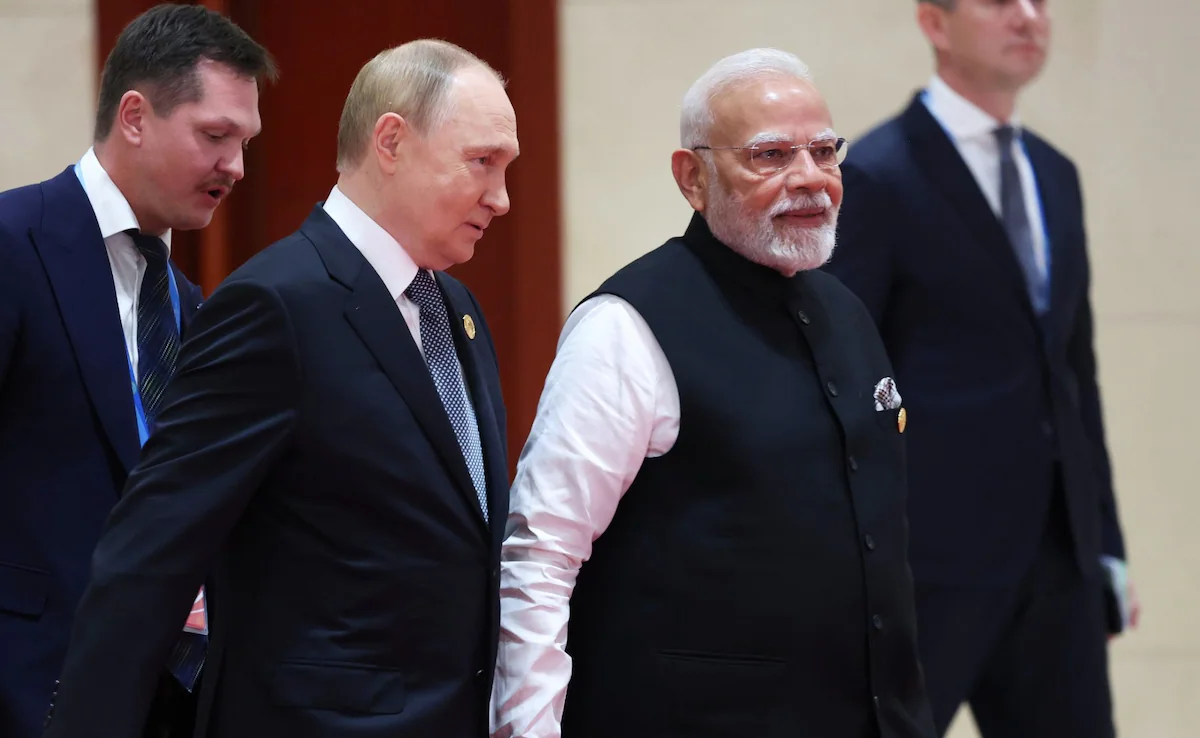
Putin’s Two-Day India Visit: Schedule and Significance
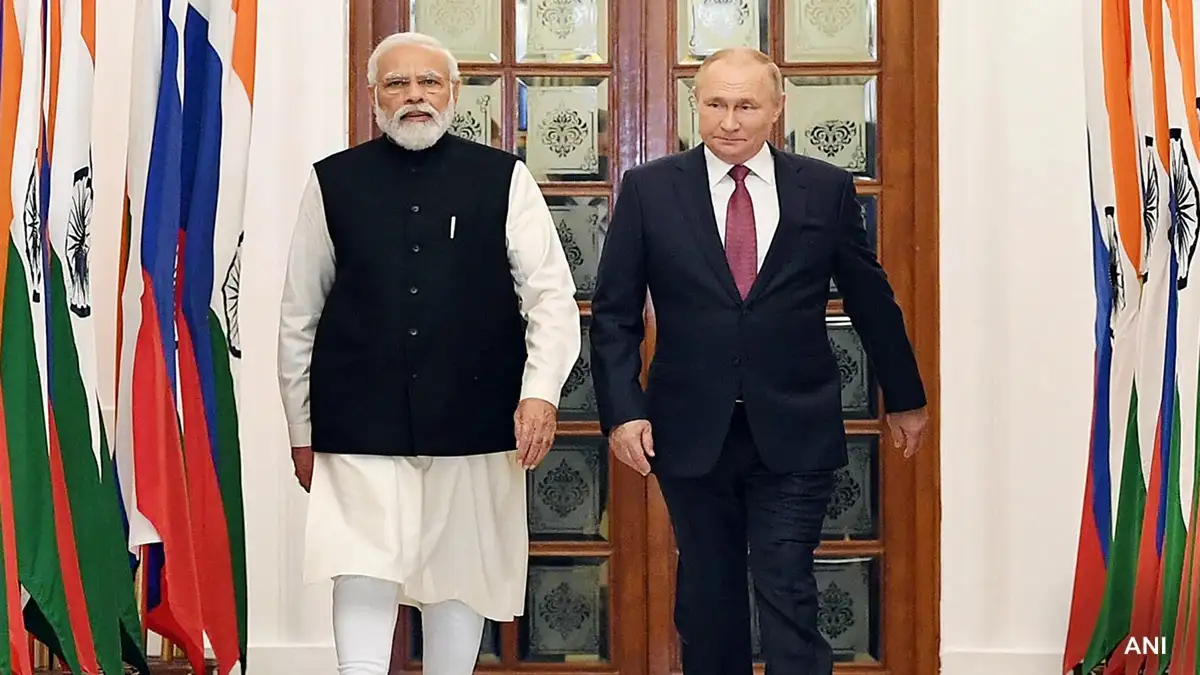
Putin’s compressed 30-hour trip carries major symbolic and political weight. He arrives Thursday evening for a private dinner with Prime Minister Narendra Modi. Friday’s agenda includes:
-
Guard of honour at Rashtrapati Bhavan.
-
Meeting with President Droupadi Murmu.
-
Paying respects at Raj Ghat.
-
Summit-level talks with Modi at Hyderabad House.
-
Engagements with business leaders.
-
A presidential banquet hosted by Murmu.
The Kremlin described the visit as “of great importance” for reviewing the full spectrum of the “privileged strategic partnership.”
Putin is accompanied by Defence Minister Andrei Belousov and senior executives from Rosoboronexport, Rosneft, and Gazprom Neft—an indicator of the visit’s defence and energy-centric priorities.
Why the Timing Matters More Than Ever
This year marks the 25th anniversary of the India–Russia strategic partnership. Yet the relationship has faced disruptions:
-
2022: Modi’s visit to Russia was postponed during the peak of the Ukraine war.
-
2023: Putin skipped the G20 summit in New Delhi due to the ICC warrant.
-
2024: Modi visited Russia, reviving the annual summit mechanism.
-
Now: Putin returns to India after a four-year gap.
Despite the “steadfast friendship” narrative, India and Russia remain sensitive to external geopolitical pressures.
Trump’s Tariffs: A Shadow Over the Summit
India became the world’s second-largest buyer of Russian crude after 2022—a staggering 2,250% rise in imports. Russia’s share surged from 1% pre-war to 40% soon after.
The U.S. initially encouraged India’s purchases to help prevent global oil prices from skyrocketing. But Trump’s second-term strategy to pressure Moscow and Kyiv has dramatically shifted his tone:
-
25% tariffs on Indian goods
-
Raised to 50%, tied explicitly to Indian imports of Russian crude
-
Sanctions on Rosneft and Lukoil
-
Threats targeting foreign firms trading with them
Reliance, India’s largest private refiner, has halted exports of products derived from Russian crude. As a result, Indian imports of Russian crude are expected to drop to a three-year low.
Simultaneously, India has signed major agreements to increase U.S. LNG imports.
This growing pressure risks cooling India’s goodwill toward Washington.
As former foreign secretary Kanwal Sibal remarks: “Trump can roll out a red carpet for Putin in Alaska. Why shouldn’t India build on its ties with Russia?”
Defence: The Strongest Link in India–Russia Relations
Despite turbulence in energy ties, defence cooperation remains steady:
-
Russia accounts for 36% of India’s defence imports.
-
More than 60% of India’s current arsenal is Russian-origin.
-
Import share has dropped from 72% in 2010, reflecting diversification, but Russia remains irreplaceable in the medium term.
The Russian S-400 air defence system proved pivotal during the four-day air war with Pakistan in May, described by the Indian Air Force chief as a “game changer.”
India is now pursuing additional S-400 units, while Russia hopes to advance discussions on the Su-57 stealth fighter, described by Kremlin spokesperson Dmitry Peskov as “the best plane in the world.”
Trade Outlook: A Reality Check
India–Russia trade has ballooned since 2022—from $10 billion to nearly $69 billion, driven almost entirely by crude oil. But exports remain stuck at around $5 billion, leaving a yawning $64 billion deficit.
The target of $100 billion by 2030 now appears unrealistic, especially with oil trade expected to decline under U.S. pressure.
According to Russia’s Ministry of Labour, the country will face a shortfall of 3.1 million workers by 2030. Moscow is now turning to India as a potential source of labour, shifting away from its traditional Central Asian suppliers.
Experts say this could deepen people-to-people ties and stabilize long-term economic engagement.
Yet, the central dilemma remains: How can India strengthen Russia relations without risking its partnerships with the U.S., EU, and Eurasian Economic Union—each crucial to New Delhi’s global economic goals?
Many analysts believe the only real solution would be a peace deal between Russia and Ukraine, which currently seems remote.
A High-Stakes Balancing Act for India
Putin’s visit symbolizes far more than ceremonial diplomacy. It is a test of India’s strategic autonomy in an era defined by geopolitical confrontation and economic coercion. Whether India opts for cautious continuity or bold realignment, the stakes are immense: energy security, defence preparedness, and the ability to maneuver independently between competing superpowers.
In a world of sanctions, proxies, and fragmented global supply chains, India’s challenge is clear: to preserve autonomy while resisting pressure from Washington and dependence on Moscow—without losing the benefits of either partnership.
With inputs from agencies
Image Source: Multiple agencies
© Copyright 2025. All Rights Reserved. Powered by Vygr Media.