 By
By 
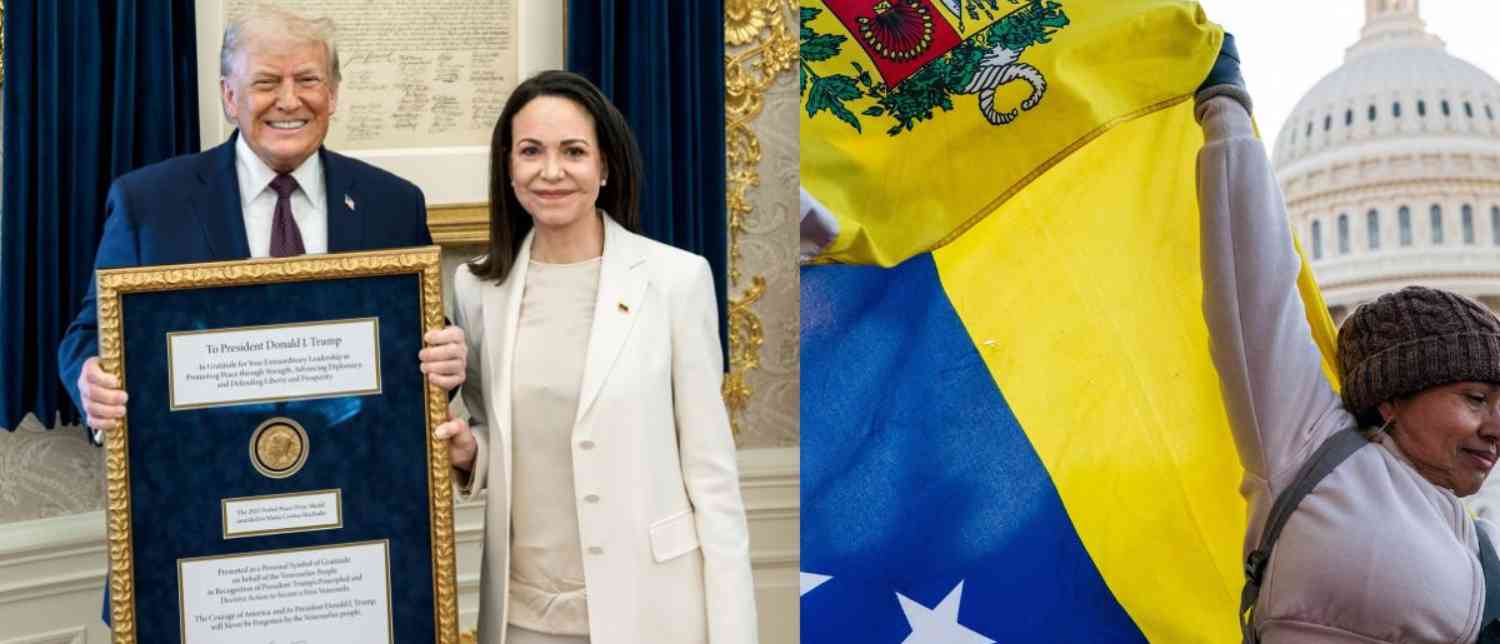
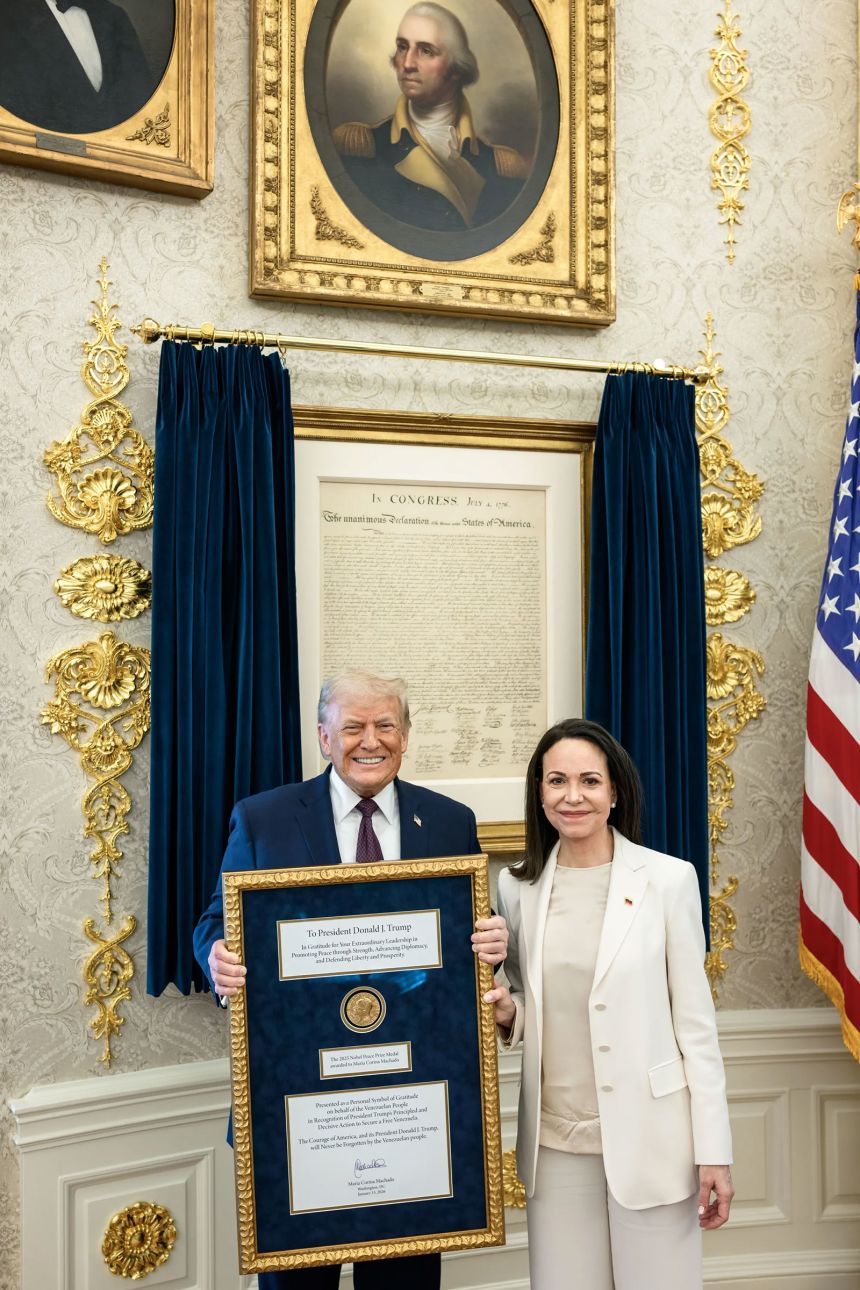
When Venezuelan opposition leader Maria Corina Machado stepped into the White House and placed her Nobel Peace Prize medal into the hands of US President Donald Trump, the moment carried a symbolism far heavier than the gold disc itself. Trump smiled broadly, leaning cheek-to-cheek for photographs, calling it a “wonderful gesture of mutual respect.” For a leader who has long made no secret of his desire for the Nobel Peace Prize, the image appeared to capture a long-cherished ambition—if not in title, then at least in form.
Yet, beneath the surface spectacle lay a deeper and more consequential question: can the world’s most prestigious peace award be transferred, shared, or symbolically reassigned without eroding the very legacy it was designed to protect? The answer, firmly and unequivocally, is no.
The Norwegian Nobel Institute made that clear—again and again.
A Gesture Without Precedent
Machado’s act was unprecedented. Never before had a Nobel Peace Prize laureate voluntarily handed over their medal to another individual. She not only presented the medal to Trump during their meeting but left it at the White House, where a US official later confirmed it would remain in Trump’s possession.
Trump openly accepted the medal, publicly thanking Machado and describing her as a “wonderful woman.” In a post on Truth Social, he wrote, “Maria presented me with her Nobel Peace Prize for the work I have done. Such a wonderful gesture of mutual respect. Thank you Maria!”
For Trump, the moment held obvious personal significance. Over the years, he has repeatedly argued that he deserved the Nobel Peace Prize, citing his claims of having stopped “eight wars.” According to Trump, “You should get a Nobel Prize for every war you stopped. These were major wars. These were wars that nobody thought could have stopped.”
But admiration, ambition, and symbolism cannot override institutional history.
Why Machado Gave Her Peace Prize to Trump
Maria Corina Machado was awarded the 2025 Nobel Peace Prize for her role in promoting democratic rights and advocating for a peaceful political transition in Venezuela. The Nobel Committee recognised her sustained efforts to challenge authoritarian rule through non-violent means, marking her as a central figure in Venezuela’s opposition movement.
However, following Trump’s role in capturing Venezuelan President Nicolás Maduro, Machado announced she would present her Nobel medal to the US President. She framed the gesture as recognition of what she described as Trump’s “unique commitment to the freedom of the Venezuelan people.”
Speaking to reporters after leaving the White House, Machado said, “I presented the president of the United States the medal, the Nobel Peace Prize, as a recognition for his unique commitment with our freedom.”
In her view, the medal was a tribute—an acknowledgment of political action she believed helped advance Venezuela’s democratic cause.
But tribute and transfer are not the same.
President Donald J. Trump meets with María Corina Machado of Venezuela in the Oval Office, during which she presented the President with her Nobel Peace Prize in recognition and honor.🕊️ pic.twitter.com/v7pYHjVNVO— The White House (@WhiteHouse) January 16, 2026
The Nobel Committee Draws a Line
Even before Machado’s White House visit, the Norwegian Nobel Institute had anticipated the controversy. Days earlier, it had addressed speculation about whether a Nobel Peace Prize could be shared or passed on.
After Machado suggested she might give her award to Trump—and later followed through—the institute reiterated its position with unmistakable clarity.
“Once a Nobel Prize is announced, it cannot be revoked, shared, or transferred to others,” the Norwegian Nobel Committee and the Norwegian Nobel Institute stated. “The decision is final and stands for all time.”
The institute emphasised that while a physical medal can change hands, the title of Nobel Peace Prize laureate cannot. Ownership of the object does not equate to ownership of the honour, the recognition, or the historical record.
This distinction matters—not just legally, but culturally.
Can a Nobel Peace Prize Be Revoked or Shared?
The statutes governing the Nobel Foundation leave no room for ambiguity. According to §10 of the Statutes of the Nobel Foundation, “No appeals may be made against the decision of a prize-awarding body with regard to the award of a prize.”
Neither Alfred Nobel’s will nor the foundation’s statutes include any provision for revoking, sharing, or transferring a prize once awarded. In fact, no Nobel Committee in Stockholm or Oslo has ever considered revoking a prize.
As a matter of principle, the Norwegian Nobel Committee does not comment on what laureates do or say after receiving the award. Its mandate ends once the prize is announced. The committee may observe future actions but does not revise history based on them.
This rigid framework is not bureaucratic stubbornness—it is preservation.
The #NobelPeacePrize medal.
It measures 6.6 cm in diameter, weighs 196 grams and is struck in gold. On its face, a portrait of Alfred Nobel and on its reverse, three naked men holding around each other’s shoulders as a sign of brotherhood. A design unchanged for 120 years.
Did… pic.twitter.com/Jdjgf3Ud2A— Nobel Peace Center (@NobelPeaceOslo) January 15, 2026
Heritage Versus Reinvention: Why the Rules Exist
The Nobel Peace Prize is not merely an accolade; it is an institution rooted in over a century of moral authority, historical continuity, and symbolic integrity. Allowing prizes to be transferred—even symbolically—would risk transforming a legacy honour into a negotiable token.
This is where the broader question of development versus heritage emerges.
In the modern political landscape, gestures move faster than institutions. There is an increasing tendency to reshape long-standing traditions in the name of progress, relevance, or personal validation. But development that erases foundational values is not progress—it is erosion.
If historical honours can be repurposed to suit political narratives, what remains of their meaning?
The Nobel Committee’s insistence on finality protects the award from becoming transactional. It ensures that recognition remains anchored to the actions and context evaluated at the time of the award, not reshaped by future political alliances or symbolic acts.
Trump’s Longstanding Nobel Ambition
Trump’s acceptance of the medal fits into a broader narrative. He has, on multiple occasions, publicly expressed frustration at not receiving the Nobel Peace Prize. He has pointed to diplomatic initiatives and conflict resolutions as justification, asserting that such achievements warranted recognition.
Yet the Nobel Committee has remained silent on these claims, consistent with its policy of not responding to post-award commentary or external pressure.
The medal may sit in Trump’s possession, but the title does not—and cannot—follow.
Symbolism Without Authority
So what does Machado’s gesture ultimately mean?
In practical terms, nothing changes. Machado remains the Nobel Peace Prize laureate for 2025. Trump does not become one by possession, presentation, or proclamation.
Symbolically, however, the moment reveals a deeper tension—between political storytelling and institutional memory.
Machado sought to honour what she perceived as decisive action. Trump embraced a symbol of validation. But the Nobel Committee stood firm, preserving the boundary between recognition and reinterpretation.
Development That Respects History
The world evolves. Institutions must adapt. But adaptation does not mean abandonment of principles.
True development lies in finding ways to move forward without dismantling the structures that give meaning to progress. If we sacrifice historical integrity for momentary symbolism, we risk hollowing out the very institutions that lend weight to our collective achievements.
If cultural heritage is lost in the name of development, one must ask—what exactly are we developing toward?
The Nobel Peace Prize endures not because it bends, but because it holds its ground.
And in doing so, it reminds the world that some legacies are not transferable—no matter how powerful the hands that hold them.
With inputs from agencies
Image Source: Multiple agencies
© Copyright 2025. All Rights Reserved. Powered by Vygr Media.