 By
By 
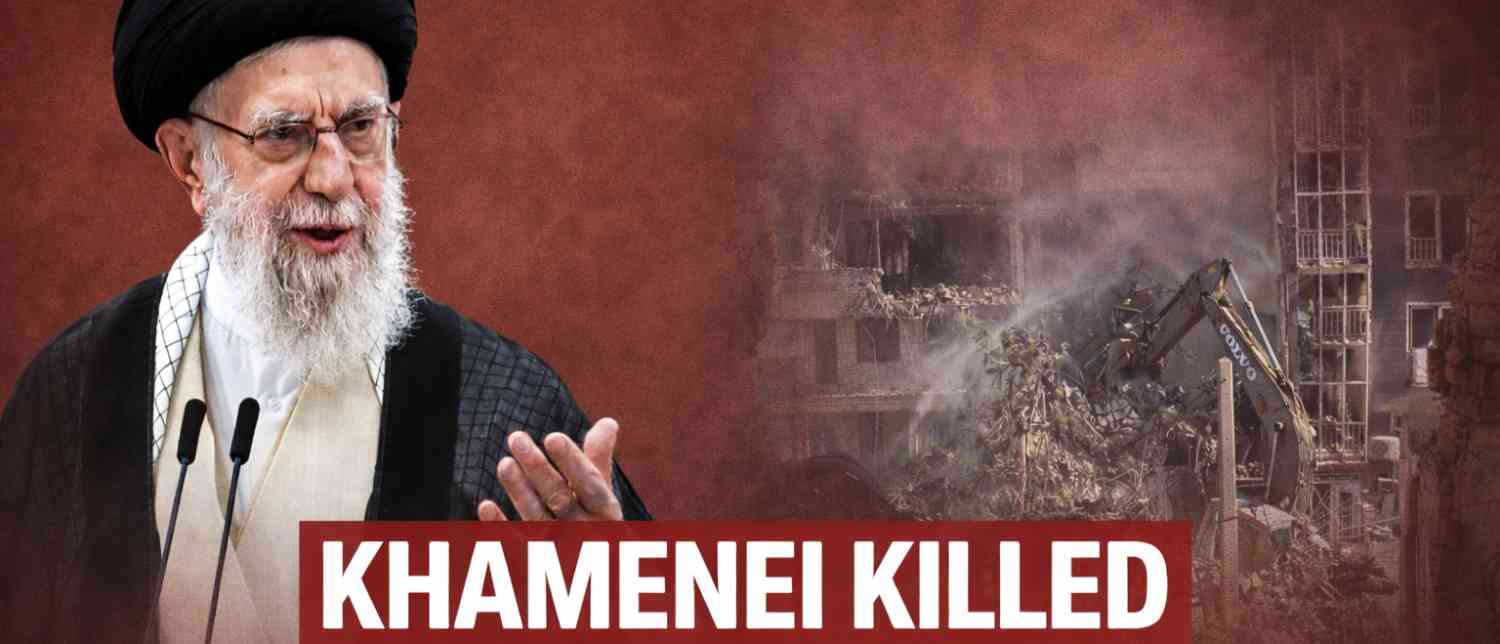
The assassination of Ayatollah Ali Khamenei in a coordinated U.S.-Israeli strike marks one of the most consequential moments in Middle Eastern history since the 1979 Iranian Revolution. Conducted in broad daylight under the banner of “Operation Epic Fury,” the raid did more than eliminate Iran’s Supreme Leader of nearly four decades — it detonated the fragile architecture of regional stability and forced Tehran, Washington, and their allies into a volatile new chapter.
This was not just another strike on Iranian assets. It was a direct decapitation of the Islamic Republic’s supreme authority — spiritual, political, and military. And it could not have happened without help from within.
The Strike That Changed the Region
American and Israeli forces launched coordinated airstrikes across multiple Iranian cities, including Tehran, after stalled nuclear negotiations and mounting claims that Iran had resumed sensitive nuclear activities. According to Iranian state media, Khamenei was killed inside his compound. His daughter, son-in-law, and granddaughter reportedly also died in the attack. Israeli Prime Minister Benjamin Netanyahu was said to have viewed images of Khamenei’s body.
The operation represented a dramatic shift from last year’s airstrikes, which conspicuously avoided targeting the Supreme Leader. This time, the narrative from Washington was unmistakable: regime change.
U.S. President Donald Trump described the action as “major combat operations,” declaring that the objective was to eliminate imminent threats and ensure Iran could never obtain a nuclear weapon. In a video message, he told the Iranian people to remain sheltered — and then delivered an extraordinary appeal: “When we are finished, take over your government. It will be yours to take. This will be probably your only chance for generations.”
Netanyahu echoed the call, urging Iranians to “throw off the yoke of tyranny and bring about a free and peaceful Iran.”
These were not words of limited deterrence. They were calls for systemic upheaval.
Why the U.S. Says It Acted
According to senior U.S. officials, Trump was “forced to act” after intelligence suggested Tehran was preparing to launch preemptive missile attacks or strike simultaneously with any American action. One official stated that Washington assessed that waiting to be hit would result in significantly higher casualties among U.S. forces and allies.
“We are not going to be held hostage,” officials said, emphasizing that the U.S. would not allow Iran to strike first and endanger American troops in the region.
Officials further claimed that Iran was reconstructing enrichment and conversion sites and expanding centrifuge manufacturing capacity at five times the permitted rate. Tehran had developed advanced IR-6 centrifuges — described as among the fastest available — and retained stockpiles of highly enriched uranium that, while difficult to access militarily, remained known to Washington.
The broader strategic rationale was framed as preemptive defense: dismantle missile capabilities, degrade naval assets destabilizing international waters, and disrupt the machinery arming proxy militias. U.S. Ambassador to the UN Mike Waltz told the Security Council that the strikes were aimed at ensuring Iran could “never ever” threaten the world with a nuclear weapon.
Pressure from Israel — and a Pattern from 2020
The nuclear dispute has defined U.S.-Iran relations for years. Trump withdrew from the 2015 nuclear deal negotiated under President Barack Obama, opting instead for a “maximum pressure” campaign. After President Joe Biden failed to secure a new agreement, Trump returned to office signaling he preferred diplomacy — but would use force if necessary.
Israel, however, was skeptical of negotiations. Netanyahu reportedly told Trump in February that even if a deal were struck, Iran would not honor it. When Trump imposed a 60-day deadline last June for a new deal, Israel attacked Iranian nuclear facilities after it expired. The U.S. joined days later.
Operation Epic Fury appears to be the culmination of that escalating trajectory.
Trump’s willingness to take high-risk military action is not new. In 2020, he ordered the assassination of Qassem Soleimani at Baghdad airport. Soleimani, head of the Islamic Revolutionary Guard Corps’ Quds Force, was the architect of Iran’s so-called “Axis of Resistance” — a network of proxy militias used to project power across the region while maintaining plausible deniability.
That strike offered a clear window into Trump’s modus operandi: bold, disruptive, low on long-term strategic patience, and focused on immediate leverage. For those paying attention, it also revealed that nuclear diplomacy alone would never define his Iran policy.
The Inside Job Question
Yet one question overshadows all others: how did U.S. and Israeli forces know precisely where and when to strike Khamenei?
The only way actionable intelligence about his movements, schedules, and location could reach foreign adversaries is if “the calls were coming from inside the house.”
Following 2025, the Iranian government initiated extensive purges across political and military ranks to weed out alleged informants. Reports suggested hundreds were removed, often without trial, and subjected to imprisonment or execution to instill fear.
And yet Khamenei was killed inside his own office.
The implication is stark: internal dissent or infiltration remains significant within the Islamic Republic. Just days before the strike, the Central Intelligence Agency posted Farsi-language videos online urging Iranians to provide intelligence in exchange for compensation.
If Tehran’s greatest vulnerability lies within, the regime faces a crisis deeper than any external bombardment.
Smoke, evacuations, and alarms reported at Dubai International Airport after the latest Iranian missile attack. pic.twitter.com/R0OXEGJwwV— OSINTtechnical (@Osinttechnical) February 28, 2026
A State at a Crossroads
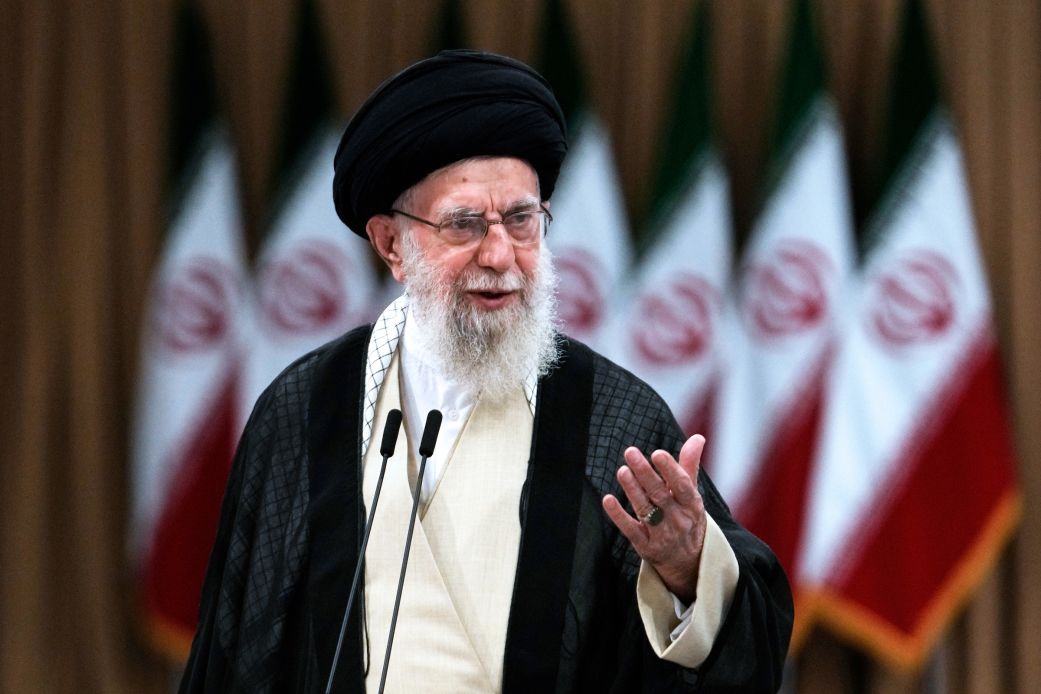
Iran now stands at a poetic — and perilous — juncture. Since the 1979 revolution, the Islamic Republic has defined itself through ideological resistance to the United States and Israel. Under Khamenei, that posture became inseparable from state identity.
Before 1979, under monarchic rule — particularly during the era of Reza Shah Pahlavi — Iran maintained pro-Western alignment and strategic ties with Israel. The revolution severed those relations and entrenched a theocratic system anchored in anti-Americanism and anti-Zionism.
Khamenei’s removal is therefore tectonic. But systemic collapse is not inevitable. The U.S. is demanding not merely the capitulation of an aging cleric but the dismantling of an entire political-religious structure.
History suggests such systems do not unravel easily.
When Ruhollah Khomeini died in 1989, the choice of Khamenei — then a relatively young cleric — surprised many. Senior figures were bypassed. Power dynamics shifted unexpectedly. Today, selecting a successor from Iran’s fractious political and theological circles will be equally complex.
Regime sustainability is not solely about leadership replacement; it is about survival instincts. And Iran is a survivalist state.
Iran’s Military Dilemma
Tehran’s immediate challenge is how to respond credibly without triggering annihilation.
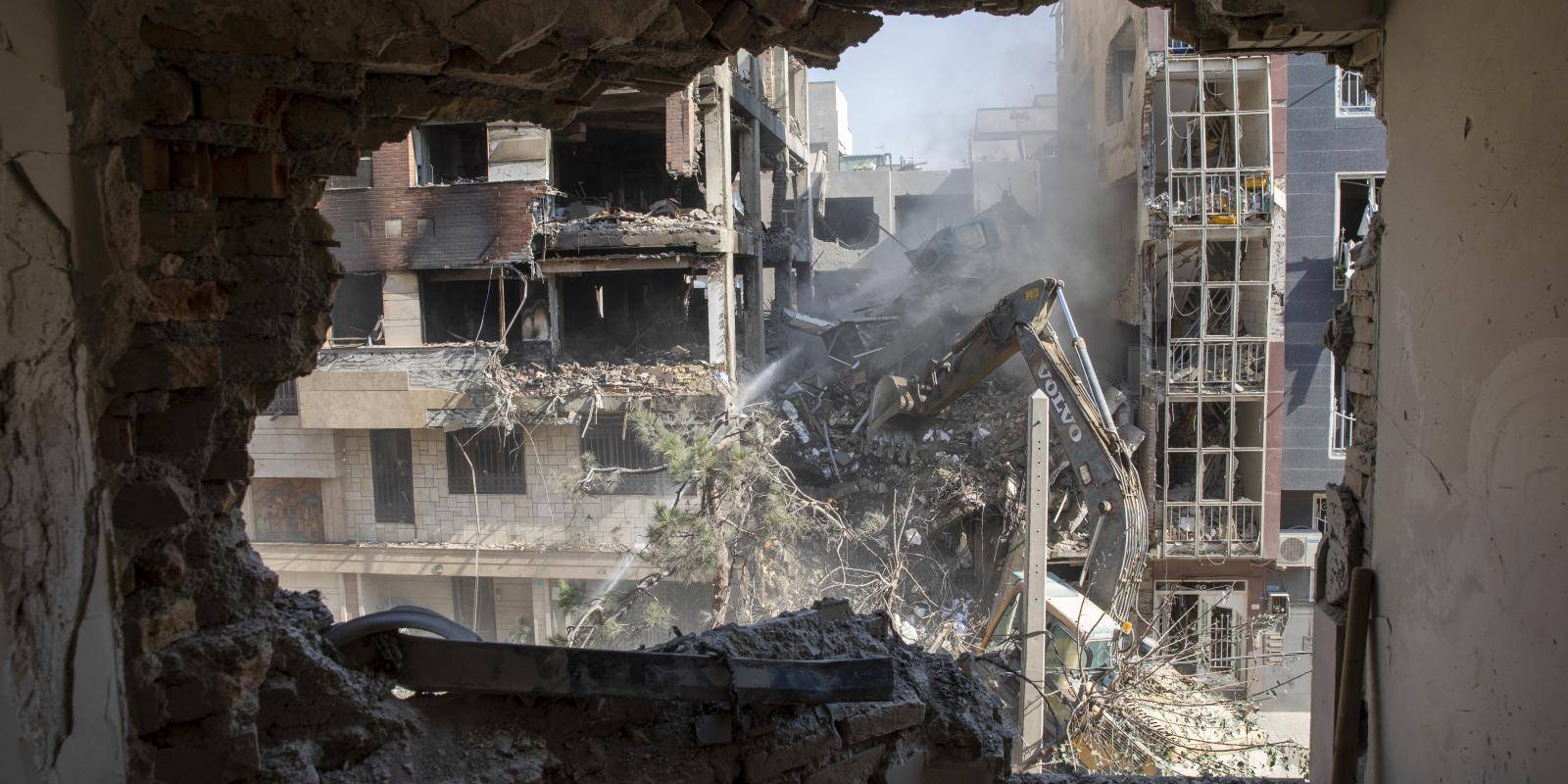
Within hours of the joint strike, Iran launched missiles and drones targeting U.S. bases and Israeli assets across the region under the banner of “Truthful Promise 4.” Blasts were reported in Gulf capitals including Dubai, Abu Dhabi, Doha, Manama, and Kuwait City. Footage showed smoke near the Burj Khalifa and damage at Dubai International Airport.
Iran’s Revolutionary Guard vowed the “most ferocious” operation in the Republic’s history, promising revenge against “occupied territories and American terrorist bases.”
Yet there is evidence of restraint — or limitation. Despite possessing a large missile stockpile, Iran appears technologically constrained in delivering precise, long-range strikes against Israel roughly 1,000 kilometers away. By targeting Gulf states, Tehran may be attempting to regionalize the conflict, heighten pressure on Washington, and entangle the U.S. in a prolonged war — something Trump has historically sought to avoid.
Still, Iran is on the back foot. Its network of proxies has been degraded over the past two years. Massive protests in January — driven by economic grievances and demands for regime change — revealed domestic fragility. The regime’s crackdown reportedly killed thousands.
If Washington perceives weakness, that perception may have emboldened the strike.
Global Reaction: A Divided World
The international response has been swift and polarized.
UN Secretary-General Antonio Guterres condemned the escalation, warning that it undermines international peace and security and risks wider regional conflict.
Russia’s ambassador to the UN, Vasily Nebenzia, condemned the strikes and warned of spillover beyond the Middle East.
Oman’s Foreign Minister Badr Albusaidi, who had been mediating nuclear talks, expressed dismay that negotiations were undermined, urging Washington not to get “sucked in further.”
Iran’s Foreign Minister Abbas Araghchi called the strikes “wholly unprovoked, illegal, and illegitimate,” accusing Trump of turning “America First into Israel First — which always means America Last.”
Saudi Arabia condemned Iran’s retaliatory missile attacks on Bahrain, the UAE, Qatar, Jordan, and Kuwait, pledging full solidarity with Gulf partners.
A joint statement by French President Emmanuel Macron, German Chancellor Friedrich Merz, and UK Prime Minister Keir Starmer urged Iran to seek a negotiated solution, emphasizing they did not participate in the strikes but remain engaged diplomatically.
EU foreign policy chief Kaja Kallas called the situation “perilous.” Brazil expressed grave concern. Australia backed U.S. efforts to prevent Iranian nuclearization. UN Human Rights Chief Volker Türk reminded all parties that civilians ultimately pay the highest price in armed conflict.
The message from much of the world is clear: de-escalate before this spirals beyond control.
The Uncertain Road Ahead
The coming days and weeks will define whether Operation Epic Fury becomes a turning point toward a transformed Iran — or the spark of a broader regional war.
The United States and Israel appear to believe that decapitating the regime will create conditions for internal revolt. But revolutions are not engineered from the sky. They require networks, leadership, legitimacy, and momentum.
At the same time, Iran’s leadership vacuum and internal fractures could produce outcomes no strategist can fully predict.
The Islamic Republic has spent decades fortifying itself against external attack. But it may prove more vulnerable to internal erosion.
The assassination of Ayatollah Khamenei is not merely a military event; it is a political gamble of extraordinary magnitude. Washington and Jerusalem have bet that pressure will fracture Tehran’s system. Tehran, cornered, may choose defiance over surrender.
What is certain is this: the Middle East has entered a timeline of the unknown.
And history will judge whether this was the moment that reshaped Iran — or the moment that ignited something far more uncontrollable.
With inputs from agencies
Image Source: Multiple agencies
© Copyright 2025. All Rights Reserved. Powered by Vygr Media.