 By
By 
The ongoing conflict involving the Iran, Israel, and the United States is rapidly expanding in scale and complexity. Reports suggest that Russia may be indirectly aiding Tehran with intelligence, while Israeli and US forces continue large-scale strikes on Iranian targets. At the same time, civilians across the Gulf are scrambling to leave the region as the war disrupts air travel and regional stability.
Russia Reportedly Sharing Intelligence With Iran
According to a report by the The Washington Post, Russia has begun providing intelligence support to Iran as the war with the US–Israel alliance intensifies. The assistance is believed to include strategic information that could help Iran target American warships and aircraft operating in the Middle East.
While the precise extent of Moscow’s support remains unclear, analysts believe Iran’s ability to track US military movements had been severely degraded after Washington and Tel Aviv launched strikes on Tehran last week. Russian intelligence capabilities—particularly its advanced satellite infrastructure—could therefore significantly enhance Tehran’s targeting capabilities.
Military analyst Dara Massicot from the Carnegie Endowment for International Peace said Iran’s recent attacks appear unusually precise.
According to Massicot, Iran has been hitting critical infrastructure such as early-warning radar systems and over-the-horizon radars. These strikes are aimed at weakening enemy command-and-control systems and disrupting battlefield coordination.
Massicot also noted that Iran possesses only a limited number of military-grade satellites and lacks a satellite constellation of its own. Russia’s advanced space capabilities therefore offer Tehran valuable support in identifying targets and tracking US assets.
Another expert, Nicole Grajewski of the Harvard Kennedy School Belfer Center, observed that Iran’s recent strikes have improved significantly compared to its 12-day war with the US and Israel last year.
Despite these assessments, the White House has downplayed Iran’s effectiveness. White House spokesperson Anna Kelly stated that the Iranian regime is facing severe losses. According to her, Iran’s ballistic missile retaliation is decreasing, its navy is being heavily damaged, and its military production capacity is being dismantled.
Drone Strike in Kuwait Kills US Troops
The escalating conflict has already caused casualties among US forces stationed in the region.
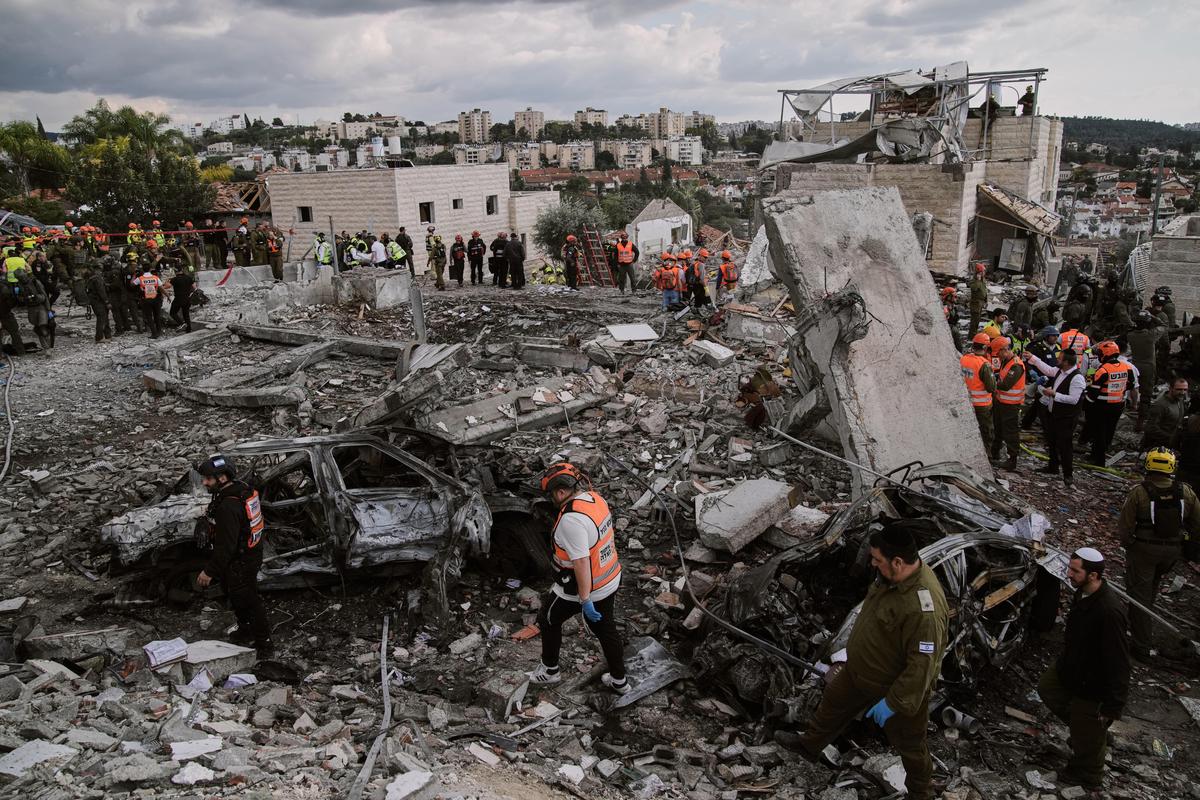
On Sunday, an Iranian drone strike hit a command centre in Port Shuaiba, Kuwait, killing six US soldiers and injuring 18 others. The drone reportedly bypassed regional air defence systems before striking the facility.
The attack highlights the growing reach of Iranian drone operations and the vulnerabilities of US bases in the Gulf.
Pentagon Downplays Role of Russia and China
Despite reports of Russian intelligence support, US Defence Secretary Pete Hegseth dismissed the idea that Russia or China are major factors in the current war.
Speaking on Wednesday, Hegseth said Washington’s focus remains solely on Iran and not on other global powers.
Russia and China have both criticized the US–Israeli strikes on Iran. Beijing has urged an immediate end to the conflict and stated that there is no clear evidence Tehran was developing nuclear weapons.
Meanwhile, the Kremlin confirmed it is maintaining dialogue with Iranian leadership but declined to disclose whether any military assistance is being provided.
The war has also unexpectedly benefited Russia economically. Demand for Russian oil and gas has increased as global energy markets react to instability in the Middle East, helping offset the impact of sanctions imposed during the Russia-Ukraine War.
Trump Demands Iran’s “Unconditional Surrender”
Amid intensifying hostilities, US President Donald Trump has issued a stark ultimatum to Tehran.
Posting on the Truth Social platform, Trump declared that the only acceptable outcome of the conflict would be Iran’s “unconditional surrender.”
The statement came as Israeli forces continued bombardments of regime targets in Tehran and Hezbollah positions in Beirut, Lebanon.
Trump also suggested that once Iran capitulates, the United States and its allies would work to rebuild the country’s economy and restore stability. He ended his message with the slogan “MAKE IRAN GREAT AGAIN (MIGA),” echoing his well-known “Make America Great Again” political brand.
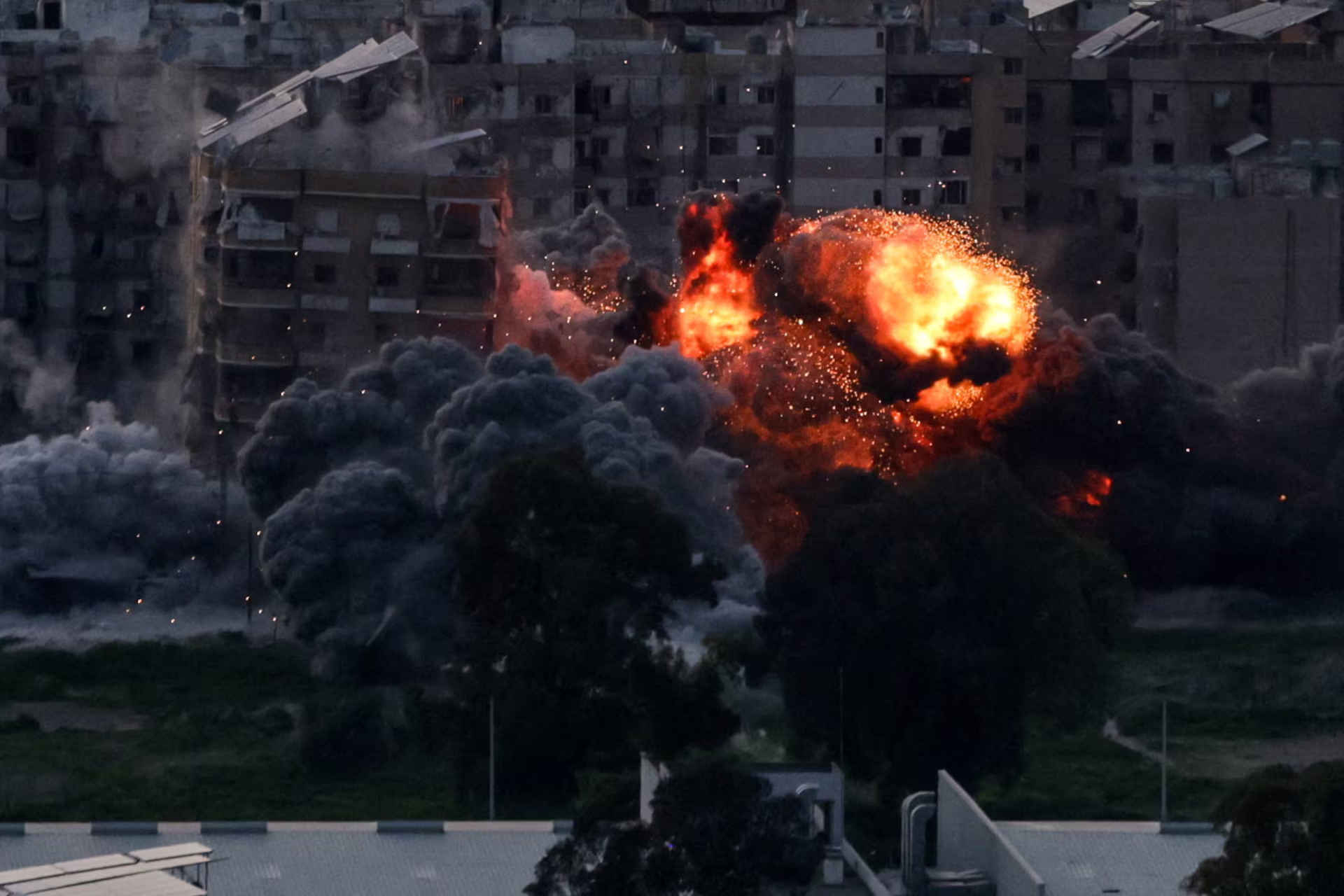
Israeli Fighter Jets Strike Tehran Leadership Bunker
In one of the most significant operations of the war, the Israeli Air Force launched a massive strike in central Tehran using approximately 50 fighter jets.
The operation targeted a vast underground bunker beneath the leadership compound of Iran’s supreme leader Ayatollah Ali Khamenei. Israeli intelligence agencies, including Mossad and the country’s military intelligence units, provided detailed targeting information.
The bunker was designed as a secure command centre where Khamenei could manage wartime operations. However, the facility was never used by him because he had already been killed earlier in joint US–Israeli strikes during Operation Roaring Lion.
According to Israeli officials, the underground complex stretched across several city blocks and contained multiple entrances, meeting rooms, and operational spaces for senior regime leaders.
The compound itself served as the central headquarters of Iran’s leadership. Israeli military officials said destroying the bunker has further weakened Iran’s command-and-control capabilities.
Death of Iran’s Supreme Leader Ali Khamenei
Iran confirmed that Ayatollah Ali Khamenei, who ruled the Islamic Republic for more than three decades, was killed in joint US–Israeli strikes. He was 86 years old.
Iranian state media announced his death on Sunday after the major attack. Earlier, President Donald Trump had publicly stated that Khamenei had been eliminated during the operation.
Khamenei assumed power in 1989 following the death of Ayatollah Ruhollah Khomeini, the revolutionary leader who had overthrown the Shah during the Iranian Revolution of 1979.
Although Khamenei lacked Khomeini’s charismatic leadership and religious authority, he successfully transformed the revolutionary system into a stable state apparatus. During his rule, he expanded the influence of the Shiite clerical establishment and significantly strengthened the Islamic Revolutionary Guard Corps.
The Revolutionary Guard evolved into Iran’s most powerful institution, controlling the country’s ballistic missile program and holding major stakes across key sectors of the Iranian economy.
Iranian state media also reported that several members of Khamenei’s family—including his daughter, son-in-law, a grandchild, and a daughter-in-law—were killed in the same attack.
In response, the Iranian government declared 40 days of national mourning and announced a seven-day nationwide public holiday.
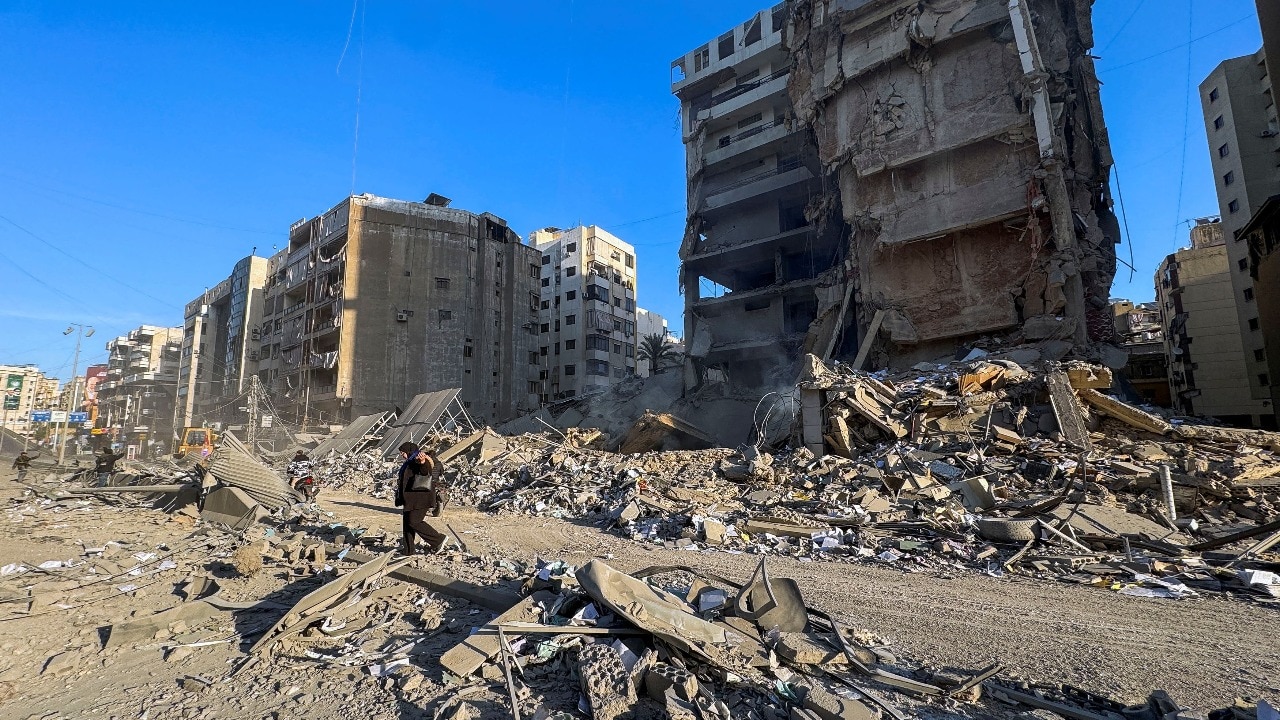
Fresh Wave of Military Strikes Across the Region
On Friday morning, Israel announced a new wave of large-scale attacks on Iranian military targets.
Witnesses reported powerful explosions across Tehran as well as around missile bases near Kermanshah. Israeli officials claim that most of Iran’s air defence systems and missile launchers have already been destroyed.
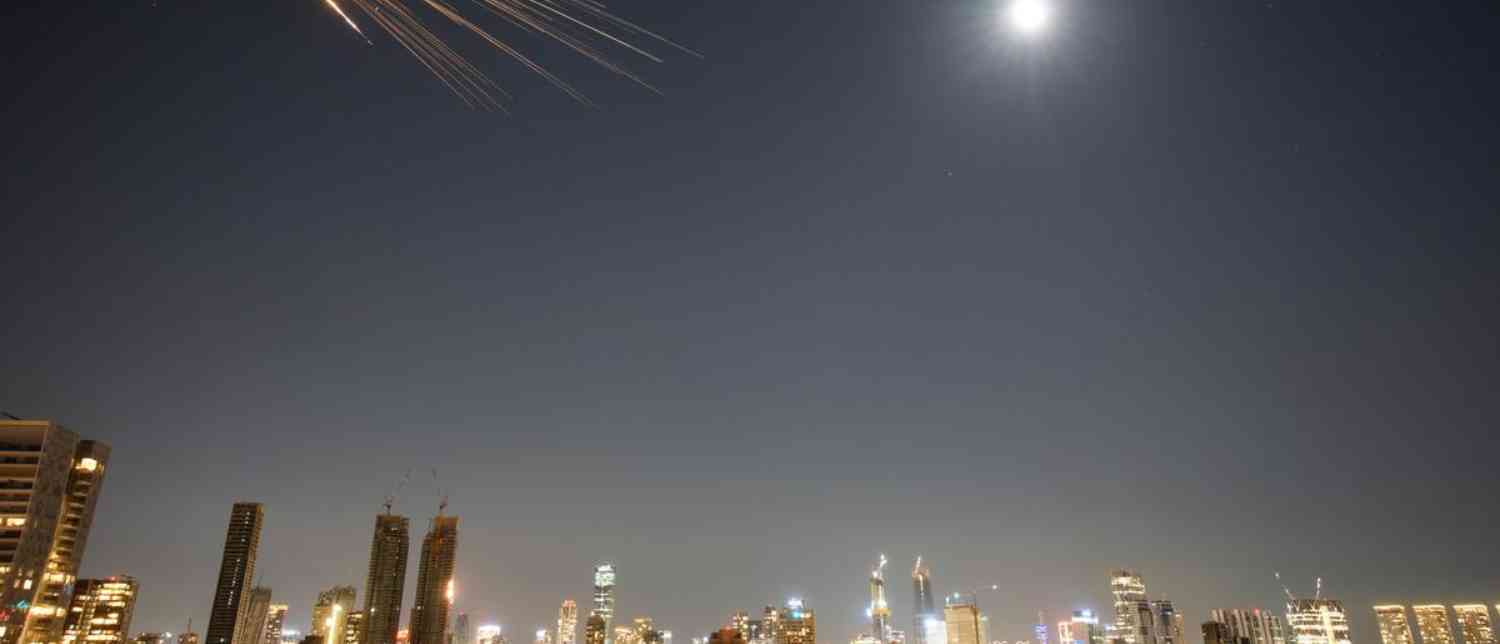
Iran retaliated by launching missiles and drones toward Qatar, Saudi Arabia, Bahrain, and Kuwait—countries hosting US military bases. No immediate casualties were reported from these attacks.
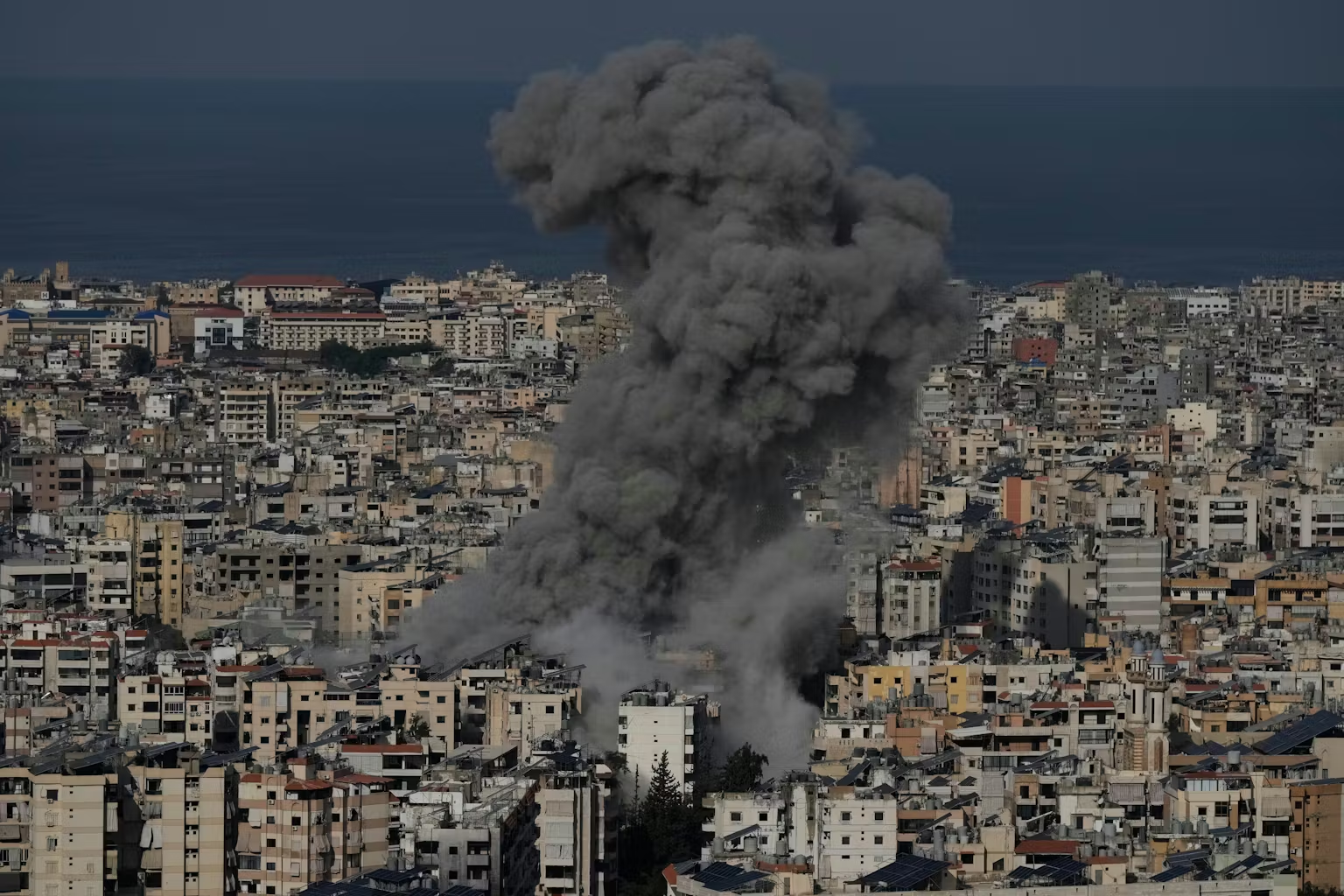
In Lebanon, Israeli airstrikes targeted the southern suburbs of Beirut, triggering a wave of civilian displacement as residents fled the bombardment.
Overall, the war has caused significant casualties. Officials report at least 1,230 deaths in Iran, more than 120 in Lebanon, around a dozen in Israel, and six US troops killed.
Major Naval and Air Combat Operations
The conflict has also extended to naval warfare.
US forces struck the Iranian drone carrier IRIS Shahid Bagheri, a converted container ship equipped with a 180-meter runway designed to launch drones. The vessel reportedly caught fire following the attack.
Earlier, a US submarine sank an Iranian frigate near Sri Lanka while the vessel was returning from a naval exercise hosted by India, in which the United States also participated. Sri Lankan authorities rescued 32 crew members and recovered 87 bodies from the incident.
Meanwhile, US B-2 Spirit stealth bomber aircraft deployed dozens of 2,000-pound bunker-penetrating bombs against deeply buried Iranian ballistic missile launchers.
In another defensive action, Qatari forces intercepted a drone aimed at Al Udeid Air Base, one of the largest US military installations in the Middle East.
Private Jets Become Costly Escape Route From the Gulf
As the war intensifies and regional airspace restrictions disrupt commercial aviation, thousands of residents are scrambling to leave the Gulf.
Entrepreneur Samuel Lait, who launched pet-focused aviation startup PetX Jets in Dubai, originally planned to provide private travel services for pet owners between the United Kingdom and Dubai.
However, after the conflict escalated, the company began receiving a flood of emergency travel requests from individuals seeking to flee the region—including young adults, elderly travelers, and pregnant couples.
Commercial flights from major Gulf airports are operating at only a fraction of normal capacity due to airspace closures. As a result, many travellers are attempting to cross land borders into Oman or Saudi Arabia and depart from airports there.
Private jet broker Jet-VIP, led by CEO Altay Kula, reported a surge in demand for charter flights.
According to Kula, requests are arriving every 10 to 20 minutes as travellers seek ways to exit the Middle East—particularly from Dubai and Qatar.
However, the sudden demand has caused charter prices to skyrocket. Flights that previously cost $50,000 for a six-passenger light jet between Dubai and Istanbul now cost around $100,000. Larger jets that once cost $110,000 are now priced near $200,000.
Another challenge is limited airport slots. High traffic at Muscat and Riyadh has made it difficult for charter companies to secure landing permissions. In some cases, it takes up to 24 hours just to obtain authorization to fly into Oman to pick up passengers.
For now, companies like PetX Jets are monitoring the situation and hoping airspace around Dubai will soon reopen and prices return to normal levels.
A Conflict With Global Consequences
The US–Israel–Iran war is no longer confined to isolated strikes. It now involves major military operations, regional missile attacks, intelligence cooperation among global powers, and significant economic and humanitarian consequences.
From Russia’s alleged intelligence support to Iran and the assassination of Iran’s supreme leader, to civilian evacuations and soaring private jet prices, the conflict continues to reshape geopolitics in the Middle East—and potentially beyond.
With inputs from agencies
Image Source: Multiple agencies
© Copyright 2025. All Rights Reserved. Powered by Vygr Media.