 By
By 
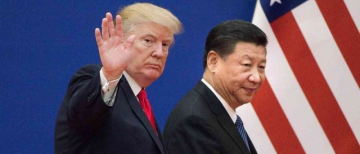
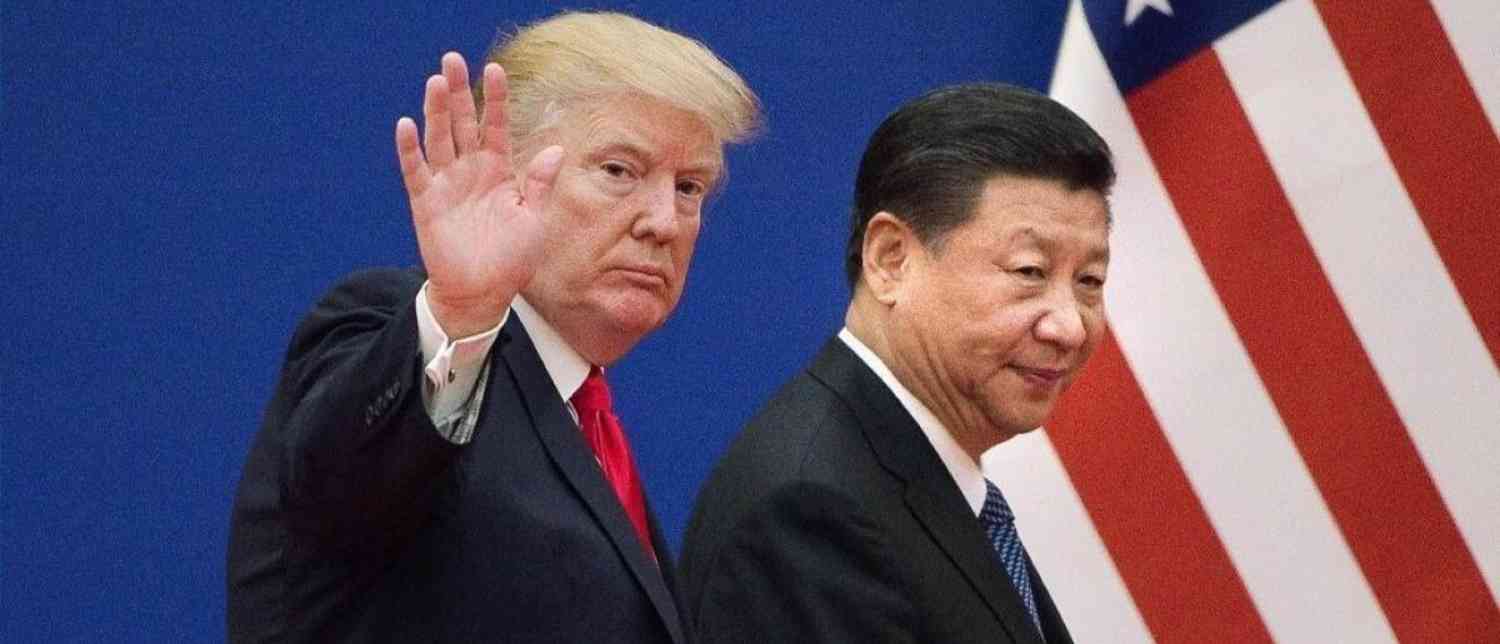
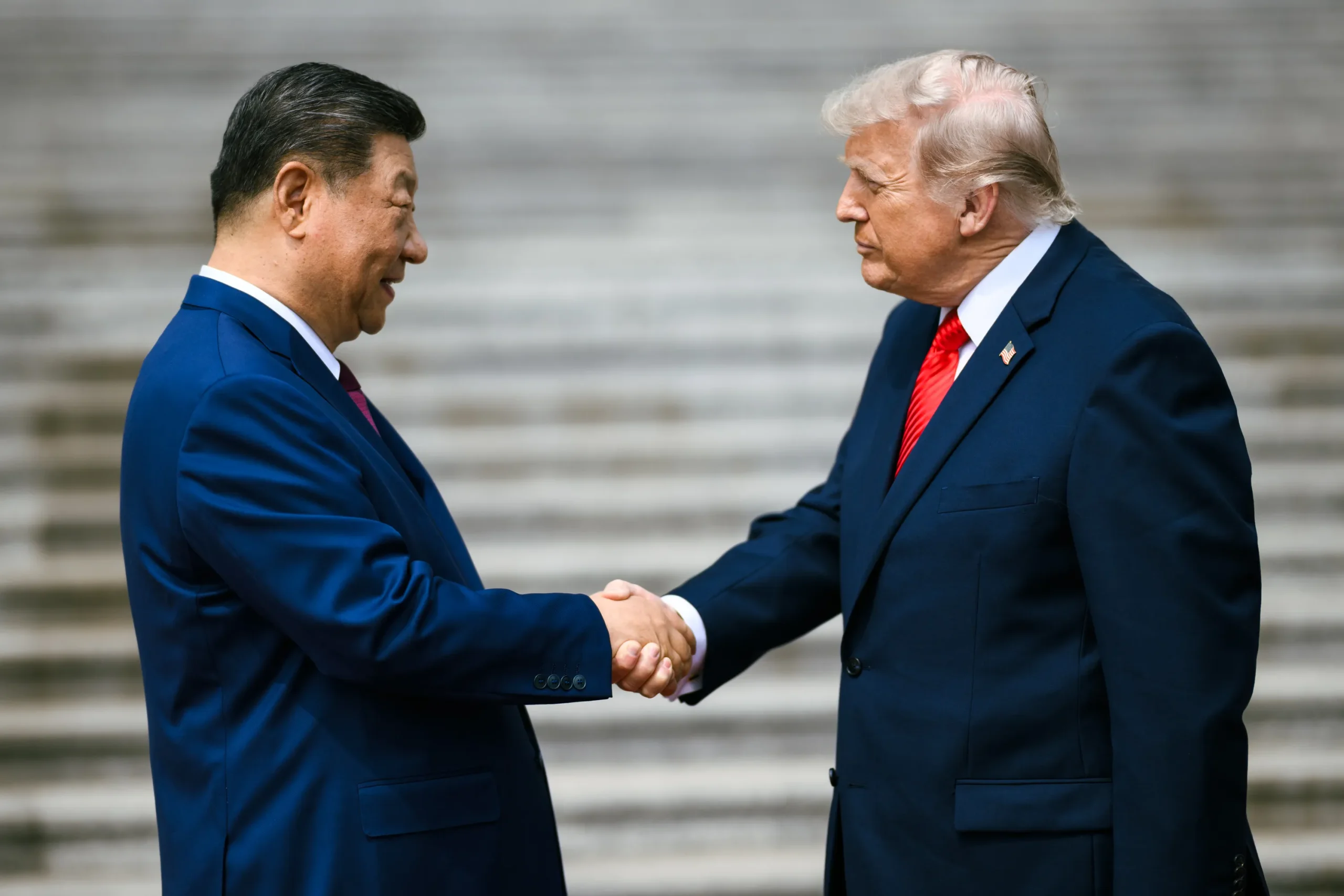
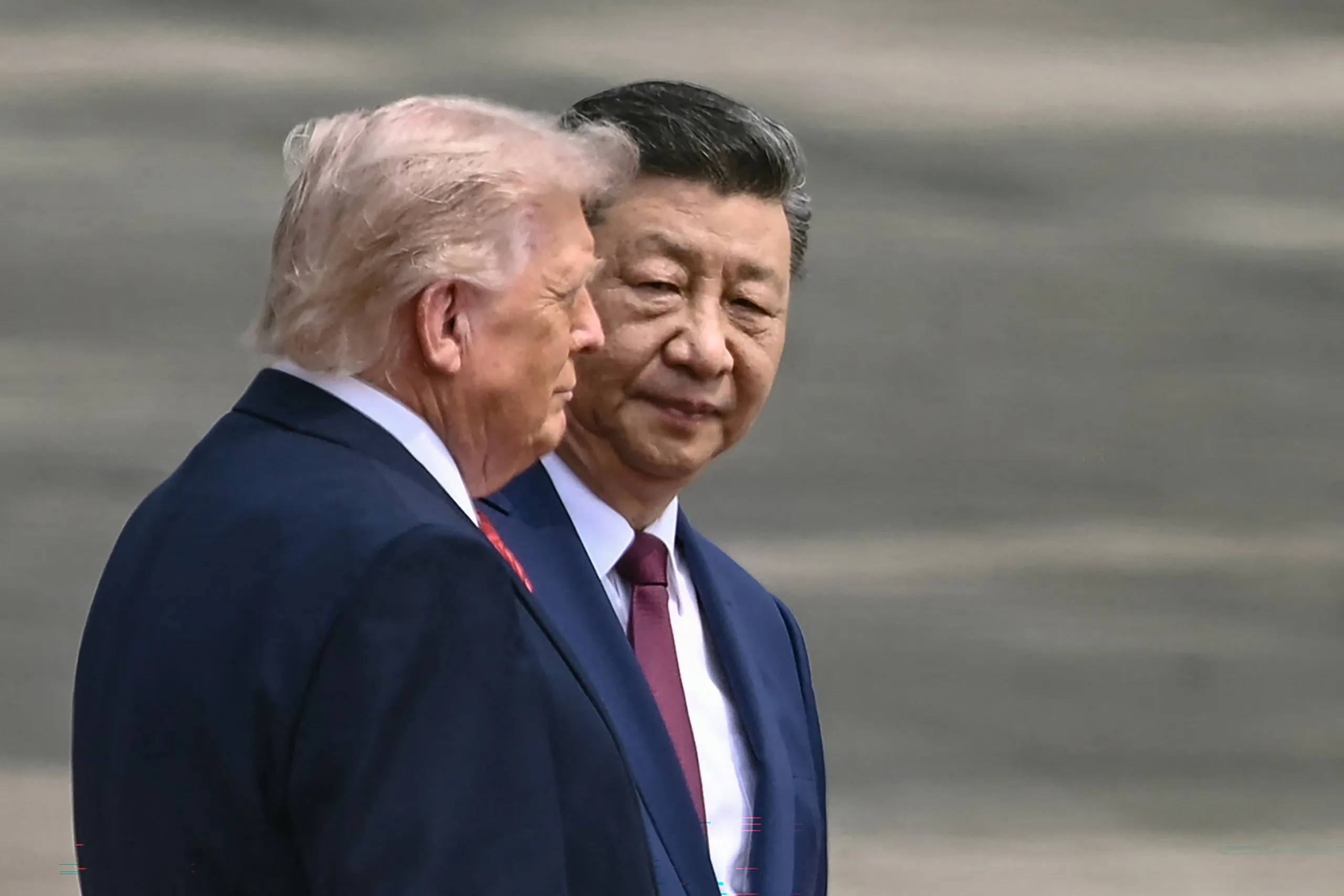
Washington: US President Donald Trump and Chinese President Xi Jinping are preparing for a closely watched meeting in Washington this week, with trade, artificial intelligence, critical minerals, Taiwan and the wider geopolitical contest between the world's two largest economies expected to dominate the agenda.
Xi's visit, beginning September 23, will mark his first trip to Washington in a decade and the third meeting between the two leaders since Trump returned to the White House. Yet despite the high-profile setting, expectations of a sweeping US-China breakthrough remain limited. The immediate objective appears to be preventing the relationship from deteriorating while finding areas where Washington and Beijing can make narrowly defined deals.
For India, however, the significance of the Trump-Xi summit goes well beyond the US-China relationship. Any improvement in ties between Washington and Beijing could affect India's position in global supply chains, technology partnerships, critical-mineral markets and the broader Indo-Pacific strategic balance.
At the same time, a failure to reach an understanding could produce a different set of consequences, potentially increasing Washington's reliance on partners such as India while also creating fresh economic and diplomatic pressures.
Trump-Xi summit: Why trade remains at the centre
Trade is likely to be the most immediate issue confronting Trump and Xi.
The two countries have spent the past year attempting to step back from a tariff confrontation that had pushed duties to extremely high levels and threatened to disrupt global supply chains. A trade truce reached in 2025 reduced some of the immediate pressure, but the underlying disagreements have not disappeared.
Washington wants greater access for American products in China, a reduction in trade imbalances and implementation of commitments made during earlier negotiations. Beijing, meanwhile, is seeking greater certainty for Chinese exporters and relief from tariffs and other restrictions imposed by Washington.
The two sides are also discussing tariff reductions covering non-strategic goods. Recent negotiations have explored a framework involving products worth roughly $30 billion from each side, while China has previously committed to increasing purchases of American agricultural products and buying more aircraft from US manufacturers.
But the relationship remains complicated by additional US tariff measures.
Following a US Supreme Court decision striking down tariffs imposed under a national-emergency law, the Trump administration has sought alternative legal routes to maintain or introduce duties. Washington has also announced a 12.5 per cent tariff on imports from several trading partners, including China, over allegations involving forced labour, while considering another 7.5 per cent tariff linked to concerns about China's industrial overcapacity.
That leaves both presidents with an incentive to prevent another escalation.
For businesses, even a limited extension of the trade détente could provide greater predictability. For consumers and manufacturers, stable tariffs and supply chains could reduce the risk of another round of sudden price increases and disruptions.
Rare earths give China an important bargaining position
Trade is not just about tariffs.
Critical minerals and rare earth elements have emerged as one of the most strategically important parts of the US-China relationship. These materials are essential to industries ranging from electric vehicles and electronics to advanced weapons systems and other defence technologies.
China has a dominant position in the processing and refining of several rare earth materials and has previously used export controls as a source of economic leverage. During last year's tensions, restrictions on critical minerals added another layer of pressure to already strained supply chains.
Washington therefore wants greater reliability in the flow of these materials, while Beijing has an interest in retaining leverage over an area in which the US remains dependent on Chinese processing capacity.
The timing is particularly significant because China's suspension of broader rare-earth export controls is due to expire in November. That gives Beijing an important negotiating tool as the two sides discuss the future of their wider trade arrangement.
The issue matters to India because New Delhi has been trying to position itself as an alternative destination for manufacturing and supply-chain diversification.
What a US-China deal could mean for India
India has benefited from the global effort to reduce dependence on China.
The "China-plus-one" strategy has encouraged multinational companies to look for additional manufacturing locations, particularly in sectors such as electronics, semiconductors, pharmaceuticals and other advanced industries.
A prolonged US-China confrontation could accelerate that trend.
But if Washington and Beijing reach arrangements that make Chinese exports, minerals and technology supply chains more predictable, some of the urgency behind diversification could diminish.
That does not mean India's manufacturing opportunity would disappear. India still offers a large domestic market, a substantial workforce and a strategic location in the Indo-Pacific. Its growing relationship with the US also extends beyond economics into defence, technology and regional security.
However, the immediate strategic value of being an alternative to China could change if Washington becomes more comfortable sourcing certain products or materials through Chinese channels.
This is one of the central questions India will be watching as Trump and Xi sit down in Washington: Will the US continue to see India as an essential alternative to China, or will greater Chinese cooperation reduce the urgency of that partnership in some areas?
The answer may vary from sector to sector.
AI becomes the new front line
If tariffs represent the old battlefield of US-China competition, artificial intelligence is rapidly becoming the new one.
Both Washington and Beijing view advanced AI as strategically important to economic growth, technological leadership and national security. Neither side appears willing to abandon the race for technological supremacy.
The United States has continued restricting China's access to some of the most advanced AI chips and semiconductor technologies. Washington has also raised concerns over Chinese companies allegedly using American AI models to obtain capabilities through techniques such as model distillation.
Beijing has rejected the broader US approach and accused Washington of attempting to restrict China's technological development.
At the same time, there is an emerging area of cooperation.
US Treasury Secretary Scott Bessent recently said Washington had proposed a mechanism under which the two countries could notify each other about major AI-related incidents with potential national-security implications. The proposal reflects growing recognition that competition between the two leading AI powers could create risks that neither country can manage entirely on its own.
The idea does not mean the AI rivalry is ending.
Instead, the two countries appear to be exploring whether certain guardrails can coexist with continued technological competition. The US wants to protect its lead while preventing dangerous AI capabilities from falling into the hands of hostile non-state actors. China, meanwhile, wants to expand its technological capabilities without accepting restrictions that it views as attempts to contain its rise.
That makes AI one of the most complicated parts of the Trump-Xi discussions.
Why AI matters to India
For India, the AI negotiations have an important economic dimension.
India has been expanding its technology relationship with the United States while simultaneously attempting to develop its own artificial-intelligence ecosystem. Access to advanced computing, chips, cloud infrastructure and global technology partnerships will be important to that effort.
If Washington and Beijing create a framework for managing their AI rivalry without substantially loosening restrictions on advanced technologies, India could continue to occupy an important position in the broader technology ecosystem.
But if the two countries begin managing their technology competition through bilateral arrangements, India will have to demonstrate that it can contribute something beyond simply being an alternative to China.
That means strengthening domestic semiconductor capacity, computing infrastructure, AI research, skilled talent and technology manufacturing.
The US-China AI competition therefore presents India with both an opportunity and a challenge.
Taiwan remains the biggest strategic fault line
Even if Trump and Xi make progress on trade and AI, Taiwan remains a fundamentally difficult issue.
China considers Taiwan part of its territory and strongly opposes American arms sales to the island. The United States, meanwhile, has longstanding commitments under its domestic law to support Taiwan's ability to defend itself.
The Trump administration has previously described arms sales to Taiwan in transactional terms, adding uncertainty to one of the most sensitive areas of US-China relations.
A major US weapons package for Taiwan remains an important point of contention, with Beijing expected to press Washington to delay or reconsider further military support.
The Taiwan question also has wider implications for the Indo-Pacific.
Any deterioration in US-China relations over Taiwan could increase military tensions across East Asia and affect regional trade and security calculations. Conversely, any temporary accommodation could reduce immediate tensions without resolving the fundamental disagreement.
This is why an improvement in US-China relations should not necessarily be interpreted as an end to strategic rivalry.
The two countries can cooperate on trade while competing on technology. They can maintain dialogue while strengthening military capabilities. They can negotiate over specific issues while continuing to disagree over Taiwan.
That pattern increasingly defines the relationship.
Iran adds another layer to the summit
The US-China meeting is also taking place against the backdrop of the conflict involving Iran.
Washington has been attempting to increase economic pressure on Tehran, while China remains a major economic partner of Iran and an important buyer of Iranian oil.
Trump has sought Chinese cooperation in reducing Iran's economic lifelines. Beijing, however, has maintained that it has the right to conduct normal economic relations with Tehran.
China's position gives Xi potential leverage in discussions over the conflict, but it also creates a difficult negotiating equation. Any Chinese role in encouraging de-escalation would have to be balanced against Beijing's own economic and strategic interests in Iran.
For India, developments involving Iran are particularly important.
India's interests include energy security, connectivity and access to the Gulf region. The security of shipping routes, particularly around the Strait of Hormuz, has direct consequences for India's energy supplies and broader economic stability.
The Chabahar port project also gives India a long-term strategic interest in maintaining connectivity with Iran and Central Asia.
Consequently, any Trump-Xi discussion involving Tehran could have repercussions well beyond Washington and Beijing.
What happens if Trump and Xi reach a deal?
A successful summit does not necessarily mean the end of US-China rivalry.
Instead, the most realistic outcome could be a framework for managing competition.
Washington could seek greater predictability in trade, improved access to critical minerals and Chinese cooperation on selected geopolitical issues. Beijing could seek tariff relief, greater certainty for its exporters and reduced pressure on Chinese companies and technology.
Such an arrangement could provide temporary stability to global markets.
For India, the implications would be mixed.
Lower US-China tensions could reduce uncertainty in global trade and supply chains. But greater Chinese cooperation with Washington could also reduce the immediate strategic value of some Indian capabilities, particularly where India is being considered as an alternative to China.
India's geography, market, defence capabilities and role in the Indo-Pacific would continue to matter. But strategic importance is not static. It depends partly on what each major power needs at a particular moment.
What if the summit produces little?
A limited agreement would preserve the current pattern: cooperation in selected areas alongside intense competition in others.
For India, that could keep opportunities open in manufacturing, technology, defence and supply-chain diversification.
The United States would continue looking for alternatives to China in sensitive sectors, while India would retain room to deepen partnerships with Washington, Europe, Japan and other economies.
But India would also have to manage the risks of remaining caught between competing major powers.
The possibility of a failed or acrimonious summit creates another scenario.
If Trump fails to obtain meaningful concessions from Xi, US-China tensions could intensify. That could increase American interest in alternative suppliers, technology partners and security relationships in the Indo-Pacific.
Yet greater Chinese resistance would not automatically translate into a softer US approach towards India.
Washington could simultaneously view India as more strategically important and demand greater concessions from New Delhi on trade, market access, technology or other issues.
That is the transactional dimension of the current relationship that India cannot ignore.
The larger message for New Delhi
The Trump-Xi summit is therefore not simply about whether the two leaders announce a trade agreement.
For India, the bigger question is how the United States and China choose to manage their competition.
If Washington and Beijing move towards selective cooperation, India will need to ensure that its economic and technological capabilities remain valuable even when China is willing to cooperate with the US.
If tensions rise again, India could gain greater strategic relevance as Washington seeks alternative supply chains and partners.
Either way, the summit underlines the importance of India's ability to pursue multiple relationships simultaneously.
New Delhi has long maintained ties with the US, Russia, Europe, Japan, Israel, Gulf countries and other major powers while managing a difficult relationship with China. The evolving US-China relationship makes that flexibility even more important.
The Trump-Xi meeting may not produce a historic reset. But it could reveal something equally consequential: how far Washington and Beijing are prepared to compartmentalise their rivalry.
They may compete in artificial intelligence, negotiate tariffs, cooperate selectively on Iran, argue over Taiwan and still maintain a functioning diplomatic relationship.
For India, that is the reality to prepare for.
The outcome of the summit will matter, but the longer-term lesson may matter even more. India's influence in a rapidly changing global order will depend less on being chosen over China and more on building economic, technological, military and diplomatic capabilities that remain valuable regardless of how Washington and Beijing choose to deal with each other.
With input from agencies
Image Source: Multiple agencies
© Copyright 2026. All Rights Reserved. Powered by Vygr Media.