
 By
By 
As US President Donald Trump struggles to broker peace between Russia and Ukraine, a controversial and unconventional idea is quietly gaining traction in Washington’s policy circles: the creation of a new global power forum known as the “Core Five” or “C5.” The proposed grouping—reportedly consisting of the United States, China, Russia, India, and Japan—would represent a dramatic departure from long-standing Western alliances such as the G7 and could fundamentally reshape global diplomacy.
According to a report by POLITICO, the concept of a C5 has surfaced amid growing dissatisfaction within the Trump administration about the effectiveness of existing global institutions in addressing today’s multipolar world. Though the White House has officially denied the existence of any such proposal, national security experts say the idea fits squarely within Trump’s worldview and governing style.

A Radical Alternative to the G7
Unlike the G7, which is largely composed of wealthy Western democracies and includes key European nations, the proposed C5 notably excludes Europe altogether. Instead, it brings together the world’s most powerful states by population size, military capacity, and geopolitical influence—regardless of ideology or governance model.
The reported aim of the grouping is to create a pragmatic, hard-power forum focused on deal-making rather than shared democratic values. The strategy reportedly envisions regular C5 summits, similar to G7 meetings, centered on major global challenges. According to the POLITICO report, the first issue proposed for the C5 agenda would be Middle East security, with particular emphasis on normalising relations between Israel and Saudi Arabia.
The idea reportedly appeared in a longer, unpublished draft of the National Security Strategy released by the White House last week, though the existence of this extended document remains unverified.
White House Denial, Expert Speculation
The White House has firmly rejected claims that such a document exists. Spokesperson Anna Kelly told NatSec Daily that “no alternative, private, or classified version exists” beyond the official 33-page National Security Strategy.
Despite the denial, the idea has sparked intense debate among foreign policy experts. Many argue that the C5 proposal reflects President Trump’s longstanding skepticism toward multilateral institutions like the United Nations and the G-structures.
A former White House official from Trump’s first administration, speaking anonymously to POLITICO, said the idea itself was not surprising. While confirming that no specific discussions about a C5 or C7 took place during their tenure, the official acknowledged broader internal conversations questioning whether existing global bodies were still “fit for purpose” given the rise of new power centers.
A “Trumpian” Worldview
Analysts say the C5 proposal aligns closely with Trump’s non-ideological approach to foreign policy. Torrey Taussig, who served as director for European affairs on the National Security Council during the Biden administration, described the concept as consistent with Trump’s affinity for strong leaders and his preference for working directly with major powers that exert influence within defined regional spheres.
“This aligns with how we know President Trump to view the world,” Taussig said, noting that Trump tends to prioritize power and pragmatism over shared values. She also highlighted the conspicuous absence of Europe from the proposed grouping, suggesting it could signal that the Trump administration views Russia as the dominant power capable of exerting its own influence over the European continent.
Such a perception, Taussig warned, would likely alarm European allies already uneasy about Washington’s shifting tone toward Moscow.

A Sharp Turn on China Policy
The idea of including China in a new elite power bloc also represents a significant departure from Trump’s earlier stance. Michael Sobolik, a former aide to Republican Senator Ted Cruz during Trump’s first term, described the C5 concept as a reversal of the administration’s previous framing of US-China relations.
“The first Trump administration bought into the framework of great power competition,” Sobolik explained. “That was how we talked about China. This is just a huge departure.”
That departure has not gone unnoticed on Capitol Hill, where lawmakers from both parties are increasingly concerned about signals that Washington may be softening its approach toward Beijing.
The ‘G2’ Controversy and Congressional Pushback
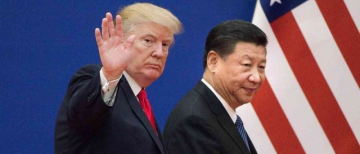
Those concerns intensified after Defense Secretary Pete Hegseth referenced a historic “G2” meeting between Trump and Chinese President Xi Jinping in November—a term implying a dual leadership of global affairs by the US and China.
Representative Raja Krishnamoorthi of Illinois, the ranking Democrat on the House Select Committee on China, wrote to Hegseth expressing “profound concern.” In his letter, Krishnamoorthi warned that characterising US-China relations as a “G2” risked fundamentally misreading America’s foremost strategic adversary and could dangerously undermine Pentagon preparations to deter conflict in the Indo-Pacific.
Shifting National Security Doctrine
The debate over the C5 comes against the backdrop of broader changes in US foreign policy doctrine under Trump. On December 7, the United States released an updated 29-page National Security Strategy that notably lifted Russia’s designation as a “direct threat.”
The document described Trump’s foreign policy approach as one of “flexible realism,” emphasizing that US strategy would now be guided primarily by what “works for America.”
“The strategy is motivated above all by what works for America—or, in two words, ‘America First,’” the document stated.
While the administration maintained sanctions on Russia over its actions in Ukraine, Trump has repeatedly spoken positively about Russian President Vladimir Putin. Critics argue this rhetoric risks weakening Western resolve at a time when European allies remain heavily dependent on US military support to deter Russian aggression.
European Allies on Edge
Europe’s exclusion from the proposed C5 has heightened anxiety among US allies, many of whom already fear a weakening of NATO cohesion. Analysts warn that elevating Russia to a peer position alongside the US and China could legitimize authoritarian leadership styles and undermine decades of transatlantic cooperation.
Allied nations view the move as potentially sidelining democratic values in favor of transactional diplomacy and fear it could erode Western unity at a critical geopolitical moment.
India’s Central Role—and Trump’s Change in Tone
India’s inclusion in the C5 is particularly noteworthy given Trump’s recent rhetoric. Just months ago, the former president publicly suggested that the US had “lost India and Russia” to China, even posting an image of Prime Minister Narendra Modi alongside Presidents Vladimir Putin and Xi Jinping with a pointed caption implying strategic alignment with Beijing.
Yet recent developments suggest a thaw. India and the United States are actively working to finalize a bilateral trade deal, and tariff tensions between the two countries appear to be easing, albeit slowly.
Earlier this week, Prime Minister Modi and Trump held a telephone conversation during which they reviewed progress in bilateral relations and discussed regional and international developments.
“Had very warm and engaging conversation with President Trump,” Modi wrote on X. “We reviewed progress in our bilateral relations and discussed regional and international developments. India and the US will continue to work together for global peace, stability and prosperity.”
No Confirmation—But Growing Buzz
Despite the mounting speculation, there has been no official confirmation from the White House regarding plans to establish a Core Five grouping. The idea remains unverified, contested, and politically sensitive.
Still, the very fact that such a proposal is being seriously debated underscores how dramatically Trump’s return to power could reshape the global order. By questioning the relevance of long-standing institutions like the G7, G20, and even the UN Security Council, the administration appears willing to reimagine global governance around power, population, and influence rather than ideology.
Whether the C5 ever materializes or not, the discussion itself signals a potential pivot away from the post-World War II international framework—and toward a more transactional, strongman-driven world order.
For allies and adversaries alike, that possibility alone is enough to send ripples across capitals worldwide.
With inputs from agencies
Image Source: Multiple agencies
© Copyright 2025. All Rights Reserved. Powered by Vygr Media.