
 By

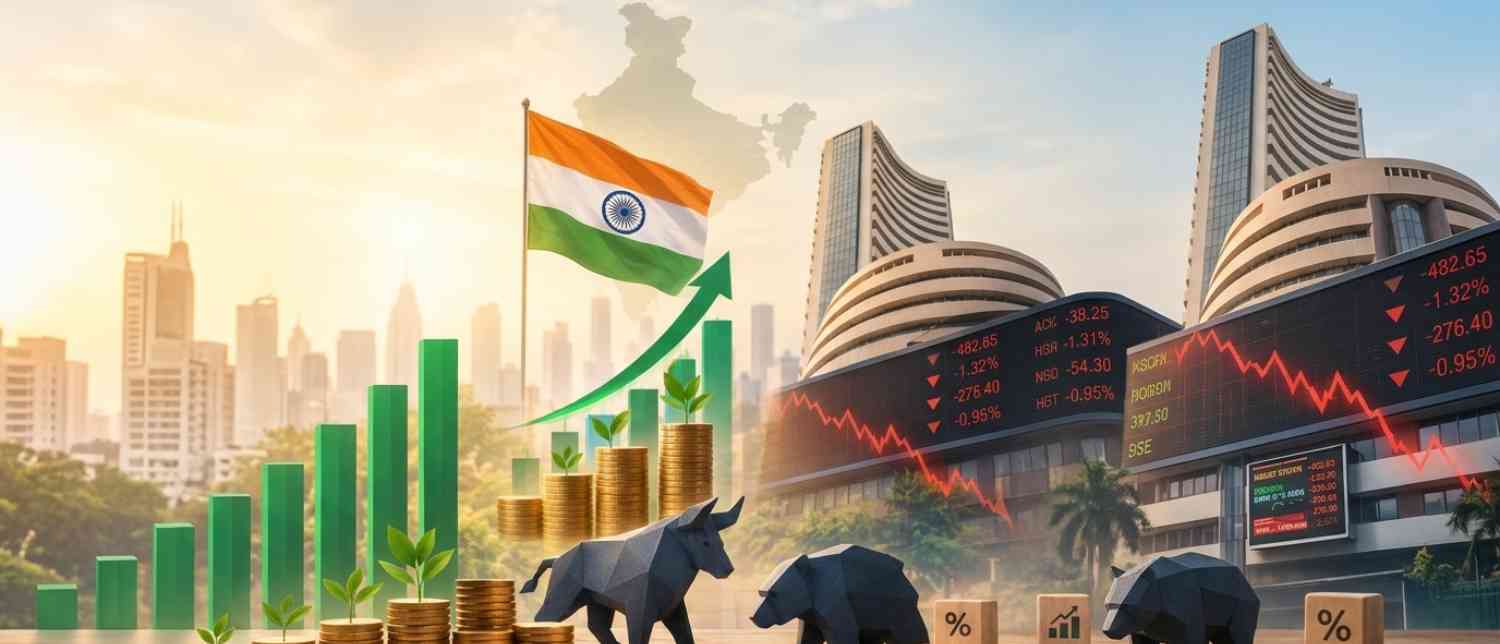
India has spent years building its reputation as one of the world's most promising economic growth stories. A rapidly expanding economy, a growing consumer base, improving infrastructure and rising domestic investment have strengthened the country's position on the global stage. Yet, there is an increasingly uncomfortable question confronting investors: if India's economy is growing so impressively, why is its stock market struggling to deliver equally impressive returns?
The contradiction has become difficult to ignore in 2026. While India's GDP growth remains above 7%, its equity market has emerged as one of the weaker performers among major global markets. The Sensex and Nifty have endured prolonged periods of weakness, foreign investors have continued withdrawing capital, and domestic investors have found themselves questioning the value of staying invested.
This is not simply another market correction or a temporary bout of pessimism. It reflects a combination of structural weaknesses, expensive valuations, unfavourable currency movements, taxation concerns and changing global investment preferences.
More importantly, it raises a fundamental issue about India's investment proposition: a country can be economically successful without necessarily being an attractive stock market investment at every price.
That distinction deserves far greater attention than it currently receives.
India's Economic Growth Story and Its Stock Market Performance Are Two Different Things
One of the biggest misconceptions among retail investors is that a rapidly growing economy automatically produces superior stock market returns.
The relationship, however, is far more complicated.
GDP growth measures the expansion of economic activity across a country. Stock market returns, on the other hand, depend on corporate earnings, profitability, valuations, investor expectations, capital efficiency and the price investors pay to participate in future growth.
A country may experience strong economic expansion while its listed companies struggle to generate sufficient earnings growth. Even when businesses perform well, investors can earn disappointing returns if they purchase shares at excessively high valuations.
India's recent experience illustrates this disconnect.
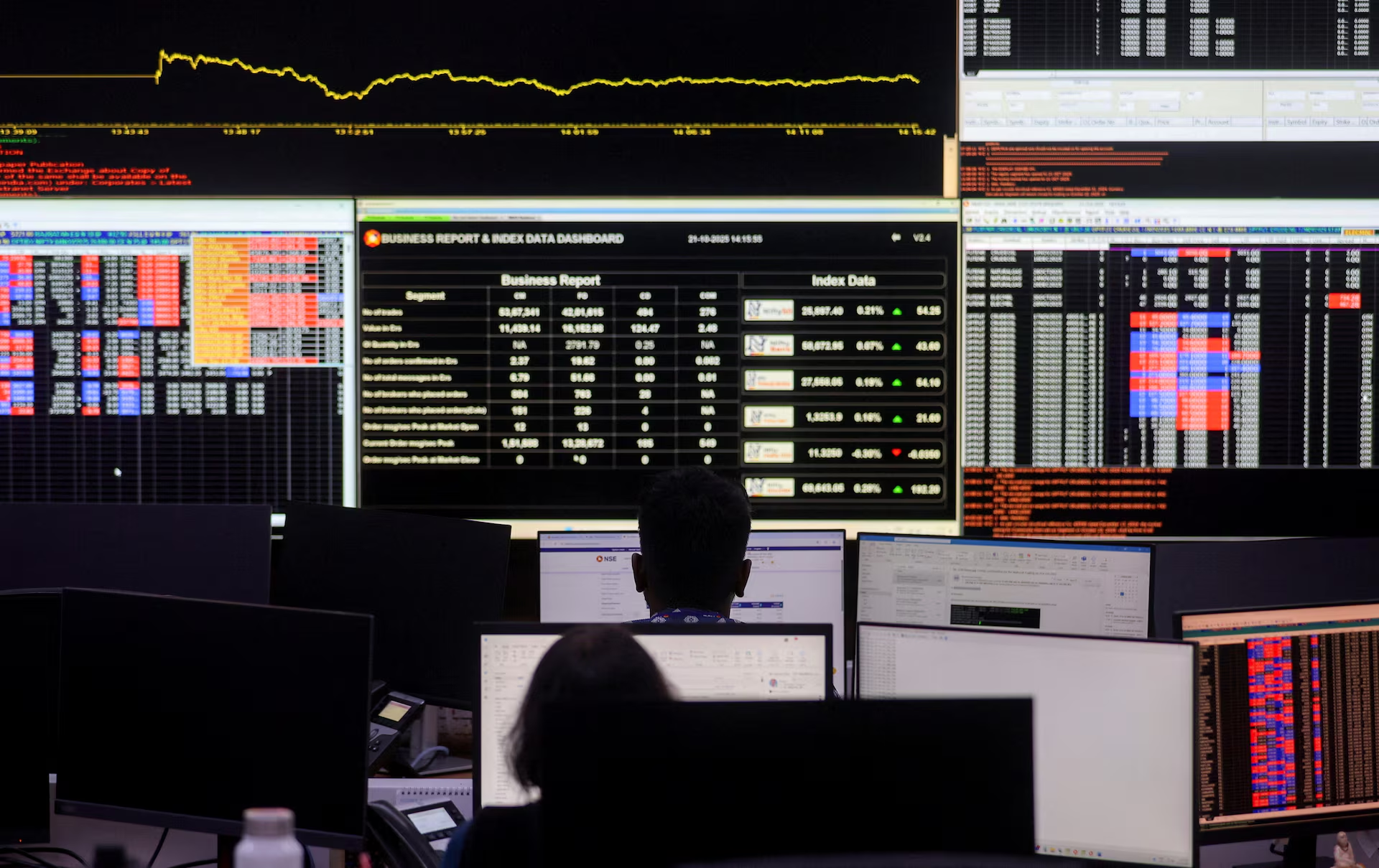
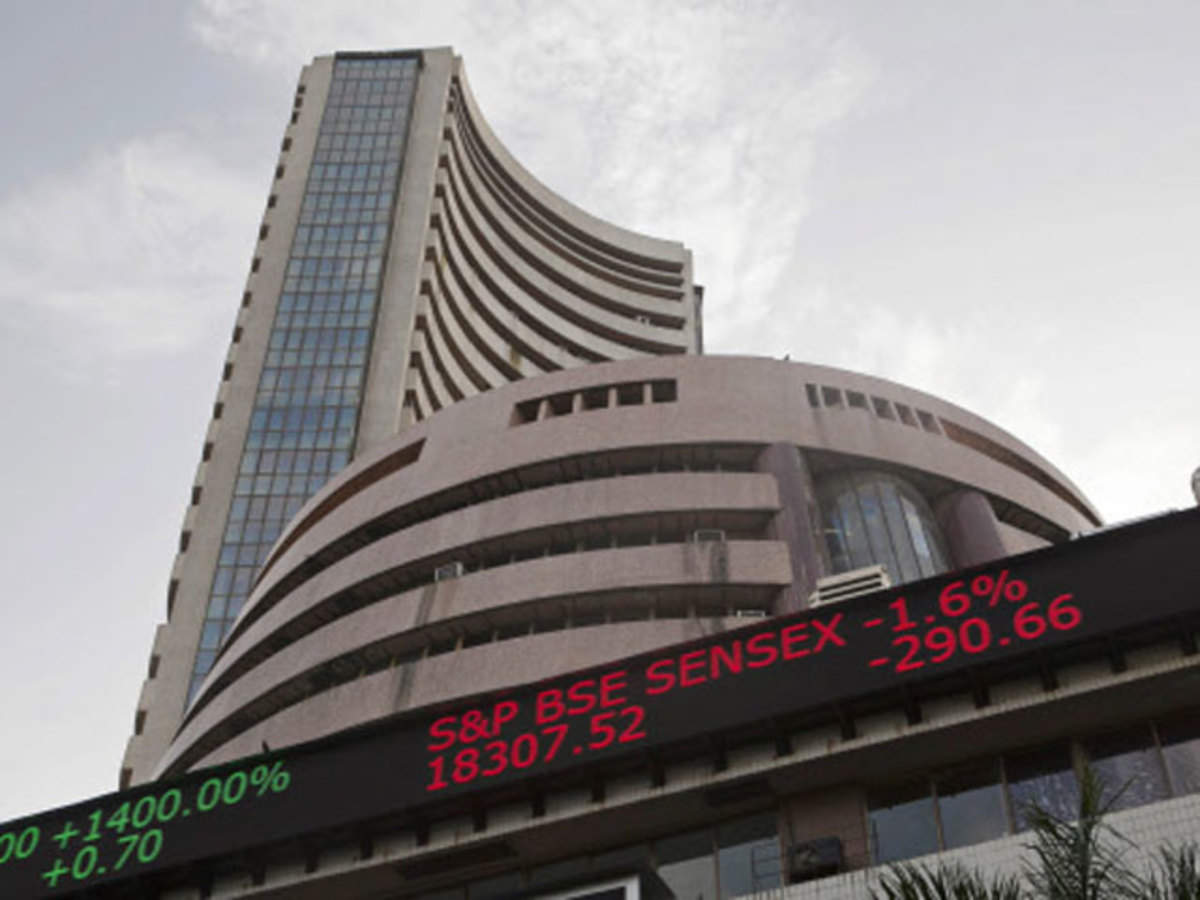
In 2026, the country's economy continued expanding at more than 7%, yet the Nifty and Sensex struggled to maintain their momentum. At one point, the benchmark indices recorded eight consecutive weeks of losses, marking their longest losing streak in approximately 25 years.
The contrast becomes even more striking when compared with international markets. Investors exposed to South Korea's Kospi, for example, enjoyed substantially stronger returns during the same period.
This does not mean India's economic prospects have suddenly deteriorated. It means the stock market is responding to a different set of variables.
Investors are not simply buying India's GDP growth. They are buying individual companies, their earnings prospects and the price at which those expectations are already reflected in share valuations.
And increasingly, that price is becoming difficult to justify.
Expensive Valuations Are Making Indian Equities Less Attractive
For years, Indian equities have commanded a premium over many other emerging markets. Investors were willing to pay higher valuations because of India's growth potential, political stability, expanding domestic consumption and relatively attractive long-term economic prospects.
However, a premium is justified only when it is supported by superior earnings growth, sustainable profitability and competitive business performance.
The problem emerges when valuations rise faster than the underlying fundamentals.
Even after the correction of the past two years, Indian stocks remain relatively expensive compared with several competing emerging markets. The valuation premium has narrowed, but it has not disappeared.
This creates a challenging environment for investors.
When a stock trades at a high price-to-earnings ratio, the company must consistently deliver strong earnings growth to justify its valuation. Any disappointment in quarterly results, margins or future guidance can trigger a disproportionate correction.
The situation becomes particularly concerning when investors continue assigning premium valuations to businesses based primarily on their future potential rather than their current financial performance.
A compelling business story does not automatically make a compelling investment.
Investors must distinguish between a company that has the potential to grow and a company whose current market price already assumes years of exceptional performance.
India's valuation problem is therefore not simply about whether stocks are expensive. It is about whether their earnings can grow fast enough to justify the prices investors are paying.
Foreign Investor Exodus Is Becoming a Structural Concern
One of the most significant developments affecting the Indian stock market is the sustained withdrawal of foreign portfolio investors.
Foreign capital has historically played an important role in supporting Indian equity valuations, providing liquidity and financing businesses with growth ambitions.
However, foreign institutional investors have increasingly found alternative destinations more attractive.
The scale of the withdrawal is substantial. Foreign investors withdrew approximately $40 billion from Indian markets over the preceding two years, while their cumulative net investment over the previous decade approached zero.
The situation became even more pronounced in 2026. Foreign portfolio investors sold approximately ₹3.08 lakh crore worth of Indian equities through October 12, following net sales of ₹1.66 lakh crore in 2025.
These figures point towards more than short-term profit booking.
Several factors are influencing this shift, including relatively expensive Indian valuations, currency depreciation, global interest rates and better opportunities in competing markets.
The declining foreign ownership of Indian equities is particularly important. India's weight in the MSCI Emerging Markets index has also fallen considerably from its September 2024 level.
If global fund managers increasingly reconsider their dedicated allocation to India, the consequences could extend beyond immediate market corrections.
A market that becomes less attractive as an independent investment destination risks receiving a smaller share of international capital. That could weaken demand for Indian equities and increase the returns investors expect before committing money to Indian companies.
Ultimately, this affects not only stock prices but also the cost of raising capital for businesses.
High Oil Prices, Global Interest Rates and Rupee Depreciation Are Adding Pressure
India's stock market does not operate in isolation. Its performance is closely connected to international economic developments, particularly because the country remains heavily dependent on imported energy.
India imports more than 90% of its crude oil requirements. Consequently, prolonged geopolitical disruptions and elevated international oil prices can have a substantial impact on the domestic economy.
During 2026, crude oil prices remained around $90–$100 per barrel amid persistent disruptions to shipping through the Strait of Hormuz.
Higher crude prices create several problems simultaneously.
They increase India's import expenditure, put pressure on the current account, contribute to inflation and raise operating costs for businesses. Companies in sectors such as aviation, transportation, manufacturing and consumer goods can experience margin pressure.
For investors, this creates uncertainty about future corporate earnings.
The situation becomes more challenging when global interest rates rise. When US government bond yields become attractive, international investors have less incentive to take additional risks in emerging markets.
They can earn relatively attractive returns from safer assets without accepting the volatility associated with Indian equities.
Rupee depreciation adds another disadvantage.
Even when Indian stocks generate positive returns in domestic currency, foreign investors must account for the exchange rate when converting their investments back into dollars.
Over the past decade, the Nifty has delivered approximately 6% annualised returns in dollar terms, considerably reducing its attractiveness for international investors.
This highlights an important distinction: Indian stock market returns and dollar-adjusted investment returns are not the same thing.
For domestic investors, rupee depreciation also matters when considering long-term financial goals involving international education, overseas travel or foreign-currency expenses.
Is India's Capital Gains Tax Policy Making Its Stock Market Less Competitive?
Another increasingly important issue is the taxation of equity investments.
Following the 2024 changes, long-term capital gains on listed equity investments are taxed at 12.5%, while short-term capital gains are taxed at 20%, subject to applicable conditions, exemptions and additional levies.
Securities Transaction Tax is also applicable to relevant transactions.
Although taxation is a legitimate source of government revenue, the larger question is whether India's overall tax structure makes its equity market less competitive internationally.
Investors compare opportunities across countries. They consider not only expected returns but also taxation, currency risks, regulatory predictability, transaction costs and the ease of moving capital.
Countries such as Singapore, Hong Kong and the UAE have significantly more favourable capital gains tax treatment for many listed-equity investments. The United States also has a different tax treatment for certain non-resident investors.
This creates a competitive disadvantage when international capital is deciding where to invest.
The concern is not necessarily that foreign investors should never pay taxes in India. Rather, it is whether the combined tax burden discourages the very capital that Indian businesses need to finance expansion.
There is an important economic distinction between taxing investors who have limited alternatives and taxing internationally mobile capital that can move elsewhere.
If higher taxes increase the returns foreign investors demand, companies may eventually face a higher cost of equity. Their valuations could decline, making fundraising more expensive.
India has already recognised the importance of tax competitiveness in attracting foreign investment into government securities through specific exemptions introduced in 2026.
Extending a comparable policy discussion to listed equities deserves serious consideration.
A competitive stock market is not built merely by attracting domestic savings. It also requires an environment in which international investors find the risk-adjusted returns worthwhile.
The Hidden Problem With Growth Stocks: Growth Is Not Always Profitable
There is another important issue that investors frequently overlook: the cost of growth.
Financial markets love growth stories. Companies promising rapid expansion, new technologies, ambitious revenue targets and dominant future market positions often attract considerable investor attention.
However, revenue growth alone does not determine whether a business creates shareholder wealth.
What matters is how much additional capital a company requires to achieve that growth and how efficiently it converts investment into sustainable profits and cash flows.
Consider two businesses growing their revenues at the same rate.
The first expands through an established business model, generates strong operating cash flows and requires relatively little additional investment.
The second must continuously spend enormous amounts on infrastructure, technology, marketing and debt-funded expansion to maintain its growth trajectory.
Although both may report impressive revenue growth, their economic outcomes can be dramatically different.
The first business may generate substantial returns on capital and steadily increase shareholder wealth. The second may need repeated fundraising, borrowings or fresh equity infusions simply to sustain its expansion.
This is why investors should examine return on invested capital, free cash flow, operating margins, debt levels and capital expenditure alongside revenue growth.
The history of several capital-intensive industries, including airlines, demonstrates how rapid expansion can coexist with disappointing shareholder returns.
The same discipline should apply to newer sectors such as electric vehicles, digital businesses and infrastructure.
Growth is valuable only when the returns generated justify the capital invested to achieve it.
Investors who ignore this distinction risk confusing an exciting corporate narrative with a financially attractive business.
India's Missing AI Advantage Could Become a Long-Term Market Disadvantage
Artificial intelligence has become one of the biggest drivers of global investment activity.
Companies involved in AI infrastructure, advanced semiconductors, computing systems and technology platforms have attracted enormous amounts of capital.
Markets such as the United States, South Korea and Taiwan have benefited from their exposure to important parts of this technology ecosystem.
India, meanwhile, has a comparatively limited presence among the world's largest AI businesses and the most profitable segments of the AI value chain.
Although domestic companies are investing in data centres, semiconductor manufacturing, defence technology and digital infrastructure, the country has yet to produce a globally dominant AI company comparable to leading international players.
This matters because global investors increasingly allocate capital towards industries expected to generate the next generation of corporate profits.
If Indian large-cap companies continue relying heavily on established business models without investing sufficiently in emerging technologies, their long-term earnings growth could become less competitive.
However, enthusiasm around AI also deserves caution.
The scale of investment in artificial intelligence is enormous, with estimates placing annual investment at approximately 2% of US GDP in 2026. Heavy borrowing, expensive computing infrastructure and rapidly depreciating technology assets raise questions about whether all this investment will eventually generate adequate economic returns.
History offers several warnings.
Railways, automobiles, aviation and the internet transformed economies, but investors still lost substantial amounts of money during periods of excessive investment and inflated valuations.
A technology can change the world without making every company associated with it a profitable investment.
India needs to participate more meaningfully in emerging technology industries, but investors must remain selective rather than blindly chasing AI-related stocks.
Should Indian Investors Look Beyond Domestic Equities?
The challenges facing Indian equities make global diversification an increasingly relevant consideration.
India represents less than 3% of global market capitalisation. Yet many Indian investors maintain an overwhelmingly domestic investment portfolio.
This creates geographical concentration risk.
A portfolio invested almost entirely in Indian stocks remains exposed to the same domestic economic conditions, currency movements, regulatory developments and market valuations.
Global investing offers access to different economies, industries, currencies and business models.
A thoughtfully diversified portfolio can include exposure to developed markets, emerging economies and sectors that may be underrepresented in India.
However, global diversification should not become a reaction to disappointing domestic returns.
Chasing whichever international market has recently performed best can be just as dangerous as maintaining an excessive home-market bias.
Investors who rushed into technology-focused funds during earlier periods of market enthusiasm experienced painful corrections when valuations collapsed.
Diversification should therefore be a long-term portfolio decision, not an attempt to predict the next winning market.
For investors considering international exposure, globally diversified exchange-traded funds and professionally managed international funds may provide potential routes, subject to applicable Indian regulations, taxation, currency risks, product costs and investment limits.
The objective should be to build a portfolio that is not dependent on the fortunes of a single country.
Is the Worst Behind India's Stock Market? The Outlook May Be More Complicated Than It Appears
Despite the prevailing pessimism, declaring the Indian equity market permanently unattractive would be premature.
Market returns are rarely linear. Periods of stagnation and underperformance can sometimes create opportunities for investors willing to remain patient and selective.
Historical observations suggest that following previous two-year periods of relatively flat Indian market performance, the subsequent year's returns have ranged between approximately 5% and 55%, with an average near 25%.
This historical pattern offers an interesting perspective, although it should not be mistaken for a reliable forecast.
There is no guarantee that history will repeat itself.
Improving corporate earnings, more reasonable valuations, easing geopolitical tensions and renewed foreign investor participation could support a recovery.
Similarly, sustained high oil prices, currency weakness, global financial uncertainty and disappointing earnings could prolong market weakness.
The important point is that market sentiment often becomes excessively optimistic near periods of strong performance and excessively pessimistic after extended corrections.
Investors who make decisions entirely on the basis of recent returns risk buying when enthusiasm is highest and selling when fear dominates.
This is particularly relevant for long-term equity investors and systematic investment plan (SIP) participants.
A temporary period of weak returns does not automatically invalidate an investment strategy. However, continuing to invest in fundamentally weak or excessively expensive businesses simply because prices have fallen is equally unwise.
Patience must be accompanied by analysis.
India's Growth Story Is Intact, But Investors Must Become More Discerning
India remains a major economic growth opportunity. Its expanding domestic market, infrastructure development, entrepreneurial ecosystem and demographic potential continue to offer significant long-term possibilities.
However, these strengths should not be used to justify every stock valuation or overlook structural weaknesses in the investment environment.
The Indian stock market is confronting a combination of challenges: expensive valuations, foreign portfolio investor outflows, capital gains taxation, rupee depreciation, global interest rate pressures and an evolving technology landscape.
At the company level, investors must also question whether growth is translating into sustainable profitability or simply consuming more capital.
For policymakers, the priority should be to create a more competitive investment environment, attract long-term foreign capital, encourage innovation and ensure that taxation does not unintentionally increase the cost of equity for Indian businesses.
For investors, the lesson is equally important.
Do not confuse economic growth with stock market returns. Do not mistake rising revenue for shareholder wealth creation. Do not assume that a popular sector guarantees investment success. And do not restrict your entire financial future to a single country's equity market.
India's long-term story may remain compelling, but compelling stories are not substitutes for sensible valuations and disciplined investing.
The real question is no longer whether India will grow. It is whether Indian companies can convert that growth into sustainable earnings, competitive returns and genuine shareholder wealth.
Until that distinction becomes central to investment decisions, India's stock market may continue to disappoint investors even as its economy moves forward.
© Copyright 2026. All Rights Reserved. Powered by Vygr Media.