
 By
By 
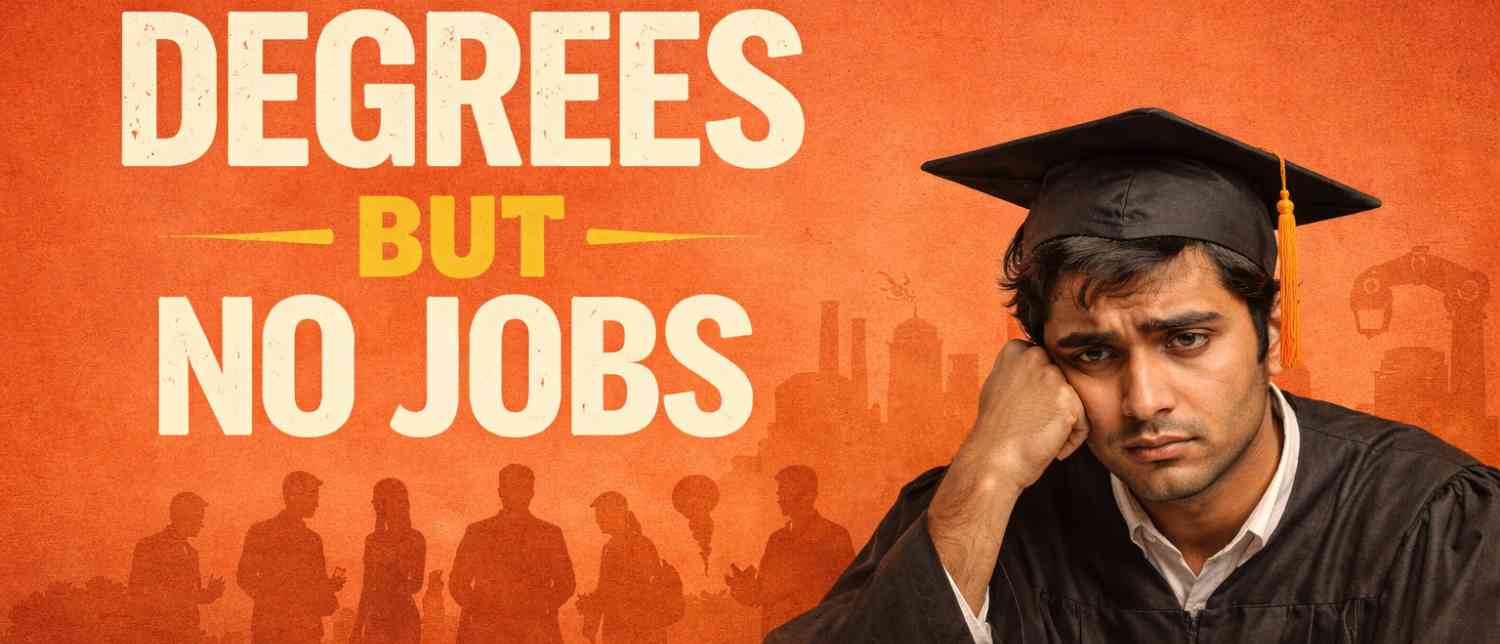
For decades, India sold its young a promise: Study hard, earn a degree, and the world will open its doors. That promise built coaching empires, filled engineering colleges, and pushed millions of families to invest beyond their means in higher education. Today, that promise is quietly collapsing.
The evidence is no longer anecdotal; it is overwhelming.
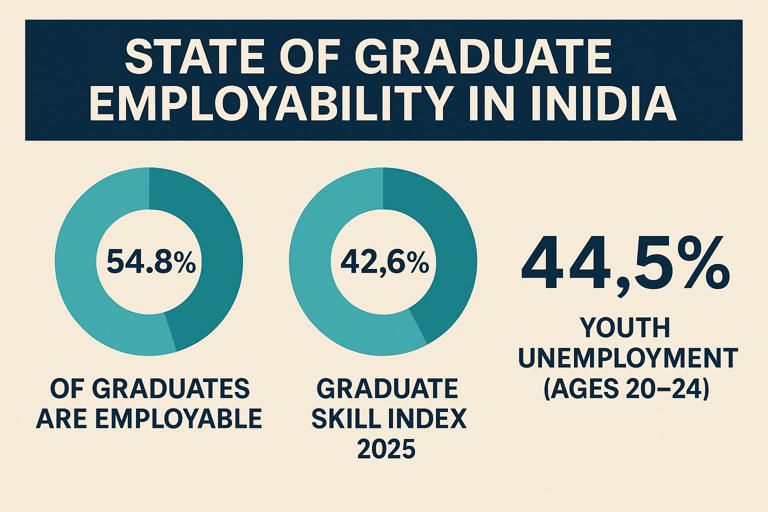
Nearly 40% of India’s graduates are unemployed, according to recent research. Even more troubling is what happens after graduation: only 7 out of every 100 unemployed graduates manage to secure stable employment within a year. This is not friction in the system. This is systemic failure.
Yet, to reduce this crisis to “too many graduates” would be dangerously simplistic. India is not facing a surplus of education. It is facing a collapse of alignment—between degrees and skills, between aspirations and opportunities, and increasingly, between effort and reward.
The Great Indian Mismatch
India’s higher education system is producing graduates at scale, but not at relevance.
Employers across industries repeatedly flag the same concern: graduates are not job-ready. They lack applied knowledge, communication skills, and the ability to function in dynamic work environments. Degrees have become signals of endurance rather than indicators of capability.
But here lies the deeper contradiction—while employers complain of unemployable graduates, they also struggle to fill roles requiring specialised skills. This dual reality exposes a structural mismatch rather than a simple shortage or surplus.
The classroom and the workplace have drifted apart.
Curricula remain outdated, often disconnected from industry needs. Internships, where they exist, are frequently tokenistic. Skill development is treated as supplementary, not foundational. The result is a workforce that is certified, but not prepared.
The Lie of Overeducation
A growing narrative suggests that India is “overproducing graduates.” It is a convenient argument—one that shifts blame onto students and institutions. But it does not hold up under scrutiny.
The more accurate diagnosis is that India is underproducing good jobs.
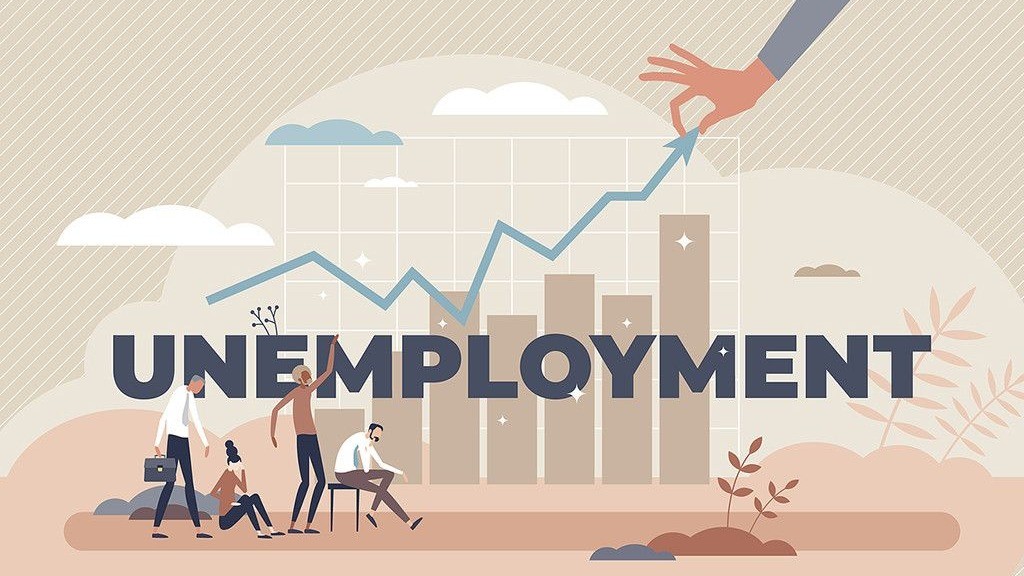
Economic growth has not translated into proportional job creation, especially in sectors capable of absorbing skilled labour. This is the paradox of modern India—rising GDP alongside stagnant employment quality.
The jobs that do exist are often informal, unstable, or poorly paid. For a generation raised on the belief that education guarantees upward mobility, this mismatch feels like betrayal.
When the First Step Disappears
Historically, careers began with modest entry-level roles. These jobs were not glamorous, but they offered something invaluable—experience.
That ladder is now breaking.
The rise of artificial intelligence and automation is eliminating routine, entry-level tasks—the very tasks that once served as training grounds for fresh graduates. Companies are no longer hiring large numbers of freshers to “learn on the job.” Instead, they expect candidates to arrive pre-skilled, pre-trained, and immediately productive.
The consequence is a paradoxical deadlock; graduates cannot gain experience without jobs, and cannot get jobs without experience.
This phenomenon, the vanishing first job, may be one of the most under-discussed aspects of India’s employment crisis, yet it is arguably the most damaging in the long term.
A Wage Reality That No One Expected
Adding to the disruption is a shift that challenges decades of social conditioning: blue-collar wages are rising faster than entry-level white-collar salaries.
In sectors like logistics, construction, and skilled trades, demand is pushing wages upward. Meanwhile, entry-level corporate roles—especially in oversupplied sectors—are seeing stagnant or marginal salary growth.
The message is uncomfortable but clear: a college degree is no longer the most reliable path to financial stability.
This shift also exposes another persistent fault line, the gender pay gap, which continues to disadvantage women across sectors. Even as female enrollment in higher education rises, equitable outcomes remain elusive.
The Human Cost of Broken Expectations
Behind every statistic is a story of expectation deferred.
Families invest heavily in education, often taking loans or sacrificing savings. For many, especially in rural and semi-urban India, a graduate in the family represents hope—a step toward stability and dignity.
When that hope is unmet, the consequences ripple outward.
Unemployment and underemployment among graduates are increasingly linked to rising frustration, anxiety, and disillusionment. The psychological toll is significant, yet often overlooked in policy discussions.
The crisis is not just economic. It is emotional and social.
Who Is Responsible? Everyone.
It would be easy to assign blame to a single actor: the education system, employers, or the government. But the reality is more complex.
Educational institutions have failed to evolve. Too many continue to prioritise rote learning over critical thinking, theory over practice.
Employers demand job-ready candidates but often invest little in training. The expectation that a 21-year-old graduate should seamlessly integrate into a fast-changing workplace is unrealistic.
Policymakers have struggled to align education policy with labour market realities. Skill development initiatives exist, but their scale and effectiveness remain limited relative to the magnitude of the problem.
And society itself plays a role. The cultural obsession with degrees, particularly white-collar ones, has devalued vocational skills and alternative career paths.
Rewriting the Rules of Education and Work
If the crisis is systemic, the response must be equally comprehensive.
India needs to rethink what education is meant to achieve. A degree can no longer be an end in itself. It must become part of a broader ecosystem of continuous learning, skill acquisition, and adaptability.
Curricula must be dynamic, not static. Industry collaboration should be embedded, not optional. Internships and apprenticeships must be meaningful, not symbolic.
At the same time, employers need to rebuild the entry-level pipeline. Investing in training is not charity; it is a strategic necessity in a rapidly evolving economy.
Public policy must also shift focus from merely expanding access to education to ensuring outcomes that translate into employability and meaningful work.
A Necessary Cultural Shift
Perhaps the hardest change is cultural.
India must move beyond the binary of “degree equals success.” Skills, trades, entrepreneurship, and non-linear career paths must gain legitimacy.
The rise in blue-collar wages is not a temporary anomaly; it is a signal. A signal that the market values capability over credentials.
Recognising this reality requires a shift not just in policy, but in mindset.
The Stakes Could Not Be Higher
India’s demographic dividend, its young population, has long been seen as its greatest strength. But a dividend is not automatic. It must be earned.
If millions of educated young people remain unemployed or underemployed, that dividend risks turning into a liability.
The question is no longer whether India can produce graduates. It clearly can.
The real question is whether it can create a system where those graduates can build meaningful, productive, and dignified lives.
Right now, the answer is uncertain.
And that uncertainty may be the most urgent crisis of all.
With inputs from agencies
Image Source: Multiple agencies
© Copyright 2025. All Rights Reserved. Powered by Vygr Media.