
 By
By 
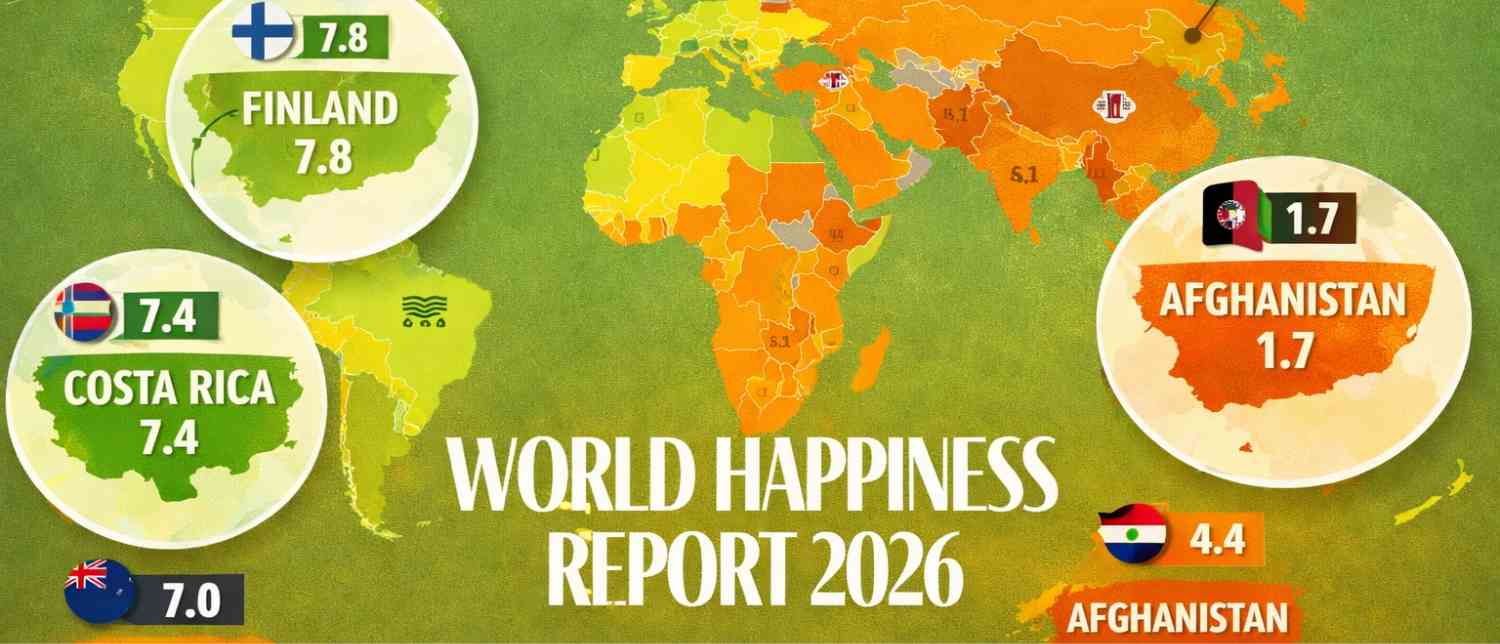
Every year, the release of the World Happiness Report triggers a predictable mix of curiosity, pride, and introspection. The 2026 edition does not disappoint—but it also does something more profound. It forces us to confront a central question: what truly makes societies thrive? Beyond the rankings and headlines, this year’s data offers a layered, sometimes uncomfortable, portrait of global wellbeing—one that stretches from the social trust of Finland to the persistent despair in Afghanistan, and from Europe’s dominance to surprising shifts in Latin America and Asia.
This is not just a story about happiness. It is a story about governance, inequality, culture, and human connection.

The Nordic Benchmark: Why Finland Still Leads
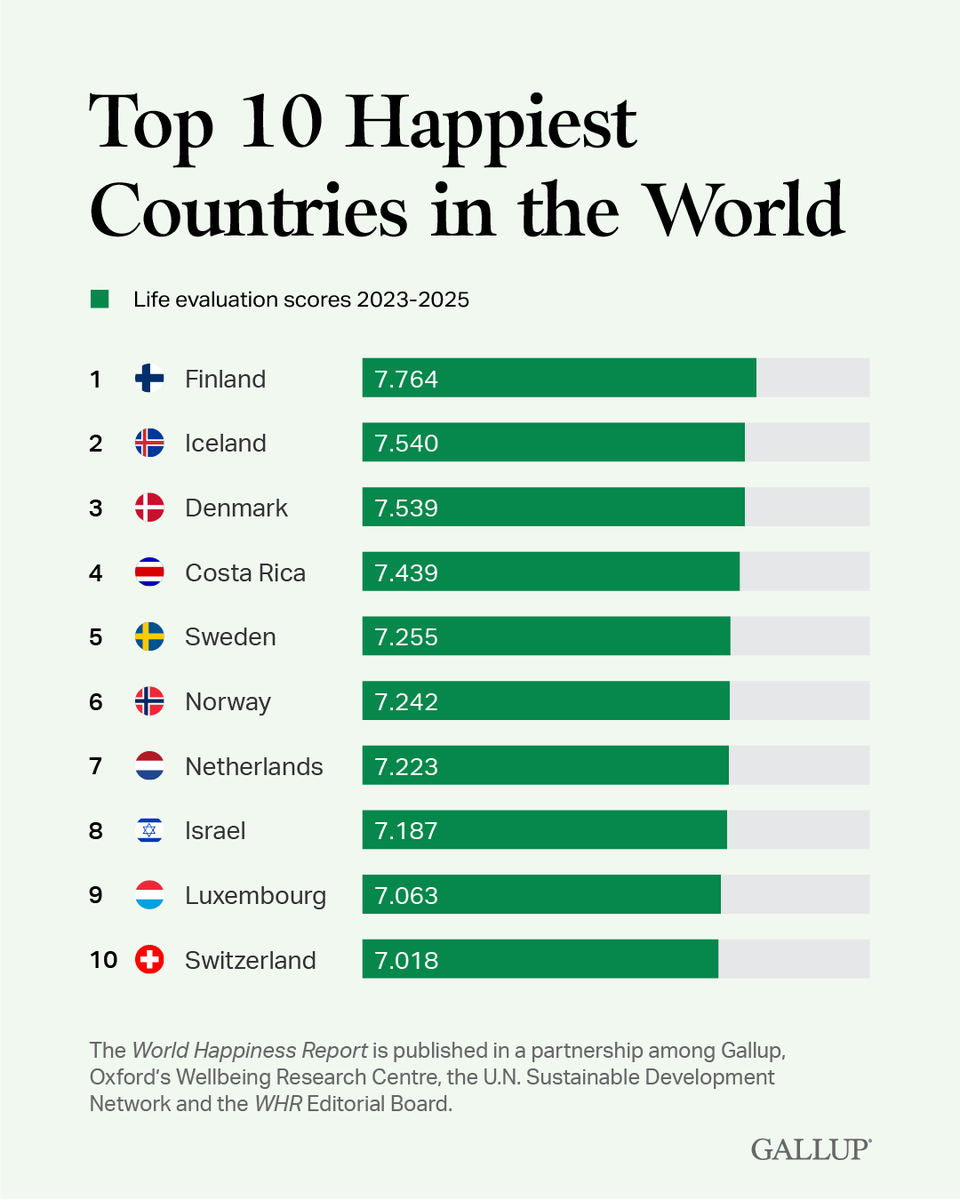
For yet another year, Finland tops the global happiness rankings—a position it has now held for nearly a decade. But this is not merely a statistical anomaly or a case of “cold countries, warm hearts.” Finland’s consistency reveals a system that works at multiple levels simultaneously.
At the core lies a deep reservoir of social trust. Citizens trust their institutions, their neighbors, and even strangers. This trust translates into lower corruption, more effective public services, and a general sense of security. It is not just about economic prosperity—though Finland performs well there—but about how that prosperity is distributed and experienced.
Equally critical is Finland’s robust welfare system. Universal healthcare, high-quality education, and strong social safety nets ensure that citizens are protected from life’s uncertainties. The psychological impact of this cannot be overstated: when people are not constantly worried about survival, they have the mental space to pursue fulfillment.
Another defining factor is work-life balance. Finnish culture does not glorify overwork. Instead, it prioritizes time with family, personal well-being, and connection with nature. This is complemented by widespread access to green spaces, reinforcing a lifestyle that is both physically and mentally restorative.
Interestingly, the report also highlights the importance of freedom and autonomy. Finns feel empowered to make life choices without excessive societal or institutional constraints. This sense of agency contributes significantly to overall life satisfaction.
Other Nordic countries—Denmark, Iceland, Sweden, and Norway—continue to cluster near the top, reinforcing the idea that the “Nordic model” is not an outlier but a replicable framework rooted in equality, trust, and social cohesion.
Europe’s Dominance—and What It Signals
One of the most striking patterns in the 2026 rankings is Europe’s overwhelming presence at the top. Eight of the ten happiest countries are European, a statistic that underscores the continent’s sustained investment in social infrastructure.
Countries like Netherlands, Switzerland, and Luxembourg combine strong economies with inclusive policies. The European model, broadly speaking, prioritizes not just GDP growth but quality of life metrics—healthcare access, education, social protection, and environmental sustainability.
This dominance is not accidental. It reflects decades of policy choices that emphasize collective well-being over individual accumulation. Even in wealthier non-European nations, such as the United States, the absence of universal systems in healthcare and social security continues to weigh on overall happiness scores.
However, Europe’s success is not without nuance. The report suggests that social trust and institutional integrity—rather than sheer wealth—are the true differentiators. In other words, money matters, but how societies organize themselves matters more.
The Costa Rica Surprise: A New Model Emerges
While Europe dominates, one of the most compelling narratives of 2026 comes from Costa Rica. Its dramatic rise in the rankings is widely described as the most impressive jump of the year—and for good reason.
Costa Rica challenges conventional assumptions about happiness. It is not among the world’s richest nations, yet it outperforms many wealthier countries. Its success lies in a unique blend of environmental stewardship, social investment, and cultural values.
The country abolished its military decades ago, redirecting resources into education and healthcare. It also prioritizes environmental conservation, with vast areas protected as national parks. This creates not just ecological benefits but a strong sense of national identity and pride.
Equally important is Costa Rica’s cultural emphasis on “pura vida”—a philosophy that values simplicity, community, and contentment. This intangible factor highlights a key insight from the report: happiness is not purely structural; it is also deeply cultural.
India’s Incremental Progress
For India, the 2026 report offers a cautiously optimistic picture. The country has improved its ranking compared to previous years, signaling progress in certain areas of well-being. India ranks 116th, lower than neighbors Nepal (99th) and Pakistan (104th).
This improvement reflects gains in economic growth, infrastructure development, and access to basic services. However, India still faces significant challenges, particularly in income inequality, social cohesion, and mental health awareness.
The report underscores that while macroeconomic indicators are improving, lived experiences remain uneven. Urban-rural divides, disparities in healthcare access, and rising stress levels continue to impact overall happiness.
India’s trajectory illustrates a broader truth: development is necessary but not sufficient. Without parallel investments in social trust, community building, and mental well-being, economic progress alone cannot guarantee happiness.
The Bottom of the List: A Stark Reality
At the other end of the spectrum lies Afghanistan, once again ranked as the world’s least happy country. Its position is shaped by a complex interplay of conflict, economic collapse, political instability, and humanitarian crises.
The report highlights severe challenges, including limited access to basic services, widespread poverty, and restrictions on personal freedoms. These conditions create an environment where happiness is not just elusive—it is structurally constrained.
Other countries at the lower end of the rankings include nations grappling with war, governance failures, and economic distress. The data serves as a sobering reminder that happiness is deeply tied to peace, stability, and human rights.
What the Data Really Measures
The World Happiness Report is often misunderstood as a simple ranking of “who feels happiest.” In reality, it is a sophisticated analysis based on multiple variables, including:
-
GDP per capita
-
Social support
-
Healthy life expectancy
-
Freedom to make life choices
-
Generosity
-
Perceptions of corruption
These indicators collectively capture both material conditions and subjective well-being. The emphasis on social support and trust is particularly notable. Countries that perform well are not just wealthy—they are connected.
The Loneliness Factor
One of the subtler but crucial themes in the 2026 report is the role of loneliness and social isolation. Even in high-income countries, rising loneliness is emerging as a significant threat to well-being.
The findings suggest that community engagement and interpersonal relationships are as important as economic stability. Nations that foster strong social bonds—through community activities, inclusive policies, and cultural norms—tend to rank higher.
This has profound implications in an increasingly digital world. As societies become more connected online, they risk becoming more disconnected offline.
Rethinking Success: Beyond GDP
Perhaps the most important takeaway from the 2026 rankings is the need to redefine success. Traditional metrics like GDP fail to capture the full picture of human well-being.
Countries like Finland and Costa Rica demonstrate that equity, trust, and sustainability are not just moral ideals—they are practical strategies for building happier societies.
Conversely, nations that prioritize growth without addressing inequality or social fragmentation often find themselves lagging in happiness, despite economic gains.
A Global Mirror
The World Happiness Report acts as a mirror, reflecting not just where countries stand, but what they value. It reveals that happiness is not a luxury—it is the outcome of deliberate choices.
-
Investments in healthcare and education pay dividends in well-being.
-
Transparent governance builds trust and stability.
-
Cultural values shape how people perceive and experience life.
In this sense, the rankings are less about competition and more about learning.
The Future of Happiness
The 2026 report makes one thing clear: happiness is neither accidental nor unattainable. It is built through policies, culture, and collective effort.
From Finland's steady leadership to Costa Rica's resilience, and from India's challenges to Afghanistan's hardships, the global landscape of happiness is as diverse as it is instructive.
The question is no longer what makes people happy. We know the answer: trust, security, freedom, and connection.
The real question is whether governments—and societies—are willing to act on it.
With inputs from agencies
Image Source: Multiple agencies
© Copyright 2025. All Rights Reserved. Powered by Vygr Media.