 By
By 
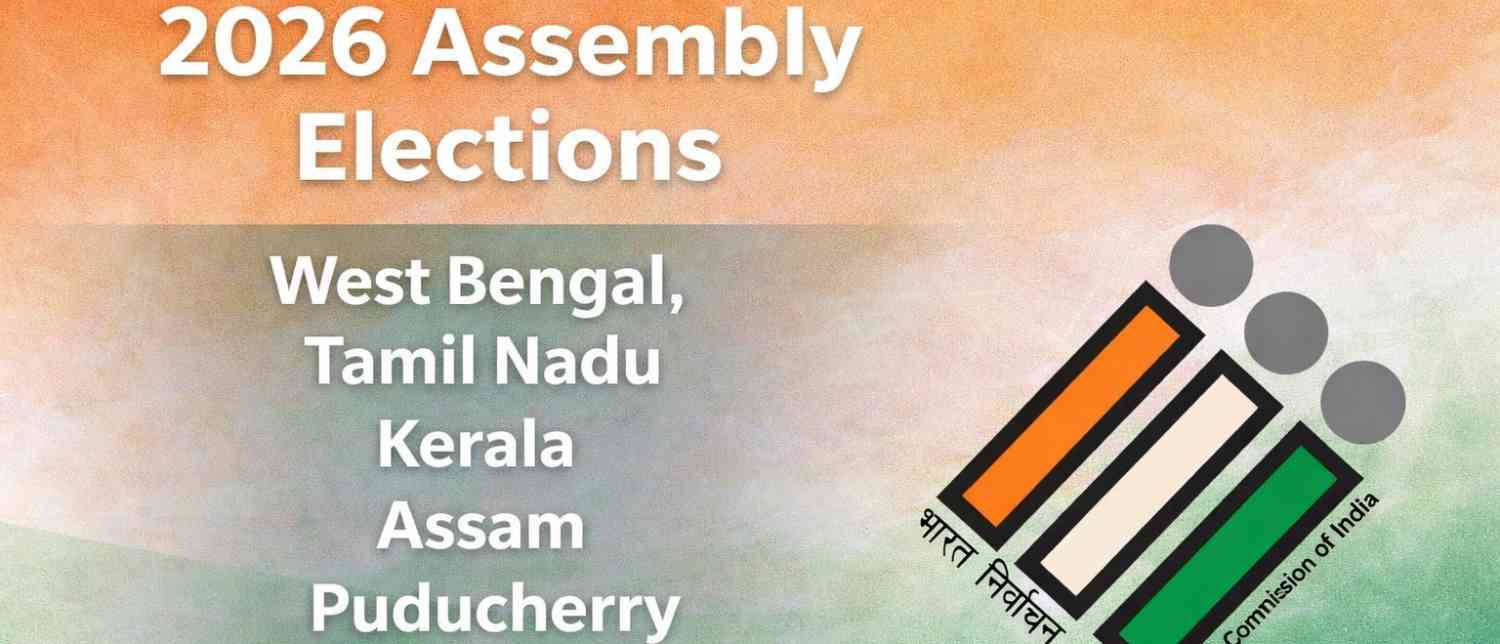
India’s electoral cycle has once again entered a decisive phase. The Election Commission of India (ECI) has officially announced the schedule for the 2026 Assembly elections in four states — West Bengal, Tamil Nadu, Kerala, Assam — and the Union Territory of Puducherry. The announcement formally sets the stage for a high-stakes political contest that will determine governments across regions representing hundreds of millions of voters.
With polling dates spread across April and vote counting scheduled for early May, the elections are expected to witness intense campaigns, sharp political rhetoric, and strategic alliances as national and regional parties battle for power.
Election Commission Announces 2026 Poll Schedule
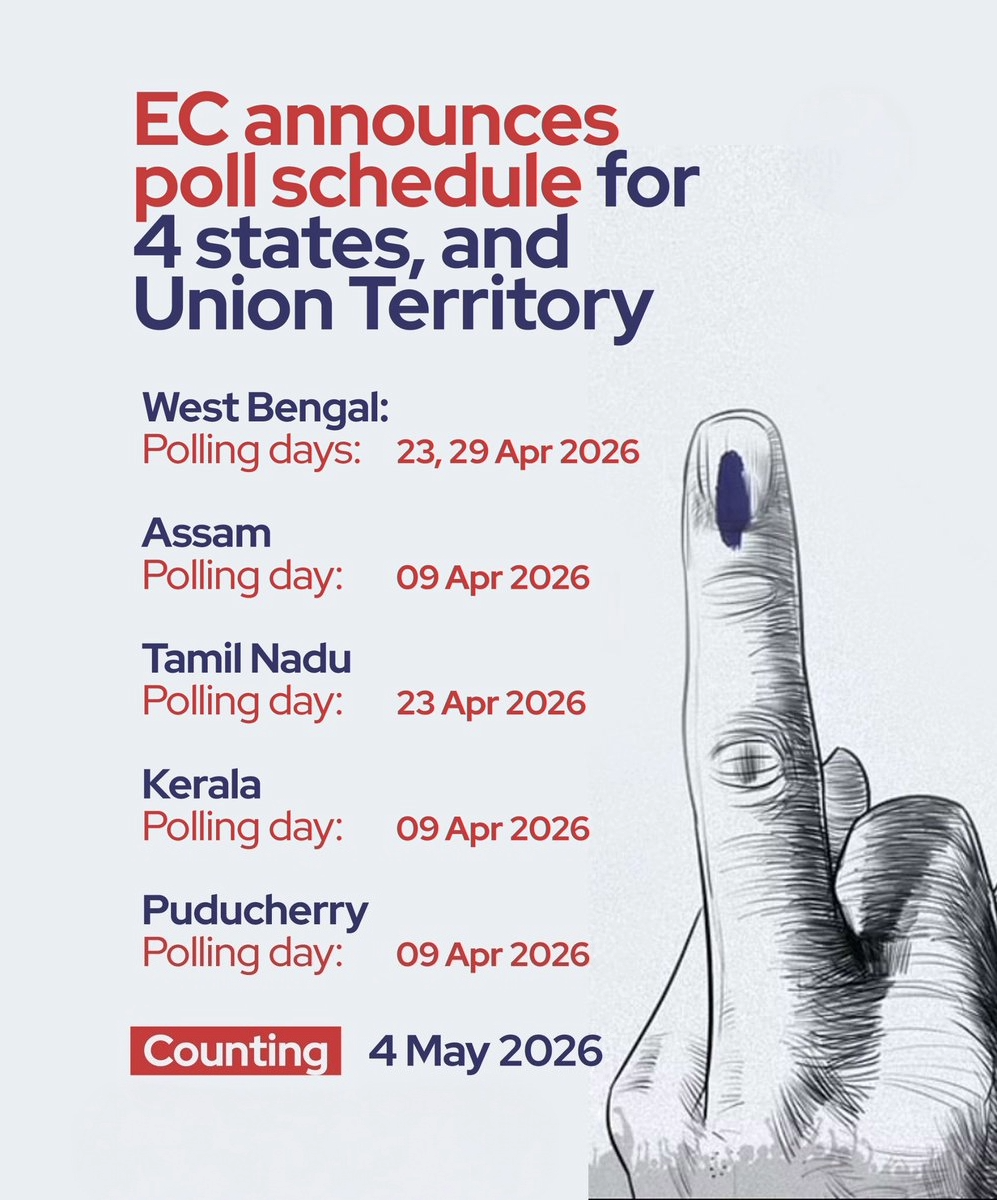
The Election Commission announced the election timetable during a press conference in New Delhi, initiating the formal election process for the five assemblies. The polls will take place across different dates in April, while counting of votes for all states and the Union Territory will take place on May 4, 2026.
The elections will decide the future governments in assemblies whose current terms are nearing completion.
The tenure of the existing assemblies ends on different dates:
-
West Bengal Assembly: May 7
-
Tamil Nadu Assembly: May 10
-
Assam Assembly: May 20
-
Kerala Assembly: May 23
-
Puducherry Assembly: June 15
Because of these timelines, the Election Commission scheduled voting in April so that the entire electoral process can be completed before the assemblies’ terms expire.
Seats at Stake in the 2026 Elections
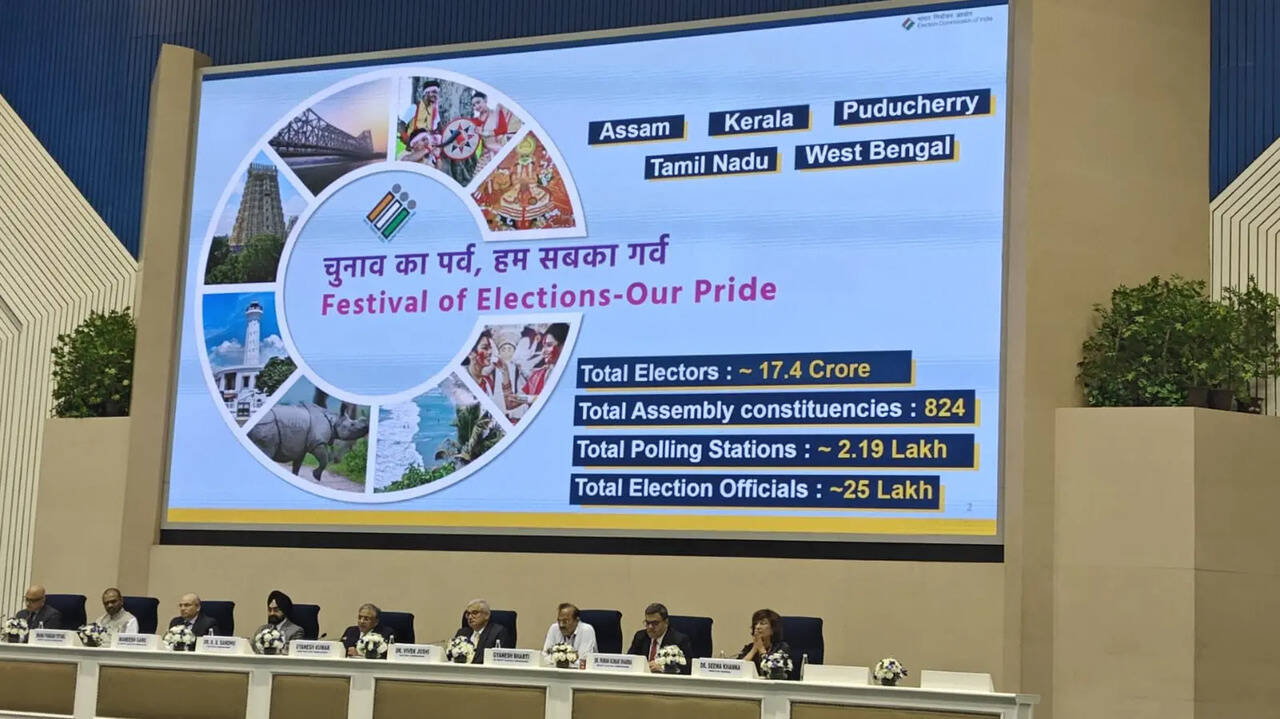
A total of 824 assembly seats across the four states and one union territory will go to the polls.
Breakdown of seats:
-
West Bengal: 294 seats
-
Tamil Nadu: 234 seats
-
Kerala: 140 seats
-
Assam: 126 seats
-
Puducherry: 30 seats
These elections will determine who governs these regions for the next five years.
Full Election Schedule
The Election Commission released the detailed election calendar for the states and union territory. Most regions will vote in a single phase, while West Bengal will vote in two phases.
Polling Dates
April 9, 2026
-
Assam
-
Kerala
-
Puducherry
April 23, 2026
-
Tamil Nadu
-
West Bengal (Phase 1)
April 29, 2026
-
West Bengal (Phase 2)
Result Date
-
Counting of votes: May 4, 2026
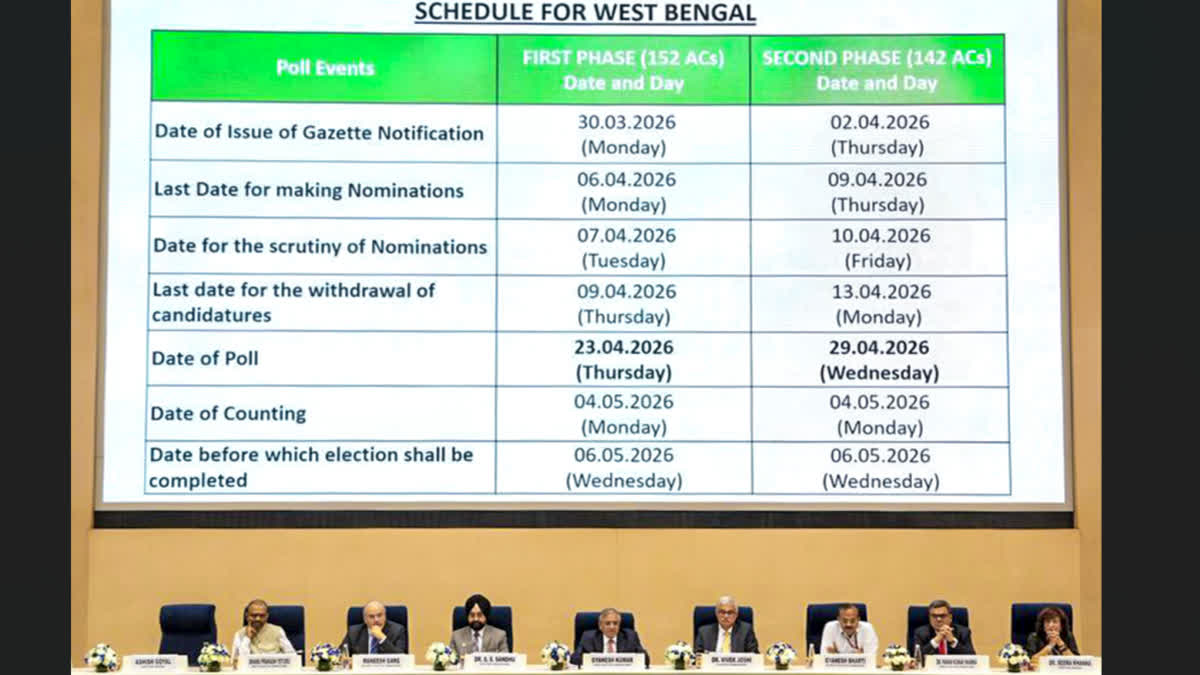
The Commission also laid out the official election timeline:
-
Notification issued: March 16, 2026
-
Last date for filing nominations: March 23, 2026
-
Scrutiny of nominations: March 24, 2026
-
Last date for withdrawal of candidatures: March 26, 2026
The entire election process is scheduled to be completed by May 6, 2026.
Voter Statistics and Electoral Preparations
The Election Commission has completed extensive preparations in the poll-bound states.
In Kerala, for example, the Commission reported 26,953,644 registered voters eligible to vote in the assembly elections.
Ahead of the announcement, election officials conducted readiness assessments in the states to evaluate logistics, security requirements, and administrative preparedness.
Electoral roll revisions were also undertaken in the lead-up to the polls:
-
Puducherry published its final voter list on February 14 after a Special Intensive Revision (SIR).
-
Tamil Nadu released its revised voter roll soon after.
-
Kerala published its final electoral roll on February 21.
-
West Bengal released its final voter list on February 28.
-
Assam, where a special revision was conducted instead of SIR, published its final electoral roll on February 10.
These updates are meant to ensure the accuracy of voter databases and improve election transparency.
Political Parties React to Poll Announcement
Soon after the Election Commission released the schedule, leaders across the political spectrum responded with statements outlining their expectations and strategies.
Several parties framed the election as a decisive ideological contest.
Leaders from the Bharatiya Janata Party (BJP) described the upcoming elections as a “civilisational battle,” emphasising that the polls represent more than routine political competition. According to party leaders, the elections will reflect the broader direction India’s political and cultural trajectory should take.
On the other side, regional parties such as the Trinamool Congress (TMC), Dravida Munnetra Kazhagam (DMK), All India Anna Dravida Munnetra Kazhagam (AIADMK) and the Congress welcomed the poll announcement and expressed confidence about their prospects in the upcoming contests.
The responses signal that the election campaign will likely become highly polarised, especially in states where national and regional forces are locked in direct confrontation.
Why West Bengal’s Two-Phase Election Matters
Among the five regions voting in 2026, West Bengal stands out because it will vote in two phases, unlike the single-phase polls in the other states.
The state’s 294 constituencies will vote on:
-
April 23 (Phase 1)
-
April 29 (Phase 2)
This decision has sparked debate among political observers about its strategic implications.
The two-phase polling schedule is significantly shorter than the previous election cycle.
In 2021, West Bengal voted in eight phases, which stretched over several weeks and became one of the longest state elections in Indian history.
The shorter two-phase format in 2026 is therefore a notable departure.
How the Poll Schedule Could Benefit the TMC
Analysts suggest that the shorter election schedule could influence political momentum in the state.
One argument is that fewer phases reduce the time available for parties to build narrative momentum between rounds of voting. This could potentially benefit the ruling Trinamool Congress, led by Chief Minister Mamata Banerjee, which already has a strong organisational network across the state.
With only a six-day gap between phases, there is less opportunity for dramatic political swings or campaign shifts.
In longer multi-phase elections, national parties often attempt to capitalise on early results or narratives from the first phases to influence later voting rounds. A compressed schedule may limit that strategy.
Pre-Election Political Moves in West Bengal
The political climate in West Bengal has already intensified even before the official campaign begins.
Just ahead of the Election Commission’s announcement, Chief Minister Mamata Banerjee approved a ₹500 increase in the monthly honorarium given to priests and muezzins in the state.
The state government also announced that all pending and new applications for the honorarium scheme would be approved.
The timing of the decision, coming shortly before the election schedule announcement, has drawn attention from political observers who view it as a move with electoral implications.
Key Political Battles Across the States
Each of the five regions voting in 2026 will see different political contests shaped by regional dynamics.
West Bengal
The biggest fight in the state is expected between the Trinamool Congress and the Bharatiya Janata Party.
The BJP has been trying to expand its base in Bengal over the past decade, while the TMC continues to dominate the state’s political landscape.
The 2026 election will test whether the BJP can translate its national strength into a decisive breakthrough in Bengal.
Tamil Nadu
Tamil Nadu’s politics continues to revolve around the rivalry between the DMK and the AIADMK.
The Dravidian parties have dominated the state’s politics for decades, with national parties typically playing supporting roles through alliances.
The upcoming election will determine whether the DMK retains its dominance or whether the AIADMK can stage a comeback.
Kerala
Kerala has traditionally seen a two-front contest between:
-
Left Democratic Front (LDF) led by the CPI(M)
-
United Democratic Front (UDF) led by the Congress
The state is known for alternating governments between these two alliances, making each election highly competitive.
Assam
In Assam, the election will test the political strength of the ruling BJP-led alliance against opposition parties that are attempting to consolidate their vote base.
The state has seen significant political shifts over the past decade, making the outcome an important indicator of regional political trends.
Puducherry
Although smaller in size compared with the states, Puducherry’s 30-seat assembly plays a crucial role in regional politics.
The election there often revolves around coalition dynamics and alliances between national and regional parties.
Campaign Season Begins
With the poll schedule now announced, the model code of conduct immediately comes into force.
Political parties will now intensify their campaigns across the five regions.
Over the next few weeks, voters can expect:
-
Massive rallies
-
Door-to-door campaigning
-
High-profile speeches by national leaders
-
Coalition negotiations and candidate announcements
The short time between the notification and polling dates also means parties will have limited time to finalise their strategies.
The Democratic Significance of the 2026 Polls
Assembly elections in India often serve as an important barometer of the country’s political mood.
The results in West Bengal, Tamil Nadu, Kerala, Assam and Puducherry will not only decide state governments but also influence national political narratives ahead of future parliamentary elections.
These polls will also highlight regional political dynamics, where powerful state-based parties frequently challenge the dominance of national political organisations.
Final Timeline Recap
To summarise the key dates:
March 16, 2026
Election notification issued
March 23, 2026
Last date for nomination filing
March 24, 2026
Scrutiny of nominations
March 26, 2026
Last date for withdrawal of candidature
April 9, 2026
Polling in Assam, Kerala and Puducherry
April 23, 2026
Polling in Tamil Nadu and Phase 1 in West Bengal
April 29, 2026
Phase 2 polling in West Bengal
May 4, 2026
Counting of votes for all states and the union territory
May 6, 2026
Deadline for completion of the election process
Final Thoughts
The announcement of the 2026 assembly election schedule marks the beginning of another crucial democratic exercise in India.
With more than 800 assembly seats, multiple regional power centres, and intense ideological competition, the elections in West Bengal, Tamil Nadu, Kerala, Assam, and Puducherry promise to be among the most closely watched political events of the year.
From the two-phase contest in West Bengal to the single-phase polls in other states, each region will witness its own political drama.
As campaigning accelerates and alliances solidify, the countdown to May 4, 2026 — when the results will be declared — has officially begun.
With inputs from agencies
Image Source: Multiple agencies
© Copyright 2025. All Rights Reserved. Powered by Vygr Media.