 By
By 
As West Bengal moves toward a decisive electoral moment, Prime Minister Narendra Modi has intensified both his rhetoric and promises, blending sharp warnings on national security with a slate of post-election assurances. Across multiple rallies and a high-voltage roadshow in Barrackpore, his message has been consistent and forceful: infiltrators will be identified and pushed back, governance will be reset after May 4, and the state will witness a renewed push toward jobs, digital innovation, and law-and-order reforms.
A campaign centred on infiltration and identity
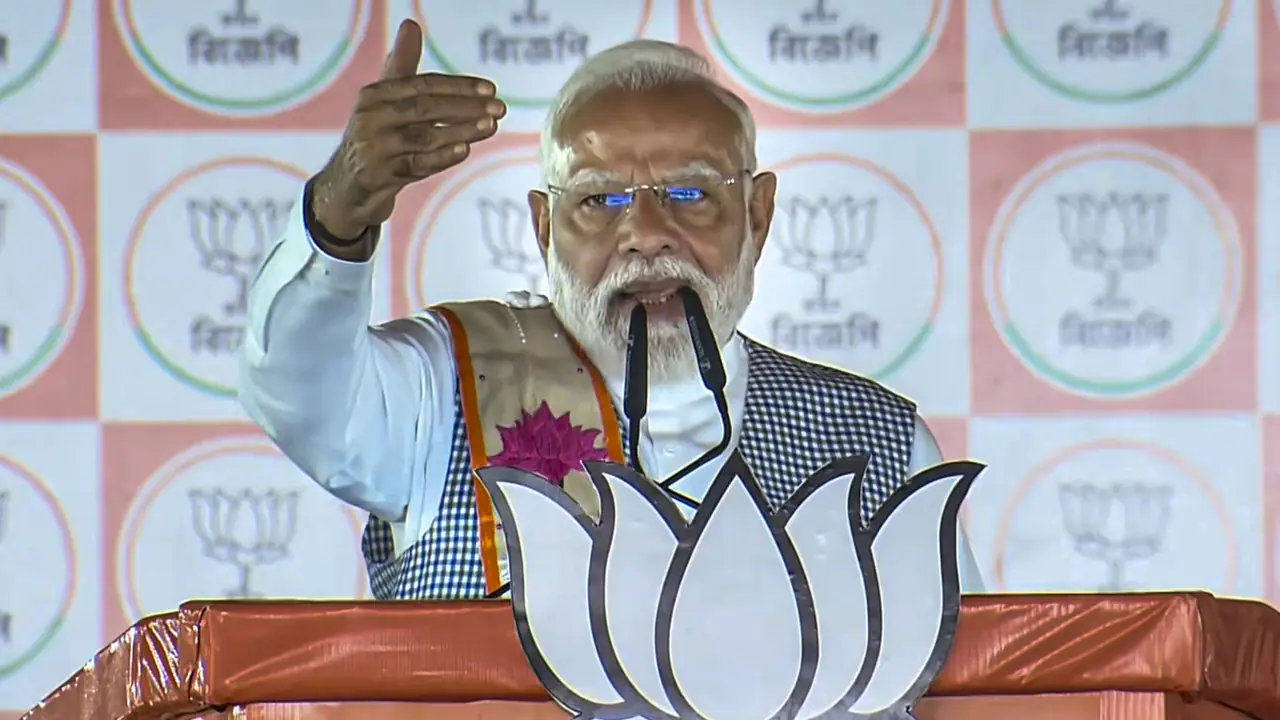
Speaking ahead of the second phase of polling, Modi delivered one of his strongest statements yet on illegal infiltration, placing the issue at the core of the BJP’s campaign narrative in West Bengal. He asserted that infiltrators would be identified and deported, making it clear that those who had entered the country unlawfully would not be allowed to remain.
The Prime Minister framed infiltration as both a national security threat and a challenge to Bengal’s cultural identity. He accused the Mamata Banerjee-led government of shielding infiltrators for political benefit, alleging that welfare schemes intended for citizens were being diverted. According to him, this not only compromised security but also deprived rightful beneficiaries of state resources.
This emphasis aligns with the BJP’s broader electoral strategy in the state, where issues of border security, citizenship, and demographic balance have been consistently highlighted. Modi’s remarks reinforced infiltration as a central election theme, echoing similar concerns raised by other senior leaders during the campaign.
Escalating attacks ahead of crucial voting phases
In his final rally before the next round of voting, Modi sharpened his attack on the ruling Trinamool Congress (TMC), accusing it of corruption, administrative failure, and fostering an environment of lawlessness. He positioned the BJP as the force capable of bringing structural change to the state’s governance.
Repeatedly invoking May 4—the day election results are expected—Modi described it as a turning point for West Bengal. He portrayed it as the end of what he called a period of misrule, promising that a BJP government would begin implementing reforms immediately after the results are declared.
Linking infiltration to governance failures, he argued that illegal entrants contributed to rising crime, economic strain, and social imbalance. By connecting security concerns with everyday governance issues, Modi sought to present a unified narrative where development and national security are inseparable.
#WATCH | West Bengal Assembly Elections: Prime Minister Narendra Modi holds roadshow in Barrackpore
The second phase of elections here is scheduled for April 29, and the counting will take place on May 4
(Source: DD) pic.twitter.com/SdLKZQ0JM5— ANI (@ANI) April 27, 2026
Promises aimed at youth and employment
While the campaign has been marked by strong warnings, it has also included a range of forward-looking promises. In his final rally, Modi unveiled initiatives aimed particularly at Bengal’s youth and unemployed population—key voter groups in the state.
One of the standout proposals was the creation of “content creation labs.” These facilities, he said, would provide infrastructure and support for young people to participate in the digital economy. The initiative is designed to tap into the rapidly expanding creator ecosystem, offering training, tools, and opportunities for monetisation.
Alongside this, Modi promised to expand government job opportunities. He criticized the current recruitment system, alleging irregularities and a lack of transparency, and pledged that a BJP government would implement a merit-based and streamlined hiring process.
This dual focus on employment and digital innovation reflects an attempt to broaden the campaign’s appeal. By pairing hardline positions on security with aspirational economic policies, the BJP is seeking to connect with both traditional supporters and younger, more aspirational voters.
Barrackpore roadshow signals campaign climax
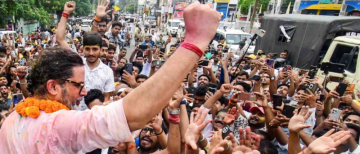
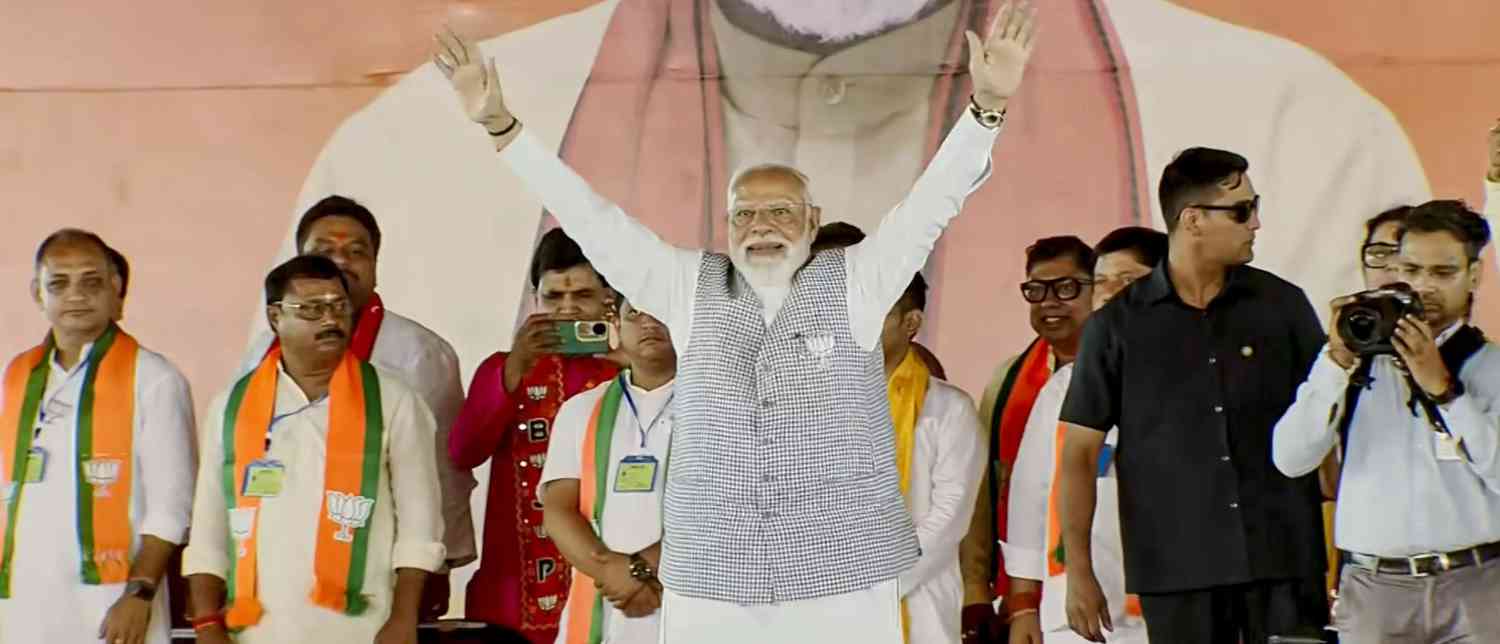
The campaign reached a visual and political high point with a massive roadshow in Barrackpore. As campaigning for the final phase came to an end, Modi’s convoy moved through densely packed streets lined with supporters, creating a charged atmosphere that underscored the intensity of the election.
Crowds gathered in large numbers, waving party flags and chanting slogans, turning the event into a show of strength. The roadshow was not just about voter outreach—it was a demonstration of organisational capability and momentum at a critical juncture in the election cycle.
Barrackpore’s strategic importance added weight to the event. With its complex political dynamics and history, the region represents a key battleground where even small shifts in voter preference could influence the overall outcome.
ব্যারাকপুরে আজ তিল ধারণের জায়গা নেই। কিছুক্ষণের মধ্যেই জনসভায় ভাষণ দেব। pic.twitter.com/wbDV4w21iI— Narendra Modi (@narendramodi) April 27, 2026
BJP vs TMC: A sharply drawn contrast
Throughout his speeches, Modi consistently framed the चुनाव as a direct contest between two contrasting models of governance. He presented the BJP as a party committed to development, transparency, and national security, while accusing the TMC of corruption, appeasement politics, and administrative inefficiency.
He alleged that the ruling party’s policies had enabled infiltration and weakened governance structures, positioning the election as a choice between “development for citizens” and “support for infiltrators.” This binary framing has been central to the BJP’s messaging, simplifying complex issues into a clear political choice for voters.
Such framing is designed to mobilize a broad voter base by appealing to both emotional and practical concerns—security, identity, and economic opportunity.
Timing and electoral significance
The timing of Modi’s remarks is significant. With polling spread across multiple phases, each rally has the potential to influence voter sentiment in real time. His speeches ahead of key phases appear calibrated to energize party workers while also reaching undecided voters.
Elections in West Bengal have historically been intense, often marked by fierce competition and concerns over law and order. Against this backdrop, Modi’s emphasis on security and administrative reform resonates with voters who prioritize stability and effective governance.
Speaking at a huge rally in Barrackpore. People across West Bengal want security, opportunities and honest governance, which TMC has completely failed to deliver.@BJP4Bengal
https://t.co/yvD05mmyu0— Narendra Modi (@narendramodi) April 27, 2026
The symbolic weight of May 4
A recurring theme in Modi’s campaign has been the date of May 4. Beyond being the day results will be announced, it has been presented as a symbolic turning point—a deadline for change.
He has repeatedly promised that decisive action will follow immediately after this date. Whether it is tackling infiltration, addressing corruption, or implementing development initiatives, May 4 has been framed as the beginning of a new phase for the state.
This forward-looking messaging creates a sense of urgency among voters while also setting expectations for swift action if the BJP comes to power.
Broader political stakes
West Bengal remains one of India’s most politically complex states, with deeply entrenched party loyalties and evolving voter dynamics. The BJP’s aggressive campaign, led by Modi, reflects its ambition to significantly expand its presence in the region.
For the TMC, the election represents a critical test of its ability to withstand a high-intensity challenge backed by national leadership and resources. The contest goes beyond electoral numbers—it represents competing visions of governance, identity, and development.
#WATCH | West Bengal Assembly Elections: Prime Minister Narendra Modi held a roadshow in Barrackpore
The campaigning for the second and final phase of the assembly elections in West Bengal will end this evening. 142 constituencies will go to the polls in this phase on the 29th… pic.twitter.com/JwyiWnjPsE— ANI (@ANI) April 27, 2026
A campaign at full throttle
As campaigning concludes for crucial phases, Modi’s outreach in Bengal encapsulates the BJP’s broader electoral strategy: combine assertive national security messaging with targeted economic promises, draw sharp contrasts with the incumbent government, and maintain strong visibility on the ground.
From warnings about identifying and deporting infiltrators to promises of content creation labs and expanded job opportunities, the campaign narrative has been both forceful and expansive. The Barrackpore roadshow, with its massive turnout and charged atmosphere, marked the culmination of this effort.
With voting underway and May 4 approaching, the outcome now rests with the electorate. Whether this high-energy campaign translates into electoral gains remains to be seen, but one thing is certain—West Bengal stands at a pivotal political crossroads.
With inputs from agencies
Image Source: Multiple agencies
© Copyright 2026. All Rights Reserved. Powered by Vygr Media.