 By
By 
Ask anyone in politics to name a seat the BJP simply cannot lose, and Ayodhya tends to come up first. It is the city of the Ram temple, after all. But as Uttar Pradesh begins to look towards the 2027 Assembly election, the numbers tell a more complicated story, and so do the people who actually live there.
A seat the BJP has mostly called home
For most of the last thirty years, Ayodhya has been a BJP seat. Lallu Singh won it five times in a row, in 1991, 1993, 1996, 2002 and 2007, still the party’s longest unbroken run here. The Samajwadi Party (SP) broke the streak in 2012, when Tej Narayan Pandey won. The BJP took it back in 2017, when Ved Prakash Gupta won by more than 50,000 votes, and he held it in 2022.
On paper, it still looks like safe ground. The trouble is what lies underneath.
The win that quietly shrank
In both 2017 and 2022, the BJP polled about 49 per cent. Same share, same result. But the margin fell from 50,440 votes in 2017 to 19,990 in 2022, because the SP’s vote share jumped to 40.40 per cent, up 14.39 percentage points.
Put simply, the BJP kept its voters, but the Opposition found far more of them. This is not a new worry, either. Reports from earlier elections noted that the winner’s margin here had been declining with each Assembly poll.
The 2024 jolt
Then came the 2024 Lok Sabha election. Just months after the Ram temple’s consecration, the Faizabad seat, which includes Ayodhya, went to the SP’s Awadhesh Prasad, who beat the BJP’s Lallu Singh by 48,104 votes. One state BJP leader admitted at the time that the defeat was painful and unexpected.
There is a twist worth knowing. Inside the Ayodhya Assembly segment itself, Lallu Singh still led Prasad by roughly 4,667 votes. The city didn’t turn against the BJP, but a lead that thin is a long way from the comfortable cushion of 2017.
Who lives here: the caste picture
Ayodhya has roughly 3.6 lakh voters. According to a widely cited estimate (not official data), around 45,000 are Brahmins, 36,000 Yadavs, 43,000 Dalits and 44,000 Muslims. That is a finely balanced mix, and exactly the kind of seat where caste maths can change a result.
The SP is leaning on its “PDA” coalition of backward, Dalit and minority voters. Its 2024 candidate, Awadhesh Prasad, comes from the Pasi (Dalit) community, which has a sizeable presence locally. The BJP, for its part, will point to the Ram temple and the development that has followed it.
The local anger behind the numbers
This is where the story gets human. Development has transformed Ayodhya, and it has come at a cost for some residents. Reporting in 2024 described widespread resentment among traders over the demolition of shops and houses for the widening of Ram Path and nearby roads. One account put the number of displaced shopkeepers at around 800, another counted more than 1,100 shops and houses demolished along the 13-km Ram Path, and a traders’ union leader gave a far higher estimate of 4,000 to 4,500 shops and homes. These figures vary and none is official.
Many of those affected said the compensation was far too small. One shopkeeper described it as feeling more like charity. A recurring complaint is that much of the town is built on government land, so people who had lived and traded there for generations were paid for the demolition but not for the land itself. Some residents also said that their elected representatives told them it was a government matter when they asked for help.
The state government’s position, reported in earlier coverage, was that compensation had been handed out to displaced shopkeepers, and it approved ₹1,000 crore for road-widening projects. We have not seen fresh reporting on how many of these complaints remain unresolved today, so treat the numbers above as a snapshot of the mood around the last election, not the present.
The civic picture
Ayodhya is now run by a municipal corporation, and the current mayor is the BJP’s Girish Pati Tripathi, elected in May 2023. The next civic election is not due until 2028, so the Assembly poll will be the first big test of public feeling on local governance since then.
The war of words has already started
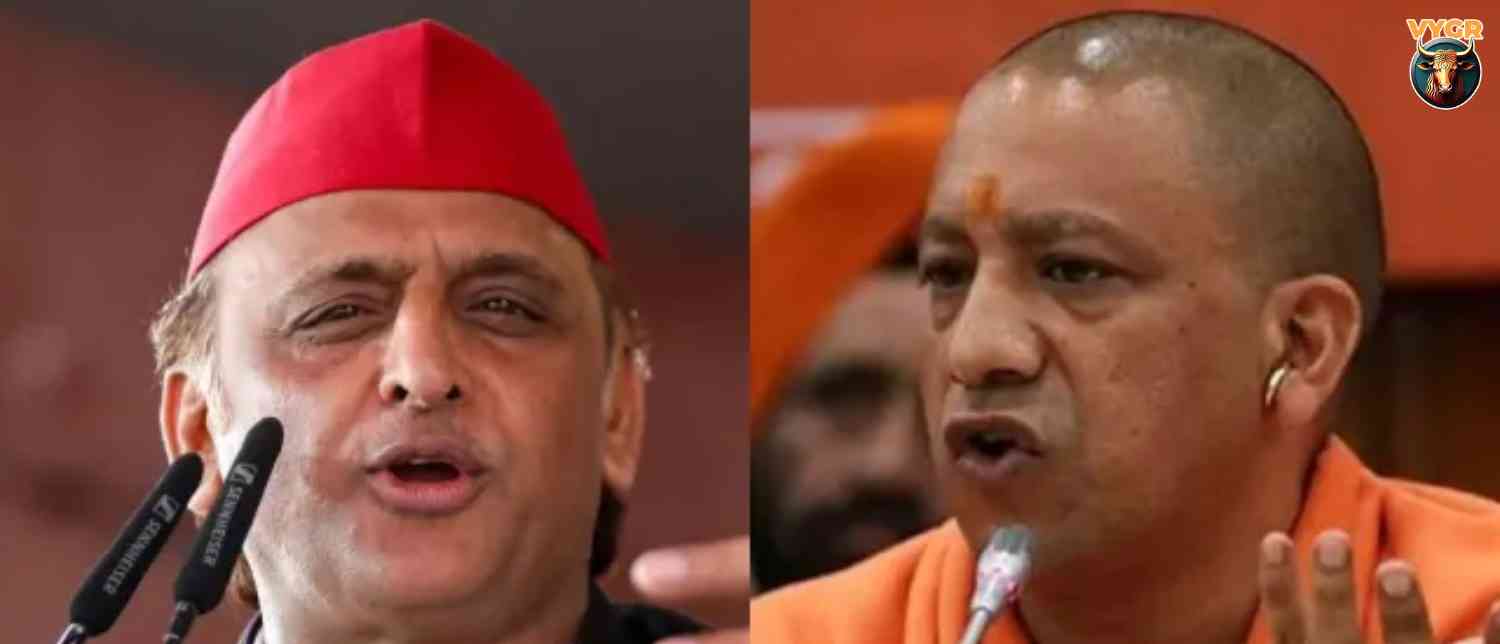
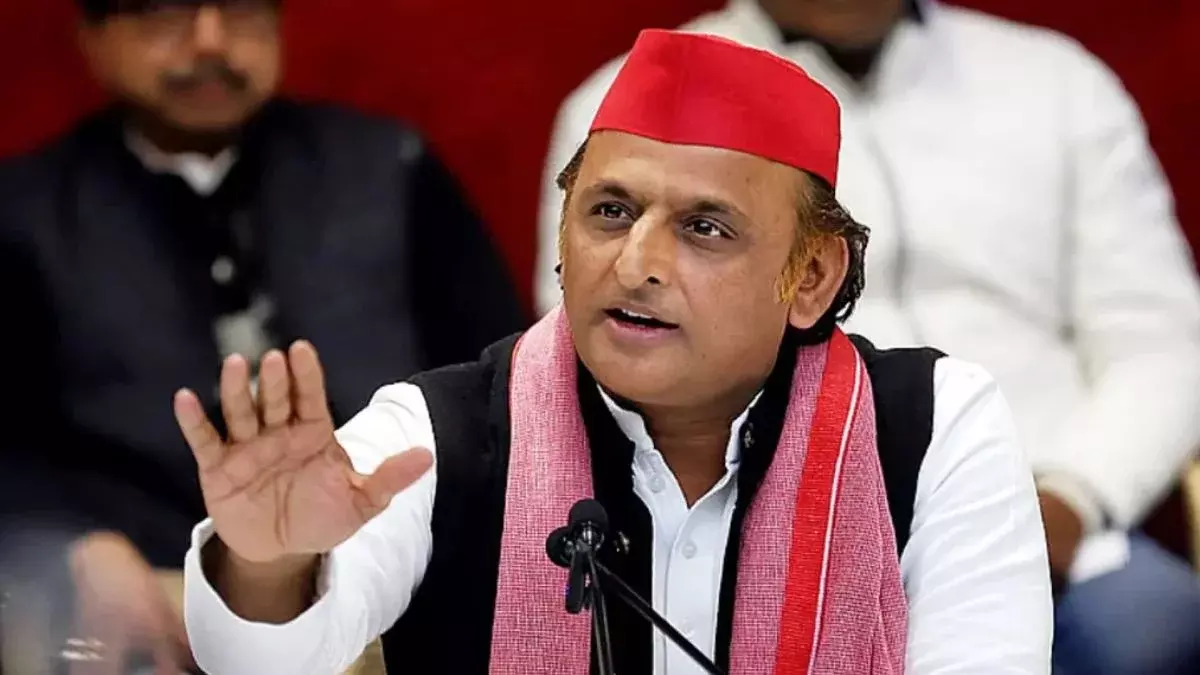
The two parties are not waiting for the official campaign. SP chief Akhilesh Yadav says the BJP has been running surveys and can’t find a candidate for Ayodhya, and Chief Minister Yogi Adityanath is reported to have accepted the challenge.
The Chief Minister has now answered. He said he travels to Ayodhya again and again because he wants to make sure that its development never slips and that the state’s image is not damaged, describing the city as a centre of faith and devotion. He insisted these visits have nothing to do with fighting an election. At the same time, he invited Akhilesh to file his nomination from Ayodhya, said he would do the same and take a chance there, and called for a direct contest between the two.
Akhilesh replied that a youthful nominee would be enough to take on the BJP in the city, and he pointed to the temple donation row as the reason. The SP has already named Pandey as its candidate. The BJP has not announced its pick, and Adityanath currently represents Gorakhpur Urban in the Assembly. As reports have noted, his reply is an invitation to a contest and not an announcement that he will stand from Ayodhya.
Awadhesh Prasad has claimed that the SP will win nearly 325 seats statewide in 2027. That is a party prediction, and it should be read as one.
What to watch
Three questions will shape this contest. Who will each party pick as its candidate? Can the SP turn its 2024 momentum into assembly votes? And can the BJP rebuild the margin it enjoyed in 2017, or has the local mood shifted for good? On a seat this finely balanced, turnout and everyday concerns could tip the result.
What happens next
The election is due in 2027, and the first real clues will come when the parties announce their candidates. We have not seen a confirmed list of candidates
© Copyright 2026. All Rights Reserved. Powered by Vygr Media.