 By
By 
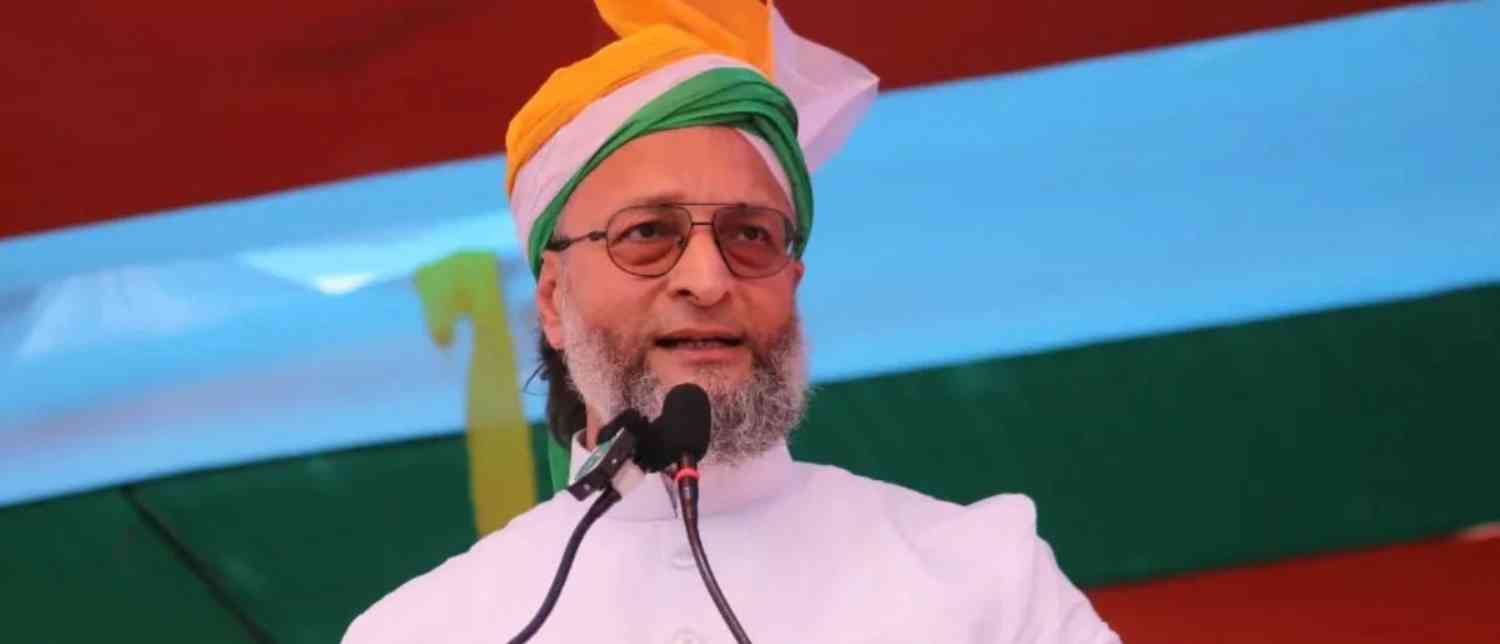
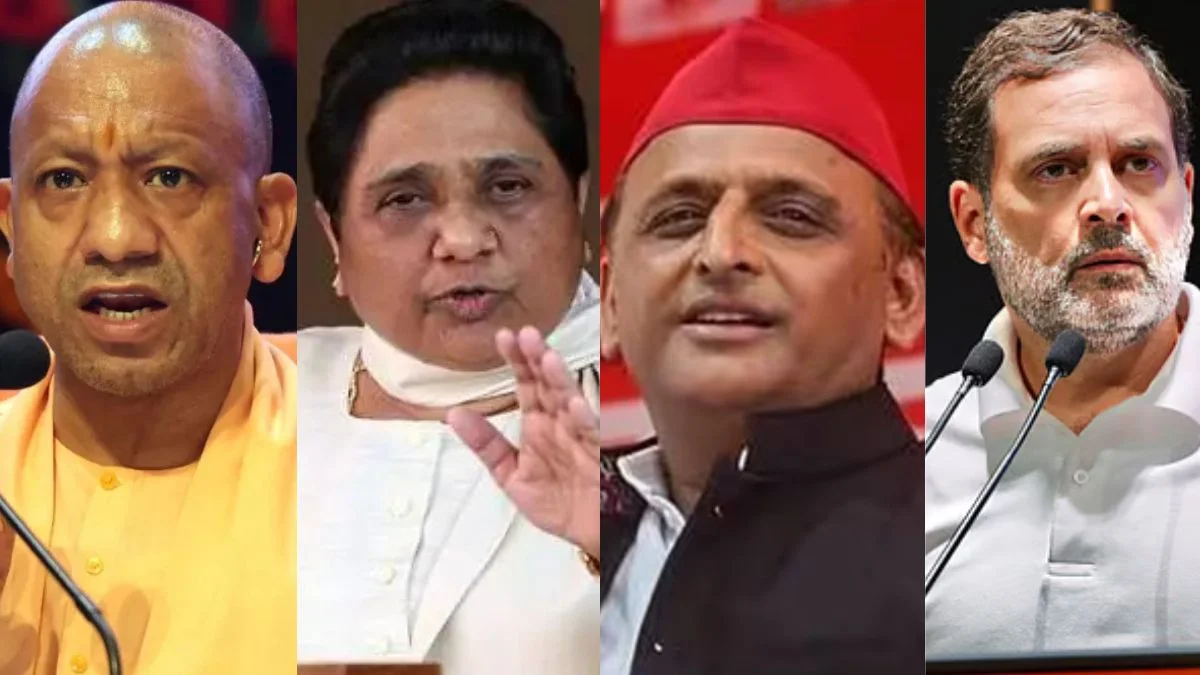
With the 2027 Uttar Pradesh Assembly elections approaching, political exchanges between the ruling Bharatiya Janata Party (BJP) and the opposition Samajwadi Party (SP) are gaining momentum. AIMIM president Asaduddin Owaisi has now entered the escalating confrontation with a series of pointed challenges directed at Yogi Adityanath and Akhilesh Yadav.
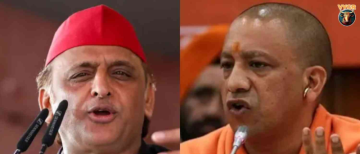
Owaisi has proposed an electoral face-off that would take both leaders beyond the constituencies currently at the centre of their political rhetoric. He challenged Uttar Pradesh Chief Minister Yogi Adityanath to contest from Sambhal and urged Akhilesh Yadav to enter the electoral fray from Gorakhpur, a constituency closely associated with the chief minister's political base.
The AIMIM chief's remarks come amid a broader war of words over where the two prominent leaders should contest the next Assembly election. Rather than simply joining the exchange, Owaisi has attempted to turn it into a challenge about political confidence, accountability and the willingness of leaders to face voters in difficult constituencies.
His intervention also signals AIMIM's intention to establish a more visible presence in Uttar Pradesh politics, particularly in areas where Muslim voters constitute an important electoral constituency.
Why Owaisi Challenged Yogi Adityanath to Contest from Sambhal
Sambhal has become a politically sensitive location in Uttar Pradesh, with questions surrounding communal tensions, mosque-related disputes and administrative action contributing to its significance.
Owaisi challenged Yogi Adityanath to contest from Sambhal and face voters directly over controversies involving the demolition of mosques and the state government's handling of related matters.
The challenge was designed to place the chief minister's political claims against the realities of a constituency with a substantial Muslim population. By asking Yogi to seek a mandate from Sambhal, Owaisi sought to make the proposed contest a test of political credibility and public accountability.
The AIMIM leader also questioned whether the political confrontation between the BJP and SP was addressing the issues that matter to ordinary residents. His criticism extended beyond the choice of constituencies to allegations of irregularities and unanswered questions surrounding developments in Sambhal.
These remarks remain part of Owaisi's political allegations and challenges. They do not, by themselves, establish wrongdoing by either of the leaders he criticised.
Nevertheless, Sambhal's prominence in the debate reflects the wider role of local controversies, community representation and competing political narratives in shaping the run-up to the Uttar Pradesh Assembly elections.
Owaisi Dares Akhilesh Yadav to Contest from Gorakhpur
Owaisi's challenge to Akhilesh Yadav is equally significant. He urged the Samajwadi Party president to contest from Gorakhpur, a city that has long been associated with Yogi Adityanath's political influence.
The proposal would place Akhilesh in a constituency widely viewed as a stronghold of the chief minister and the BJP. Owaisi suggested that if both leaders were confident of their popularity, they should be prepared to face voters in politically challenging territory.
He also claimed that AIMIM and the people of the state could defeat the two leaders if they accepted his proposed challenges.
The remark adds another dimension to the rivalry between the BJP and the SP. While Yogi Adityanath and Akhilesh Yadav remain central figures in the state's political contest, Owaisi is seeking to position AIMIM as a party willing to question both sides rather than align itself automatically with the opposition.
Gorakhpur's importance in this exchange is largely symbolic. It represents a test of Akhilesh Yadav's willingness to enter a constituency associated with his principal political rival. However, Owaisi's challenge is not an announcement that Akhilesh will contest from Gorakhpur, nor does it confirm the final constituency choices of either leader.
The political significance lies in the message: leaders who project confidence in their popularity should be willing to demonstrate it before voters, including in constituencies where their opponents have a stronger organisational presence.
Owaisi Alleges an Understanding Between BJP and Samajwadi Party
One of the sharpest elements of Owaisi's criticism has been his allegation that Yogi Adityanath and Akhilesh Yadav are operating with an understanding that benefits both political camps.
He has described their confrontation as a form of staged political wrestling, suggesting that the public exchange of challenges may distract voters from substantive questions about governance and accountability.
The allegation of a political understanding between the Uttar Pradesh chief minister and the SP president is a claim made by Owaisi, not an established fact. Both leaders belong to rival political camps, and the accusation adds to the increasingly confrontational atmosphere ahead of the election.
Owaisi's argument is that political exchanges centred on dramatic challenges can generate headlines without necessarily providing answers on employment, economic hardship, public services, corruption allegations or the representation of marginalised communities.
By questioning the nature of the BJP-SP confrontation, the AIMIM chief is attempting to present his party as an alternative to the two dominant political forces.
The strategy could also appeal to voters who feel that their concerns are being overshadowed by high-profile political disputes. However, whether the argument translates into electoral support will depend on AIMIM's organisation, candidates, campaign strategy and ability to connect its messaging with local issues.
'Muslims Need Their Own Political Leadership': Owaisi's Azamgarh Message
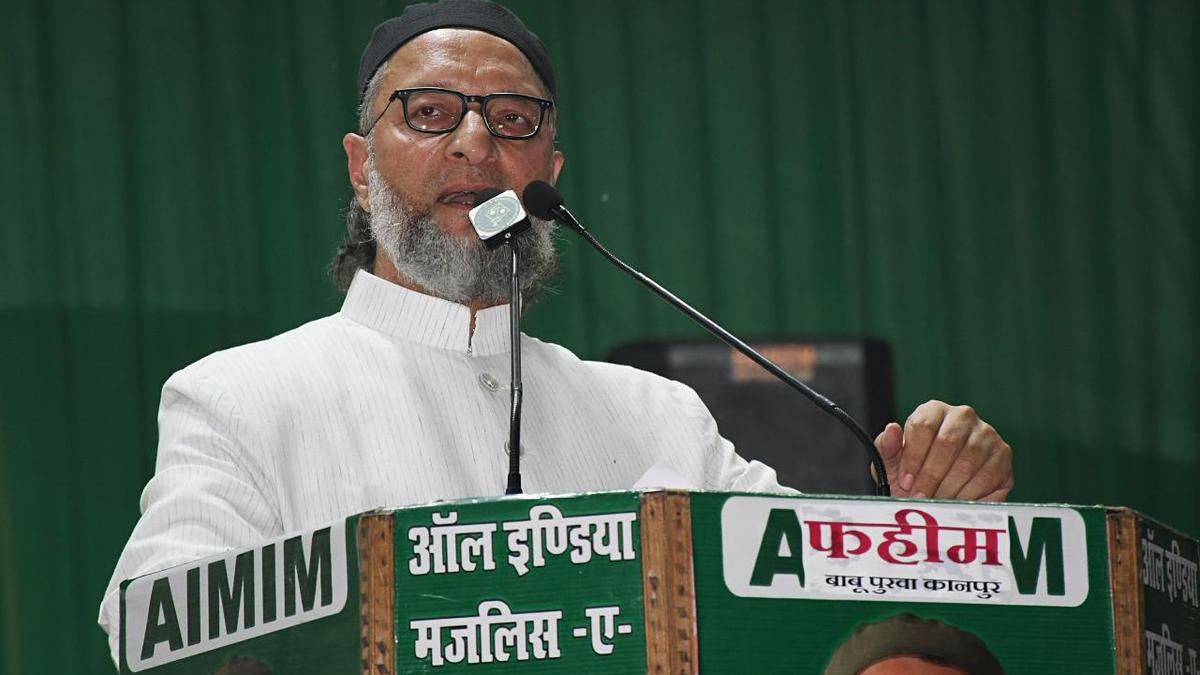
Owaisi's campaign has not been limited to challenging the two leaders over their potential constituencies. At a public gathering in Azamgarh, an important political centre for the Samajwadi Party, he delivered a broader message about independent political leadership and Muslim representation.
He argued that Muslim voters should not remain dependent on established political families or parties for representation. His remarks included a pointed reference to the Gandhi and Nehru names, with Owaisi saying that the community needed leaders of its own rather than continuing to depend on established political figures.
The message was framed around political self-representation, dignity and participation in decision-making. Owaisi argued that Muslim voters should seek a greater share in political power instead of being treated primarily as a vote bank during elections.
The Azamgarh rally is particularly relevant because of the region's association with the Samajwadi Party. By addressing supporters there, Owaisi sought to challenge the SP's traditional appeal among sections of Muslim voters and encourage them to consider AIMIM as an independent political option.
His remarks also targeted the Congress, placing both parties within his criticism of established opposition politics.
The central question raised by Owaisi is whether minority communities should continue relying on larger parties to represent their interests or build political platforms capable of negotiating power and representation directly.
For AIMIM, the message is part of a wider attempt to expand beyond its established political base and strengthen its appeal among voters who want greater participation in legislative and political decision-making.
Owaisi Accuses Samajwadi Party of Exploiting Muslim Voters
Owaisi's criticism of the Samajwadi Party has become a central theme of his campaign. He alleged that the party had benefited from Muslim voters' support over several generations without providing adequate political empowerment or delivering the level of development expected in areas where it enjoys considerable influence.
He questioned the SP's development record in Azamgarh and compared the facilities and institutions associated with the region with those established in Saifai, the home turf of the Yadav political family.
Owaisi also raised the issue of Shibli College in Azamgarh, questioning why it had not received university status. By highlighting educational infrastructure and development, he attempted to connect his criticism of the SP with concerns that extend beyond electoral representation.
His broader argument is that political loyalty should not be treated as permanent or unconditional. According to Owaisi, voters should assess parties on their record, their commitment to public welfare and the opportunities they create for communities that have consistently supported them.
The accusations are likely to intensify the political contest for Muslim voters in Uttar Pradesh. The SP has traditionally attracted considerable support among sections of the state's Muslim electorate, while AIMIM is attempting to establish itself as a stronger alternative.
However, Owaisi's criticism also touches on a longstanding political dilemma: whether minority voters should prioritise supporting a party considered capable of defeating the BJP or backing candidates who promise more direct representation of their interests.
Owaisi's '99 vs 1' Narrative Challenges BJP's Political Messaging
Another significant element of Owaisi's campaign is his proposed '99 vs 1' political narrative, which he has presented as an alternative to the BJP's frequently discussed '80 vs 20' formulation.
Owaisi argued that the real divide in the upcoming Uttar Pradesh elections should be between economically disadvantaged citizens and a wealthy minority that holds a disproportionate share of the country's wealth.
He described the 99% as the poor and ordinary people of Uttar Pradesh, while accusing the remaining 1% of benefiting from concentrated economic power. He also claimed that this wealthy section controls around 40% of India's wealth.
These figures and characterisations form part of Owaisi's political argument and should be understood as his claims rather than independently established findings presented during the campaign.
The message seeks to redirect attention towards poverty, economic inequality and the distribution of opportunities. It also allows AIMIM to broaden its political appeal beyond questions of religious identity and minority representation.
For voters concerned about employment, education, inflation and access to public services, economic issues could become an important part of the electoral conversation. Whether Owaisi's framing gains traction will depend on how effectively AIMIM translates its rhetoric into a convincing programme for governance.
What Owaisi's Challenges Mean for Uttar Pradesh's Political Landscape
The emerging confrontation highlights the increasingly complicated calculations facing the BJP, the Samajwadi Party, Congress and AIMIM ahead of the 2027 Uttar Pradesh Assembly elections.
For the BJP, Yogi Adityanath's leadership remains a central part of its political positioning in the state. For the SP, Akhilesh Yadav's challenge will include retaining opposition support while defending the party's record and maintaining its coalition of voters.
AIMIM, meanwhile, is attempting to carve out a distinct political space by questioning both the ruling party and its principal opposition.
Owaisi's challenges involving Sambhal and Gorakhpur are therefore more than headline-grabbing exchanges. They form part of an effort to question the confidence of established leaders, bring local controversies into the wider election debate and encourage voters to reconsider their political choices.
His outreach in Azamgarh adds another layer to that strategy. By urging Muslims to develop independent leadership, he is seeking to turn dissatisfaction with established parties into support for AIMIM.
At the same time, the party faces the challenge of converting public meetings and forceful speeches into votes and Assembly seats. Strong campaign rhetoric does not automatically guarantee electoral success, particularly in a state with a complex mix of caste identities, regional loyalties, local leadership and competing political alliances.
The possible impact of AIMIM on opposition vote distribution is also likely to remain a subject of debate. Critics of the party have previously argued that its participation can divide votes among parties competing against the BJP, while Owaisi maintains that voters deserve independent political choices and meaningful representation.
The eventual outcome will depend on candidate selection, constituency-level alliances, campaign organisation and the issues that dominate the final stages of the election.
A High-Stakes Political Battle Ahead of UP Elections 2027
Asaduddin Owaisi's latest remarks have added fresh intensity to Uttar Pradesh's developing election narrative. His challenge to Yogi Adityanath to contest from Sambhal and Akhilesh Yadav from Gorakhpur has brought the two prominent leaders into a debate about political confidence and electoral accountability.
His allegations of an understanding between the BJP and the Samajwadi Party, along with his criticism of the SP's record on Muslim representation, have also sharpened the ideological and electoral differences within the state's political opposition.
The message delivered in Azamgarh reinforces AIMIM's broader objective: encouraging Muslim voters to demand a greater role in political leadership rather than relying exclusively on established parties.
Whether this approach reshapes the electoral contest remains uncertain. What is clear is that the road to the 2027 Uttar Pradesh Assembly elections is already being marked by competing narratives over representation, development, economic inequality and political accountability.
As campaigning gathers pace, voters will ultimately decide whether these challenges and allegations influence their choices at the ballot box.
© Copyright 2026. All Rights Reserved. Powered by Vygr Media.