

 By
By 
In a major policy decision with far-reaching political and security implications, the newly formed West Bengal government led by Suvendu Adhikari has announced that all pending land required for border fencing along the India-Bangladesh frontier will be transferred to the Border Security Force within 45 days. The move, approved during the first Cabinet meeting of the new BJP-led administration, is being projected as a decisive step to curb infiltration, strengthen national security, and accelerate stalled fencing work across vulnerable stretches of the border.
The announcement marks one of the most significant reversals of the previous administration’s handling of border-related land acquisition and is already shaping up as a defining issue in Bengal’s post-election political landscape.
According to Chief Minister Suvendu Adhikari, the state government has identified long-pending procedural and administrative bottlenecks that delayed the transfer of land needed for fencing construction. He said the new government would ensure “complete cooperation” with the BSF and central agencies to complete the process swiftly.
The decision was taken during the first Cabinet meeting after the BJP assumed power in the state. Adhikari stated that all district administrations concerned have been instructed to expedite documentation, resolve disputes, and complete the transfer process within the stipulated 45-day timeline.
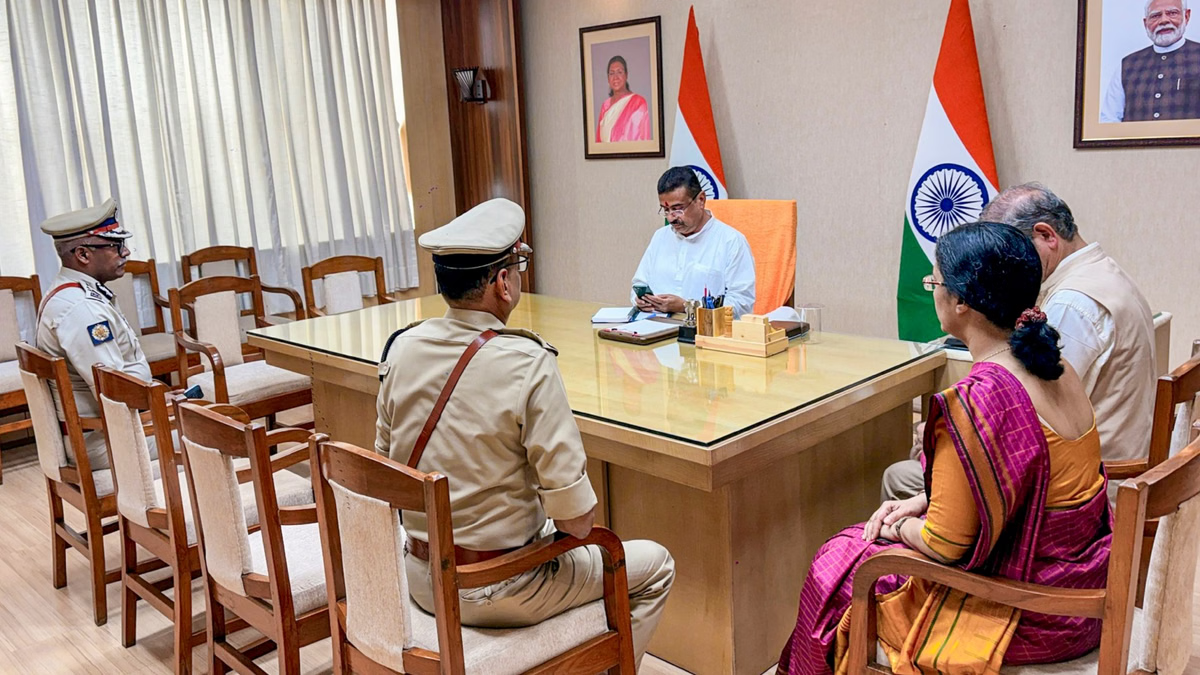
Border Fencing Delays Under Scanner
West Bengal shares a porous international border of over 2,200 km with Bangladesh, making it one of the most sensitive border states in the country. Large stretches of this border pass through riverine terrain, densely populated villages, agricultural land, and areas with complicated land ownership patterns.
Officials and political leaders have repeatedly claimed that fencing projects remained incomplete in several districts because land required for construction was either not handed over or got stuck in administrative disputes. The newly elected government has alleged that the delays under the previous regime compromised national security and enabled illegal infiltration, cattle smuggling, and cross-border criminal activity.
Adhikari said that the state’s position on the issue would now be “clear and uncompromising,” adding that security concerns would receive priority treatment.
The government’s decision is expected to directly impact several border districts, including North 24 Parganas, Nadia, Murshidabad, Malda, Uttar Dinajpur, Cooch Behar, and South 24 Parganas — regions that have frequently featured in debates surrounding illegal migration and cross-border crime.
BJP Frames Move as National Security Measure
The BJP has consistently accused the previous government of obstructing border infrastructure projects and adopting a “soft” approach toward illegal infiltration from Bangladesh. During the Assembly election campaign, the party repeatedly highlighted incomplete fencing work and promised stronger coordination with central security agencies.
Adhikari, while addressing the media after the Cabinet meeting, argued that border fencing is not merely a state issue but a matter of national interest. He claimed that delayed land transfer weakened efforts to secure the frontier and created operational challenges for the BSF.
The Chief Minister also said that the government would work in close coordination with the Union Home Ministry to ensure uninterrupted progress in fencing work. He added that all departments had been directed to remove procedural delays and avoid bureaucratic hurdles.
Political observers see the decision as part of the BJP government’s attempt to establish a strong law-and-order and national security narrative immediately after taking office.

Focus on Infiltration and Cross-Border Crime
The issue of infiltration from Bangladesh has remained politically charged in Bengal for years. BJP leaders have often linked undocumented migration to demographic change, voter identity concerns, and rising security threats.
In announcing the Cabinet decision, Adhikari reiterated claims that illegal infiltration had become a serious challenge in multiple districts bordering Bangladesh. He argued that strengthening fencing infrastructure was essential not only to prevent unauthorized entry but also to combat smuggling networks operating along the frontier.
Security experts note that sections of the Bengal border remain particularly difficult to monitor because of rivers, char areas, and densely inhabited settlements located close to the zero line. In many places, fencing alignment has historically faced resistance due to land ownership complications and displacement concerns.
The BSF has long argued that fencing gaps creates vulnerabilities that traffickers and illegal cross-border operators can exploit. The fresh push by the state government is expected to improve coordination between civil administration and border forces significantly.
Land Transfer to Include Pending Cases
Government sources indicated that the 45-day deadline applies not only to new proposals but also to long-pending land transfer cases awaiting administrative approval. District magistrates and land departments have reportedly been instructed to prepare updated status reports and identify unresolved issues immediately.
The administration is also expected to conduct rapid verification of disputed land parcels and coordinate compensation-related procedures where required.
Officials familiar with the matter said the government aims to create a “single-window clearance mechanism” to speed up approvals linked to fencing projects. This could reduce delays caused by multiple departmental clearances, one of the major obstacles cited in previous years.
The BJP government has also suggested that future border-related projects will receive fast-track treatment under a dedicated monitoring system.
Political Message Beyond Security
Beyond the administrative significance, the announcement carries substantial political messaging.
The BJP’s rise in Bengal politics has been closely tied to issues such as border security, illegal migration, and citizenship debates. By prioritizing the land transfer issue in its very first Cabinet meeting, the new government appears intent on signaling a sharp departure from the previous regime’s governance style.
Political analysts believe the move is aimed at consolidating the BJP’s support base in border districts, where concerns around infiltration and smuggling have remained electorally influential.
The decision also aligns with the party’s broader national narrative emphasizing border management and internal security. Several BJP leaders have argued that better fencing infrastructure is necessary to ensure effective implementation of citizenship and immigration laws.
Opposition parties, however, are expected to question the political motivations behind the announcement and may raise concerns regarding land acquisition, rehabilitation, and the impact on local residents living near the border.
Debate Over BSF Jurisdiction Continues
The issue of border management in West Bengal has previously triggered political confrontations between the state government and the Centre, particularly over the expanded jurisdiction of the BSF in border states.
The earlier state administration had opposed the Centre’s decision to extend the BSF’s operational jurisdiction from 15 km to 50 km inside Bengal territory, arguing that it infringed upon the state’s policing powers.
The BJP, on the other hand, defended the move by citing national security concerns and increasing cross-border criminal activity.
Against this backdrop, the latest Cabinet decision is being viewed as an attempt to establish closer state-centre coordination on border security matters.
Adhikari emphasized that the new government would fully cooperate with central agencies and would not allow “political considerations” to interfere with security-related projects.
Administrative Push Expected Across Border Districts
The state administration is now expected to begin intensive coordination exercises with district authorities, land records departments, and BSF officials to meet the ambitious 45-day target.
Sources said that senior bureaucrats may conduct regular review meetings to track progress district-wise. The government is also expected to maintain direct communication with the Union Home Ministry regarding pending infrastructure requirements.
Experts believe that if implemented successfully, the accelerated land transfer could help complete several stalled fencing segments that have remained unfinished for years.
At the same time, challenges remain significant. Border fencing projects in Bengal often involve densely cultivated farmland, residential settlements, and complex terrain conditions. Resolving compensation claims and relocation concerns within a short timeline may prove difficult in certain pockets.
A Defining Early Decision for the New Government
The Cabinet’s decision to hand over all pending border land to the BSF within 45 days has emerged as one of the first major policy announcements of the new Bengal government and reflects the BJP administration’s emphasis on national security-led governance.
Whether the government succeeds in meeting the deadline remains to be seen, but the announcement has already reshaped the political conversation around border management in the state.
For the BJP leadership, the move represents both an administrative commitment and a political statement — one intended to demonstrate urgency, assertiveness, and alignment with the Centre’s security priorities.
As implementation begins across Bengal’s border districts, the effectiveness of the policy will likely be measured not only by the speed of land transfer but also by its long-term impact on fencing completion, infiltration control, and the broader security architecture along India’s eastern frontier.
With inputs from agencies
Image Source: Multiple agencies
© Copyright 2026. All Rights Reserved. Powered by Vygr Media.