 By

The political landscape of Punjab has witnessed a major development ahead of the 2027 Punjab Assembly elections, with the Bharatiya Janata Party (BJP) and the Shiromani Akali Dal (SAD) officially announcing the revival of their alliance. Ending nearly six years of political separation, the two former allies have decided to come together once again, setting the stage for a potentially significant electoral contest in the state.
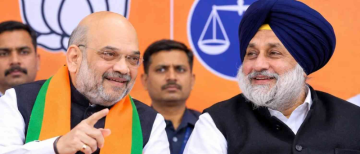
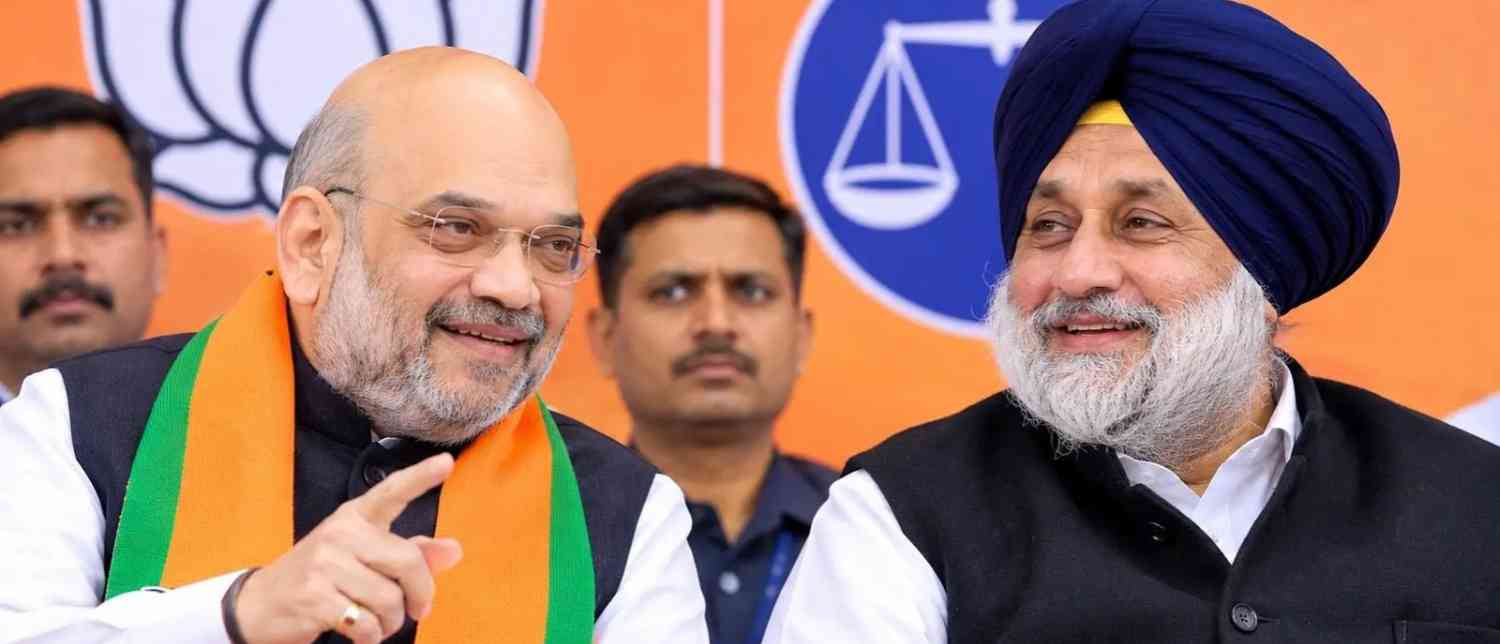
Union Home Minister Amit Shah, BJP president Nitin Nabin and Shiromani Akali Dal president Sukhbir Singh Badal announced the alliance at a joint press conference in New Delhi on November 24, 2026. The announcement followed weeks of speculation and political discussions about the possibility of the two parties renewing their partnership before the crucial Punjab Assembly polls.
The reunion is particularly significant because the BJP and SAD had shared a long-standing political relationship before parting ways over the contentious farm laws in 2020. Their return could reshape Punjab's electoral calculations, particularly as the ruling Aam Aadmi Party (AAP), Congress and other political players prepare for the next Assembly elections.
With Akali Dal retaining the leading position in the alliance and the Chief Minister's post expected to go to its side, the partnership has already generated considerable political interest. However, its actual electoral strength will depend on seat-sharing arrangements, voter sentiment and the ability of both parties to rebuild their support bases.
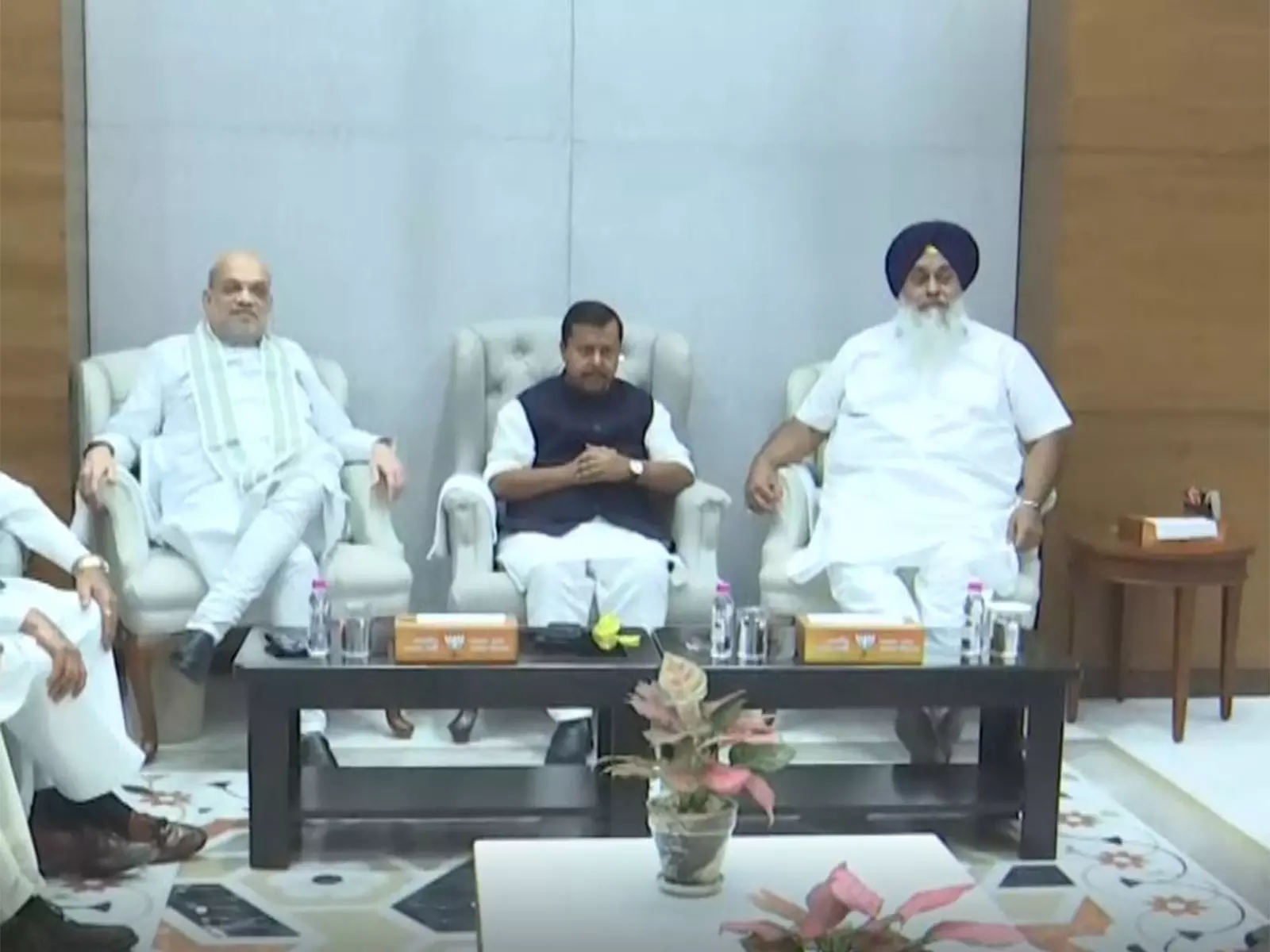
BJP-SAD Alliance 2027: Six Years After Split, Old Partners Reunite
The BJP-SAD alliance has considerable historical significance in Punjab. The two parties were not merely electoral partners; together, they governed the state for a decade and developed a political arrangement that brought different voter constituencies under one umbrella.
Their partnership dates back several decades and reached its electoral high point during the 2007 and 2012 Assembly elections. In 2007, the Shiromani Akali Dal won 48 seats, while the BJP secured 19. The alliance successfully retained power in 2012, although the BJP's seat tally declined to 12.
However, the political equation began changing in 2017. The alliance suffered a major setback as the Congress returned to power under Captain Amarinder Singh. The SAD managed to win just 15 seats, while the BJP secured only three.
The situation deteriorated further in the 2022 Punjab Assembly elections. Contesting separately, the Aam Aadmi Party registered a sweeping victory, winning 92 of the state's 117 Assembly seats. Congress finished with 18 seats, while the SAD managed only three and the BJP secured two.
These results exposed the declining electoral influence of both former allies and highlighted the challenge they now face in rebuilding their political strength.
The 2027 Punjab elections will therefore be an important test of whether the BJP and Akali Dal can recreate the political chemistry that once made them a formidable force in the state.
Why Did the BJP and Akali Dal Split in 2020?
The BJP-SAD alliance broke down in September 2020 after the Shiromani Akali Dal withdrew from the NDA over the Centre's three controversial farm laws.
The legislation triggered widespread protests among farmers, particularly in Punjab, where agriculture plays a central role in the state's economy, society and political identity.
The SAD, which traditionally enjoyed considerable support among farming communities, faced mounting pressure over its association with the BJP-led central government. The party opposed the farm laws and eventually decided to end its 24-year-old alliance with the BJP.
The decision marked a significant turning point in Punjab politics. The Akali Dal's then Union Minister Harsimrat Kaur Badal also resigned from the Union Cabinet in September 2020 in protest against the legislation.
The three farm laws were subsequently repealed by the central government in November 2021. However, their political consequences continued to influence the relationship between the two parties.
For nearly six years, the BJP and SAD pursued separate political strategies in Punjab. Both parties struggled electorally, with the 2022 Assembly results demonstrating how significantly their combined political influence had weakened.
Their reunion ahead of the 2027 Punjab Assembly elections indicates that both sides are now willing to put their differences behind them in pursuit of a common electoral objective.
Amit Shah Calls Alliance a Symbol of Hindu-Sikh Brotherhood
One of the most significant aspects of the BJP-SAD alliance announcement was the emphasis on the historical relationship between the two parties and their broader social significance.
Announcing the partnership, Union Home Minister Amit Shah described the Shiromani Akali Dal as one of the NDA's oldest allies and welcomed its return to the alliance.
Shah also highlighted the long-standing relationship between the BJP and the Akali Dal, recalling the association between former Prime Minister Atal Bihari Vajpayee and former Punjab Chief Minister Parkash Singh Badal.
He said Prime Minister Narendra Modi was pleased with the development and viewed the renewed partnership as a symbol of Hindu-Sikh brotherhood.
The timing of the announcement also carried symbolic importance, as it coincided with Guru Purab, adding a cultural and historical dimension to the political reunion.
For the BJP, the alliance provides an opportunity to strengthen its political outreach in a Sikh-majority state. For the Akali Dal, it offers the possibility of rebuilding its electoral position through renewed cooperation with a national political party.
Sukhbir Singh Badal described the partnership as more than a political arrangement, calling it an emotional alliance aimed at securing Punjab's interests.
He also credited the political legacy of his father, Parkash Singh Badal, and former Prime Minister Atal Bihari Vajpayee for laying the foundation of the relationship.
NDTV+1
Seat-Sharing Formula: How Many Seats Will BJP and SAD Contest?
While the alliance has been officially announced, the exact seat-sharing arrangement between the two parties remains an important issue to watch.
Punjab has 117 Assembly constituencies, and both parties will need to negotiate their respective electoral responsibilities carefully.
During the announcement, Amit Shah clarified that the Akali Dal would retain the senior partner position in the alliance. He indicated that the Chief Minister would also come from the Akali Dal, reinforcing the party's leadership role in Punjab.
Shah also stated that both parties would contest all 117 Assembly seats as part of the alliance.
Although the final seat distribution was not announced, reports ahead of the agreement had suggested that the BJP could contest approximately 40 constituencies. This would represent a considerable increase from the 23 seats it traditionally contested under the previous arrangement.
Under the old seat-sharing formula, the Akali Dal generally contested 94 seats, while the BJP contested the remaining 23.
The possibility of a larger BJP share reflects the party's changing political ambitions in Punjab. Having spent several years attempting to expand its independent presence in the state, the BJP is likely to seek a stronger electoral role within the revived partnership.
However, the Akali Dal's position as the senior partner suggests that its traditional political influence will remain central to the alliance.
The final seat-sharing formula, constituency selection and possible arrangements involving other NDA partners will be important factors in determining how effectively the two parties coordinate their campaigns.
Why the BJP-SAD Alliance Could Become a Strong Contender in 2027
The biggest electoral advantage of the BJP-Akali Dal alliance lies in the possibility of bringing together two different voter bases.
The BJP has traditionally maintained a relatively stronger presence among urban voters and sections of the Hindu electorate in Punjab. Meanwhile, the Akali Dal has historically drawn support from Sikh voters, rural communities and its traditional Panthic base.
By contesting together, the parties could potentially combine these support networks and improve their electoral reach across different regions of Punjab.
The alliance also provides an opportunity to avoid splitting votes between two parties that previously shared a common political platform.
The historical election figures demonstrate why the partnership could matter.
In 2007, the SAD-BJP combine secured a comfortable position in the state, with the Akali Dal winning 48 seats and the BJP winning 19. Their partnership remained in power through the 2012 elections.
The subsequent decline of both parties, particularly in 2022, makes the renewed alliance strategically important.
However, electoral arithmetic alone cannot guarantee victory. The political environment in Punjab has changed considerably since the two parties last contested an election together.
The AAP has established a substantial electoral presence, while Congress continues to remain a major political contender.
The challenge for the reunited partners will be to demonstrate that their combined voter base can translate into actual constituency-level victories.
The Economic Times+1
AAP and Congress Face a New Political Challenge in Punjab
The revival of the BJP-SAD alliance could significantly influence the political calculations of both the ruling Aam Aadmi Party and the Congress ahead of the 2027 Punjab elections.
The AAP secured a historic mandate in 2022, winning 92 of the 117 Assembly seats. Its victory marked a major transformation in Punjab politics, pushing traditional political parties into the background.
However, the return of the BJP and Akali Dal as electoral partners could create a more competitive environment.
For the AAP, the immediate challenge will be defending its existing electoral support while countering a reunited opposition alliance.
The BJP-SAD partnership is also likely to put additional pressure on Congress, which finished second in the 2022 elections with 18 seats.
Instead of facing the BJP and Akali Dal separately, both AAP and Congress may now have to prepare for a coordinated electoral challenge from the two former allies.
This could make the 2027 Punjab Assembly elections a closely watched three-way political contest.
Nevertheless, the final outcome will depend on several factors, including candidate selection, local leadership, campaign strategies, anti-incumbency sentiment and the response of voters to the alliance.
Drug-Free Punjab and Other Key Political Promises
Apart from the alliance announcement, Amit Shah also highlighted the issue of drug abuse, which remains one of Punjab's most significant social and political concerns.
Shah reiterated the promise of making Punjab drug-free by December 2029 while criticising the previous Congress government and the incumbent AAP administration over their handling of the drug problem.
Drug trafficking and substance abuse have remained recurring issues in Punjab's electoral debates. Political parties have repeatedly promised stronger enforcement, rehabilitation measures and action against organised drug networks.
For the BJP and SAD, making the issue a central part of their campaign could help them connect with voters concerned about public safety, youth employment and the future of the state's younger population.
Sukhbir Singh Badal also criticised the AAP government, accusing it of failing to address Punjab's problems and alleging that the state needed a political alternative.
He maintained that the renewed alliance would work towards protecting Punjab's interests.
Whether these promises translate into a detailed and convincing electoral programme will become clearer as the parties begin preparing their campaign agendas and manifestos.
Can the Reunited BJP-SAD Alliance Recreate Its Political Success?
Despite the optimism surrounding the announcement, rebuilding the former alliance's electoral strength will not be an easy task.
Both parties have experienced significant political setbacks since their separation. The Akali Dal has struggled to regain its earlier influence, while the BJP has yet to establish itself as a dominant independent force across Punjab.
The farm laws controversy also remains an important part of the political history of their separation. Rebuilding trust among farmers and sections of the electorate who opposed the legislation could prove challenging.
Furthermore, the political landscape is no longer the same as it was during the alliance's successful years.
The rise of AAP, changing voter preferences, regional political issues and the evolving influence of different parties have created a more complicated electoral environment.
The BJP and SAD will therefore need more than a historical partnership to convince voters. They will have to present a credible political roadmap, address local concerns and establish that their reunion offers a meaningful alternative.
The leadership arrangement announced by Amit Shah gives the Akali Dal an important advantage, but the seat-sharing negotiations and campaign coordination will ultimately determine how the alliance functions on the ground.
BJP-SAD Reunion Sets the Stage for an Interesting 2027 Punjab Election
The revival of the BJP-SAD alliance marks a major development in Punjab politics ahead of the 2027 Assembly elections. After nearly six years apart, the two former partners have decided to reunite, hoping to regain their political influence and challenge the dominance of the AAP and Congress.
With the Akali Dal retaining the senior partner position and the BJP seeking a stronger electoral role, the partnership has the potential to reshape the state's political contest.
However, its success will depend on whether the two parties can rebuild their traditional support bases, overcome the political consequences of their 2020 split and present a convincing alternative to voters.
One thing is clear: the return of the BJP and Akali Dal has added a significant new dimension to the 2027 Punjab Assembly elections. Whether this reunion becomes a winning political formula or merely an attempt to revive past electoral fortunes will be decided by the people of Punjab.
© Copyright 2026. All Rights Reserved. Powered by Vygr Media.