 By
By 
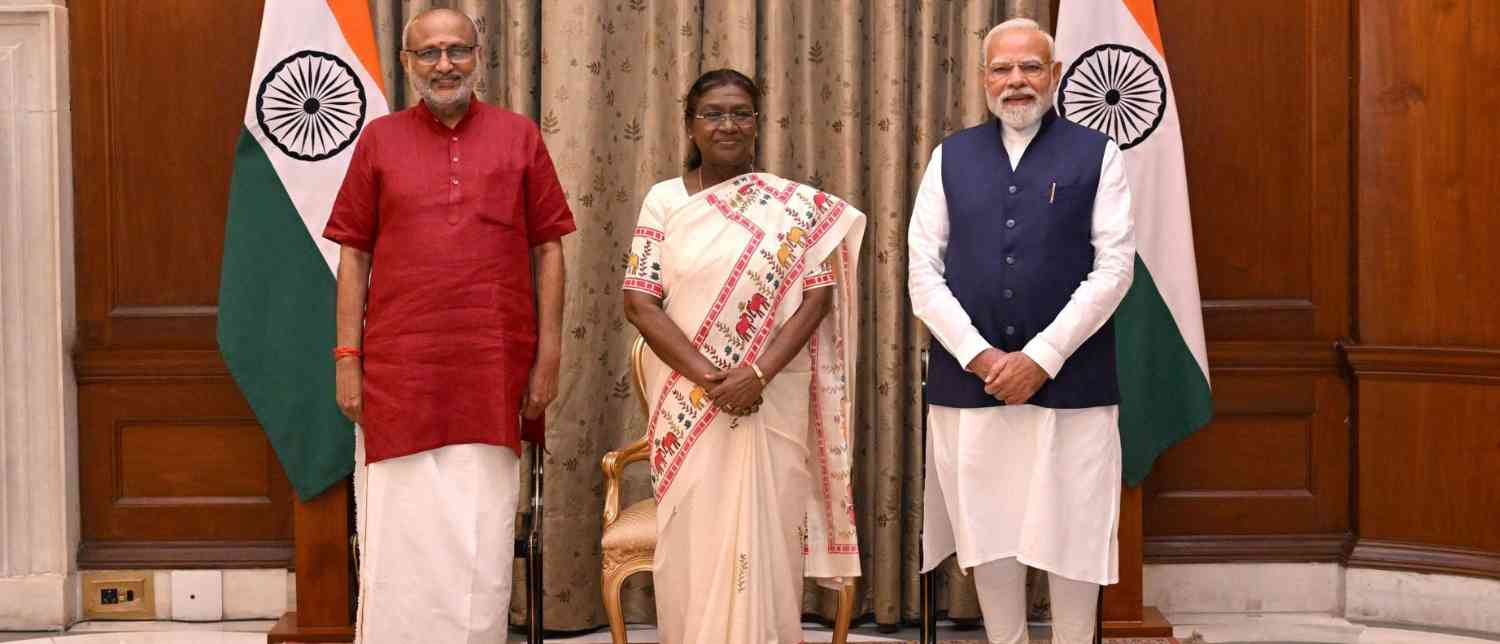
When C P Radhakrishnan—veteran parliamentarian, former governor, and the ruling NDA’s nominee—was elected the new Chairman of the Rajya Sabha with a comfortable margin, the result itself was unsurprising. The official tally showed him securing 452 votes against Opposition candidate Justice B Sudershan Reddy’s 300. Yet, the intensity of the run-up to the election, the arguments aired, and the anxieties expressed revealed something much deeper: the recognition that the Vice President, by virtue of being the ex officio presiding officer of the Rajya Sabha, carries far more than ceremonial weight. He is a custodian of India’s federal equilibrium.
Justice Reddy’s own campaign underscored the stakes. His cautionary remarks on the restructuring of the GST and reminders of his earlier judicial verdict on Salwa Judum—a judgment that shaped state strategy against Naxalism—served as prompts for a wider reflection. These debates revived a fundamental truth: the Rajya Sabha is not merely the Upper House; it is the institutional anchor of federalism. And the Vice President, guiding its proceedings, is pivotal in protecting the spirit of that design.
The Rajya Sabha’s Constitutional Power: The Federal Chamber by Design
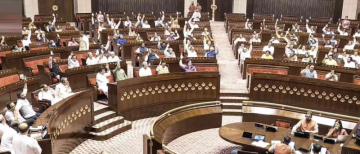
India’s Parliament rests on a bicameral architecture crafted to balance direct democracy with federal representation. The Lok Sabha mirrors the popular mandate. The Rajya Sabha embodies the will of the states—indirectly elected, yet structurally empowered to safeguard their interests.
Its powers go well beyond revising legislation. Under Article 249, the Rajya Sabha can, with a two-thirds majority of members present and voting, authorise Parliament to legislate on subjects listed in the State List if it deems it necessary in the national interest. Under Article 312, it can create new All-India Services with an identical majority—an act that shapes the Union’s administrative spine. And even though the Lok Sabha has primacy over Money Bills, the Rajya Sabha’s scrutiny of fiscal policy remains essential, for no appropriation act can be passed without both Houses approving it.
Most constitutional amendments, too, require special majorities in both Houses, reinforcing the Upper House’s indispensability. In contentious moments—fiscal devolution, Centre-state frictions, governor-state face-offs, appointment mechanisms, centrally sponsored schemes—the Rajya Sabha becomes the country’s institutional safety valve.
This is why the credibility and authority of the Chair matter profoundly.
Impartiality at the Helm: Why the Vice President’s Role Is Crucial
The Vice President presides over the Rajya Sabha but is not a member of the House. The office demands neutrality—recognising speakers without favour, adjudicating points of order with even-handedness, and ensuring smaller and regional parties receive adequate space. In an arena where federal questions routinely arise, an unbiased Chair can mean the difference between meaningful scrutiny and mere symbolism.
A rigorous Chair does not obstruct the majority’s legislative agenda. Instead, he ensures that every proposal receives its due: fair debate time, transparent admission of notices, equitable speaking slots, and a presumption in favour of discussion—especially when issues touch on state autonomy.
But recent years have strained this expectation.
Troubling Trends: Money Bills, Diminished Committee Scrutiny, and Eroding Debates
The controversy around the Aadhaar Act crystallised concerns about the misuse of the Money Bill route. Once certified as a Money Bill by the Lok Sabha Speaker, the Rajya Sabha’s role is limited to recommending changes, which the Lower House can ignore. Judicial opinions remain split on whether this mechanism has been stretched beyond constitutional intent—potentially undermining bicameralism.
Equally worrying is the fall in committee scrutiny. In the 17th Lok Sabha, only 16% of bills were referred to committees. During the 16th Lok Sabha, 21% went to committees. Contrast this with the 15th Lok Sabha, when 69% of bills were sent for detailed examination. Fewer references mean fewer opportunities for expert and stakeholder consultations—weakening deliberative democracy and curtailing the federal voice vested in the Rajya Sabha.
It is in this context that Justice Reddy’s warnings about GST-related centralisation found resonance. And it is in this political climate that Radhakrishnan takes charge.
A Return After Two Decades: A Changed Parliament Awaits Radhakrishnan
When Radhakrishnan steps into Parliament on December 1, the opening day of the 2025 Winter Session, he returns after two decades. His last stint as an MP ended with the 13th Lok Sabha in 2004. The parliamentary landscape he now encounters is vastly transformed.
The era of fractured mandates and coalition compulsions has given way to a decade of BJP dominance. Since 2014, the party has remained the single-largest force in Parliament, enabling the ruling NDA to set the legislative pace and shape the national agenda. Yet, this consolidation has coincided with a surge in confrontations between the government and an increasingly numerically diminished Opposition.
In the early years of the Modi era, the Rajya Sabha—where the BJP initially lacked a majority—became a battleground, with the Opposition deploying procedural tools to stall major proposals. Now, with the ruling alliance enjoying a comfortable majority in the Upper House as well, the government breathes easier. But the equilibrium has not stabilised; instead, it has shifted into a new form of tension.
Breakdown of Trust: Suspensions, Unaccepted Notices, and an Opposition Shut Out
Opposition parties argue that they are being denied the parliamentary space necessary to articulate concerns. They cite instances where notices for discussions—on the Galwan Valley clashes, the border stand-off with China, security breaches in Parliament in 2023, or issues concerning the Election Commission—were not admitted by the Chair.
The 2023 Winter Session marked an unprecedented flashpoint: 146 Opposition MPs—100 from the Lok Sabha and 46 from the Rajya Sabha—were suspended for demanding a statement from the Prime Minister or the Home Minister after a visitor breached security in the Lok Sabha gallery. Never before had Parliament witnessed a standoff of such intensity.
This distrust deepened when the combined Opposition submitted motions seeking the removal of both the Rajya Sabha Chairman and Deputy Chairman—motions that were rejected but symbolised the near-total collapse of cross-party dialogue.
Trinamool Congress MP Derek O’Brien recently argued that the refusal to allow a discussion on the functioning of the Election Commission was emblematic of the government’s reluctance to engage on issues central to electoral transparency. Multiple parties had submitted notices, but none were accepted.
The Committee Question: A Flashpoint That Won’t Settle
Another persistent grievance concerns the dwindling number of bills sent to parliamentary committees. PRS Legislative Research data highlights that during the 17th Lok Sabha, 58% of the 179 bills passed were cleared within two weeks of introduction—leaving little room for examination.
Opposition leaders argue that the backlash against the now-repealed 2021 farm laws might have been avoided had the bills been subjected to committee scrutiny, where farmers, experts, and other stakeholders could have aired their views. Committee processes enable consensus-building—yet they are now sparingly used.
A Pre-Session Controversy: The Bulletin and the Battle Over Decorum
On the eve of the 2025 Winter Session, another controversy erupted. The Congress objected to an entry in the Rajya Sabha Bulletin outlining parliamentary customs: it suggested that slogans such as “Thank You,” “Jai Hind,” or “Vande Mataram” should not be raised inside the House to maintain decorum. After pushback, the entry disappeared from the Bulletin.
While minor in isolation, the episode highlighted the fragile trust between political blocs and the scrutiny that awaits the new Chair.
The Task Before Radhakrishnan: Rebuilding Dialogue and Reclaiming Federalism
Having met ministers, officials, and MPs across parties in the weeks preceding his new role, Radhakrishnan now faces the weighty responsibility of restoring credibility to the Upper House. As Nobel laureates Daron Acemoglu and James A. Robinson have long argued, democracies survive and thrive through strong institutions—not strongmen. For the Rajya Sabha, procedural fairness is that strength.
His performance will be judged on several metrics:
1. Procedural Fairness:
Is debate on federal issues—GST, Centre-state finances, governors’ roles—given adequate time and genuine consideration?
2. Protection of Bicameralism:
Though the Chair cannot influence Money Bill certifications in the Lok Sabha, he can ensure the Rajya Sabha’s debates are robust, and refer bills to select committees where deeper scrutiny is essential.
3. Dignity and Inclusion:
A healthy federal chamber requires that regional and smaller parties feel seen and heard. Transparent speaking lists, equitable time distribution, and consistent enforcement of rules protect this ecosystem.
Practical Reforms Within Reach
Without any constitutional amendment, certain improvements can strengthen the Rajya Sabha’s integrity:
-
Publishing reasoned rulings on admissibility, especially on federal matters, to build institutional precedent.
-
Codifying transparent norms for speaking time and participation to protect the interests of smaller parties.
-
Reviving cross-party agreements to send more bills to committees.
-
Narrowing the over-use of the Money Bill route through parliamentary conventions.
Looking Ahead: A Federal Test Beyond the Immediate Horizon
The Vice President’s office is not ornamental—it is the hinge on which the Rajya Sabha’s authority rests. Radhakrishnan’s election does not automatically tilt the federal balance. What will matter is how he navigates the next five years, especially when issues involving state autonomy come under debate.
The stakes may rise further. After the upcoming delimitation exercise, if disparities in population-based Lok Sabha seat allocations widen, the Rajya Sabha—where states are more evenly represented—could become the constitutional arena for resolving federal asymmetry. Some scholars have even suggested moving toward more equal representation in the Upper House.
In the end, India’s federal balance does not rely solely on Articles 249 and 312 or on constitutional amendments. It rests on the daily practice of bicameralism—on a Chair who upholds neutrality, inclusivity, and scrutiny.
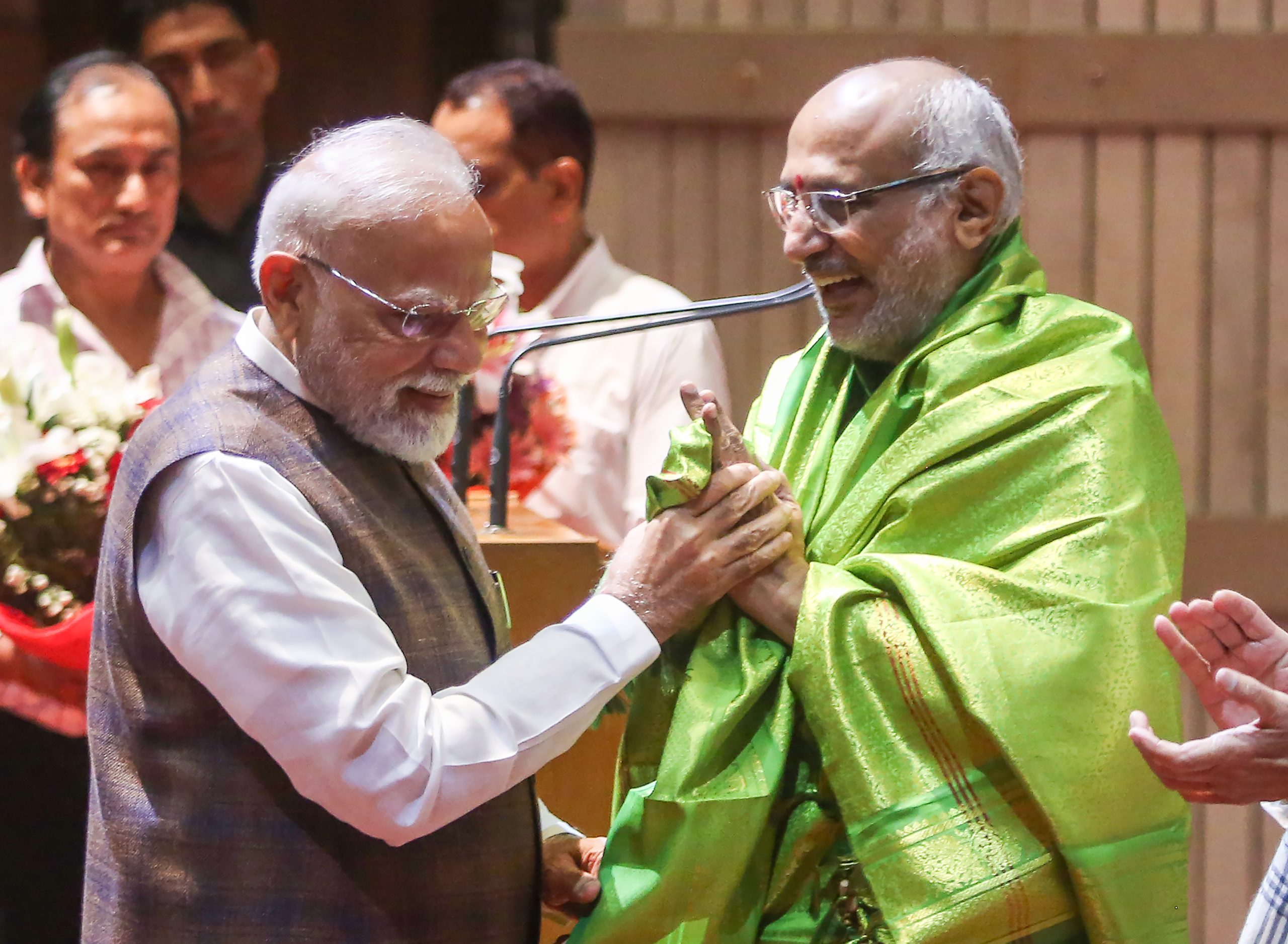
As C P Radhakrishnan takes charge, the central question remains: Can the new Rajya Sabha Chairman restore dialogue and trust, and thereby preserve the federal ethos that Parliament was built to uphold?
With inputs from agencies
Image Source: Multiple agencies
© Copyright 2025. All Rights Reserved. Powered by Vygr Media.