 By

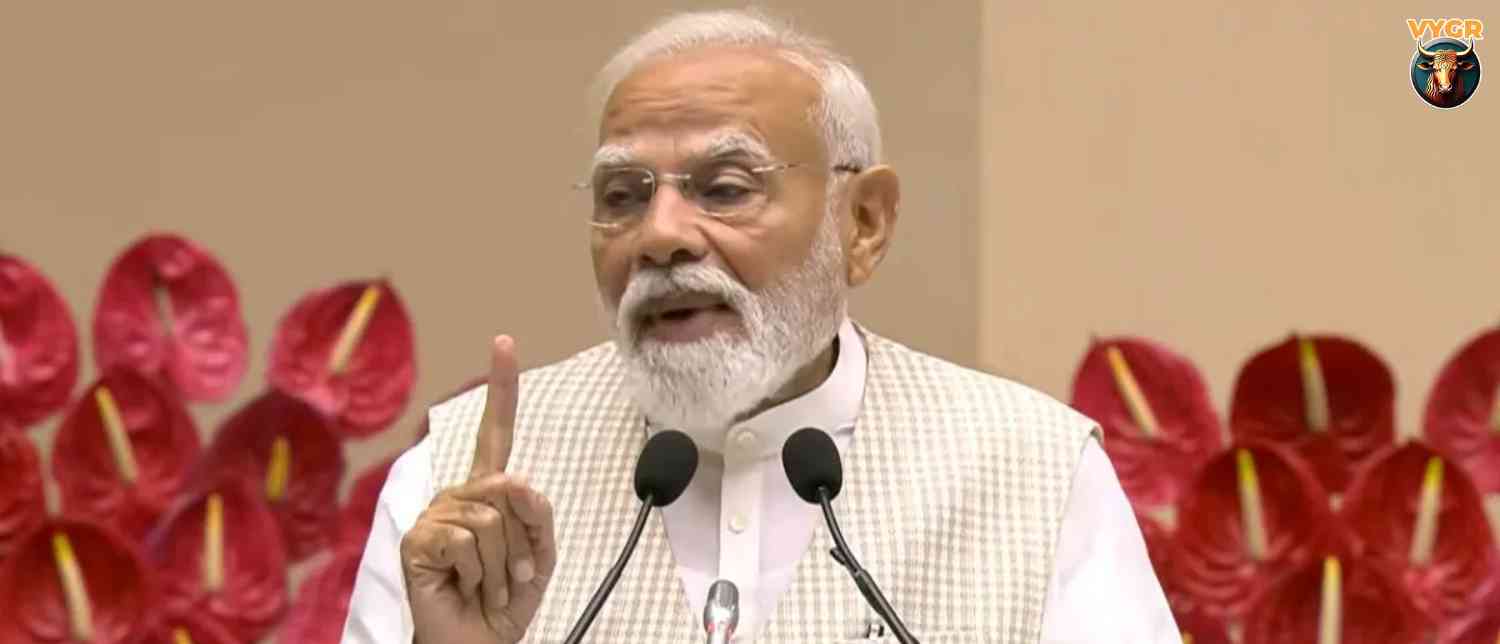
Prime Minister Narendra Modi has once again put women’s reservation at the centre of the national conversation. He said his government remains committed to its Nari Shakti promise and that no obstacle will be allowed to stand in the way of greater participation of women in Parliament and state assemblies.
His remarks come as the Centre pushes revised legislation that links the proposed 33 per cent quota for women with a fresh delimitation exercise. The push has reopened one of the most important and most debated questions in Indian politics today.
What the Prime Minister Said
The Prime Minister’s message was direct and confident. He reiterated that the government is determined to deliver on its promise to women and that political hurdles will not be allowed to derail it.
He framed the issue as one of rights and national progress, not favour. In his view, giving women a stronger voice in lawmaking is central to building a more representative democracy. His comments signal that the government sees the quota as a defining commitment, one it intends to see through.
The Background: A Promise Decades in the Making
The idea of reserving seats for women in legislatures is not new. It has been discussed in Indian politics for roughly three decades, with several attempts stalling along the way.
A major breakthrough came in 2023, when Parliament passed the Nari Shakti Vandan Adhiniyam. The law provides for 33 per cent reservation for women in the Lok Sabha and state legislative assemblies. But it came with a catch. Implementation was tied to two steps still pending at the time: a fresh census and a delimitation exercise to redraw constituency boundaries.
That linkage is exactly why delimitation has now become part of the story.
Why Delimitation Is Tied to the Quota
Delimitation is the process of redrawing the boundaries of electoral constituencies so that they reflect population changes. It also determines how seats are distributed across the country.
The government’s case is straightforward. To reserve one third of seats for women, the seats themselves must first be organised on a fresh and fair basis. Linking the two, it argues, allows the quota to take effect smoothly once the new boundaries are in place.
The Centre has now brought forward revised legislation to move this process along. The aim is to remove the practical hurdles that have kept the promise on paper and make it a reality in elections.
Why This Matters for Women in Politics
Women make up nearly half the country’s population, yet their presence in Parliament and state assemblies has remained far below that share. Supporters of the quota say the numbers speak for themselves.
If implemented, the reservation could be one of the biggest changes to India’s political landscape in decades.
- More women in lawmaking: A third of the seats would go to women, bringing more voices into decisions on education, health, safety, jobs and the economy.
- A stronger pipeline of leaders: Women who rise through local bodies, where reservation has already worked, would find a clearer path to higher office.
- Greater representation of everyday concerns: Many believe a more balanced legislature will give new priority to issues that have often been overlooked.
The Debate Around the Linkage
Not everyone is convinced about how the reform is being structured. While support for women’s reservation itself is widely shared across party lines, the link with delimitation has drawn questions.
Critics have raised several concerns.
- Fairness across states: Some worry that states with different population growth rates could see their share of political representation change.
- Timing: Others argue the quota should be implemented without waiting for delimitation, and could be applied to the existing seat structure.
- Inclusion within the quota: There are also calls for clearer provisions for women from Other Backward Classes within the reserved seats.
The government has pushed back, saying delimitation will be carried out fairly and will not discriminate against any region. It has urged all parties to look at the larger national interest and avoid turning women’s empowerment into a political contest.
What Happens Next
The next steps will matter as much as the speeches. The revised legislation has to move through Parliament, and because it involves constitutional changes, it needs strong and broad support to pass. An earlier attempt earlier this year ran into trouble on exactly this point, which is why the current push is being watched closely.
If the bill clears Parliament, attention will turn to the delimitation exercise itself, how it is carried out, and how quickly the reserved seats can be put in place ahead of the next general election cycle.
The Bigger Picture
Beyond the legal and political detail, this is a story about whether a long-standing promise will finally become real. Women already play a visible role in local governance, in business, in sport and in public life. The question is whether that strength will now be reflected in the country’s highest law-making bodies.
For the Prime Minister, the Nari Shakti pledge has become a cornerstone of his political message. For the Opposition, it is a test of whether support in principle will translate into support in practice. For millions of women across the country, it is a test of whether a decades-old promise will finally be kept.
Final Word
PM Modi’s message is clear: the government is committed, and it does not intend to let obstacles stand in the way. Whether the revised Delimitation Bill can build the wide consensus it needs will decide how soon women’s reservation moves from promise to reality.
Whatever the outcome, one thing is certain. The conversation about women’s place in India’s democracy has moved from the margins to the centre, and it is not going away.
© Copyright 2026. All Rights Reserved. Powered by Vygr Media.