 By
By 
The Supreme Court registry has flagged 14 procedural defects in a petition filed by Congress leader Rahul Gandhi and other INDIA bloc leaders challenging alleged electoral irregularities and the Election Commission of India’s Special Intensive Revision (SIR) of electoral rolls. The objections include missing lawyer authorisations, incomplete supporting documents, an unclear identity card and a court fee shortfall of Rs 220.
The development came on October 12, 2026, as Opposition leaders assembled in New Delhi for a demonstration demanding greater transparency in the electoral process and accountability over alleged voter deletions. The petition seeks judicial intervention in the SIR exercise, which has become a major political flashpoint between the Opposition and the Election Commission.
However, the registry’s objections concern filing requirements and should not be mistaken for a judicial decision on the petition’s substantive allegations. The plea will need to meet the necessary procedural requirements before it can proceed towards a hearing.
Supreme Court Registry Flags 14 Defects in INDIA Bloc Petition
The Supreme Court registry identified multiple discrepancies in the joint petition submitted by Rahul Gandhi and other Opposition leaders. Among the most prominent objections was a shortfall of Rs 220 in the court fee, alongside missing or unsigned legal authorisation documents for several petitioners.
The registry also sought a clear and legible copy of Congress president Mallikarjun Kharge’s identity card. Other issues reportedly involved incomplete paperwork, unclear supporting documents, missing pages, problems with page numbering and documents that were difficult to read.
Certain documents were also flagged for formatting and submission-related issues, including small fonts and the absence of colour copies where required. The registry further sought supporting records connected to the Election Commission’s decision to initiate the Special Intensive Revision of electoral rolls.
These objections highlight the importance of complying with procedural requirements when approaching the country’s highest court. Before a petition can move forward, its paperwork must satisfy the registry’s prescribed standards, including the submission of necessary authorisations and readable supporting evidence.
The number of objections does not, by itself, establish whether the petition’s central claims are valid or invalid. The registry’s scrutiny is an administrative stage of the judicial process, distinct from a court hearing in which judges examine the legal arguments and evidence.
Missing Signatures and Vakalatnamas Among Key Objections
One of the significant issues raised by the registry concerns missing or unsigned vakalatnamas associated with nine petitioners.
A vakalatnama is a legal document through which a party authorises an advocate to represent them in court. Such authorisation is an essential part of the filing process, and missing or incomplete documents can require correction before proceedings advance.
The leaders identified in connection with the authorisation-related objections include Trinamool Congress MP Saugata Roy, Samajwadi Party chief Akhilesh Yadav, Rashtriya Janata Dal leader Tejashwi Prasad Yadav, Shiv Sena (UBT) leader Sanjay Raut, Supriya Sule, D Raja, Mahua Majhi, M A Baby and Indian Union Muslim League leader E T Mohammed Basheer.
The registry also flagged the need for a clearer copy of Kharge’s identity card and additional supporting material. These requirements form part of the broader set of 14 defects identified during scrutiny of the INDIA bloc’s petition.
The legal team will need to address the relevant objections and ensure that the required documents are properly submitted. The exact procedural consequences depend on the nature of each defect and the applicable court rules.
What Is Rahul Gandhi’s Petition Against the Election Commission About?
The petition, filed by Rahul Gandhi and other Opposition leaders, challenges alleged irregularities associated with electoral rolls and the Election Commission’s Special Intensive Revision exercise.
The plea names the Election Commission of India, Chief Election Commissioner Gyanesh Kumar and Election Commissioners Sukhbir Singh Sandhu and Vivek Joshi as respondents. It raises concerns over voter deletions, changes to electoral rolls and the safeguards available to citizens whose names may be removed.
The petitioners are seeking intervention by the Supreme Court to ensure transparency and accountability in the revision process. They have called for greater scrutiny of the Election Commission’s decisions and safeguards to protect eligible voters from arbitrary exclusion.
Among the reliefs sought is the formation of an independent committee headed by a retired Supreme Court judge, with technical experts and other eminent citizens, to examine deletions and modifications in electoral rolls within a fixed timeframe.
The plea also seeks an interim suspension of the ongoing SIR exercise across states until the issues raised before the court are decided. In addition, the petitioners want directions ensuring that no voter is removed without prior notice and a reasonable opportunity to be heard.
Another demand concerns eligible voters in Punjab and other poll-bound states. The petitioners have sought measures allowing eligible citizens to apply for inclusion in electoral rolls until the legally prescribed deadline.
These requests place electoral transparency, voter inclusion and procedural fairness at the centre of the legal challenge. The Supreme Court will have to consider the arguments and applicable law if the petition proceeds to substantive judicial examination.
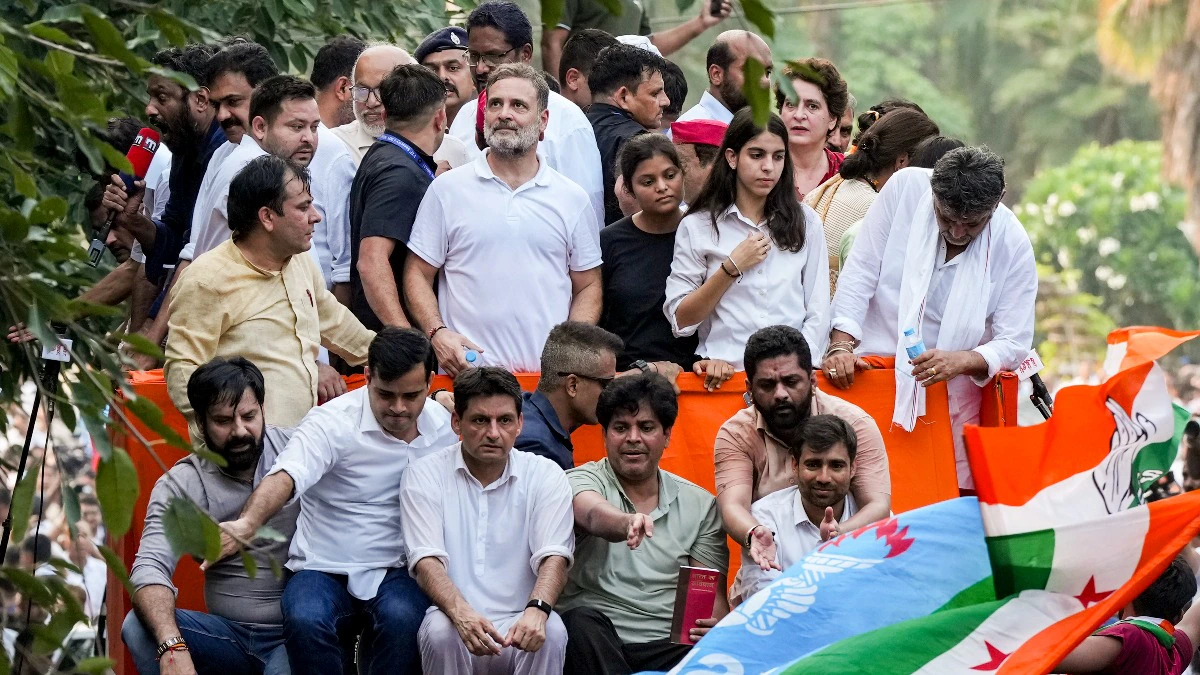
INDIA Bloc’s ‘March for Democracy’ in Delhi
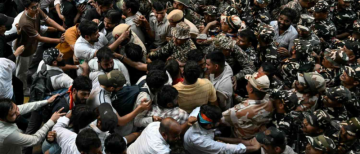
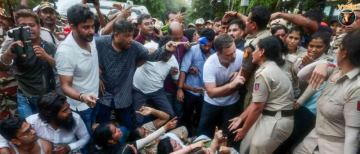
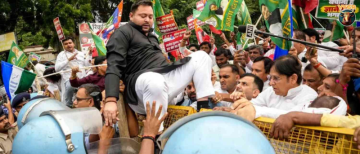
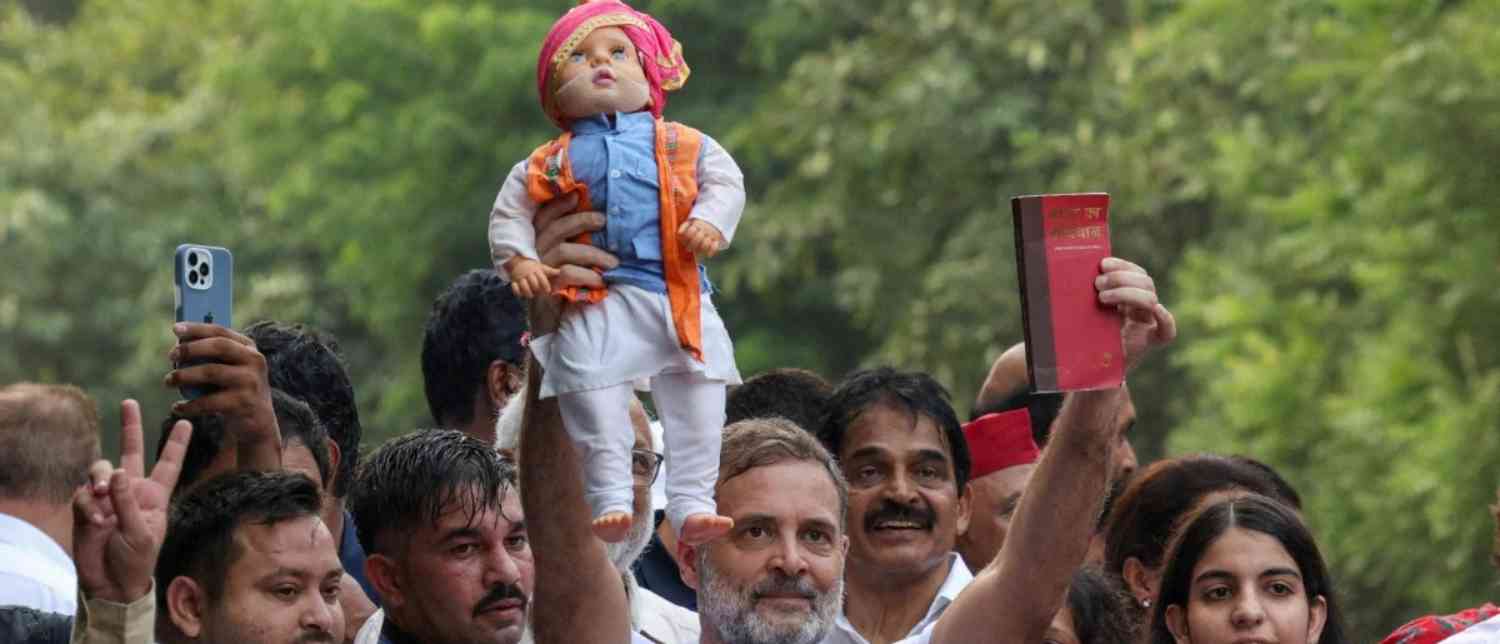
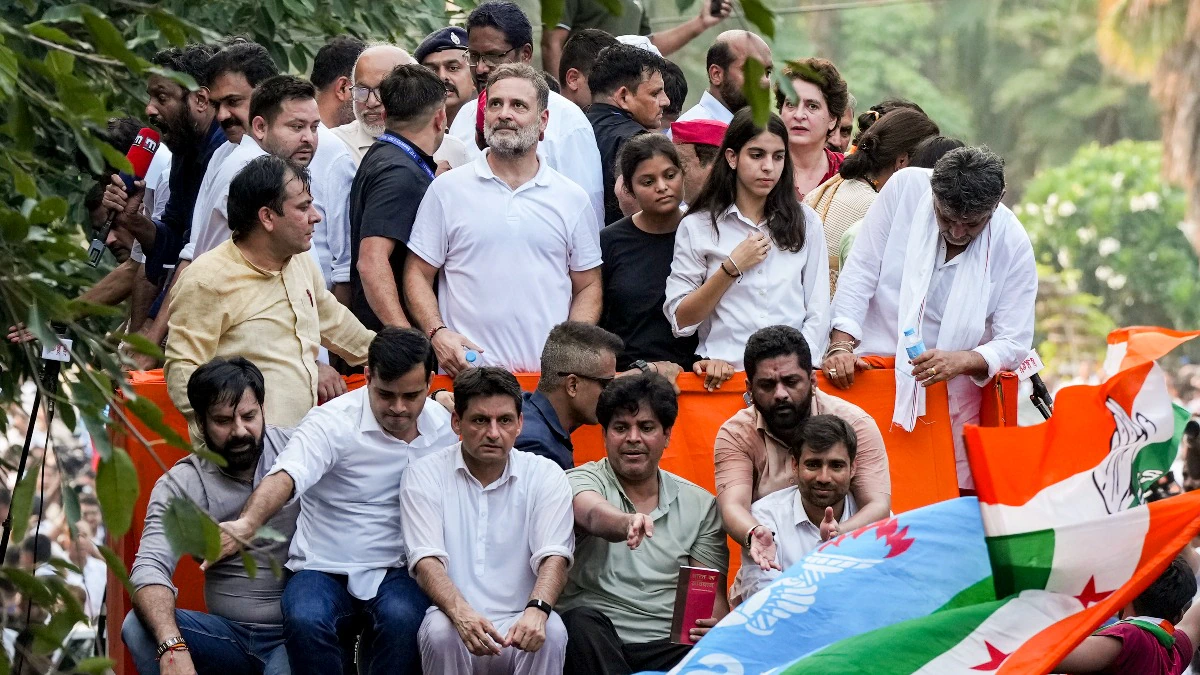
The filing of the petition coincided with a large Opposition mobilisation in the national capital under the banner of the ‘March for Democracy’.
Rahul Gandhi and several INDIA bloc leaders joined supporters who gathered in central Delhi and moved towards the Supreme Court to raise concerns over alleged electoral irregularities. The demonstration was aimed at drawing attention to what the Opposition has described as ‘vote chori’, or vote theft.
The protest formed part of a broader political campaign demanding accountability from the Election Commission and safeguards against the deletion of eligible voters from electoral rolls.
The Opposition leaders had also sought a meeting with Chief Justice of India Surya Kant to submit a memorandum outlining their concerns. Their demands included an end to alleged vote theft, the resignation of Chief Election Commissioner Gyanesh Kumar, a halt to the SIR exercise and a return to paper ballots.
The request for a meeting was declined, with the Chief Justice indicating that the matter was sub judice. However, when asked how the leaders could communicate their grievances, he emphasised that the Supreme Court remained accessible to everyone, including ordinary citizens and elected representatives.
The Opposition subsequently pursued its legal challenge through a formal petition. The move brought the political dispute over electoral rolls into sharper focus, combining street-level mobilisation with an attempt to secure judicial intervention.
The episode also underlined the distinction between political demands and legal proceedings. While demonstrations allow political parties to publicise their concerns, the court must assess the petition through the applicable legal framework and the material placed before it.
Why the Rs 220 Court Fee Shortfall Matters
The Rs 220 court fee shortfall has emerged as one of the most widely discussed details in the case. Although the amount is relatively small, the objection is significant as a procedural issue because court filings must comply with the applicable fee requirements.
A petition submitted to the Supreme Court must meet prescribed filing standards. These can include payment of the required court fee, proper authorisation of advocates, correctly prepared documents and supporting records in an acceptable format.
When the registry identifies deficiencies, the filing team must take the necessary steps to address them in accordance with court procedure. The outstanding fee is therefore one component of a wider set of objections rather than the central legal question raised by the petition.
The more consequential issues concern the completeness of the supporting material, the authorisations associated with the petitioners and the documents needed to substantiate the claims being made.
It is equally important to distinguish procedural scrutiny from judicial findings. The identification of filing defects does not mean that the Supreme Court has rejected the allegations of electoral irregularities. Nor does it establish that the petitioners’ claims are correct.
The legal questions surrounding the SIR exercise, alleged voter deletions and the Election Commission’s actions remain separate from the administrative process of correcting a filing.
What Happens Next in the Supreme Court Case?
The immediate next step is for the petitioners’ legal team to address the defects flagged by the registry. This includes resolving the court fee shortfall, providing the necessary lawyer authorisations, submitting legible copies and ensuring that the supporting documents meet the required filing standards.
The registry has also sought clarification regarding the naming of individual Election Commissioners as private respondents in a writ petition filed under Article 32 of the Constitution. Article 32 provides a route for approaching the Supreme Court to seek enforcement of fundamental rights, making the legal framing of the petition an important consideration.
Once the relevant objections have been addressed, the petition can move forward through the applicable listing process. Any subsequent hearing would provide an opportunity for the court to examine the legal issues raised by the Opposition leaders.
The petition’s requests—including an independent audit of electoral roll changes, safeguards against arbitrary voter deletions and a possible suspension of the SIR exercise—are demands made by the petitioners. They should not be interpreted as measures already ordered by the Supreme Court.
Whether the court grants any of the requested reliefs will depend on its examination of the pleadings, applicable law and arguments presented during judicial proceedings.
Electoral Roll Revision Dispute Takes Centre Stage
The controversy surrounding Rahul Gandhi’s Supreme Court petition reflects a wider political and legal debate over electoral transparency in India. At the heart of the dispute is the question of how electoral rolls should be revised while ensuring that eligible voters retain their right to participate in elections.
For the INDIA bloc, the legal challenge is an attempt to secure stronger safeguards and greater scrutiny of the Election Commission’s actions. For the court, the immediate procedural task is to ensure that the petition satisfies the requirements necessary for further consideration.
The 14 defects flagged by the Supreme Court registry, including the Rs 220 fee shortfall, missing authorisations and incomplete documents, have added a procedural hurdle to the Opposition’s legal challenge. But these objections do not settle the underlying dispute over electoral rolls.
The next developments will depend on how the petitioners respond to the registry’s objections and whether the case proceeds to a substantive hearing. Until then, the key distinction remains clear: filing defects are not a ruling on the merits, and the allegations of electoral irregularities remain matters for legal examination.
As the debate over the Special Intensive Revision continues, the case could become an important point of discussion in the wider conversation about voter protection, electoral accountability and the role of the judiciary in resolving disputes involving the Election Commission of India.
© Copyright 2026. All Rights Reserved. Powered by Vygr Media.