 By
By 
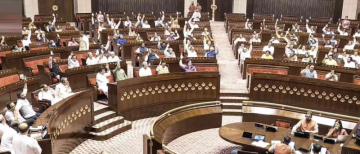
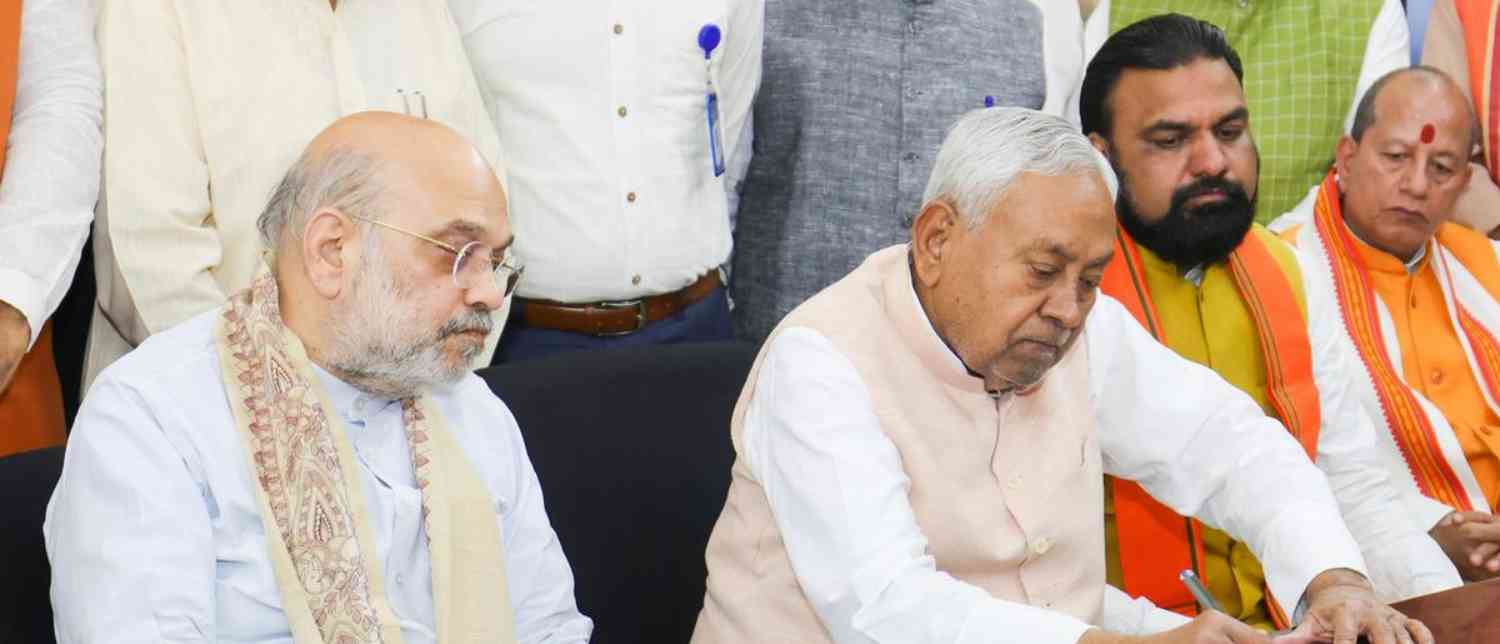
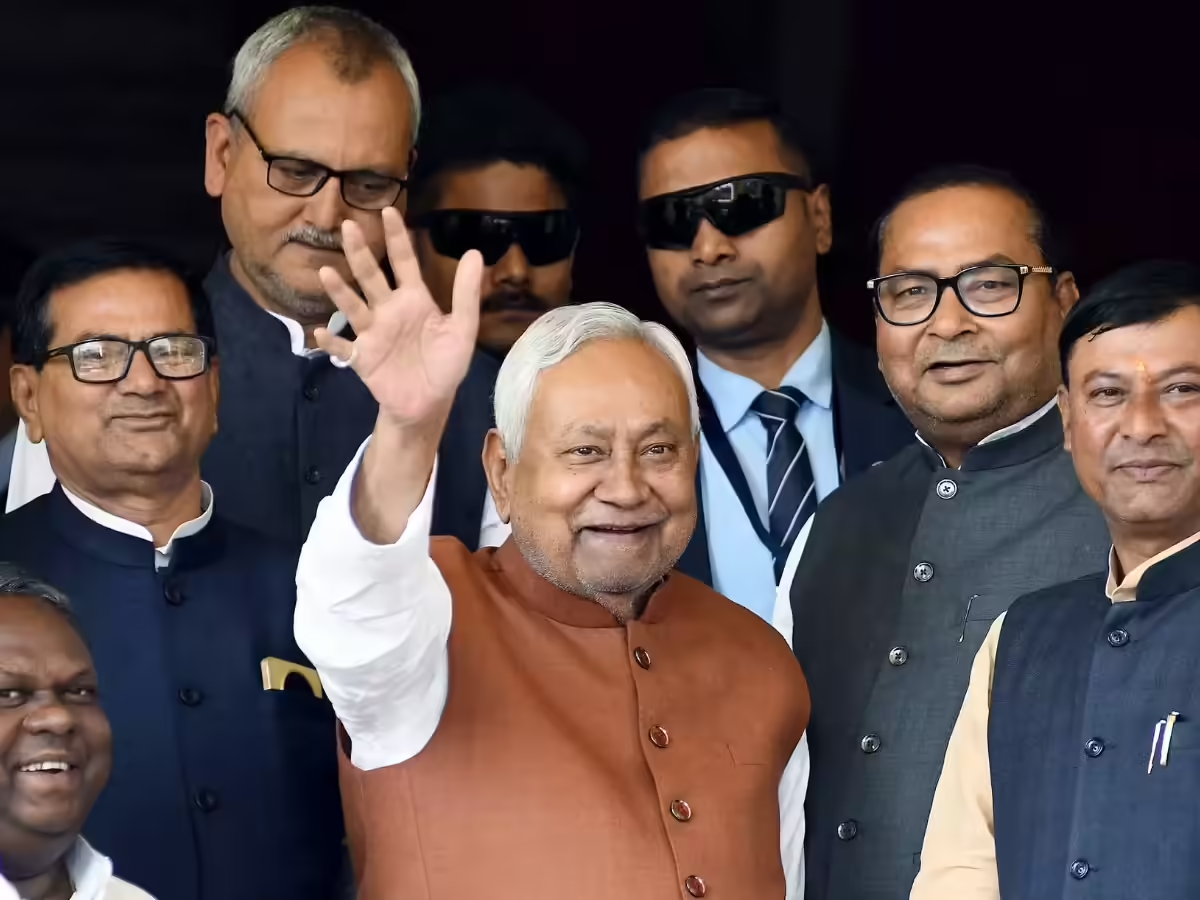
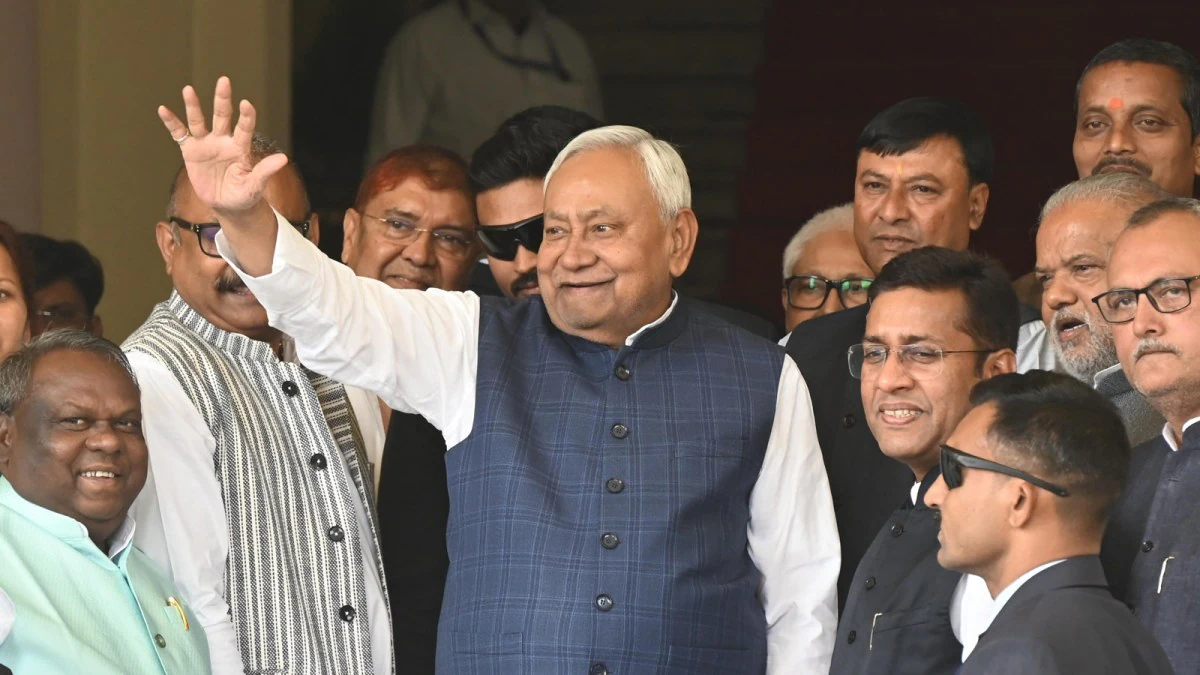
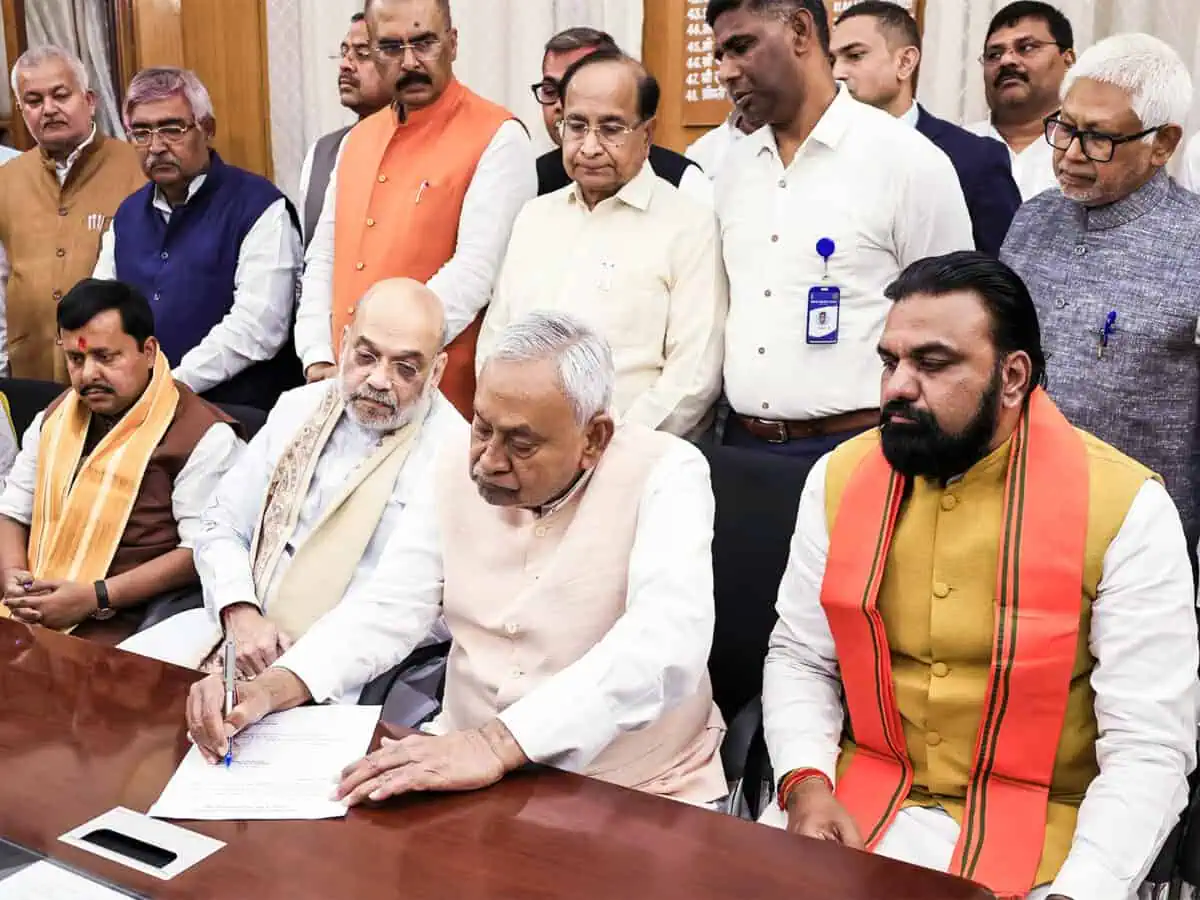
Bihar politics appears to be on the verge of a historic transition. Nitish Kumar, the state’s longest-serving chief minister and one of India’s most influential regional leaders, has filed his nomination for the Rajya Sabha on March 5. If the process unfolds as expected, Kumar will step down as chief minister after the Rajya Sabha results are declared, marking the end of an era in Bihar’s political landscape.
The development signals more than a routine political change. It reflects shifting power equations within the ruling National Democratic Alliance (NDA), a possible leadership transition inside the Janata Dal (United), and a strategic opportunity for the Bharatiya Janata Party (BJP) to stake claim to the state’s top post.
With Bihar poised for a new chief minister, the implications of Nitish Kumar’s move extend beyond state politics and could reshape alliances and leadership dynamics at both regional and national levels.
Nitish Kumar Files Rajya Sabha Nomination
Nitish Kumar officially announced his decision to contest the Rajya Sabha elections through a social media post. In the message, the 75-year-old leader reassured supporters that his commitment to Bihar would remain unchanged.
He wrote that he wished to become a member of the Rajya Sabha in the upcoming elections and promised that his relationship with the people of Bihar would continue. He also pledged full cooperation and guidance to the new government that will take charge in the state.
Kumar celebrated his 75th birthday on March 1, and his decision to move to the Upper House has intensified speculation about a leadership change in Bihar. With the BJP currently the dominant partner in the NDA government, the transition could pave the way for a BJP leader to become the state’s next chief minister.
There are also discussions about a power-sharing arrangement under which the JD(U) may receive two deputy chief minister posts if the BJP takes over the chief minister’s position.
Assembly Election Context: NDA’s Strong Mandate
The leadership shift comes in the backdrop of the NDA’s strong performance in the November Assembly elections.
-
The NDA secured 202 out of 243 seats in the Bihar Assembly.
-
The BJP emerged as the single largest party with 89 seats.
-
The JD(U) won 85 seats, marking a gain of 42 seats compared to the previous election.
Nitish Kumar served as the face of the NDA’s campaign during the elections, reinforcing his central role in the alliance’s political strategy.
Despite the BJP holding more seats, the chief minister’s post continued to remain with Nitish Kumar. If he now vacates the position, it would naturally strengthen the BJP’s claim to lead the government.
Leadership Transition Inside JD(U)
Nitish Kumar has dominated Bihar’s political landscape for decades. However, his age and health concerns have prompted discussions about succession within the JD(U).
Sources indicate that his shift to the Rajya Sabha may be part of a broader leadership transition strategy. The move could allow the party to prepare the next generation of leadership while ensuring Nitish Kumar remains influential at the national level.
Debate Over Rajya Sabha Nomination
Interestingly, there was internal debate within the JD(U) about who should contest the Rajya Sabha election.
Nitish Kumar and some of his close associates, including former bureaucrat Manish Verma, reportedly preferred that Kumar’s son Nishant Kumar enter Parliament through the Rajya Sabha. Verma, like Nitish, belongs to the Kurmi community, an influential backward caste group in Bihar.
However, Nishant Kumar is said to prefer entering state politics instead of the national legislature.
The Possibility of Nishant Kumar’s Political Entry
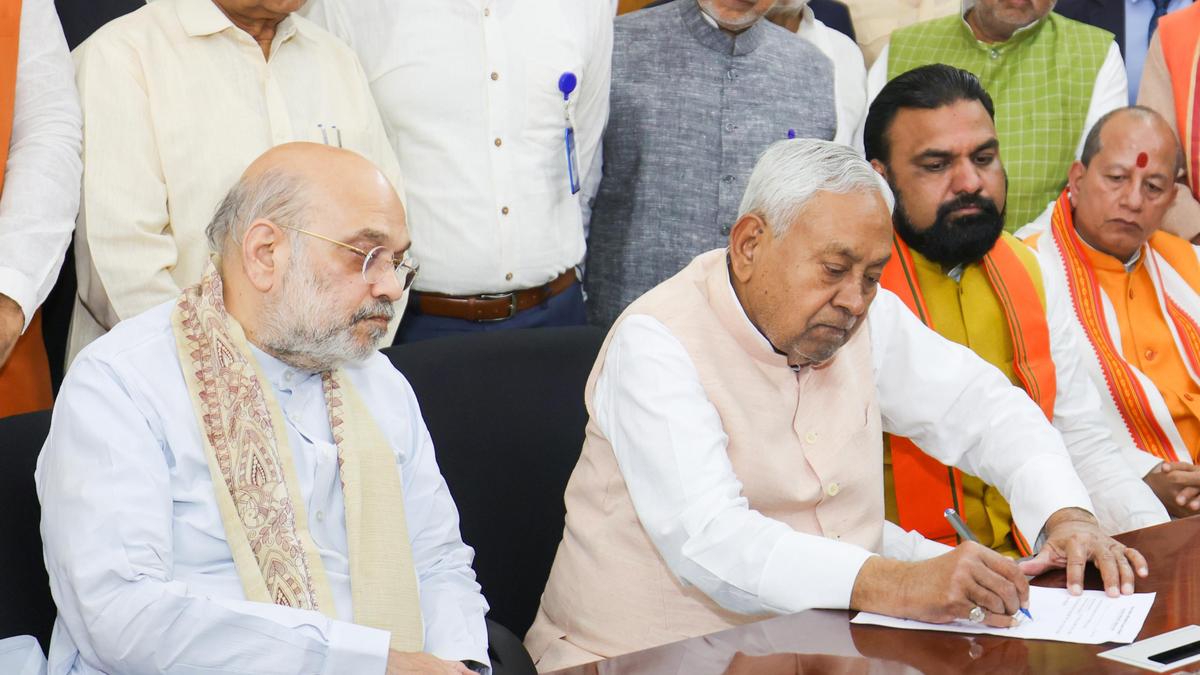
Nitish Kumar has long kept his family away from politics, distinguishing himself from many other leaders in Bihar who have promoted political dynasties. However, his son Nishant Kumar’s potential entry into public life is now being widely discussed.
If Nishant joins politics, he could be given a significant role in the state government, possibly even a deputy chief minister position or another prominent leadership role.
Such a move could serve multiple strategic purposes:
-
It would help maintain continuity within the JD(U).
-
It could consolidate support among the party’s traditional voter base.
-
It might ensure the party’s organisational stability in the post-Nitish era.
Supporters argue that placing Nishant in a leadership role would help keep the party united for at least the next five years while Nitish Kumar remains politically active.
However, critics question whether Nishant, who has no political experience, would be able to carry forward his father’s political legacy.
A Different Political Legacy
Nitish Kumar’s political image has long been defined by two distinctive features: clean governance and distance from family politics.
Unlike several political rivals, he kept his relatives away from active political roles for most of his career. This set him apart from parties like the Rashtriya Janata Dal (RJD) and others in Bihar where family leadership has been common.
If Nishant Kumar formally enters politics, Nitish could face the same accusations of dynasty politics that he previously criticised.
At the same time, the political landscape has evolved significantly. Young leaders such as Tejashwi Yadav of the RJD and Chirag Paswan, a Union minister and leader of the Lok Janshakti Party (Ram Vilas) faction, have already established themselves as major political figures.
Whether Nishant can match their political experience remains an open question.
BJP’s Strategic Opportunity in Bihar
For the BJP, Nitish Kumar’s move to the Rajya Sabha may represent a long-awaited opportunity.
Although the BJP has steadily increased its electoral strength in Bihar over the past decade, it has often operated under the leadership of the JD(U). The party’s status as the largest party in the assembly now provides it with a strong case to claim the chief minister’s position.
Possible BJP Chief Minister Candidates
According to party sources, the BJP may choose a chief minister from the Backward Class (27% of Bihar’s population) or the Extremely Backward Class (36%) to maintain its social coalition.
Several names are currently being discussed:
-
Samrat Choudhary, the current deputy chief minister
-
Nityanand Rai, Union minister
-
Dilip Jaiswal, a Bihar minister
-
Sanjiv Chaurasia, BJP MLA from Digha
The BJP has previously surprised observers with unexpected chief ministerial choices in states such as Odisha, Madhya Pradesh, Rajasthan and Chhattisgarh. Bihar could follow a similar pattern.
Challenges for the NDA Coalition
While a BJP chief minister could strengthen the party’s dominance, the transition would also require careful political management.
Nitish Kumar has long been a key figure in mobilising support from Extremely Backward Classes (EBCs). Many analysts believe that these voters backed the NDA largely because of his leadership.
If the BJP assumes the chief minister’s post, it will need to ensure that these communities do not feel alienated or betrayed.
At the same time, the alliance must balance the interests of coalition partners, particularly the JD(U), to avoid internal tensions.
Opposition Strategy
The transition also presents an opportunity for opposition parties.
Leaders from the RJD and other opposition groups have already criticised the development as a political manoeuvre rather than a governance decision.
Tejashwi Yadav, the leader of the opposition and son of former chief minister Lalu Prasad Yadav, argued that Nitish Kumar’s current predicament is the result of his own political choices.
He accused the BJP of engineering a power shift similar to political developments seen in Maharashtra. According to Tejashwi, Nitish had earlier been supported as chief minister by allies even when they had more legislators, but he chose to break those alliances.
JD(U) Leaders React with Shock
Inside the JD(U), the reaction to Nitish Kumar’s decision has been mixed.
Senior leader and Bihar’s social welfare minister Madan Sahni expressed disbelief over the development. He reportedly said it was difficult to believe that the move was entirely Nitish Kumar’s personal decision.
Sahni added that Nitish had long expressed a desire to serve in all three legislative forums of Indian democracy—the state assembly, the Lok Sabha and the Rajya Sabha. His move to the Upper House, therefore, was being presented as the fulfilment of that ambition.
Despite this explanation, many party workers remain unsettled.
Outside the JD(U) office in Patna, supporters gathered in protest and disbelief. Police were deployed to prevent them from marching toward the chief minister’s residence.
For many loyalists, the idea of Nitish Kumar stepping down after decades in power was difficult to accept.
Nitish Kumar’s Long Political Journey
To understand the significance of this moment, it is important to look at Nitish Kumar’s political journey.
Early Life and Education
Nitish Kumar was born on March 1, 1951, in Bakhtiarpur in Patna district. His father, Ram Lakhan Singh, was an Ayurvedic practitioner and a freedom fighter associated with the Congress during India’s independence movement.
Kumar studied electrical engineering at the Bihar College of Engineering, now known as the National Institute of Technology (NIT) Patna. He briefly worked at the Bihar State Electricity Board before entering politics.
Rise Through the Socialist Movement
Nitish Kumar’s political identity was shaped by the socialist movement led by Jayaprakash Narayan during the anti-Emergency agitation of the 1970s.
This movement produced a generation of leaders who would dominate North Indian politics, including both Nitish Kumar and Lalu Prasad Yadav.
Both leaders emerged from the same political tradition and belonged to backward caste communities empowered by the Mandal revolution of the 1990s. However, their political styles differed sharply.
-
Lalu Prasad Yadav relied on mass mobilisation and charismatic politics.
-
Nitish Kumar focused on administrative governance, negotiation and strategic alliances.
Their rivalry became one of the defining themes of Bihar politics.
Breaking Away and Forming New Alliances
Nitish Kumar eventually grew dissatisfied with the concentration of power around Lalu Prasad Yadav within the Janata Dal.
In 1995, he broke away from the party and began experimenting with new political strategies.
Along with socialist leader George Fernandes, he formed the Samata Party. He even briefly explored cooperation with the radical left-wing party CPI(ML) Liberation, reflecting his ideological roots.
However, electoral realities soon pushed him toward a broader alliance with the BJP.
In 1996, Nitish contested the Lok Sabha elections as part of a BJP alliance.
Creation of the Janata Dal (United)
One of his most significant political moves came when he convinced veteran socialist leader Sharad Yadav to unite their factions.
The merger created the Janata Dal (United), which soon became the principal ally of the BJP in Bihar.
At the time, the BJP’s support base in the state was perceived to be largely limited to upper-caste voters. Nitish Kumar’s leadership helped expand the alliance’s reach among backward caste communities.
In the 2005 Bihar Assembly elections, the BJP allowed the JD(U) to contest more seats than itself. The strategy proved successful, and the NDA secured victory.
Nitish Kumar finally became chief minister in November 2005.
The Longest-Serving Chief Minister of Bihar
Nitish Kumar went on to become Bihar’s longest-serving chief minister, holding office for more than two decades across multiple terms.
His first brief stint as chief minister came in March 2000, though that government lasted only a week after he failed to prove a majority.
His lasting tenure began in November 2005, when the NDA won the assembly elections.
Over the years, he returned to the chief minister’s office repeatedly despite shifting political alliances. In November last year, he was sworn in for a record-extending tenth term as chief minister.
The “Paltu Ram” Reputation
Nitish Kumar’s governance record earned him admiration, but his frequent alliance shifts also drew criticism.
His most notable political reversals include:
-
2013: Breaking a 17-year alliance with the BJP when Narendra Modi emerged as the party’s prime ministerial candidate.
-
2014: JD(U) suffered a major defeat in the Lok Sabha elections, winning only two seats in Bihar. Nitish resigned as chief minister, accepting moral responsibility.
-
2015: Formed the Mahagathbandhan alliance with Lalu Prasad Yadav and defeated the BJP in the state elections.
-
2017: Broke the alliance and returned to the BJP-led NDA.
-
2022: Again left the BJP alliance.
-
2024: Returned to the NDA once more.
These repeated shifts earned him the nickname “Paltu Ram”, meaning someone who frequently changes sides.
The “Sushasan Babu” Governance Model
Despite political controversies, Nitish Kumar developed a strong reputation for governance.
He was popularly known as “Sushasan Babu,” meaning the man of good governance.
When he first became chief minister in 2005, Bihar faced severe criticism for poor infrastructure, weak law and order, and slow economic growth.
His government introduced several reforms:
-
Strengthening policing and speeding up criminal trials
-
Expanding road and bridge infrastructure
-
Introducing welfare programmes for women and marginalised communities
One of the most famous initiatives was the Mukhyamantri Balika Cycle Yojana, which provided bicycles to schoolgirls to encourage education. The scheme significantly increased girls’ enrolment in secondary schools.
His government also introduced:
-
Reservations for women in local bodies and government jobs
-
Welfare schemes for Mahadalits and Extremely Backward Classes
-
A statewide prohibition on alcohol, which earned strong support from women voters
These policies helped change Bihar’s governance narrative after years of instability.
A Chief Minister Who Rarely Contested Assembly Elections
Another unusual aspect of Nitish Kumar’s political career was his reliance on the Legislative Council route.
After becoming chief minister in 2005, he did not immediately contest an assembly election. Instead, he entered the Bihar Legislative Council as a Member of the Legislative Council (MLC), which allowed him to continue as chief minister.
He used this route repeatedly during his tenure.
Under the Constitution, a person who is not a member of the legislature can serve as chief minister for six months, provided they obtain membership in either the assembly or the council within that period.
Nitish often chose the council route rather than contesting constituency-level elections. Supporters viewed this as a reflection of his statewide leadership role, while critics argued it helped him avoid direct electoral battles.
The End of an Era in Bihar Politics
Nitish Kumar’s decision to move to the Rajya Sabha marks a turning point in Bihar’s political history.
For nearly three decades, he remained at the centre of the state’s politics through a combination of administrative governance, strategic alliances, and coalition management.
Whether his move signals a smooth leadership transition within the JD(U), a strategic power shift toward the BJP, or the beginning of a new political chapter in Bihar remains to be seen.
What is certain, however, is that Nitish Kumar’s political career—marked by survival, reinvention and negotiation—has left an indelible imprint on Bihar’s political landscape.
With inputs from agencies
Image Source: Multiple agencies
© Copyright 2025. All Rights Reserved. Powered by Vygr Media.