
 By

There are cricketers who accumulate runs, cricketers who break records, and then there is Virat Kohli, a player who has spent nearly two decades redefining what consistency, ambition and competitive excellence look like in international cricket.
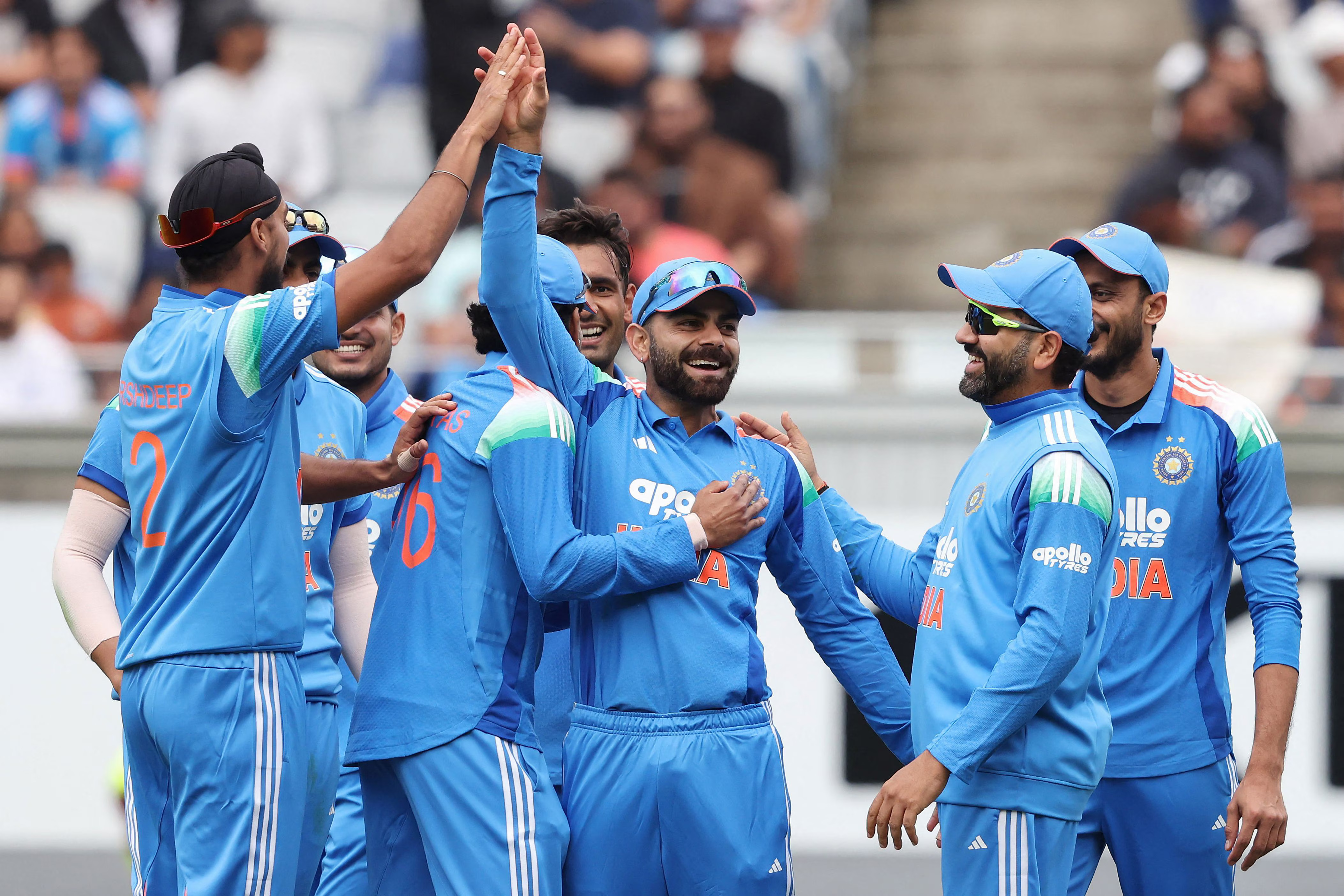
On November 4, 2026, as India faced New Zealand in the opening ODI at Eden Park, Auckland, Kohli added another extraordinary chapter to his already illustrious career. He became the first batter in the history of One Day International cricket to score 13,000 runs while batting at the number three position. And he did not stop at creating history. His commanding 74-run innings helped India secure a five-wicket victory, giving the visitors a 1-0 lead in the five-match ODI series.
The timing made the occasion even more special. With his 38th birthday falling on November 5, Kohli delivered a performance that offered a powerful reminder, age may advance, but the hunger to compete does not necessarily fade.
However, reducing this achievement to another entry in a record book would be an injustice. Kohli's latest milestone represents something much bigger, the extraordinary relationship between talent and discipline, individual brilliance and team responsibility, and longevity and an almost stubborn refusal to lower one's standards.
Virat Kohli's 13,000 ODI Runs at No. 3: A Record That Stands Apart
Some records are impressive because of the numbers involved. Others are special because of the difficulty of achieving them. Kohli's 13,000 ODI runs at number three belong firmly in the second category.
During India's chase against New Zealand, Kohli needed just 12 runs to reach the landmark. He achieved it with his 13th delivery, becoming the first player ever to cross 13,000 runs at a single batting position in ODI cricket.
Consider the company he has left behind.
Former Australian captain Ricky Ponting occupies second place on the all-time list, with 12,662 runs at number three. Sri Lankan great Kumar Sangakkara follows with 9,747, while Jacques Kallis has 7,774. New Zealand's Kane Williamson, Pakistan's Babar Azam and England's Joe Root also feature among the leading run-scorers at this position.
What makes Kohli's achievement particularly remarkable is the gap between him and the competition. He has not merely edged past Ponting; he has established a substantial lead over one of the greatest ODI batters of all time.
Even more telling is the difference in their averages. Kohli's average at number three stands at approximately 61.6, compared with Ponting's 42.48.
Only two batters in ODI history have accumulated at least 13,000 runs at a single batting position: Sachin Tendulkar, who scored 13,685 runs at number two, and Kohli, who has now reached 13,000 at number three.
This is not simply a matter of occupying a familiar position for years. It is about repeatedly delivering against different bowling attacks, in different conditions, under different levels of pressure, without allowing consistency to become an occasional achievement.
And that is precisely what separates Kohli from the rest.
Number Three: The Position That Became Kohli's Kingdom
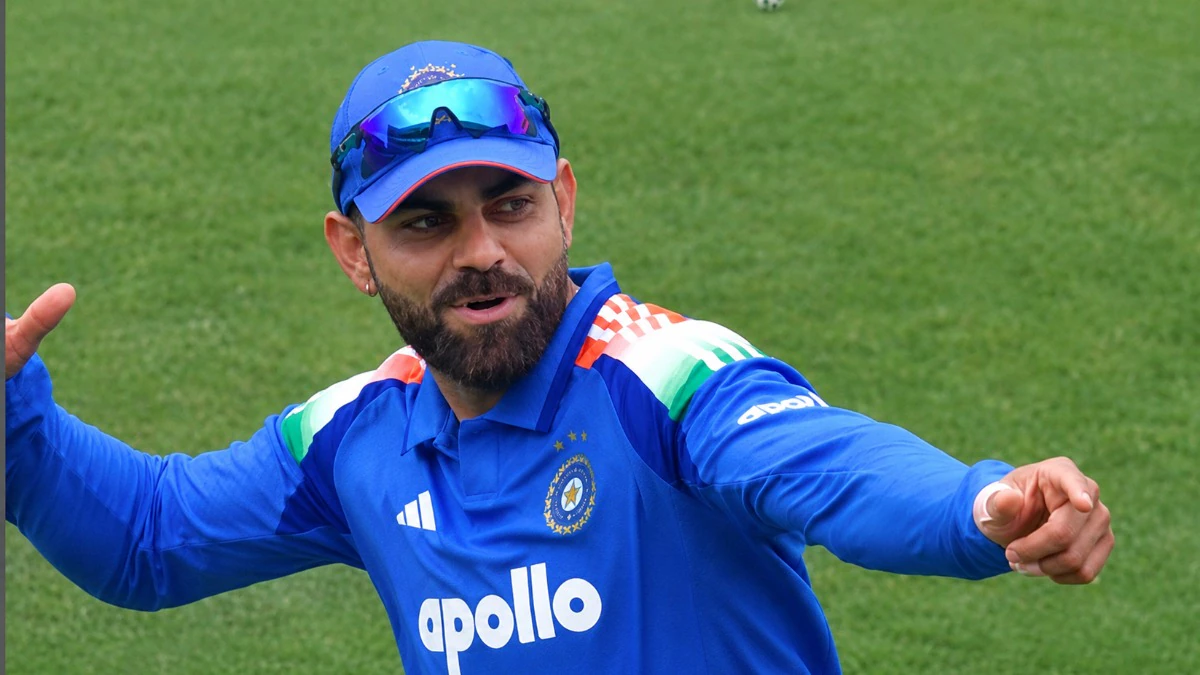
The number three position in ODI cricket is among the most demanding places in a batting order.
The batter may walk in during the first over after an early wicket, facing a fresh new ball and an aggressive field. Alternatively, they may arrive after a strong opening partnership, with the responsibility of accelerating the scoring rate while maintaining the innings' momentum.
It requires adaptability, technical discipline, temperament and the ability to read a match situation almost instinctively.
Kohli has mastered all these demands.
His ODI numbers at number three tell a remarkable story: 13,000 runs in 251 innings, an average of 61.61 and a strike rate of 95.40. His highest score at the position is 183.
These figures reveal more than an extraordinary ability to accumulate runs. They demonstrate how consistently he has been able to influence the direction of India's innings.
Unlike a batter whose success depends heavily on favourable conditions or a particular match situation, Kohli has built his reputation on adaptability. He can rebuild after early wickets, rotate the strike when boundaries are difficult, accelerate when opportunities arise and take responsibility during difficult run chases.
His number three position is no longer just a place in the Indian batting order. It has become an integral part of his identity as an ODI cricketer.
The comparison with Ponting is particularly interesting. Both were aggressive, competitive leaders who understood the importance of controlling the middle overs. Yet Kohli's average at this position gives his achievement another dimension.
He has combined longevity with an extraordinary level of efficiency.
India vs New Zealand 1st ODI: Kohli's 74 Makes the Difference
Records aside, Kohli's performance against New Zealand was also about delivering when India needed him.
The visitors won the toss and elected to field first at Eden Park. India's decision proved effective as their pace attack exploited the conditions and restricted New Zealand to 185 in 40.2 overs.
Arshdeep Singh led the bowling effort with four wickets, while Gurnoor Brar picked up three. Anshul Kamboj produced an equally impressive performance, finishing with figures of 2/22 in his 10 overs, including two maiden overs.
New Zealand struggled to establish a substantial partnership. Tim Seifert contributed 38, Glenn Phillips scored 30 and Daryl Mitchell added 28, but the home side could never build the kind of innings required to put India under serious pressure.
Blair Tickner's 34 and a late contribution from Jacob Duffy helped New Zealand reach 185, but the total remained below what the hosts would have hoped for.
India's chase, however, did not begin ideally.
Rohit Sharma departed for a duck in the opening over, leaving Kohli to walk in earlier than expected. With the new ball still presenting a challenge, the situation demanded composure rather than unnecessary aggression.
Kohli responded in familiar fashion.
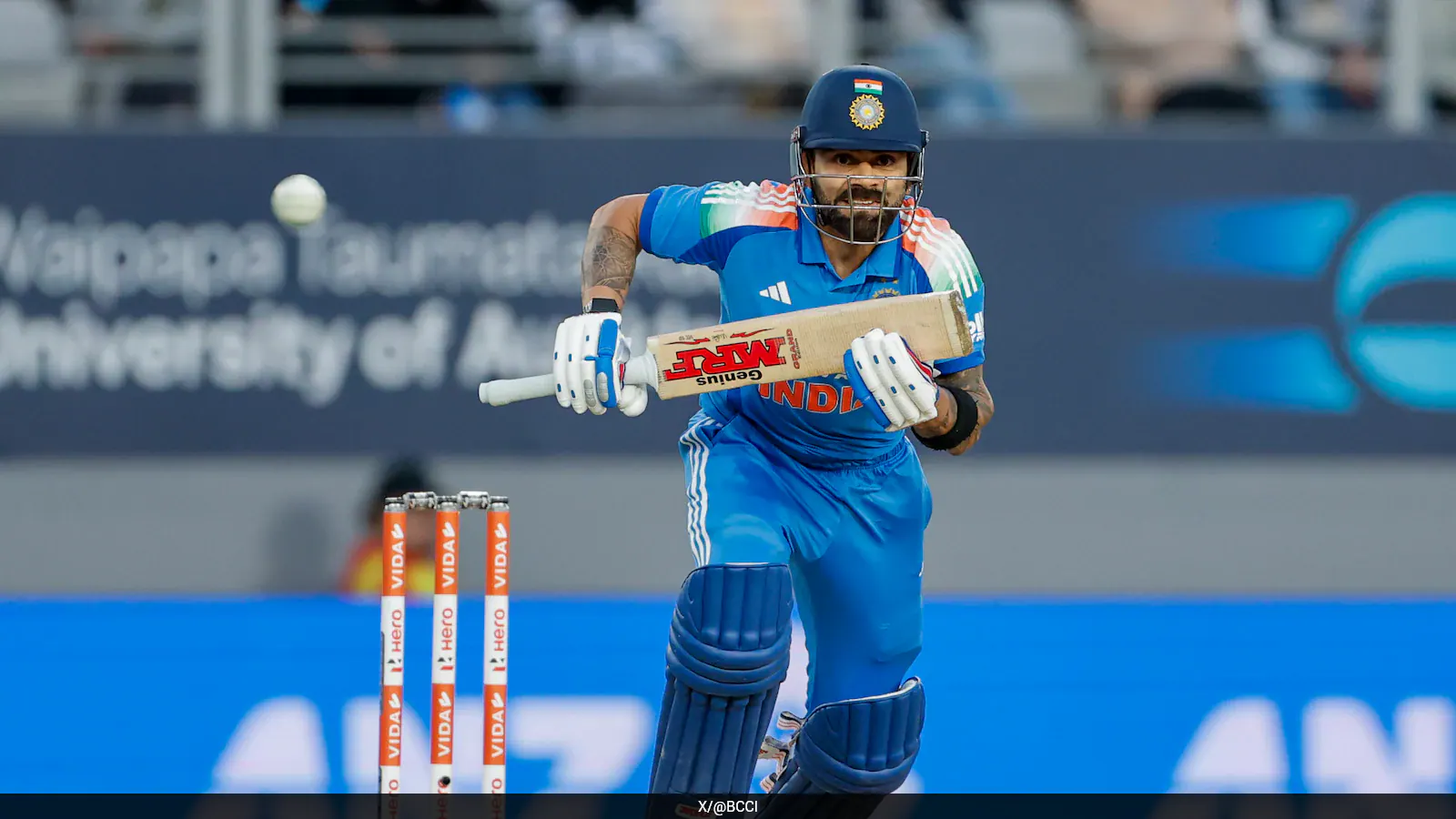
He attacked the loose deliveries, maintained a healthy scoring rate and ensured that India's chase never lost direction. His partnership with captain Shubman Gill became the defining phase of the innings. The two added 113 runs, effectively taking the contest away from New Zealand.
Kohli brought up his half-century in just 35 balls, demonstrating the attacking intent that has always made him particularly dangerous in ODI run chases.
His innings of 74 provided the foundation for India's victory. Although the Indian middle order experienced a late wobble against New Zealand's short-ball strategy, the damage had already been done.
Rain interruptions also altered the chase, reducing the match to 32 overs and setting India a revised target of 143 under the Duckworth-Lewis-Stern method.
India eventually reached 143/5 in 22.4 overs, winning by five wickets and taking an early lead in the series.
The result was important, but the manner in which Kohli and Gill controlled the chase was arguably even more encouraging for Indian cricket.
More Than Runs: The Fitness Revolution That Defines Virat Kohli
Perhaps one of the most underrated aspects of Kohli's career is how dramatically he has influenced the fitness culture within Indian cricket.
There was a time when fitness was often treated as a supporting element of a cricketer's development. Technical ability and natural talent generally dominated conversations about batting excellence.
Kohli challenged that approach.
His transformation into one of the fittest athletes in international cricket was not accidental. It was the result of years of discipline, physical conditioning, dietary changes and an uncompromising commitment to personal standards.
He did not simply want to remain fit enough to play international cricket. He wanted to become an exceptional athlete.
That ambition gradually influenced the expectations surrounding Indian cricket. Fitness, agility, fielding standards and physical conditioning became increasingly important elements of professional preparation.
The impact extended beyond the dressing room. Millions of young cricket enthusiasts began associating athleticism and physical discipline with sporting success.
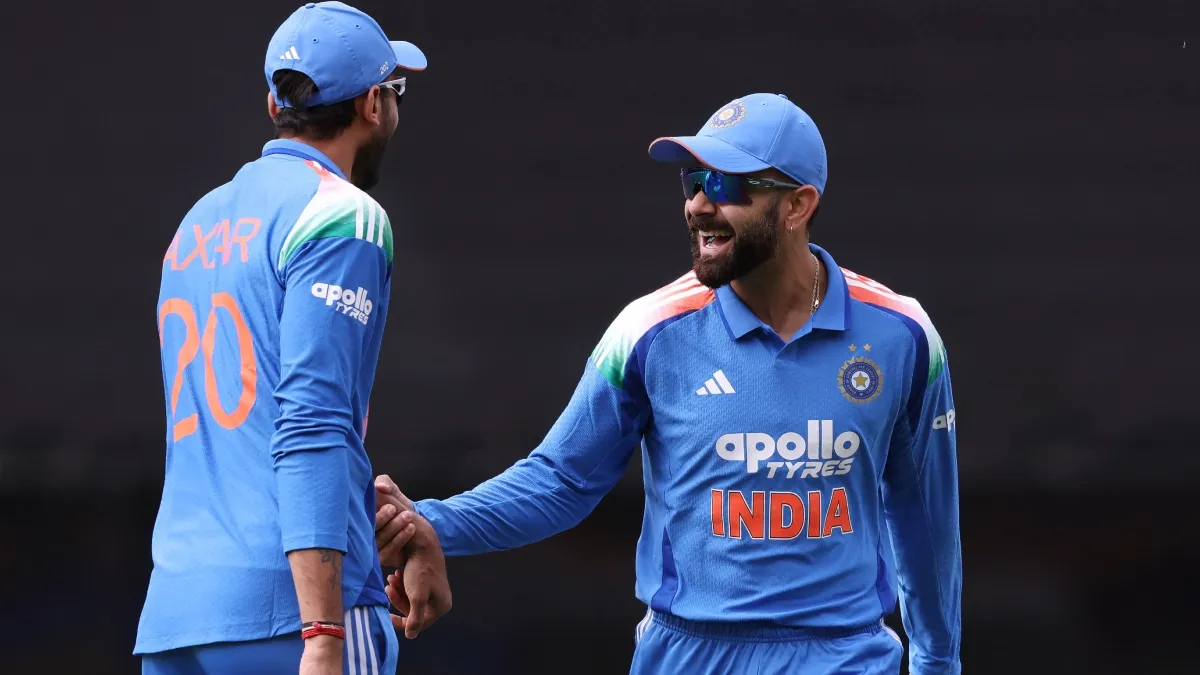
His performance against New Zealand offered another visual reminder of that transformation. The spectacular diving catch to dismiss Nathan Smith was not merely an impressive fielding moment. It demonstrated the athleticism, anticipation and enthusiasm that continue to distinguish him.
At an age when many professional athletes begin considering how to preserve their physical capabilities, Kohli continues to compete with remarkable intensity.
His fitness is not just about appearances. It is about sustaining performance, reducing limitations and maintaining the ability to influence matches in multiple ways.
The Man Behind the Records: Passion, Emotion and an Unmistakable Identity
There is another reason why Kohli remains such a compelling figure in world cricket: he has never been particularly interested in hiding his personality.
His aggression, emotional celebrations, animated reactions and visible passion have become as recognisable as his batting technique. Whether celebrating a teammate's wicket, encouraging the crowd or expressing frustration after a missed opportunity, Kohli brings an intensity that is difficult to ignore.
For some, that intensity has occasionally appeared excessive. For others, it represents precisely what makes him special.
But there is a deeper dimension to his personality that often receives less attention.
Kohli has never been afraid to express affection, gratitude or vulnerability. His public expressions of love for his wife, Anushka Sharma, including the familiar gesture of kissing his wedding ring after scoring a century, reveal a side of him that contrasts with his fiercely competitive sporting personality.
He has also spoken openly about his spiritual journey, demonstrating that his identity extends beyond cricket and physical achievement.
This combination of emotional openness and competitive intensity makes him an interesting sporting personality. He does not appear to believe that professionalism requires suppressing emotion.
Instead, he has built an identity around giving everything to whatever matters to him.
His support for fellow cricketers, including standing up for Australian batter Steve Smith during a difficult period, also demonstrated that competitiveness does not necessarily have to come at the expense of sportsmanship.
These moments may not appear on a scorecard, but they contribute to the larger story of an athlete whose influence extends beyond statistics.
From Test Cricket Retirement to a New ODI Challenge
Kohli's journey has also entered a different phase.
In May 2025, he announced his retirement from Test cricket, bringing an end to a 14-year career in the longest format. It was a significant moment for Indian cricket, considering how central he had been to the team's identity in Test matches.
His departure from Test cricket marked the end of an important chapter, but it did not signal an end to his competitive ambitions.
Instead, the focus increasingly shifted towards his remaining international commitments, particularly ODI cricket.
The upcoming 2027 ODI World Cup provides an important context for understanding his present journey.
Kohli has already indicated that the tournament will be his final World Cup representing India. That makes every appearance in the 50-over format particularly significant.
For Indian cricket, his experience could prove invaluable.
The 2027 World Cup will demand more than individual brilliance. India will need experienced players who understand tournament pressure, can guide younger teammates and deliver when matches become difficult.
Kohli's record in major tournaments, particularly his performances during the 2023 ODI World Cup, demonstrates why he remains such an important figure in India's plans.
He finished that tournament as its leading run-scorer, accumulating 765 runs, including three centuries and six half-centuries. He also became the first batter to score 50 ODI centuries during the competition.
His current form suggests that he still has plenty to contribute to India's ambitions.
However, it is important not to confuse individual excellence with guaranteed team success. India have experienced inconsistency in ODI cricket since winning the Champions Trophy in early 2025. Their performance against New Zealand is therefore an encouraging beginning, not a reason to assume that all challenges have disappeared.
The coming matches will reveal whether the team can build on this momentum.
Why Virat Kohli's Latest Record Matters for the Next Generation
Perhaps the greatest legacy Kohli is building is not a particular batting record but the standards he has established.
Young cricketers watching him can learn several lessons that extend beyond batting technique.
First, talent is only the starting point. Even exceptional natural ability requires discipline, preparation and consistent effort.
Second, adaptability matters. Kohli has succeeded because he understands that different situations require different approaches. A difficult chase cannot always be approached like a comfortable one, and a rebuilding innings cannot always be played with the same aggression as a finishing innings.
Third, longevity is an achievement in itself. Remaining relevant in international cricket for nearly two decades requires more than skill. It demands the ability to evolve, respond to criticism and continually improve.
Finally, ambition should not disappear simply because an individual has already achieved considerable success.
Kohli has won major tournaments, accumulated extraordinary numbers and established himself among the greatest ODI batters of all time. Yet his competitive instincts remain visible.
That is perhaps the most important lesson his career offers: past achievements should provide motivation, not an excuse to become complacent.
Can Kohli Continue to Rewrite ODI Cricket History?
At this stage of his career, every new milestone naturally invites questions about how many more records he can achieve.
His 13,000 ODI runs at number three have already established a benchmark that will be difficult for future generations to match.
Ricky Ponting's 12,662 runs at the position, previously the highest total, now stand behind Kohli's extraordinary achievement. The distance between Kohli and the remaining players on the list illustrates just how exceptional his consistency has been.
He also remains the second-highest run-scorer in ODI history, behind Sachin Tendulkar, and has already crossed the 15,000-run mark in the format.
But perhaps the more interesting question is not how many records he can break.
It is how many more matches he can influence.
Kohli's greatest value to India has never been limited to personal milestones. His ability to take responsibility during difficult chases, absorb pressure and guide partnerships makes him an important component of the team's batting structure.
As India build towards the 2027 ODI World Cup, that experience could become increasingly valuable.
His latest performance against New Zealand suggests that the appetite remains intact. Whether he is chasing a challenging total, celebrating a teammate's success or throwing himself into a spectacular fielding effort, the competitive spirit is still unmistakably present.
Virat Kohli Is Still Giving Cricket His 100%
Virat Kohli's 13,000 ODI runs at number three represent an extraordinary statistical achievement. His 74 against New Zealand, India's five-wicket victory and the spectacular catch that followed his trademark celebration made November 4, 2026, a memorable occasion for Indian cricket.
Yet the real story goes beyond the numbers.
It is about a young cricketer who transformed himself into one of the most disciplined athletes in the sport. It is about an international career built on consistency, ambition, emotional intensity and an extraordinary refusal to settle for less. And it is about a player who has influenced not only how India approach batting but also how an entire generation views fitness and professionalism.
As he turns 38 on November 5, Kohli finds himself at an interesting point in his journey. His Test career has ended, his ODI achievements continue to grow, and one major challenge remains on the horizon: helping India pursue the 2027 ODI World Cup.
There will inevitably be questions about age, workload, form and how much longer he can continue performing at this level. Such questions are natural in professional sport.
But writing off a player who has repeatedly answered doubts through performances would be premature.
Kohli may no longer have the luxury of time that younger cricketers enjoy. What he does have is experience, extraordinary self-belief and a competitive instinct that has defined his entire career.
Records will eventually be broken. Statistics will be updated. New generations of cricketers will emerge.
But the standards he has helped establish will remain part of Indian cricket's story.
And perhaps that is the most fitting way to celebrate Virat Kohli at 38: not simply as a batter who continues to rewrite record books, but as an athlete who has consistently demonstrated what it means to give the game everything.
Happy 38th birthday, King Kohli. The numbers are extraordinary, but the hunger behind them is what makes the story unforgettable.
© Copyright 2026. All Rights Reserved. Powered by Vygr Media.