
 By
By 
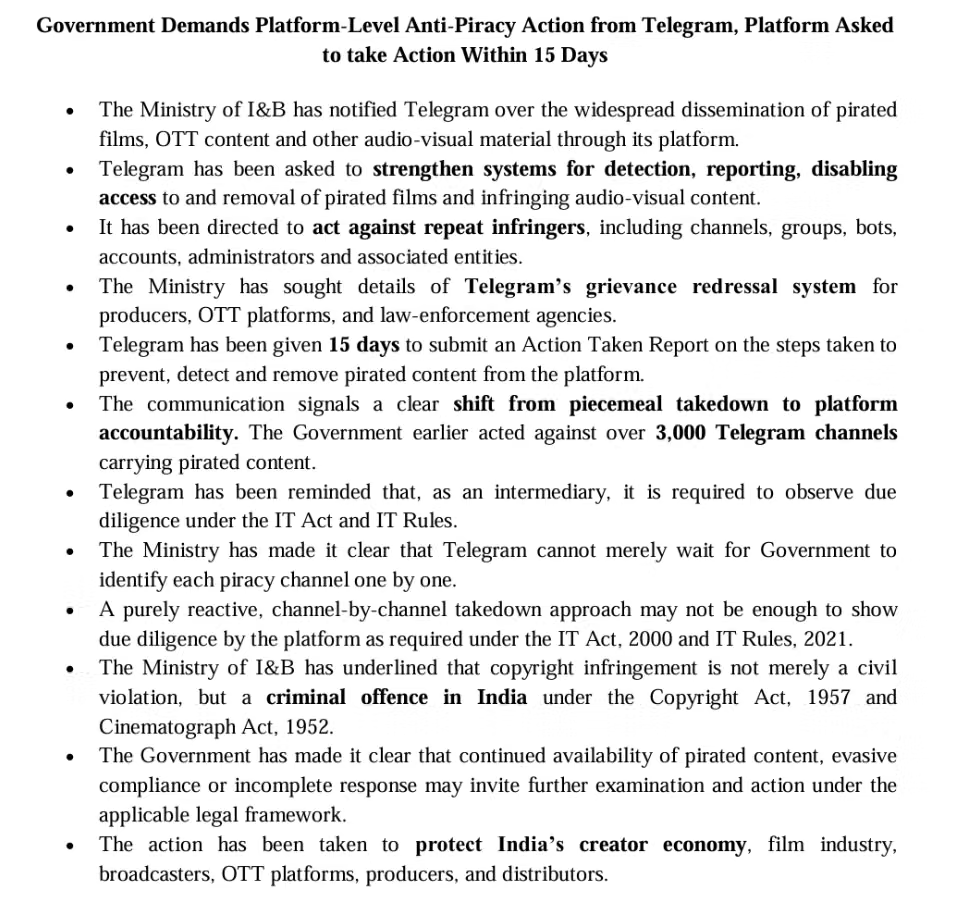
New Delhi: In a significant escalation of India's fight against digital piracy, the Centre has issued a formal notice to messaging platform Telegram, directing it to take immediate and systemic action against the widespread circulation of pirated films, web series, and other copyrighted audiovisual content. The Ministry of Information and Broadcasting (I&B) has also asked the platform to submit an Action Taken Report (ATR) within 15 days, marking one of the government's strongest interventions against online piracy through messaging services.
The move comes after multiple complaints from OTT platforms, broadcasters, film producers, and content owners, who alleged that thousands of Telegram channels continue to distribute copyrighted content illegally, causing substantial financial losses to India's entertainment industry. According to government sources, authorities have identified more than 3,100 Telegram channels allegedly involved in sharing pirated films and OTT content.
Shift From Individual Takedowns to Platform-Level Responsibility
Unlike previous instances where authorities primarily sought the removal of specific infringing links or channels, the latest notice signals a broader policy shift. The government has asked Telegram to move beyond reactive takedowns and adopt proactive, platform-level measures to curb piracy.
The ministry has reportedly instructed Telegram to strengthen mechanisms for identifying, reporting, disabling access to, and removing copyrighted material. It has also sought measures against repeat offenders and stronger systems to prevent the re-emergence of piracy channels.
Officials believe that simply removing individual links has proved ineffective because new channels frequently emerge to replace those that are taken down. By demanding structural changes, the Centre appears to be placing greater accountability on digital intermediaries for preventing copyright violations.
Why Telegram Is Under Scrutiny
Telegram has long been viewed by rights holders as one of the biggest hubs for the unauthorised distribution of movies, television shows, and premium OTT content.
Its ability to host large public channels, share massive files, and rapidly distribute content to thousands of users has made it particularly attractive for piracy networks. While Telegram has maintained that it removes illegal content upon receiving valid complaints, copyright owners argue that enforcement has not kept pace with the scale of infringement.
Industry stakeholders claim that pirated copies of newly released films and premium web series often surface on Telegram within hours of their release, affecting theatrical collections and subscription revenues.
Government sources cited complaints from several OTT platforms while issuing the notice, indicating that concerns have intensified as digital streaming continues to grow rapidly across India.
Over 3,100 Channels Identified
One of the most striking aspects of the government's notice is the reported identification of over 3,100 Telegram channels allegedly engaged in copyright infringement.
These channels are believed to be distributing:
-
Newly released films
-
Premium OTT originals
-
Television content
-
Other copyrighted audiovisual material
Authorities reportedly want Telegram not only to remove these channels but also to develop stronger mechanisms to prevent similar networks from resurfacing under different names or accounts.
Fifteen-Day Deadline for Compliance
The I&B Ministry has directed Telegram to submit a detailed Action Taken Report within 15 days.
The report is expected to outline:
-
Immediate action taken against identified piracy channels.
-
Steps introduced to improve copyright enforcement.
-
Measures to identify repeat offenders.
-
System-level improvements to reduce future copyright violations.
Although the notice does not immediately impose penalties, the deadline underscores the government's expectation of swift compliance. Officials have indicated that the move is aimed at protecting India's creative ecosystem, including filmmakers, producers, distributors, broadcasters, and OTT platforms.
Protecting India's Creator Economy
Digital piracy has emerged as one of the entertainment industry's biggest challenges, particularly with the rapid expansion of streaming platforms.
Every leaked movie or web series can translate into significant revenue losses for producers and distributors. Piracy also affects actors, technicians, writers, musicians, and thousands of professionals whose livelihoods depend on legitimate content consumption.
Government officials say the latest action is intended to safeguard India's growing creator economy and reinforce copyright protections in the digital age.
Industry experts have repeatedly argued that stronger enforcement is essential because piracy not only reduces revenues but also discourages investment in original content.
Comes Amid Wider Regulatory Scrutiny of Telegram
The anti-piracy notice is not an isolated development. Telegram has recently faced heightened regulatory attention in India over multiple issues.
Earlier this week, authorities also issued notices to Telegram and Signal seeking explanations regarding their username features, expressing concerns that anonymous usernames could potentially facilitate fraud, phishing, impersonation, and other forms of misuse.
Separately, Telegram found itself at the centre of controversy during the NEET-UG examination cycle after concerns over the circulation of leaked examination-related material. Those developments intensified the government's focus on how encrypted messaging platforms are being used to distribute unlawful content.
While the piracy notice originates from the Ministry of Information and Broadcasting, the broader pattern suggests increasing regulatory oversight of large digital platforms operating in India.
OTT Platforms Welcome Tougher Enforcement
The government's intervention is likely to be welcomed by OTT platforms and film producers, many of whom have consistently demanded stronger action against online piracy.
Streaming services invest heavily in exclusive content, with production budgets often running into hundreds of crores of rupees. The rapid circulation of pirated copies can undermine subscription growth and diminish the commercial value of exclusive releases.
Film producers have also highlighted how piracy affects theatrical revenues, particularly during the crucial opening weekend of a movie's release.
By directing Telegram to adopt platform-wide preventive mechanisms rather than relying solely on reactive takedowns, authorities appear to be responding directly to long-standing industry concerns.
A More Proactive Anti-Piracy Framework
The government's latest directive may represent a broader evolution in India's digital governance strategy.
Rather than treating messaging platforms as passive intermediaries, regulators increasingly expect them to deploy technological solutions capable of identifying and limiting unlawful activity.
The notice reportedly asks Telegram to strengthen systems for:
-
Detecting infringing content.
-
Disabling access more quickly.
-
Removing repeat copyright violators.
-
Preventing re-uploading of pirated material.
-
Enhancing reporting and enforcement mechanisms.
Such measures align with the government's broader emphasis on greater accountability from technology platforms operating in India.
What Happens Next?
Telegram now has 15 days to respond with its Action Taken Report detailing how it intends to address the concerns raised by the Ministry.
The platform has not publicly announced its response to the notice at the time of writing.
The outcome could have implications extending beyond Telegram itself. If the government continues pushing for platform-level anti-piracy obligations, other messaging and content-sharing services may also face increased expectations regarding copyright enforcement.
For India's entertainment industry, the notice represents one of the strongest signals yet that the government intends to intensify its campaign against digital piracy. Whether the move succeeds will depend not only on Telegram's response but also on the effectiveness of any technological and operational changes implemented to curb the spread of pirated content across the platform.
With inputs from agencies
Image Source: Multiple agencies
© Copyright 2026. All Rights Reserved. Powered by Vygr Media.