 By
By 
New Delhi: Delhi is preparing for a major expansion of its public transport network, combining a push towards electric mobility with targeted services for women and students. The Delhi government has announced the addition of 200 electric buses, the launch of a Delhi-Karnal electric bus service and 56 dedicated women-only bus services across the Capital.
The announcements bring together three priorities for Delhi’s transport system: increasing the number of buses available to commuters, reducing dependence on conventional fuel-powered public transport and addressing the safety and accessibility concerns of women travelling to workplaces and educational institutions.
According to the government, the measures are part of a broader effort to make public transport cleaner, safer, more comfortable and more accessible. Transport Minister Pankaj Kumar Singh said the new buses would support Delhi’s shift towards greener transportation while improving connectivity across the city and beyond.
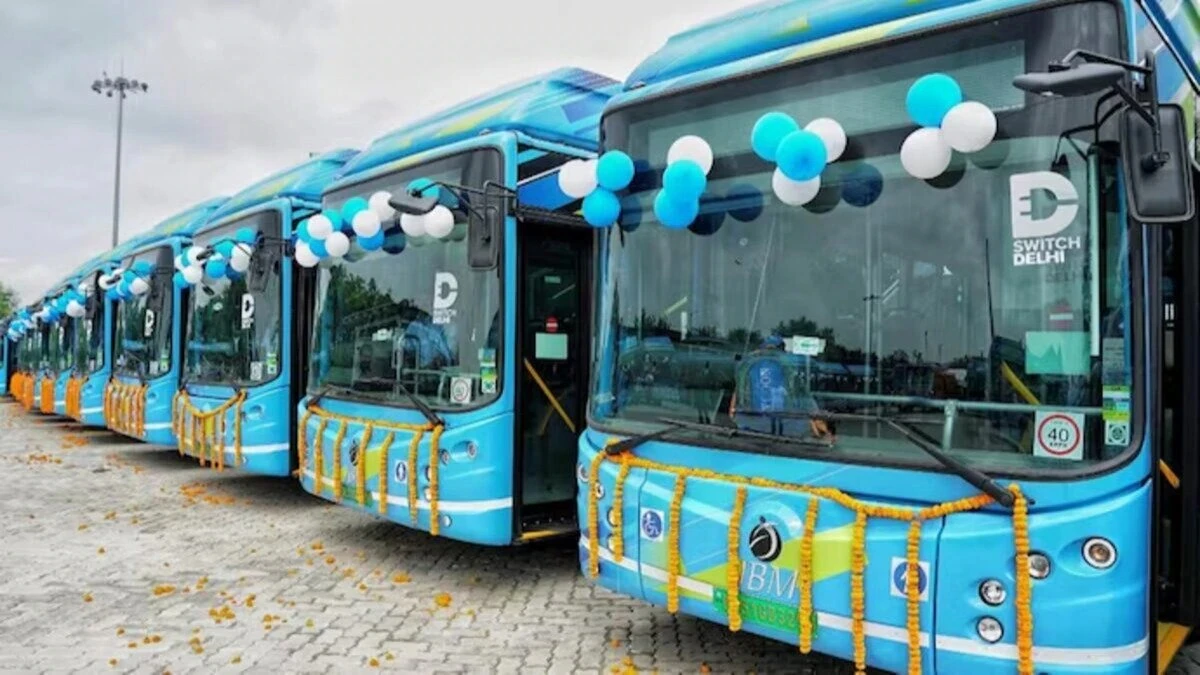
Delhi to add 200 new electric buses
The most significant part of the expansion is the addition of 200 new electric buses to Delhi’s public transport fleet. The new vehicles will consist of 88 buses measuring 12 metres and 112 smaller 9-metre buses.
The mix of bus sizes is intended to address different connectivity requirements. While larger buses can serve high-demand corridors, smaller buses can be deployed on roads and routes where bigger vehicles may be less practical.
The buses will be low-floor and air-conditioned and are expected to include passenger-safety and accessibility features such as CCTV cameras, panic buttons and live tracking. Facilities designed to make travel easier for passengers with disabilities will also be provided.
With these additions, Delhi’s total bus fleet is expected to reach approximately 6,800 buses, comprising nearly 4,938 electric buses and 1,750 CNG buses, according to the government announcement.
The expansion is also part of a much larger fleet-building plan. The Delhi government has set a target of taking the city’s total bus fleet to nearly 14,000 buses by the financial year 2028-29.
The numbers indicate that electric mobility is becoming increasingly central to Delhi’s public transport strategy. Rather than treating electric buses as a limited pilot or niche service, the government is positioning them as a substantial component of the city's future bus network.
New Delhi-Karnal electric bus service
The expansion will not be limited to intra-city travel. The Delhi Transport Corporation (DTC) is also set to begin an interstate electric bus service between Delhi and Karnal, creating another public transport link between the national capital and Haryana.
The new service will operate with five air-conditioned electric buses, with 10 trips planned in each direction every day.
The approximately 133-kilometre route will connect Maharana Pratap ISBT at Kashmiri Gate with Karnal, passing through several important locations along the Delhi-Haryana corridor. These include Singhu Border, Rai, Murthal, Ganaur, Samalkha, Panipat, Gharaunda and Madhuban.
For commuters travelling between Delhi and Haryana, the service could provide an alternative to private vehicles and conventional intercity buses. Beyond the convenience factor, the use of electric buses also gives the route an environmental dimension, particularly along a corridor with substantial daily movement of commuters.
The Delhi-Karnal service therefore fits into the government's broader attempt to combine improved regional connectivity with a gradual transition towards cleaner public transportation.
56 women-only bus services to focus on safety and accessibility
Alongside the expansion of the general bus fleet, Delhi is introducing a dedicated network of 56 women-only electric bus services.
The services have been designed around the travel patterns of working women and students and will cover 28 high-footfall corridors. The network comprises 30 Ladies Special services on 15 city routes and 26 University Ladies Special services on 13 routes.
The university-focused services are particularly significant because they are intended to connect residential neighbourhoods with Delhi University’s North and South Campuses as well as other major educational institutions.
Areas identified for these connections include Najafgarh, Rohini, Janakpuri, Mundka, Mayur Vihar, Kalkaji, Palla and Dhaula Kuan. The routes have been selected based on areas with substantial movement of women passengers.
The remaining Ladies Special services will cater primarily to office-going passengers and connect residential areas with employment centres, commercial districts, institutional hubs and Metro interchange points.
The planned timings are also designed around peak commuting periods. The 30 city services are scheduled to operate in both directions during morning office hours, between approximately 7:52 am and 9 am, with return services between 4:32 pm and 6:15 pm. University services, meanwhile, are aligned with college schedules.
What safety features will women-only buses have?
The women-only services are not simply about reserving buses for female passengers. The government has also outlined a set of safety and accessibility features intended to make the services more dependable.
The buses will have CCTV surveillance and panic buttons linked to the Operation Control Centre. They will also feature low-floor ramps for passengers with disabilities and distinctive branding to make the dedicated services easier to identify.
Where required, bus marshals or female police personnel may also be deployed. The services are additionally expected to integrate with the Pink Smart Card, enabling eligible women to continue accessing cashless and free travel benefits.
The focus on university routes is particularly relevant because students often have to make long daily journeys between residential areas and campuses. Dedicated services could offer a more predictable option for women travelling during morning and evening hours, while also potentially easing pressure on crowded regular services.
New charging infrastructure to support electric fleet
Expanding an electric bus fleet requires more than purchasing vehicles. Charging infrastructure will also have to keep pace with the number of buses entering service.
As part of the latest transport push, the government is set to open a high-capacity electric vehicle charging station at the DTC depot in Rajghat. The facility is intended to support the growing electric bus fleet and strengthen the infrastructure required for wider electrification of public transport.
This is an important part of the transition because the success of an electric bus network ultimately depends on operational infrastructure as much as on the buses themselves. Adequate charging capacity can help operators maintain schedules, manage vehicle deployment and expand services without creating bottlenecks at depots.
A broader shift in Delhi’s public transport strategy
Taken together, the announcements represent more than a simple increase in the number of buses on Delhi's roads.
The 200 new e-buses address fleet capacity and cleaner mobility. The Delhi-Karnal service expands interstate connectivity. The 56 women-only services target a specific passenger group and focus on safer and more convenient access to workplaces and educational institutions. Meanwhile, new charging infrastructure supports the larger transition towards electric public transport.
The government has also emphasised accessibility. Low-floor buses, ramps, CCTV, panic buttons and live tracking indicate an attempt to make technology and vehicle design part of the passenger experience rather than treating them as separate
With input from agencies
Image Source: Multiple agencies
© Copyright 2026. All Rights Reserved. Powered by Vygr Media.