 By

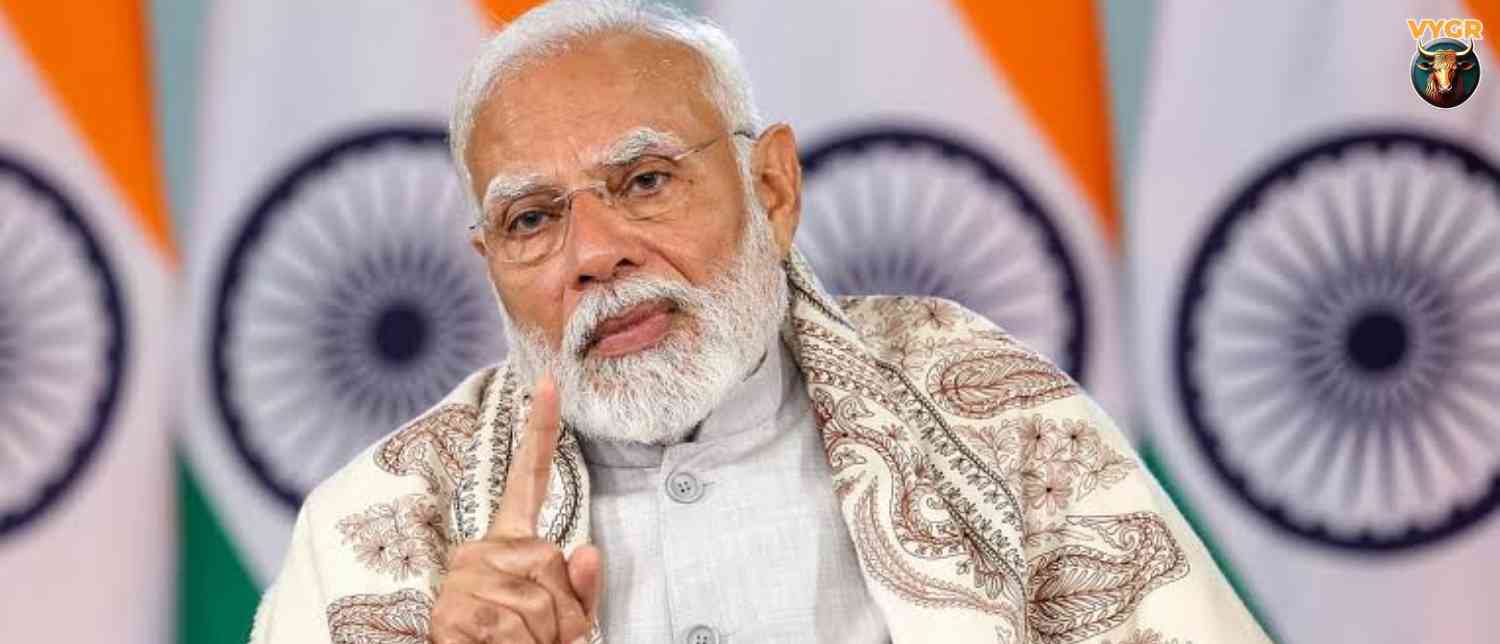
New Delhi, November 19, 2026: Prime Minister Narendra Modi said on Thursday that about 50 crore Indians have overcome poverty in the last 12-13 years, citing a recent World Bank report. He was inaugurating the annual general meeting and annual convention of FICCI at Bharat Mandapam in the national capital, where he addressed industry leaders and policymakers.
What did the Prime Minister say?
Modi told the gathering that India had defeated poverty on the ground over the past 12 years, pointing to the World Bank’s latest assessment of the country. The claim is one he has made repeatedly in recent weeks at events across the country, where he has described the fall in poverty as one of the biggest achievements since Independence.
What does the World Bank report say?
The figure comes from the World Bank’s India Poverty and Equity Brief, released in October 2026. Its key findings are:
- 49.6 crore people moved out of poverty between 2011 and 2023
- Extreme poverty at the international line of $3 a day fell from 27.1% to 2.6%
- At the lower-middle-income line of $4.20 a day, poverty fell from 57.7% to 16.1%
- The decline was driven by higher household consumption, more jobs, particularly for women, and social transfers such as food subsidies
- Poverty is projected to keep falling, but at a slower pace, with the $4.20 rate expected to move from 14.2% in 2026 to 12.1% by 2028
A point of clarity on the numbers
The 49.6 crore figure refers to people who moved above the $4.20-a-day line. At the stricter $3-a-day line, the 2.6% rate means only a few crore Indians remain in extreme poverty. The two figures measure different things, which is why the claim is described both as “out of poverty” and “out of extreme poverty” in different speeches.
Why does the government link the fall to welfare schemes?
Modi has credited a wide set of schemes for the change, including Jan Dhan accounts, PM Awas Yojana, Mudra loans, Ayushman Bharat, free foodgrains, Swachh Bharat and Har Ghar Jal. His argument is that access to banking, housing, healthcare, food security and basic services has given poor families more confidence and opportunity. He has also said that economic growth and poverty reduction go hand in hand.
What do critics say?
The opposition and some economists have questioned how the data should be read. Their main points are:
- Poverty estimates depend on the poverty line chosen, and a higher line shows a much larger share of people still poor
- Changes in survey methods and estimation techniques can affect how steep the decline looks
- Inequality remains high, and the World Bank itself notes that the median earnings of the top 10% of workers were about 13 times those of the bottom 10% in 2023
- The continuing free foodgrain programme for a very large number of households is cited as a sign that vulnerability persists
Supporters counter that the World Bank is an independent international institution, that the fall is visible across rural and urban India, and that the finding matches earlier independent research showing sharp gains.
Why it matters for industry
The FICCI platform gave the Prime Minister a business audience for the message. Falling poverty and rising consumption are central to the demand story for Indian companies, and the World Bank’s projection of a slower but continued decline points to a larger consuming class over the coming years.
What next?
Poverty reduction is likely to remain a central theme in the government’s messaging as it works towards its Viksit Bharat goal for 2047. Analysts say the next phase will depend on job quality, formal employment and income growth, since the gains so far have come largely from consumption and welfare transfers.
Frequently asked questions
What did PM Modi say at the FICCI event?
He said about 50 crore Indians have overcome poverty in the last 12-13 years, citing a World Bank report.
Which World Bank report is this?
The India Poverty and Equity Brief of October 2026.
How much has extreme poverty fallen in India?
From 27.1% in 2011 to 2.6% in 2023 at the $3-a-day line.
Does the 50 crore figure mean extreme poverty?
Not exactly. The 49.6 crore figure relates to the $4.20-a-day threshold, while the 2.6% figure relates to the $3-a-day extreme poverty line.
Will poverty keep falling?
The World Bank expects it to, though at a slower pace.
© Copyright 2026. All Rights Reserved. Powered by Vygr Media.