 By

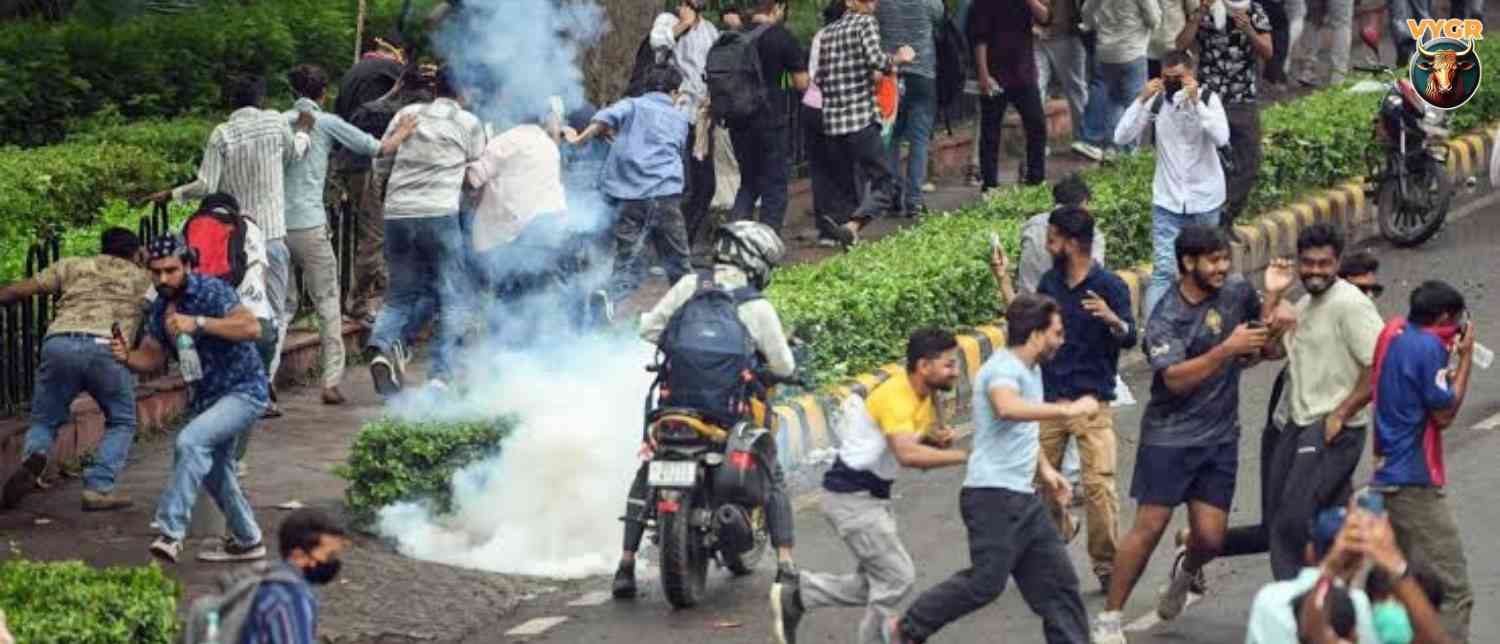
When people gather at Jantar Mantar, the traditional protest ground in the heart of Delhi, they have long expected to be watched by police. What they may not have expected, the petitioners say, is to have their faces mapped, matched against databases and stored by private companies. On Tuesday, the Supreme Court began to examine whether that is lawful, and in doing so it confronted a question with no easy answer: how much privacy can a person claim while standing in a public place?
A bench headed by Chief Justice of India Surya Kant issued notice on a petition by the Software Freedom Law Centre (SFLC.in), which alleges that facial recognition and surveillance tools used at protest sites violate the fundamental right to privacy. The Court’s examination is framed around whether such surveillance could amount to negative state interference, that is, an intrusion by the state into a space where it is constitutionally bound to hold back.
Nothing in the Court’s order decides the question. Issuing notice means the respondents must respond, and the allegations remain those of the petitioners.
What Is the Plea About?
The petition alleges that the Delhi Police and other authorities used extensive surveillance to identify and track people who took part in, or intended to join, a protest at Jantar Mantar on October 10. It relies on the recognition of privacy as a fundamental right, including the Supreme Court’s landmark 2017 ruling in Puttaswamy, as well as its earlier decision in PUCL on telephone tapping, which set out safeguards against arbitrary state surveillance.
This is not the only case on the subject. In August, the Supreme Court agreed to hear a separate petition by Rajya Sabha MP A A Rahim of the CPI(M), arising from a student protest at Jantar Mantar organised by the Cockroach Janta Party. Senior Advocate Menaka Guruswamy, appearing for him, flagged two concerns: the facial recognition of protesters by Delhi Police and the storage of data by private companies. She told the bench that one source of data collection was a vehicle, and another was spectacles, and that the data was taken without permission. The bench said it would hear that plea along with related matters.
What Exactly Is Alleged?
Taken together, the petitions make several claims.
- A legal vacuum. The petitioners argue that biometric surveillance of protesters took place without legal authority. They say neither the Delhi Police’s standing orders on protests nor the Criminal Procedure (Identification) Act, 2022, authorises such surveillance of people attending civilian assemblies.
- Automated matching. According to the Rahim plea, the police extracted and matched protesters’ biometric identifiers automatically and allegedly linked them with national criminal databases.
- No safeguards. An RTI response from Delhi Police, according to the plea, confirms that no privacy impact assessment was carried out before facial recognition was deployed.
- Private custody of data. The plea says private companies host the data, and it asks for directions that they preserve, stop using, and permanently delete any biometric data in their possession.
- Wide net. The plea says journalists and members of the public present at the site were also caught in the surveillance, not just participants.
What Did the Government Say in Court?
The Union’s top law officer, Solicitor General Tushar Mehta, opposed the plea, asking in court whether there can be a right to privacy in a public place. Reports of the hearing also record him telling the bench that protesters are not prisoners. Justice Bagchi, for his part, pressed on what privacy a person can reasonably expect when they are in a public place. The Court then issued notice.
Delhi Police have not been reported to have set out a detailed legal defence of the specific deployment at this stage, and their written response will be a central part of the next hearings. In the past, the force has justified the use of facial recognition on the basis of intelligence inputs about possible disruption. When it first used its facial recognition software at a rally in December 2019, a police spokesman said the technology was deployed on credible intelligence about possible disruptions and that checks against misuse were in place.
What Is “Negative State Interference”?
The phrase comes from the way constitutional lawyers describe rights. A right can place two kinds of duties on the state. A negative duty requires the state to stay out of an area of a person’s life, as with the freedom of speech or the right not to be arbitrarily searched. A positive duty requires the state to take action, such as providing protection or a service.
Privacy has traditionally been treated as a right in which the state’s main duty is negative: not to intrude without justification. If tracking people’s faces at a protest is found to be an intrusion on that sphere, the next question is whether it meets the test set out in Puttaswamy: that any such interference must be backed by law, serve a legitimate aim, and be proportionate to that aim.
What Are the Competing Arguments?
The case for the petitioners: They say that gathering to protest is an exercise of the fundamental freedoms of speech and assembly, and that tracking attendees chills those freedoms. They argue that identifying peaceful protesters, linking them to criminal databases and handing data to private firms, without any statutory backing or safeguards, goes well beyond ordinary policing.
The case for the state: The government’s position, as signalled in court, is that people in a public place cannot expect the same privacy as in their homes, and that the police have a duty to maintain order and prevent violence. Supporters of such measures also argue that cameras and modern tools help to identify those who commit offences during demonstrations.
The middle ground: Legal scholars often draw a distinction between general camera coverage of a public space and the systematic identification and tracking of individuals using biometric tools. The first is widely accepted. The second, they argue, raises much harder questions of necessity and proportionality.
Why Does This Case Matter?
India has no dedicated law that regulates police use of facial recognition. The data protection law passed in 2023 gives broad exemptions to government agencies for certain purposes, which means that the legal framework for such tools remains thin. A ruling from the Supreme Court could set the first clear boundaries on how the technology may be used at demonstrations, which are among the most sensitive settings for the right to dissent.
What Happens Next?
- The Union government, Delhi Police and other respondents must file their replies.
- The Court is expected to hear this matter alongside the related petitions already pending, including the plea by Rahim.
- The bench could eventually lay down guidelines on when and how biometric surveillance can be used at protests, or it could leave the matter to Parliament.
For now, the question the Court has agreed to examine goes well beyond Jantar Mantar: when you stand in a crowd to make your voice heard, does the state have the right to remember your face?
© Copyright 2026. All Rights Reserved. Powered by Vygr Media.