 By
By 
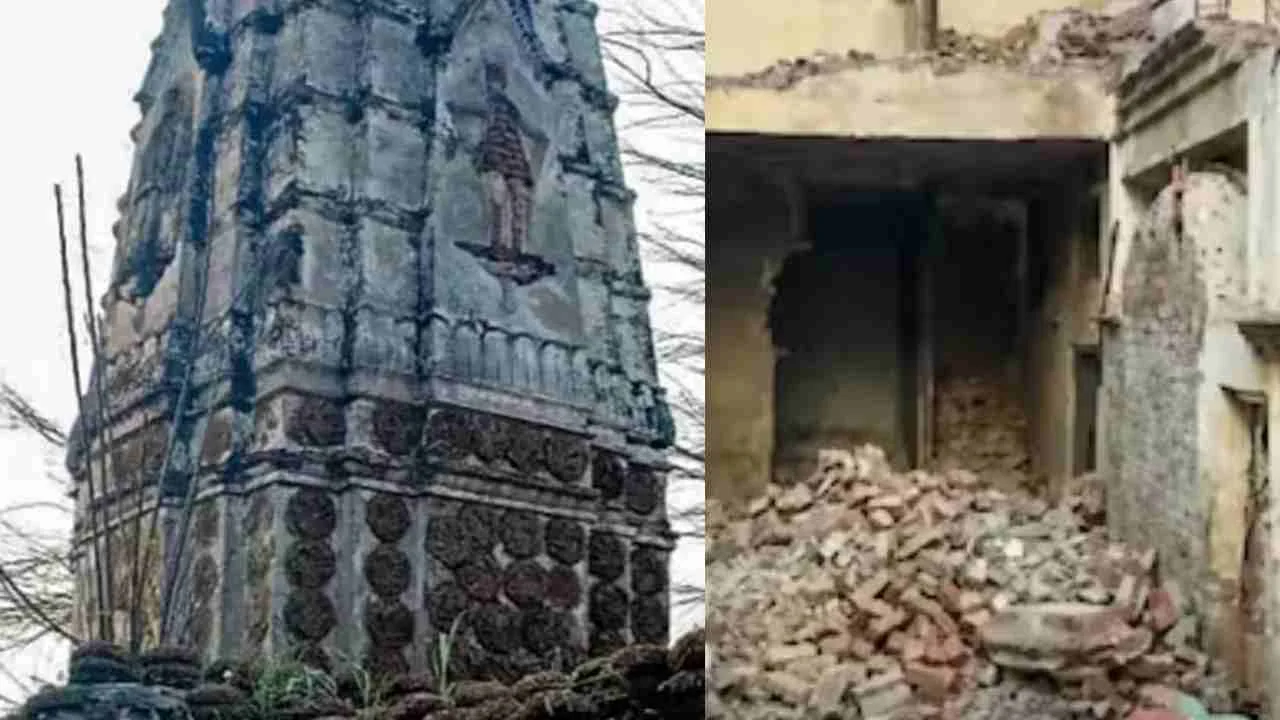
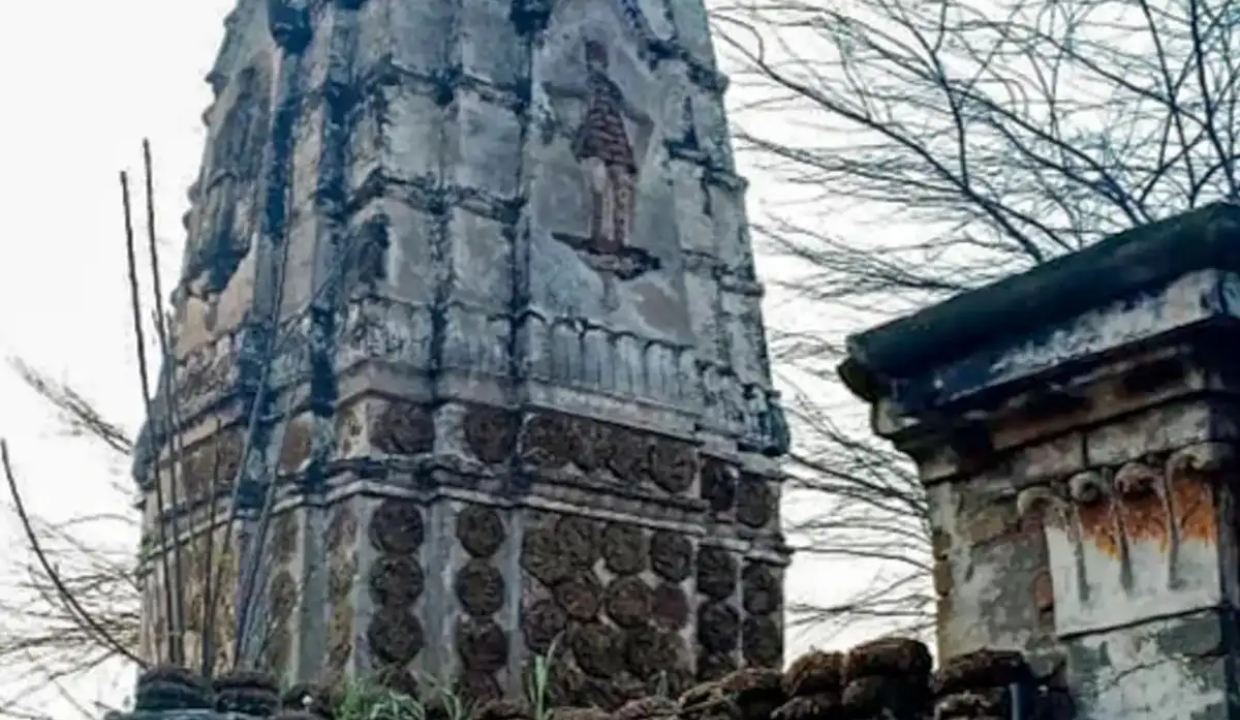
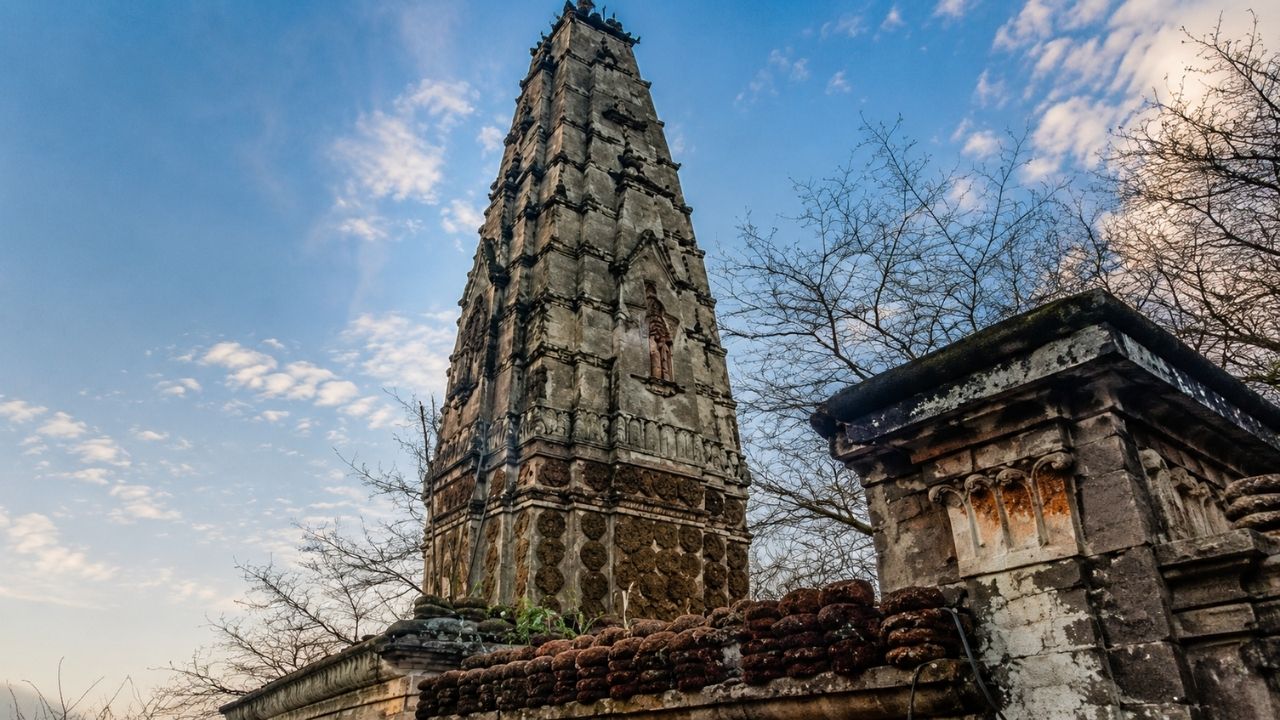
A more than century-old Hindu temple in Pakistan’s Punjab province has become the centre of a growing controversy after it was demolished in Siraj village of Narowal district, with minority representatives alleging that the historic structure was brought down to make way for the expansion of an adjoining madrassa.
The incident, which reportedly took place on August 21, has triggered demands for an investigation, restoration of the temple and action against those accused of failing to protect the religious site.
But the circumstances surrounding the destruction remain disputed.
While minority representatives and local residents allege that the temple was deliberately demolished and its land targeted for use by a neighbouring religious seminary, officials from Pakistan’s Evacuee Trust Property Board (ETPB) have rejected the claim. According to the government version, the 100-to-125-year-old structure collapsed because of torrential rains.
The competing accounts have now placed not only the temple’s destruction but also the ownership, leasing and protection of the surrounding property under scrutiny.
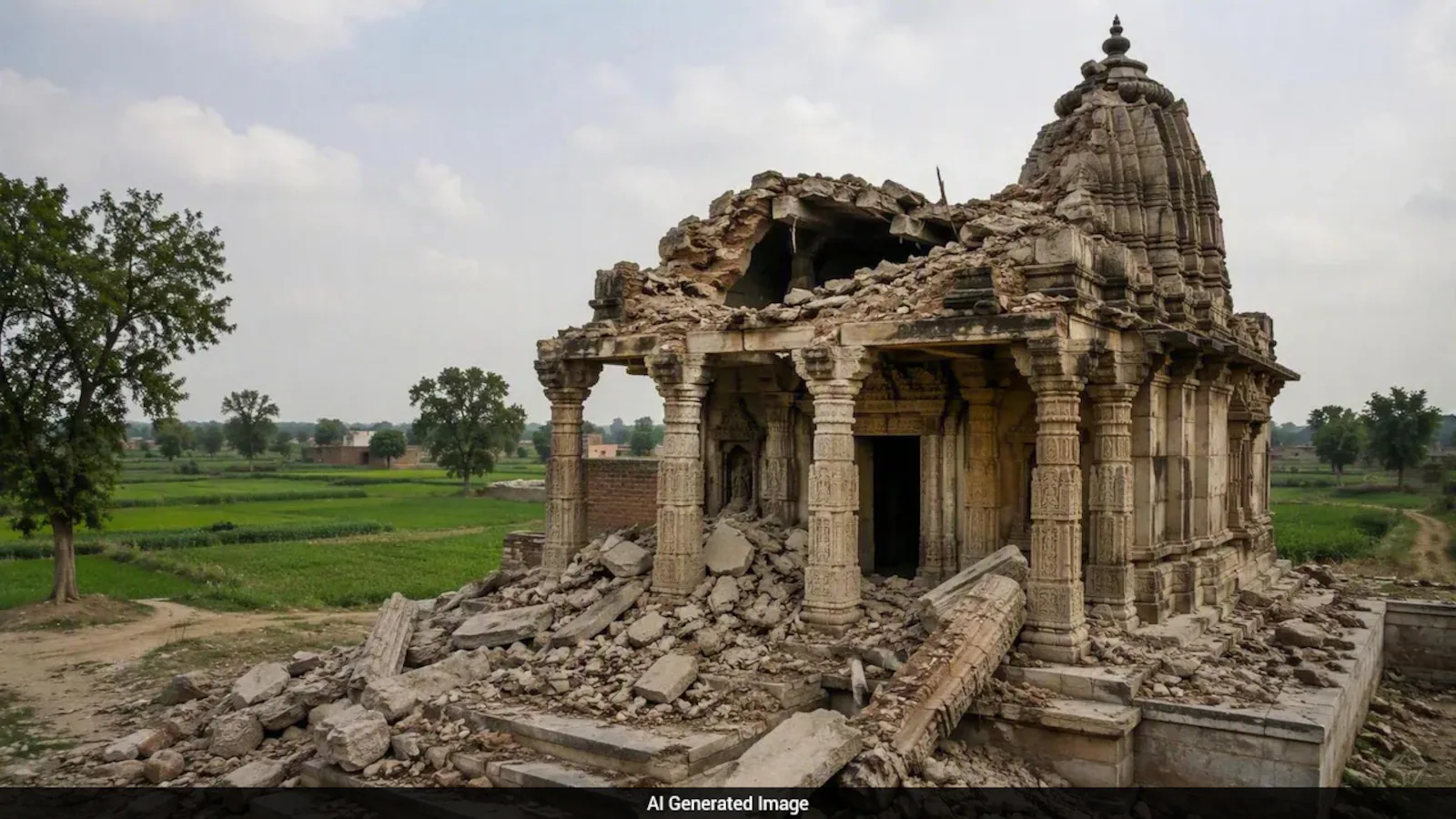
What Happened to the Hindu Temple in Narowal?
The temple was located in Siraj village, in Narowal district of Punjab, roughly 130 kilometres from Lahore. It was estimated to be between 100 and 125 years old and occupied around 1,000 square metres of land.
The structure was reportedly demolished on August 21. Soon afterwards, questions began emerging over whether the building had actually collapsed because of extreme weather or whether it had been deliberately brought down.
The controversy intensified because the temple was situated next to land that had previously been leased for a madrassa.
Minority representatives allege that the temple itself was targeted so that its land could effectively become part of the adjoining seminary. One of the key allegations is that individuals associated with Tehreek-i-Labbaik Pakistan (TLP), a banned far-right Islamic political organisation, were involved in the demolition.
However, that allegation has not been independently established.
The government has maintained that the temple collapsed following heavy rainfall rather than being intentionally demolished. A senior ETPB official confirmed the structure's age but said the temple's own land had never been leased to anyone.
That distinction is central to the dispute.
Why Has the Madrassa Land Issue Become Important?
The controversy does not begin with the temple's destruction. According to minority representatives, the property around the shrine had already been the subject of a complicated lease and occupation dispute.
The land adjoining the temple had reportedly been leased by the ETPB for the establishment of a madrassa. The lease was subsequently cancelled after allegations that rent had remained unpaid for several years and that the property had not been used for its stated purpose.
A revenue department report was also cited as identifying several people as illegal occupants of parts of the property, including quarters and other sections associated with the temple site.
The most significant development came on January 29, 2026, when the ETPB's deputy administrator in Sialkot reportedly cancelled the seminary's lease rights and ordered the eviction of alleged illegal occupants as well as the sealing of the property.
Minority representatives now claim that this order was never implemented.
That allegation has added another layer to the controversy. If the lease had indeed been cancelled and an eviction order issued, questions arise over who continued occupying the property and why the order was allegedly not enforced.
It also raises questions about whether the temple had adequate institutional protection before its destruction.
Police Were Reportedly Aware of Security Concerns
Another point being raised by those demanding an investigation is an April 11 report attributed to the Narowal deputy superintendent of police.
According to the allegations, the report indicated that local police were aware of security concerns surrounding the temple and the possibility that the site could be damaged.
This detail is significant because it shifts the focus beyond the question of whether the temple collapsed or was demolished.
Even if the government account of rain damage were accepted, the existence of prior security concerns would raise questions about whether sufficient measures were taken to safeguard the religious site and its property.
Minority representatives have accused local authorities and the ETPB of failing to act despite allegedly knowing about the risks.
The government, however, has not accepted the allegation that the temple was deliberately destroyed.
What Does the Pakistan Government Say?
The official explanation is markedly different from the allegations made by minority groups.
Rana Iftikhar, a senior ETPB official, said the temple collapsed because of torrential rains. He acknowledged that the structure was very old, estimating its age at more than 100 years and possibly as much as 125 years.
He also said the temple did not have a name recorded in the ETPB's records.
At the same time, he confirmed that land adjoining the temple had been leased for establishing a seminary. However, he stressed that the temple's own land was not included in that lease.
In other words, the official position is that the existence of a madrassa next to the temple does not establish that the temple land was transferred or leased for its expansion.
The ETPB has also said that senior officials would decide whether the temple should be restored.
That leaves an important question unanswered: if the temple collapsed because of rain, will authorities investigate the circumstances of its collapse and rebuild the historic structure?
Minority Groups Demand Investigation and Reconstruction
The demolition has prompted calls for a formal probe from minority representatives and a political organisation representing religious minorities.
Pakistan Masiha Millat Party chairman Aslam Parvez Sahotra reportedly met the Punjab Additional Home Secretary on August 28 and submitted a written application seeking action against those allegedly responsible for the destruction as well as officials accused of failing to protect the property.
Sahotra has demanded that the historic temple be reconstructed in its original form.
He has also called for stronger protection of Hindu temples, Sikh gurdwaras and Christian churches and their adjoining properties across Punjab.
The demand is broader than the restoration of one building. It reflects concerns over how religious minority properties are administered, protected and preserved in areas where historic places of worship may stand alongside properties used by other religious institutions.
Hindu community leader Rattan Lal has similarly called for the temple's restoration and action against anyone found responsible.
He has accused the district administration and the ETPB of failing to protect the site and remove alleged illegal occupants.
Temple Materials Were Allegedly Removed After Demolition
One of the allegations that has further intensified scrutiny concerns what happened after the structure came down.
Sahotra has claimed that metal fittings from the temple's shikhar, along with bricks and other building material, were removed from the site.
If established, such activity could become an important part of any investigation into the incident, particularly if authorities determine that the structure was deliberately demolished.
At present, however, these remain allegations and require independent verification.
The absence of a transparent investigation has therefore become a major concern for those demanding answers.
Local Hindus Say They Are Afraid to Visit the Site
For the local Hindu community, the dispute is not simply about a historic building.
Rattan Lal has said that members of the local Hindu community are reluctant to visit the site because a madrassa continues to operate on the premises.
The reported fear of visiting what was once a Hindu place of worship highlights the broader anxiety surrounding minority religious heritage in the area.
A temple can have significance beyond its physical structure. For a small religious community, an old shrine may represent continuity with a past that predates the current demographic and political landscape.
The loss of such a site therefore has implications that go beyond the destruction of bricks, walls and architectural features.
It can also deepen a sense of insecurity among communities already concerned about the protection of their religious properties.
A Larger Question About Pakistan’s Hindu Heritage
The Narowal temple controversy has revived broader concerns about the condition and protection of Hindu religious heritage in Pakistan.
The country is home to a number of historic Hindu temples, particularly in Sindh and Punjab. Many of these sites carry architectural, cultural and historical significance dating back to periods before the Partition of British India in 1947.
But the survival of a historic structure does not necessarily mean that it remains protected or functional.
Some religious sites have suffered from neglect, disputed ownership, encroachment or changes in use. The Narowal controversy brings several of these problems together in one case: an old Hindu temple, neighbouring institutional property, an alleged lease dispute, claims of illegal occupation, reported security concerns and competing explanations for the site's destruction.
The issue also comes against the backdrop of long-standing tensions affecting religious minorities in Pakistan.
Community representatives have pointed to decades of political and religious tensions, including the impact of Islamisation policies and strained India-Pakistan relations, as factors contributing to insecurity among Hindus.
At the same time, preserving minority religious heritage has been described as an opportunity for Pakistan to protect its multicultural history and potentially strengthen heritage tourism.
Land Dispute or Rain Damage? The Key Questions
At the heart of the controversy are several questions that only a transparent investigation can conclusively answer.
First, did the temple collapse because of torrential rainfall, as the ETPB claims, or was it deliberately demolished?
Second, if the structure was deliberately brought down, who ordered or carried out the demolition?
Third, what happened to the temple's building material after the structure was destroyed?
Fourth, what was the exact legal status of the adjoining madrassa property?
And fifth, if an ETPB order cancelling the seminary's lease and directing eviction and sealing was issued in January, why was it allegedly not implemented?
There is also the question of the reported April security assessment. If authorities had prior knowledge of a possible threat to the temple, what steps were taken to protect it?
These questions matter because the dispute is no longer simply about a collapsed historic structure. It concerns the management of religious property, the enforcement of government orders and the protection of a minority community's cultural heritage.
Why the Controversy Matters
For Pakistan's Hindu community, the destruction of an old temple carries a significance that cannot be measured solely by the age of the building.
A structure that survived for more than a century can serve as a physical link to generations of worshippers and to a much more diverse social history of the region.
Its disappearance, particularly when accompanied by allegations of encroachment or deliberate destruction, can reinforce fears that minority heritage is vulnerable when competing property or institutional interests arise.
For the government, the controversy presents an opportunity to demonstrate that religious heritage is protected irrespective of the faith associated with it.
A credible investigation would also help settle the competing narratives surrounding the Narowal temple. If torrential rain caused the collapse, an authoritative assessment could establish that fact and address the concerns raised by minority groups. If deliberate demolition is established, accountability would become essential.
Either way, allowing the controversy to remain unresolved risks deepening mistrust.
What Happens Next?
The immediate demands from minority representatives are clear: investigate the circumstances surrounding the temple's destruction, establish responsibility if wrongdoing is found, address alleged encroachments and rebuild the historic shrine.
The government has indicated that senior ETPB officials will consider whether the temple should be restored, while maintaining that the structure collapsed because of heavy rainfall.
The question of the adjoining madrassa and the disputed lease will also require closer examination.
For now, the Narowal temple stands as the centre of a dispute involving history, religion, property and governance. The facts surrounding its destruction remain contested, but the calls for transparency are growing.
Whether the site was lost to torrential rain or deliberate demolition is ultimately a matter that evidence—not competing claims—must establish.
What is already clear, however, is that a more than 100-year-old Hindu religious site has disappeared, and with it another piece of Pakistan's complex religious and cultural heritage. The demand now is not merely to determine what happened to the temple, but to establish whether the institutions responsible for protecting it did enough to ensure that it survived.
With input from agencies
Image Source: Multiple agencies
© Copyright 2026. All Rights Reserved. Powered by Vygr Media.