
 By
By 
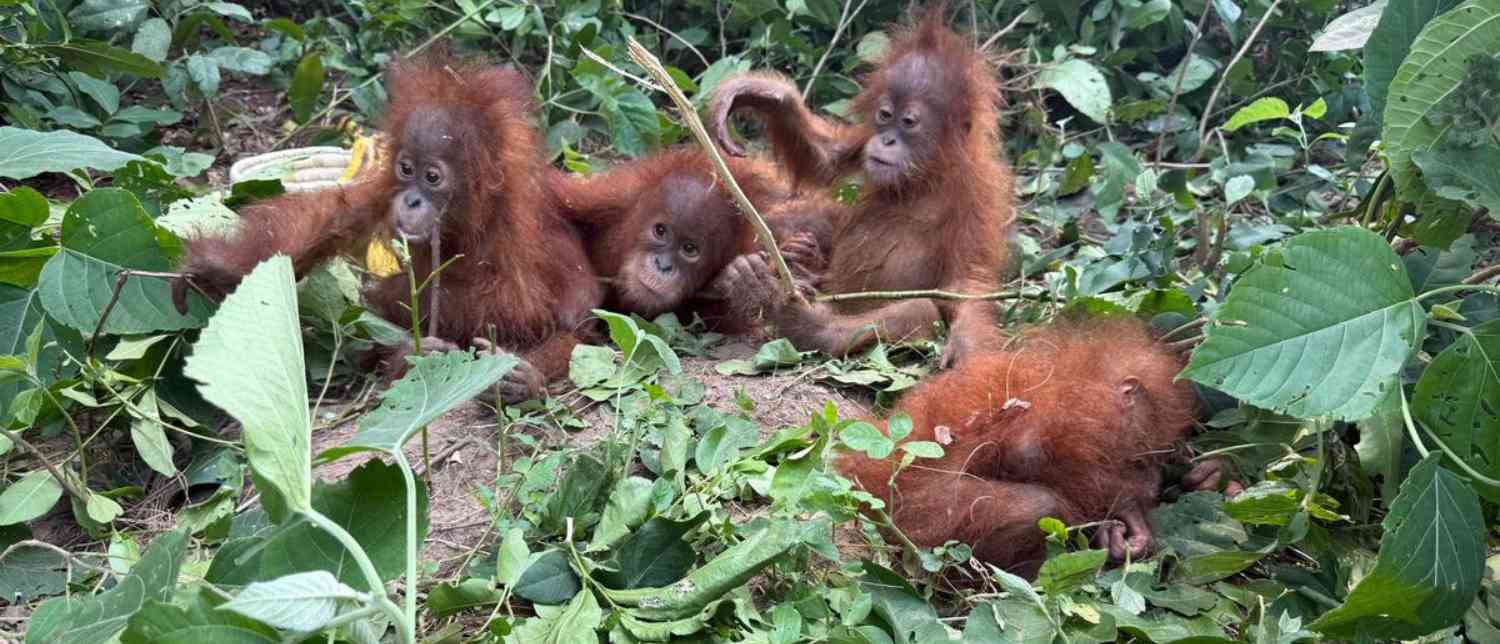
Balasore, Odisha: The discovery of five baby orangutans in a forest in Odisha’s Balasore district has triggered a major wildlife investigation, with authorities suspecting that the critically endangered animals may have been brought into India illegally as part of an international trafficking network.
The unusual sighting took place on Tuesday morning in the Bichitrapur forest area near Badipada in Bhograi block. Local residents initially spotted the animals moving among the trees and believed they were an unusual species of monkey. Forest officials who reached the spot were stunned to find five young orangutans instead.
The animals, comprising three males and two females, were subsequently rescued and taken into protective custody. Their presence in an Odisha forest is considered highly unusual because orangutans are not native to India and are found naturally only in parts of Southeast Asia.

Five young orangutans found far from their natural habitat
The five apes were reportedly spotted at around 6 am by people near Badapai village. The news spread quickly, drawing a large crowd to the forest. Concerned that the gathering could endanger or stress the animals, forest officials moved swiftly to secure them.
The orangutans were reportedly calm when rescuers arrived. Officials were able to place them inside cages without using tranquilising drugs.
According to forest officials, the juveniles measured roughly 1 to 1.5 feet in height, although their exact ages have not yet been established. Four of the five were initially described as healthy, eating food and drinking oral rehydration solution, while veterinary teams began examining all five animals.
The discovery immediately raised a fundamental question: How did five orangutans, whose natural habitat is thousands of kilometres away, end up together in a forest in coastal Odisha?
Wildlife officials have ruled out the possibility of a normal migration. Orangutans naturally inhabit the rainforests of Borneo and Sumatra, with no natural land corridor connecting their habitat to India. Their sudden appearance in Balasore therefore points towards human intervention, officials said.
International wildlife trafficking suspected
Authorities are now investigating the possibility that the five animals were being transported illegally and were abandoned when the smugglers feared detection.
The Odisha government has sought the involvement of the Wildlife Crime Control Bureau (WCCB), while the Odisha Police Special Task Force has also begun its own investigation into the circumstances surrounding the animals’ arrival.
Officials are examining whether the orangutans could have been transported through a larger trafficking route. One possibility being explored is that the animals entered India through an international route and were subsequently moved towards Odisha by road or another domestic transport network.
Officials have also raised the possibility that the animals could have been brought from Malaysia towards Kolkata and then transported by road towards Balasore. However, this remains an investigative theory and the exact route has not yet been established.
Authorities are expected to examine CCTV footage from airports, railway stations, ports and other transport points as part of the investigation. The objective is to determine where the orangutans originated, when they entered India and who may have been involved in moving them.
The suspected financial motive has also emerged as a key angle. Officials said individual orangutans can command extremely high prices in the international illegal wildlife market, with estimates suggesting that each animal could be worth around ₹20 lakh to ₹25 lakh.
#WATCH | Balasore, Odisha: Five baby orangutans were found in the Ranakatha Protected Reserve Forest (PRF) near Badapai village. (08.09) pic.twitter.com/AoPNWxpAVN— ANI (@ANI) September 8, 2026
Why the discovery is especially serious
The case has attracted attention not simply because orangutans are unusual in India, but because all three recognised orangutan species are classified as Critically Endangered.
Orangutans are Asia’s only great apes and are among the world's most distinctive tree-dwelling mammals. They spend much of their lives in forest canopies and are known for their intelligence, problem-solving abilities and ability to use tools.
Their natural populations have suffered from habitat destruction, poaching and illegal wildlife trade. The movement of young orangutans through trafficking networks is particularly concerning because infant and juvenile animals can be attractive to illegal exotic-pet markets.
The five animals found in Balasore therefore represent more than an isolated wildlife rescue. Their presence could provide investigators with clues about a larger illegal trade in protected exotic species. Officials have stressed that the extent of any trafficking network will only become clear after a detailed investigation.
STF begins investigation as animals shifted to Nandankanan
The Odisha Police Special Task Force began probing the case on Wednesday. An STF team visited Nandankanan Zoological Park in Bhubaneswar to collect information related to the rescue and subsequent transfer of the animals.
The five orangutans were transported to Nandankanan on Tuesday night, where they were placed under quarantine.
The Forest and Environment Minister said investigators would work to determine how the animals reached the coastal forest and identify those responsible, while coordination with the WCCB is also being pursued.
The immediate priority, however, remains the health and safety of the rescued animals.
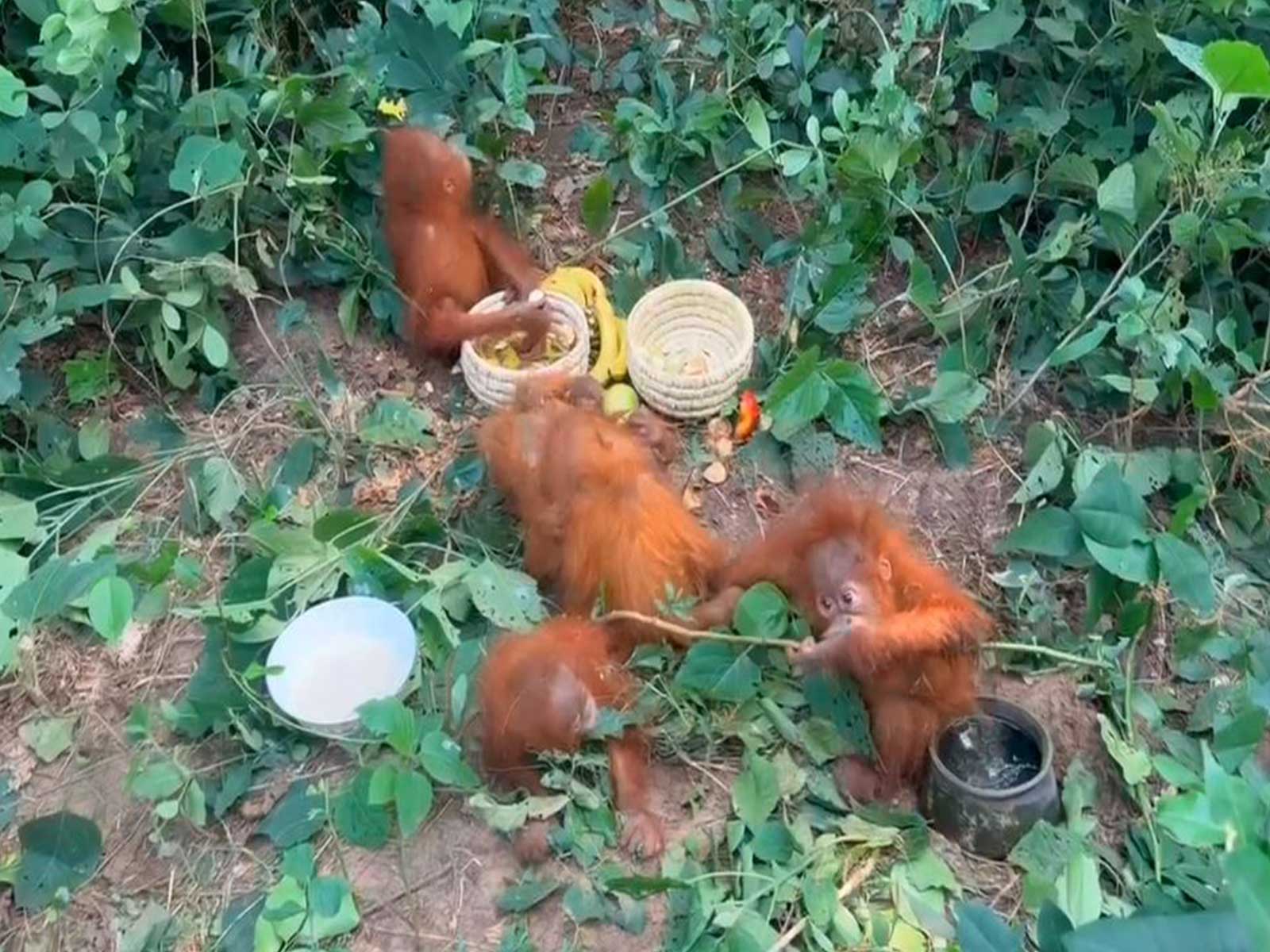
At Nandankanan, the five juveniles are being provided specialised care under strict biosecurity measures. Three caretakers have been assigned exclusively to them and have been instructed not to handle other animals to reduce the risk of infection.
The orangutans are being monitored around the clock by veterinary staff. Their feeding is being conducted in consultation with experts from Mysuru Zoo, with the infants reportedly receiving food every two hours. Keepers are working in shifts, while a dedicated veterinary expert has been assigned to monitor their health.
The animals are currently being kept in an air-conditioned area as officials work to help them gradually adjust to their new surroundings.
Crowd gathered after unusual sighting
The unexpected appearance of the animals also created a challenge for forest officials at the rescue site.
As word spread, large numbers of curious residents gathered near the forest to catch a glimpse of the young orangutans. Officials urged people to maintain a safe distance and avoid disturbing them.
The animals reportedly remained calm despite the human presence. However, experts and forest officials stressed the importance of minimising unnecessary contact, particularly because the juveniles are already undergoing the stress of an unfamiliar environment, capture and relocation.
The circumstances surrounding their presence have also raised concerns about what may have happened to the animals before they were discovered. Investigators will need to determine whether they were deliberately abandoned, separated from a larger trafficking consignment or brought into the region for another purpose.
What happens to the orangutans next?
For now, the five young orangutans will remain under observation at Nandankanan.
Officials are focusing on ensuring that they receive appropriate nutrition, medical care and protection from infections while the investigation continues. Their group behaviour could also help them adjust to human-supervised care, according to zoo officials.
The case is unusual even by the standards of wildlife rescue operations in India. Nandankanan previously housed an orangutan named Binny, who died in 2019 at the age of 41. She had earlier been brought to India through Pune after arriving from Singapore.
But the latest incident is fundamentally different. These five juveniles were not known to be part of a zoo collection. They were found unexpectedly in a forest where they have no natural range.
That makes the Balasore discovery both a rescue story and a potential wildlife-crime investigation.
As the STF and wildlife authorities trace the animals’ origins, the biggest questions remain unanswered: Where did the five orangutans come from? Who transported them to India? Why were they abandoned in Balasore, and was their discovery the first visible sign of a much larger trafficking operation?
The answers could determine whether the incident was an isolated case of illegal animal movement or a window into a wider international wildlife-smuggling network.
With input from agencies
Image Source: Multiple agencies
© Copyright 2026. All Rights Reserved. Powered by Vygr Media.