 By
By 
Patna witnessed a major escalation in student protests on Tuesday, August 25, as hundreds of job aspirants and students took to the streets over alleged irregularities in the 70th Bihar Public Service Commission (BPSC) examination, delays in recruitment and the proposed format of the Teacher Recruitment Examination (TRE)-4.
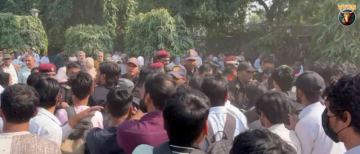
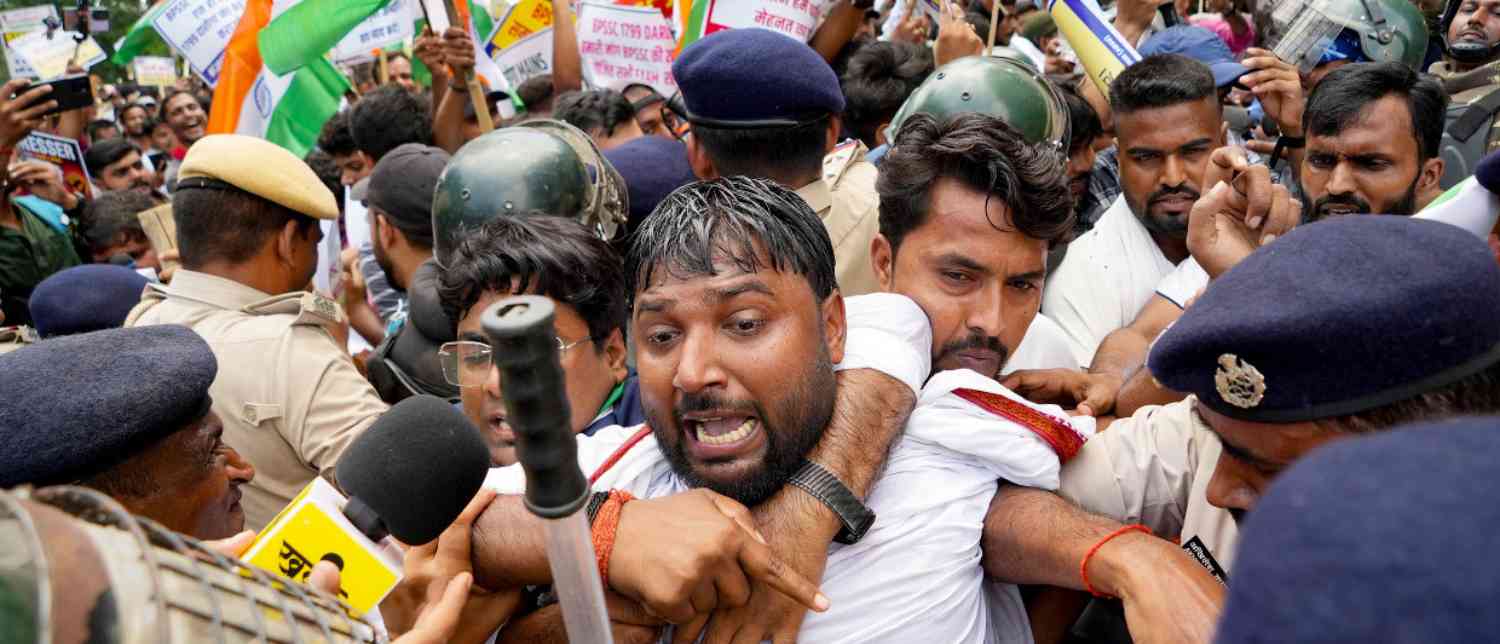
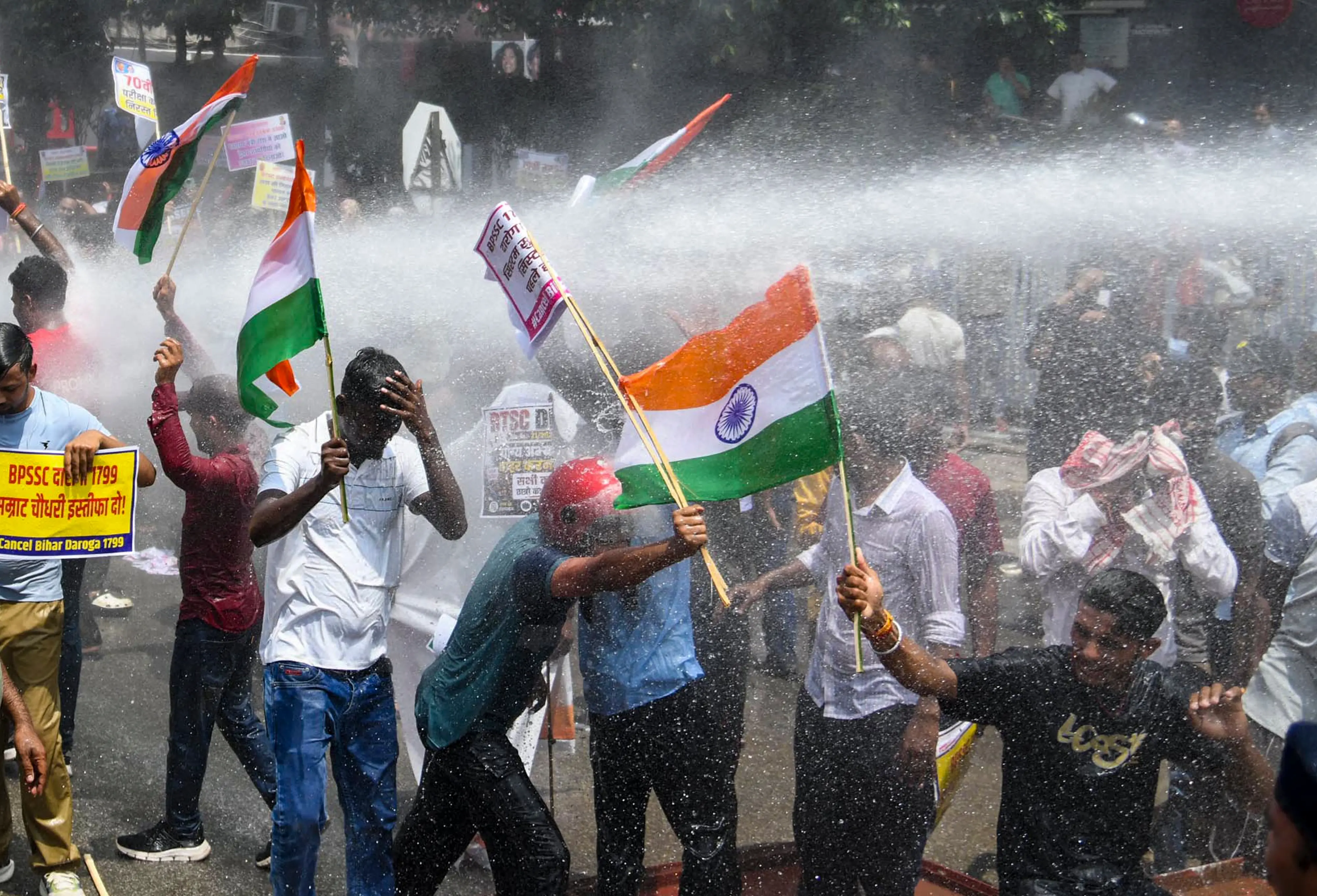
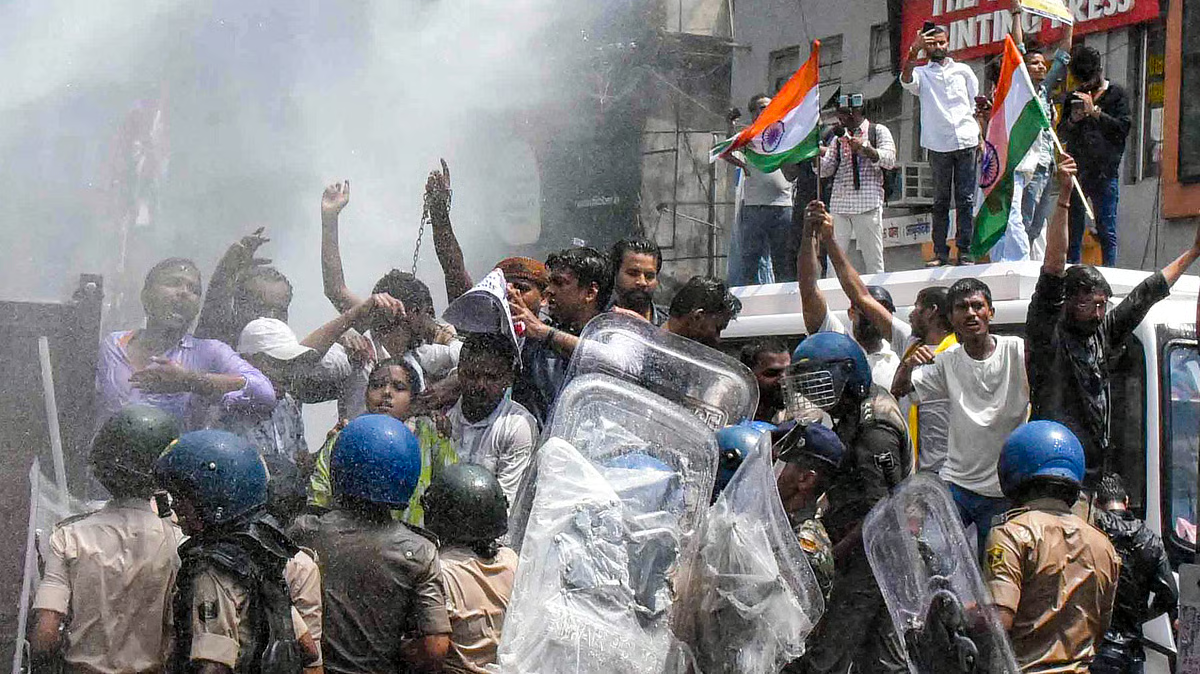
The protest began with a march from Gandhi Maidan towards the state’s administrative hub and eventually turned confrontational when demonstrators attempted to cross police barricades. Police used water cannons to disperse the crowd, while several protesters were detained. Videos and reports from the site also showed clashes, stone-pelting and a lathi-charge during the confrontation.
At the heart of the agitation, however, is a much larger concern than one examination. For many aspirants, the protest is about the credibility of Bihar’s recruitment system, the uncertainty surrounding government jobs and the repeated delays that can force candidates to spend years preparing for examinations whose schedules remain unclear.
What triggered the Bihar student protest?
The immediate flashpoint is the 70th BPSC examination. Students have demanded that the examination be cancelled, alleging irregularities and a paper leak. The BPSC, however, has rejected the allegations and maintained that material circulated on social media in connection with the examination was fake.
The dispute has also expanded to the upcoming TRE-4 recruitment examination, which is expected to be a major recruitment exercise for teachers across Bihar. The commission announced that TRE-4 will cover 32,388 teaching posts across primary, middle and senior secondary schools. Applications are scheduled to be accepted from September 1 to September 30, while the examination could be held in December or January.
Students' principal objection is not simply about when the examination will be held. They are challenging the proposed structure of the recruitment process, particularly the decision to conduct the examination in multiple phases.
The protesters want TRE-4 to be conducted as a single-stage examination across the state. They have also demanded the removal of negative marking and the immediate release of a clear, detailed recruitment notification.
The BPSC has defended negative marking, arguing that it discourages candidates from making random guesses. According to the commission's proposed arrangement, the examination could be conducted in three shifts if applications remain below five lakh and in six shifts if applications cross that threshold. A proposal to provide candidates with an additional 10 to 15 minutes has also been under consideration.
For students, the issue is one of fairness and equal opportunity. They fear that conducting an examination in several shifts could create questions around the comparability of papers and results. Their demand for a single-stage examination is therefore closely linked to their broader demand for a transparent recruitment process.
Why has the protest become bigger than BPSC?
The anger on the streets has been building for weeks.
Students protesting in Patna have raised concerns involving not only BPSC but also the Bihar Staff Selection Commission (BSSC), police recruitment and several pending government examinations. They have complained about recruitment processes that have remained incomplete for years and the absence of predictable examination calendars.
One particularly striking grievance concerns librarian recruitment. Protesters have claimed that recruitment for librarians has not taken place for around 18 years. They have also pointed to BSSC recruitment exercises that, despite being announced years ago, are still awaiting examination dates.
For candidates who devote several years of their lives to competitive examinations, such delays have consequences beyond inconvenience. Age limits can become a concern, preparation cycles are repeatedly disrupted and candidates can find themselves preparing indefinitely without knowing when an examination will actually take place.
Aspirants have therefore demanded time-bound schedules for pending examinations and greater accountability from the recruitment commissions.
The broader message from the protesters is straightforward: announcing vacancies is not enough. Recruitment needs to move from notification to examination, result and appointment within a predictable timeframe.
What are the key demands of the protesting students?
Although the protest brings together candidates from different examinations, several demands have emerged repeatedly.
1. Cancellation of the 70th BPSC examination
Students want the 70th BPSC preliminary examination cancelled, citing alleged irregularities and a paper leak. The commission has rejected the allegations and said material circulating online was fake.
The disagreement over the examination has become one of the central points of the agitation because candidates argue that even the perception of an unfair examination can undermine confidence in the recruitment process.
2. Single-stage TRE-4 examination
The proposed structure of TRE-4 is another major source of anger. Students want the examination conducted in one stage rather than across multiple phases.
The demand is linked to concerns over maintaining a level playing field for candidates appearing in different shifts and locations.
3. Removal of negative marking
Protesters have also demanded that negative marking be removed from TRE-4. The BPSC has rejected this demand and said negative marking is a standard mechanism in its objective examinations because it discourages random guessing.
4. Immediate TRE-4 notification and recruitment clarity
Aspirants want a detailed and definitive recruitment notification, including clarity on vacancies, examination structure and timelines.
They have also sought recruitment calendars for examinations conducted by the BSSC and other government bodies.
5. Transparency in competitive examinations
Students have called for greater transparency in BPSC, BSSC, police and other recruitment examinations. Their demands include action against those responsible for alleged examination irregularities and an independent investigation into disputed recruitment processes.
6. Fair treatment of Hindi-medium candidates
Another demand raised in the political debate surrounding the agitation concerns alleged discrimination against Hindi-speaking candidates in the BPSC Civil Services Main examination and interview. This has added another layer to the larger argument over equal opportunity in competitive recruitment.
What happened during Tuesday's march?
The situation in Patna deteriorated as the students moved from Gandhi Maidan towards the restricted administrative zone.
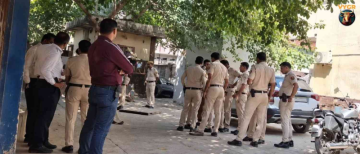
Police had deployed substantial forces along the route, anticipating the planned march towards the Chief Minister's residence and Raj Bhavan. Barricades were erected at key points, including Dak Bungalow crossing, one of the city's major traffic intersections.
When protesters attempted to move through the barricades, police used water cannons. Some protesters broke through the barriers, while police detained several people. Authorities also reported stone-pelting by sections of the crowd.
The confrontation resulted in disruption along major roads and brought traffic to a standstill in parts of the city. Police later said the situation had been brought under control and that officials would examine camera footage to identify individuals involved in violence.
Reports from the protest site also indicated that some people were injured. Videos circulating from the demonstration showed police personnel confronting protesters and a female protester collapsing by the roadside, although the exact cause of her collapse was not immediately clear.
The police maintained that they had repeatedly asked protesters to remain peaceful and offered to facilitate the submission of their demands to the authorities. Officials also said that protesters would not be allowed to enter the restricted area.
Why did the BPSC official's remark become another flashpoint?
The protest was further inflamed by a remark attributed to BPSC examination controller Rajesh Kumar Singh.
While responding to criticism surrounding the examination, Singh used a Hindi proverb comparing an elephant moving through a marketplace with dogs barking around it. Students interpreted the remark as an insult directed at those protesting the examination system.
The comment quickly became a political issue. Opposition leaders demanded action against the official and argued that students protesting legitimate concerns should not be spoken about in derogatory terms.
Singh subsequently expressed regret, saying that he had used a proverb and had not intended to offend anyone. But by then, the remark had become part of the students' broader grievance against the examination authorities.
For the protesters, the controversy was significant because it touched on something beyond examination rules: whether government institutions were willing to listen to the people appearing for their examinations.
Government says most demands have been addressed
The Bihar government has maintained that it is taking students' concerns seriously.
Education Minister Mithilesh Tiwari said that almost all issues raised by the protesters had been addressed and that the government remained open to dialogue over any unresolved matter.
The administration has also announced a new mechanism called the Vidyarthi Sahyog Shivir, or student support camp. These camps are scheduled to be organised at educational institutions on the fourth Tuesday of every month, allowing students to raise grievances directly with officials.
The government has also said that students will be able to submit complaints online and track their status through a dedicated system and helpline.
The government's position, therefore, is that the protest does not reflect a complete absence of engagement. Officials argue that several concerns have already been addressed and that remaining issues can be discussed through established channels.
Students, however, do not appear convinced.
Their argument is that assurances without specific deadlines, written commitments or changes to disputed examination policies will not resolve the underlying problem.
Opposition backs the students
The confrontation has also acquired a political dimension.
RJD leader and Bihar Leader of Opposition Tejashwi Yadav has backed the students' demands and urged Chief Minister Samrat Choudhary to engage directly with protesters.
Among the demands he has raised are a single-stage TRE-4 examination, greater transparency in competitive examinations, an independent investigation into alleged irregularities and clear timelines for pending BSSC and other recruitment examinations.
He has also criticised the BPSC official's controversial remark and demanded action over what he described as disrespectful treatment of students.
Student and youth organisations from different political backgrounds have also supported the agitation, broadening the protest beyond individual BPSC aspirants.
At the same time, ruling-party leaders have argued that the government is already undertaking large-scale recruitment and that young people should not allow political groups to exploit their concerns.
This political contest over the protests is unlikely to disappear quickly, particularly because government employment remains an extremely sensitive issue in Bihar.
The bigger issue: trust in government recruitment
The Patna confrontation is ultimately about more than barricades, water cannons or one disputed examination.
For thousands of young people preparing for competitive examinations, government recruitment represents a path to financial stability and social mobility. When examinations are delayed, questioned or repeatedly surrounded by allegations of irregularities, the damage extends beyond a single recruitment cycle.
Trust becomes the real casualty.
A candidate can accept a difficult examination. A candidate can accept intense competition. What is much harder to accept is uncertainty over whether the examination process itself will be fair, whether a recruitment calendar will be followed and whether grievances will receive a timely response.
That explains why demands that might appear technical from outside—single-stage examinations, negative marking, recruitment calendars, answer-sheet transparency and examination notifications—have become politically and emotionally charged.
The government's newly announced grievance mechanism could provide one avenue for reducing that tension, but its effectiveness will depend on whether students see concrete outcomes rather than another layer of assurances.
What happens next?
The immediate challenge for the Bihar government is to prevent the dispute from escalating further while addressing the issues that remain unresolved.
The administration has already indicated that dialogue is possible, while students have made it clear that they want specific action on the disputed demands. The gap between those two positions will determine whether the agitation subsides or gathers further momentum.
For now, the most contentious issues remain the cancellation of the 70th BPSC examination, alleged irregularities in recruitment, the structure of TRE-4, negative marking, delays in pending examinations and the demand for greater transparency.
The events of August 25 have turned these demands into a much larger public debate over Bihar's examination and recruitment system.
The students who marched through Patna were not protesting simply for a change in an examination rule. They were demanding certainty in a system in which their careers depend on decisions made by recruitment authorities.
Whether the government can convert its assurances into clear timelines, transparent procedures and credible action may ultimately determine what happens next on Bihar's streets—and whether the current confrontation becomes another unresolved chapter in the state's long-running struggle over competitive examinations and government jobs.
With input from agencies
Image Source: Multiple agencies
© Copyright 2026. All Rights Reserved. Powered by Vygr Media.