 By

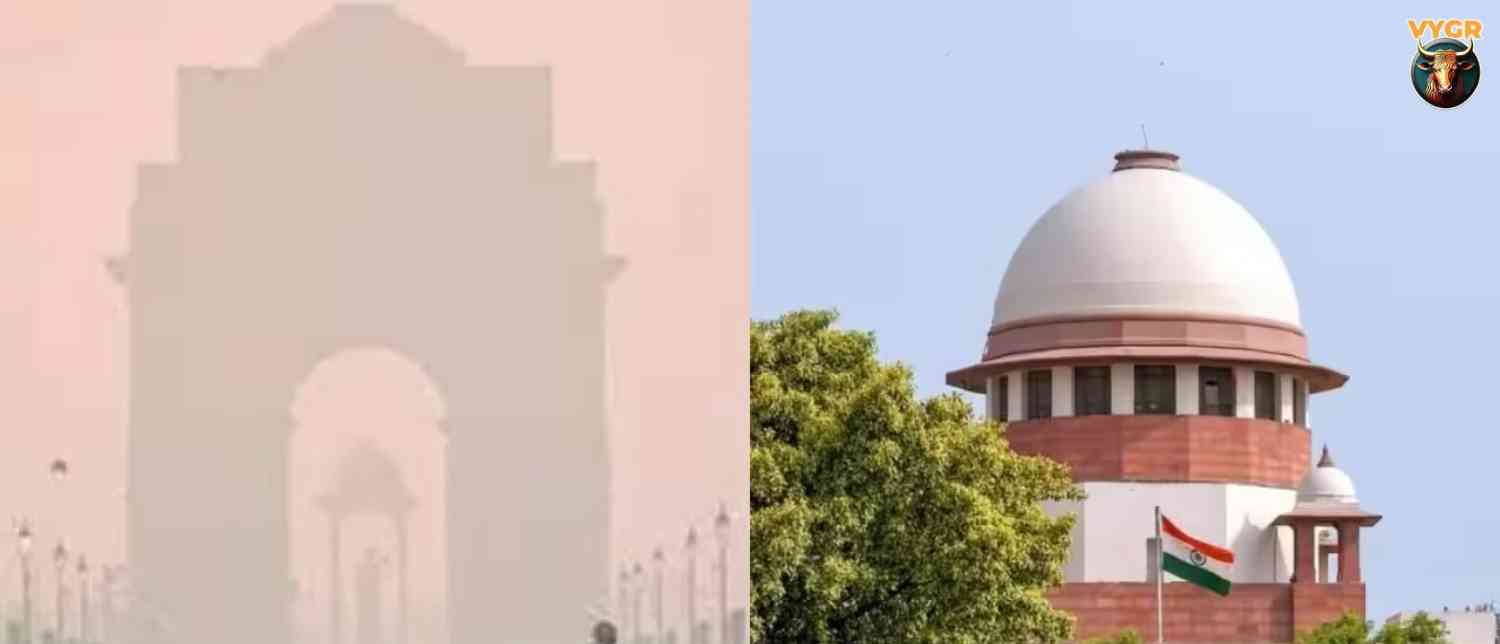
As Delhi’s air quality came within touching distance of the ‘severe’ category, the top court said the annual pollution problem can’t be solved by orders alone.
Every year around Diwali, the same conversation returns: firecrackers, farm fires, and a sky the colour of dishwater. This year, the Supreme Court has pointed at something less obvious and closer to home: the way we celebrate, shop and give gifts.
Let’s break down what the court said, what it didn’t say, and what it means for Delhi’s air.
What the Supreme Court said
At Friday’s hearing on air pollution in Delhi-NCR, a bench led by Chief Justice of India Surya Kant said that a “cultural shift” is needed to deal with the yearly pollution crisis. Its remarks covered several points.
Vehicles are a major driver. The court said vehicular emissions are a big contributor to the region’s worsening air quality and flagged bumper-to-bumper traffic across Delhi-NCR.
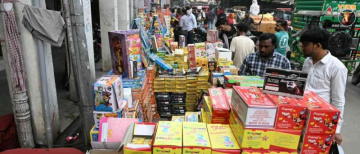
Diwali habits add to it. The court observed that the culture of Diwali gifting adds to vehicular pollution, with people making extra trips to shop, deliver gifts, and visit relatives during the festival.
Talk hasn’t cleared the air. The Chief Justice noted that, despite repeated discussions and assurances from authorities, the AQI has already touched 400.
Stubble burning isn’t the whole story. The bench said that blaming only crop-residue burning is wrong, while also stressing the need to educate farmers, who it said would stop burning once they understand the economic cost to themselves.
Schools will follow expert advice. On a plea to close physical classes for all age groups when the AQI rises, the court said it will go by expert opinion.
Authorities must report. The court asked authorities for details on the steps taken to ease traffic congestion and contain pollution in Delhi-NCR.

The livelihood point
One of the more discussed observations was the court’s remark that Diwali is the main period when poorer people get a chance to earn a livelihood, while pollution concerns are often directed at big cars and vehicles.
That is a notable balancing act. It suggests that the court sees the issue as one where the burden shouldn’t fall unfairly on people who depend on festival-season trade for income. It also sits alongside last week’s comments from the court that it was not in favour of a complete firecracker ban, but wanted existing rules to be followed and enforced.
Where Delhi’s air stands
The hearing took place as the capital’s air quality edged toward the worst category. The overall AQI reached about 400 this week, just short of the ‘severe’ mark, with some localities reporting far higher readings. Official forecasts have warned of ‘severe’ air around the festival, and the Supreme Court has allowed certified green crackers only on November 7 and 8, with a full ban from November 9.
Why the “Diwali gift” remark matters
It sounds almost light-hearted, but there’s a real logic behind it.
- Gifting means trips. Shopping runs, sweet-box deliveries, visits to relatives and office-to-office distribution all put extra vehicles on the road in a short window.
- Delivery adds up. Festival-season online orders and courier trips pile on top of normal traffic.
- Congestion multiplies emissions. Slow, stop-start traffic burns more fuel per kilometre and releases more fine particles.
- It all lands at the worst time. The extra vehicles arrive just as cold, still air and temperature inversions trap pollution close to the ground.
That is our reading of why the court raised the point. The bench did not cite figures on how much festival gifting adds to Delhi’s emissions, and there is no firm number in what has been reported.
Why a “cultural shift”?
The court’s wording points to something that rules and penalties can’t easily reach: habits. A ban can be enforced. A change in how millions of people shop, gift and travel is harder.
It also fits the court’s earlier stance that judicial directions must be realistic, enforceable and capable of actual compliance, and that lifestyle-related orders are often hard to enforce on the ground. In that sense, the call for a cultural shift is partly an admission that courts can set the framework but not change behaviour alone.
What the court did not do
It is worth being clear about the limits of what has been reported so far.
- No sweeping new order on traffic or gifting was reported. The court sought details from authorities.
- No decision on school closures. The court said it would rely on experts.
- No fresh ban. The existing firecracker framework stands.
Remarks made in court are not binding orders, and the real test will be whether concrete directions follow.
What you can do
The court’s message lands on all of us, not just on authorities. A few practical steps:
- Combine trips and avoid unnecessary drives during peak hours.
- Choose digital greetings or local delivery over long car journeys for gifts.
- Use public transport or carpool where you can.
- Avoid idling at traffic lights and outside shops.
- Skip firecrackers, or stick strictly to the permitted dates, hours and certified products.
What happens next
Authorities are expected to file details on their steps to tackle congestion and pollution, and the court will review them in later hearings. Any expert opinion on school closures will shape that part of the case. The air quality readings over Diwali and the days that follow will test whether the limits on crackers and the appeals to change habits made a difference.
Quick FAQ
What did the Supreme Court say about Diwali gifts?
It observed that the culture of Diwali gifting adds to vehicular pollution, and said a “cultural shift” is needed.
Did the court say vehicles are the main cause of Delhi’s pollution?
It called vehicular emissions a major contributor and flagged bumper-to-bumper traffic, but it did not say vehicles are the only cause.
Is the court blaming stubble burning?
It said stubble burning matters, but that blaming it alone is wrong, and stressed educating farmers.
Will schools be shut when the AQI rises?
The court said it will go by expert opinion on that.
What is Delhi’s AQI right now?
It has reached around 400, close to the ‘severe’ category, with some localities higher.
© Copyright 2026. All Rights Reserved. Powered by Vygr Media.