 By
By 
NALANDA, BIHAR: At least 34 students of a government school in Bihar's Nalanda district fell ill after allegedly consuming a mid-day meal in which detergent powder was mistakenly served instead of salt, triggering panic among parents and prompting authorities to launch an inquiry.
The incident took place on Tuesday, August 18, at Middle School Parasi in the Noorsarai area of Nalanda. The affected children were taken to Biharsharif Sadar Hospital for medical treatment after they began reporting symptoms including stomach pain, vomiting and dizziness.
The children were later reported to be stable and out of danger.
The incident has raised fresh questions over food safety, ingredient storage and supervision in school meal programmes, particularly over how a cleaning product could allegedly be mistaken for a food ingredient and reach children's plates.
What happened at the Nalanda school?
According to reports, the school meal served to students included rice and a soybean-based preparation. The meal was reportedly supplied through a centralised kitchen or another school as part of the prescribed school meal arrangement.
After some students complained that the food did not contain enough salt, they asked for additional salt.
It was during this process that the alleged mix-up occurred.
According to a teacher's account cited by India Today, detergent powder was mistakenly served instead of raw salt when students requested more salt. Other reports said the salt and detergent containers had been kept close to one another in the school kitchen, creating the possibility of confusion.
The exact sequence of events is still being examined by authorities. The allegation that detergent was served in place of salt has prompted officials to investigate how the substance was stored, who handled it and what checks were carried out before the meal was served.
At least 34 students fall ill
After consuming the meal, several students reportedly began experiencing symptoms including stomach pain, vomiting, dizziness and throat discomfort.
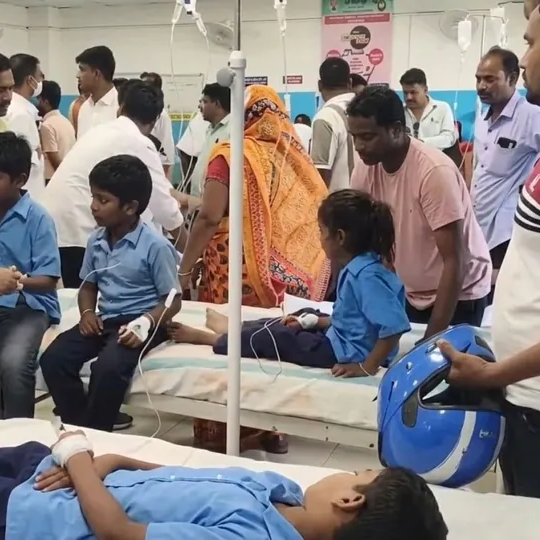
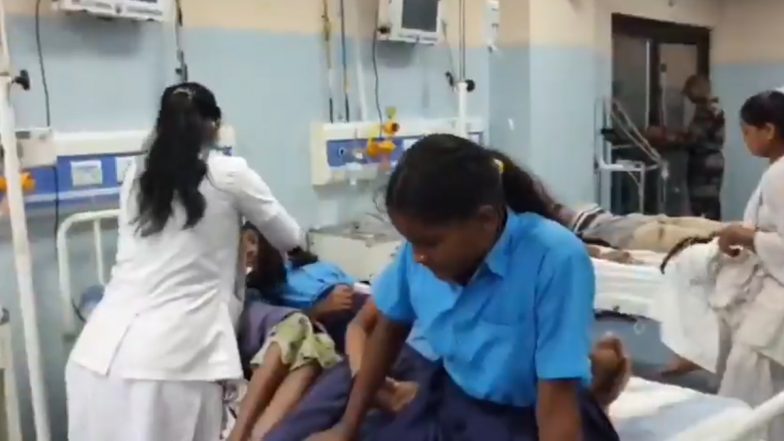
As the number of affected children increased, school authorities arranged for them to receive medical attention. At least 34 students were subsequently taken to hospital.
The incident sparked considerable anxiety among parents and relatives, many of whom rushed to the hospital after learning that their children had fallen ill.
Doctors, including Nalanda Civil Surgeon Dr Jay Prakash Singh, monitored the students. Authorities said the children were out of danger and receiving treatment.
There have been no reports of deaths in connection with the incident.
The immediate medical priority was to stabilise the affected children and monitor them for any complications following the alleged ingestion of detergent-contaminated food.
Minister visits hospital, promises action
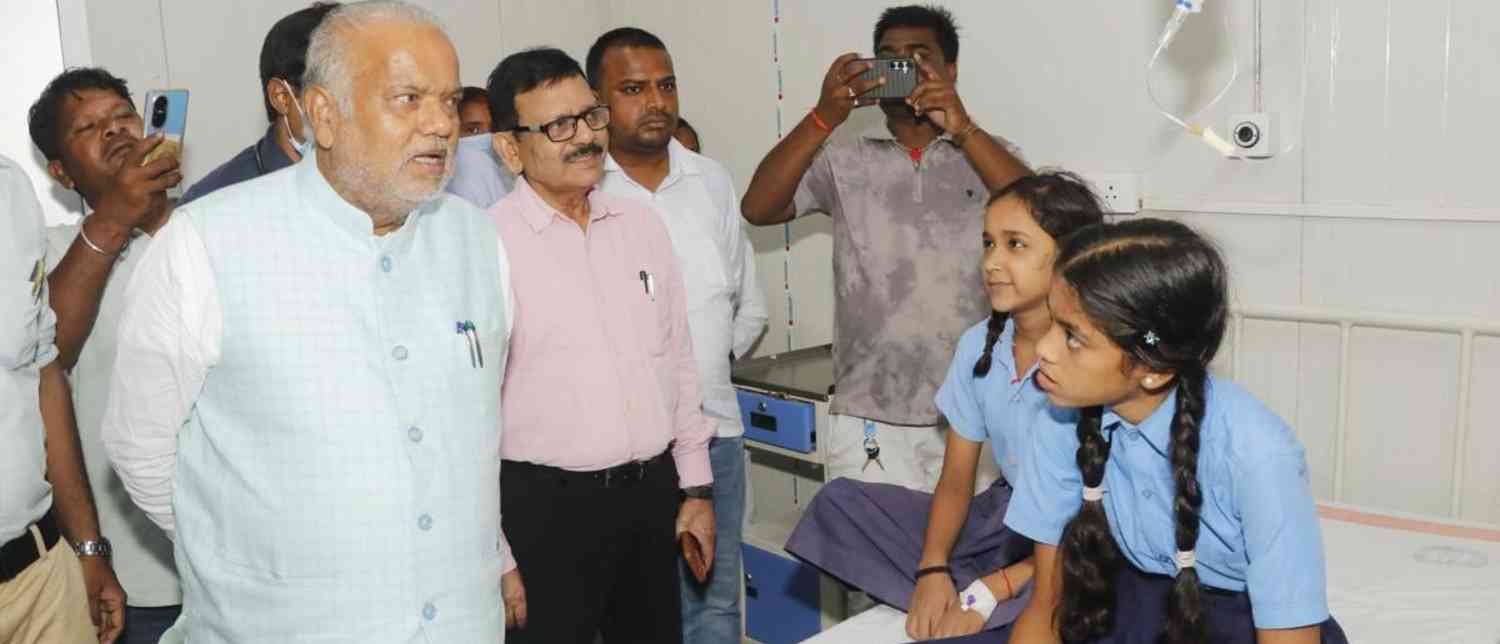
The incident prompted Bihar Rural Development Minister Shravan Kumar to visit the hospital and meet the affected students.
The minister reviewed the treatment arrangements and spoke with doctors about the children's condition. He also said strict action would be taken against those found responsible for the lapse.
Officials have now begun examining the circumstances surrounding the incident.
The investigation is expected to look at several aspects, including the storage of salt and detergent, the preparation and serving of the meal, supervision inside the school and the procedures followed before food was given to students.
The inquiry will also need to establish whether the detergent was actually mixed into the meal during preparation or whether it was mistakenly handed to students as salt while the meal was being served.
Until the investigation is completed, the precise cause and individual responsibility cannot be conclusively established.
How could detergent be mistaken for salt?
One of the biggest questions arising from the incident is how detergent powder could have been kept close enough to food ingredients for such a mix-up to occur.
Reports indicate that the containers of salt and detergent were allegedly stored together or in close proximity inside the school kitchen. If confirmed, the arrangement could point to a basic food-safety failure.
Cleaning products should be clearly labelled and stored separately from edible ingredients. Keeping them apart reduces the possibility of accidental contamination or mistaken identity.
The Nalanda incident therefore raises a broader question about kitchen management in schools: whether basic safety protocols are being followed consistently, particularly when meals are prepared or served to large numbers of children.
Why school meal safety matters
The incident has renewed attention on India's school meal programme, now known as PM POSHAN (Pradhan Mantri Poshan Shakti Nirman).
The programme is intended to improve children's nutritional status while also encouraging school attendance and reducing classroom hunger. For many children, particularly those from economically vulnerable families, the school meal is an important source of daily nutrition.
That makes food safety an equally important part of the programme.
A meal can meet nutritional requirements on paper but still pose a serious risk if ingredients are contaminated, incorrectly stored or improperly handled.
The Nalanda incident demonstrates why food safety cannot stop at checking the nutritional composition of a meal. The entire chain — from procurement and storage to cooking, serving and supervision — needs to be monitored.
What safeguards are supposed to be followed?
The Mid-Day Meal Rules and PM POSHAN guidelines contain provisions intended to ensure that meals served to children are safe and hygienically prepared.
Among the safeguards are provisions for hygiene, monitoring and tasting of meals before they are served to students. School-level monitoring mechanisms also play a role in checking the quality and safety of food.
Such safeguards are particularly important because a single mistake in the preparation or serving process can affect a large number of children at once.
In the Nalanda case, investigators will therefore need to determine not only how detergent allegedly came into contact with the meal but also whether the required checks were followed before students ate it.
If established procedures were followed, authorities will need to determine how the alleged contamination nevertheless went unnoticed. If they were not followed, the investigation could identify where the process broke down.
More than an individual mistake?
At first glance, the incident may appear to be a simple case of detergent being mistaken for salt.
But the circumstances raise questions about whether the problem was limited to human error or reflected weaknesses in the system.
If detergent and salt were indeed stored together, that would indicate a preventable risk. If students were able to receive the substance without an additional check, questions could also arise about supervision during meal service.
Similarly, if there was no effective tasting or quality-control mechanism before the food reached students, that could point to another gap.
These are matters that the ongoing inquiry will have to establish rather than assumptions that can be made before the investigation is complete.
Parents left worried after children fall ill
For parents, however, the incident was far more immediate.
News that dozens of children had fallen ill after eating lunch sent families rushing to the hospital. Parents and relatives gathered to check on their children and seek information from medical staff.
The fact that the affected students were schoolchildren made the situation particularly alarming.
Schools are expected to provide children with a safe environment, and the midday meal is an integral part of that responsibility. Parents sending their children to school should not have to worry about whether the food provided there is safe to eat.
With the children reported to be out of danger, the focus has now shifted towards determining how the incident occurred and ensuring that a similar lapse does not happen again.
What happens next?
For the children involved in Nalanda, the immediate priority remains recovery. Officials have said they are out of danger and receiving medical attention.
The larger issue will be accountability.
The inquiry will need to establish where the alleged breakdown occurred — whether in ingredient storage, meal preparation, serving, supervision or the pre-serving safety checks. It will also determine whether disciplinary or legal action is warranted.
For parents, however, the incident is likely to leave a more fundamental question: how could a substance meant for cleaning have come anywhere near food being served to children?
That question is precisely why the Nalanda incident matters beyond the number of students hospitalised.
A school meal is often more than a midday break from classes. For many children, it is an important source of daily nutrition. The responsibility that comes with serving that meal therefore extends beyond meeting calorie or protein requirements. It includes ensuring that every ingredient is identifiable, every preparation step is supervised and every reasonable safety check is completed before food reaches a child's plate.
In Nalanda, authorities now have to establish whether those safeguards failed — and, if they did, why.
With input from agencies
Image Source: Multiple agencies
© Copyright 2026. All Rights Reserved. Powered by Vygr Media.