 By
By 
The queues outside LPG agencies across India in March 2026 were not just the result of panic buying or a temporary logistics hiccup. They reflected something deeper: a structural vulnerability in how cooking fuel reaches Indian households.
As tensions escalated in West Asia—particularly around the Strait of Hormuz—India’s LPG supply chain came under pressure. Shipping disruptions, energy infrastructure attacks, and supplier uncertainty began to ripple through global fuel markets.
Yet amid this turbulence, a quieter story unfolded in Indian kitchens. In cities connected to piped natural gas (PNG) networks, cooking gas continued to flow uninterrupted. Households with PNG lines in Delhi NCR, Mumbai, Bengaluru, and Ahmedabad largely escaped the supply anxiety gripping cylinder users.
The contrast has reignited an old debate in India’s energy policy: when global shocks hit, is a pipeline-based fuel system inherently more resilient than a logistics-heavy cylinder distribution network?
The answer, as the 2026 crisis reveals, is complex—but increasingly clear.
India’s Heavy Dependence on LPG
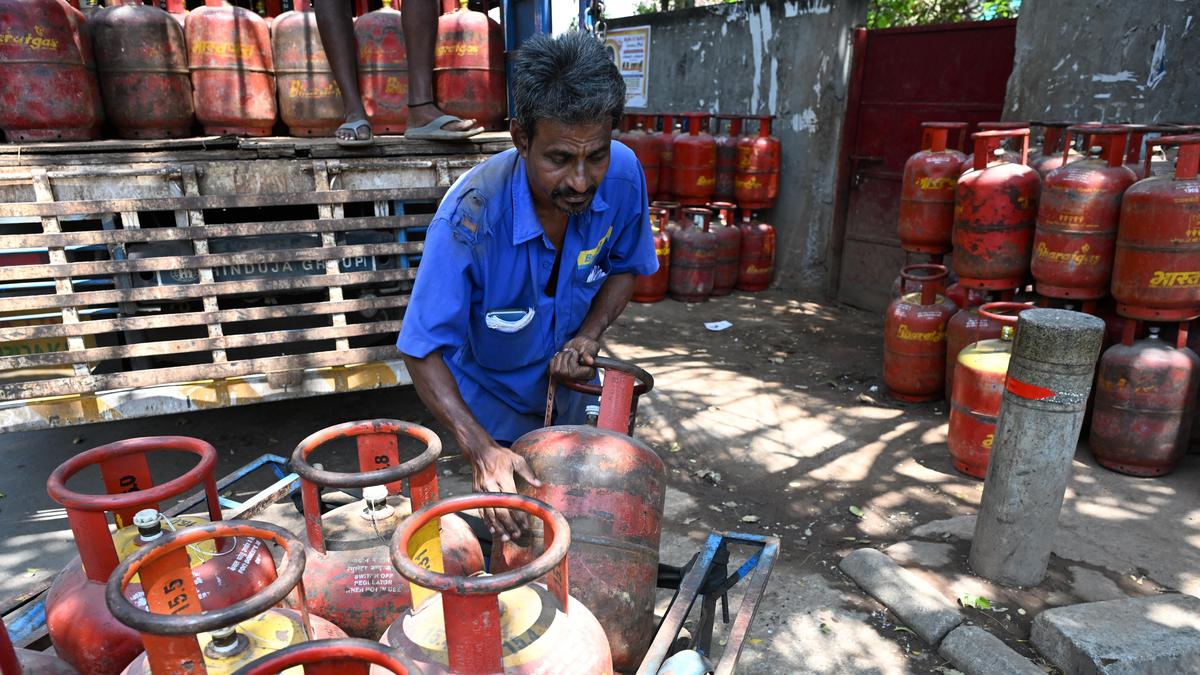
India is among the world’s largest consumers of LPG. According to data from the Ministry of Petroleum and Natural Gas, the country consumed about 31.3 million tonnes of LPG in FY2024–25, while domestic production stood at roughly 12.8 million tonnes.
That gap means imports account for nearly 60% of India’s LPG demand.
The scale of LPG use at the household level is even more striking. Data from the Petroleum Planning and Analysis Cell shows that India now has over 33.2 crore active LPG connections. Of these, more than 10 crore households received access under the government’s flagship clean-cooking programme, the Pradhan Mantri Ujjwala Yojana.
Since its launch in 2016, the scheme has been widely credited with accelerating India’s shift away from biomass fuels such as firewood and kerosene. But the rapid expansion of LPG has also deepened the country’s dependence on imported cooking fuel.
And those imports are geographically concentrated.
Government briefings in March 2026 indicated that around 90% of India’s LPG imports normally transit through the Strait of Hormuz, one of the most critical energy chokepoints in the world. According to estimates from S&P Global, disruptions at the strait can directly affect more than half of India’s LPG consumption once transit routes are factored in.
The system also has limited buffers. LPG storage infrastructure in India is designed for rapid cargo-to-distribution turnover rather than long-term stockpiling. When shipping delays occur, shortages can appear locally before national reserves are mobilised.
That is precisely what happened during the March 2026 disruption.
The Structural Difference Between LPG and PNG
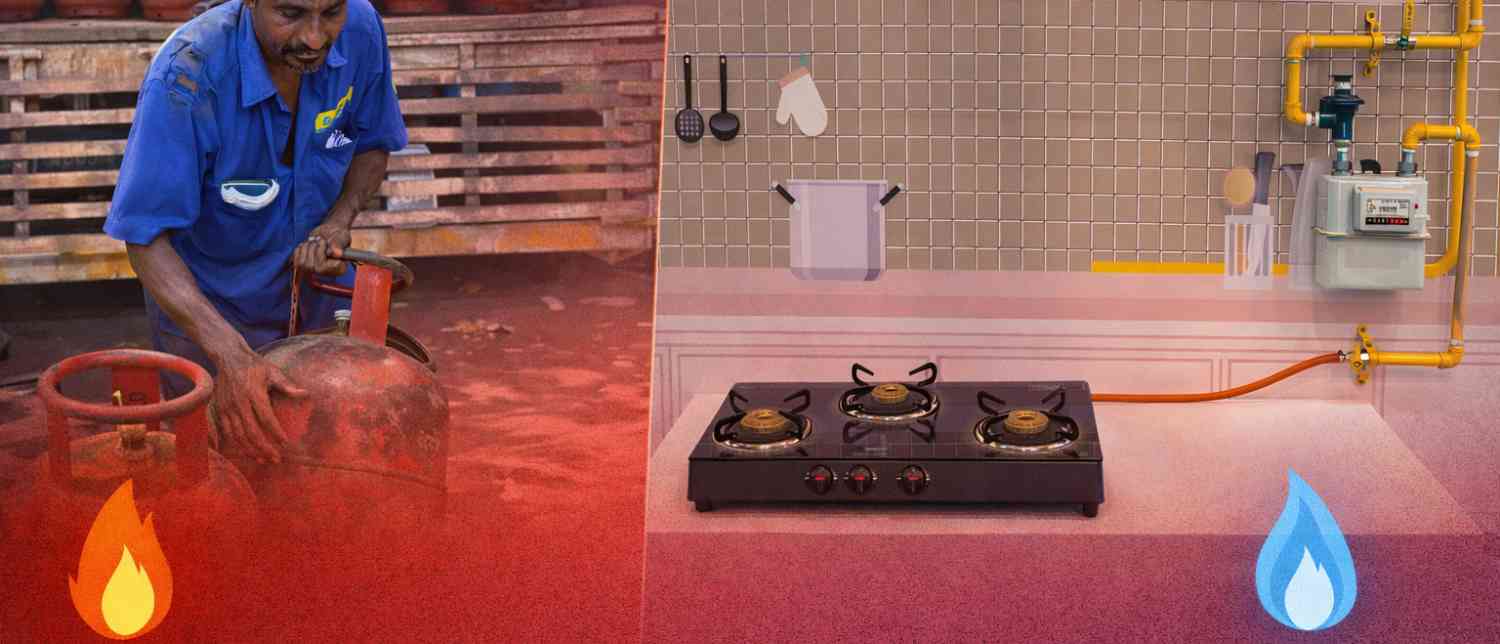
At the heart of the current crisis lies a fundamental difference between two energy delivery architectures.
LPG is logistics-intensive. The fuel must pass through several stages before reaching a kitchen stove:
-
Import or domestic production
-
Storage at coastal terminals
-
Transportation to bottling plants
-
Cylinder filling
-
Truck delivery to distributors
-
Final home delivery
India operates around 210 LPG bottling plants with a combined rated capacity of 22.6 million tonnes annually, supported by a network of over 25,000 LPG distributors.
Each link in this chain introduces potential disruption points, especially during emergencies.
PNG works differently.
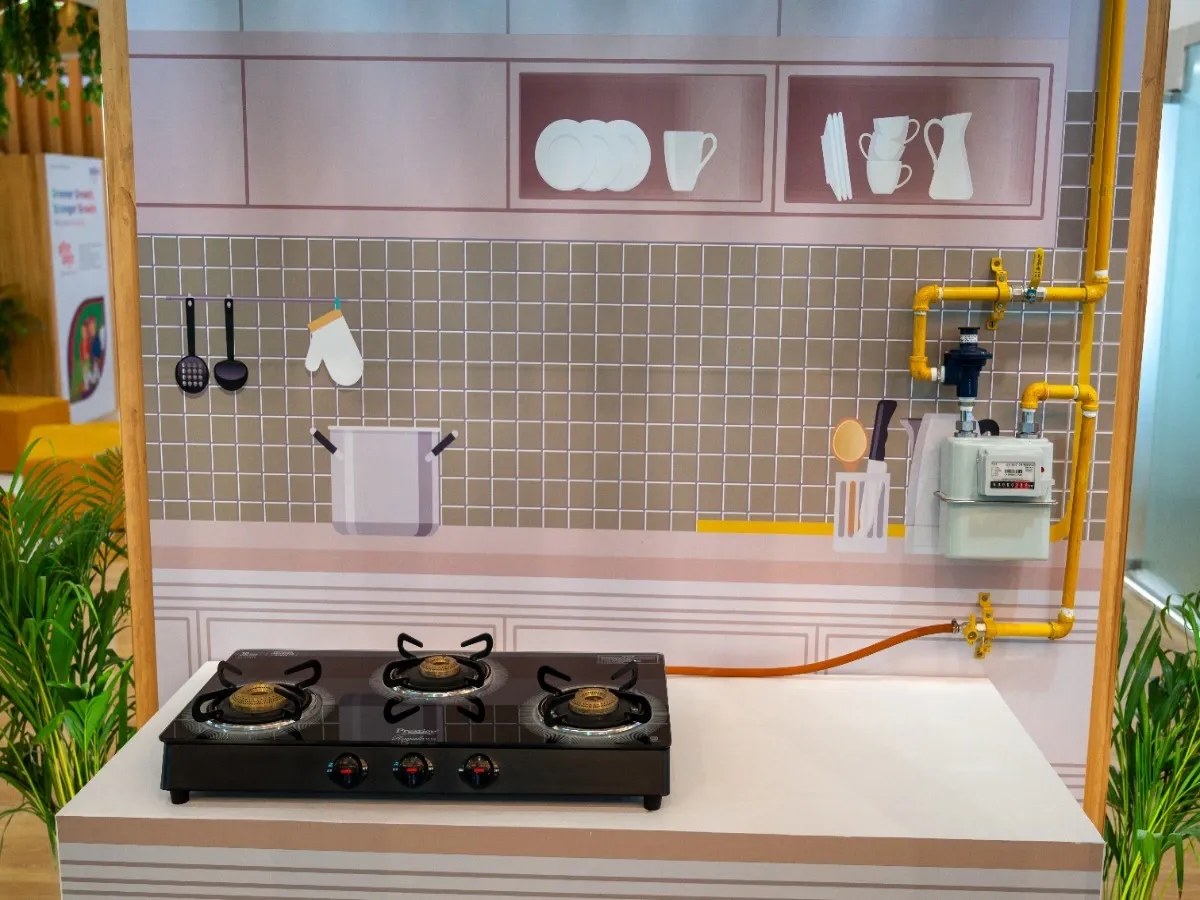
Instead of moving fuel through a physical distribution cycle, PNG relies on a continuous pipeline network. Natural gas flows from domestic fields or LNG import terminals into the national gas grid, then into city gas distribution systems, and finally into homes through underground pipelines connected to kitchen meters.
Once connected, a household does not need to book refills or wait for deliveries. Gas simply flows on demand.
During a supply shock, that difference matters.
Government Intervention: Protecting the Kitchen First
As geopolitical tensions intensified—particularly amid the Iran–Israel conflict and broader regional instability—the Indian government moved swiftly to safeguard domestic energy supplies.
Using powers under the Essential Commodities Act, 1955, the Centre issued the Natural Gas (Supply Regulation) Order, 2026 to prioritise essential gas consumption.
The order establishes a clear hierarchy for natural gas allocation during emergencies.
Four sectors receive priority:
-
Household cooking fuel (PNG and LPG)
-
Compressed natural gas (CNG) for public transport
-
LPG production in refineries
-
Essential pipeline and gas distribution operations
Under the policy, Priority Sector I—domestic PNG and CNG—is guaranteed 100% of its past six-month average consumption.
In practical terms, this means that as long as gas is operationally available in the national grid, it must be routed to homes and public transport before factories or power plants receive supply.
To maintain this guarantee, the government has authorised the diversion of gas from petrochemical plants and refineries. Existing commercial contracts can also be overridden if necessary.
The strategy reflects a simple principle: when energy supply tightens, the kitchen stays lit first.
Why PNG Supply Remained Stable
Another reason PNG remained largely unaffected lies in its supply source.
A significant portion of gas used for household PNG comes from administered-price domestic gas, produced primarily by Oil and Natural Gas Corporation (ONGC) and Oil India Limited.
This domestically produced gas is ring-fenced from international LNG price volatility and shipping disruptions.
To further stabilise supply, the government has tasked GAIL (India) Limited with managing a pooled price mechanism so that even diverted gas remains affordable for priority sectors such as household kitchens.
The results have been visible on the ground.
City gas networks in urban centres have largely maintained uninterrupted service—even as LPG refill waiting periods extended and commercial cylinder availability tightened.
What Gas Distributors Are Saying
Local distributors have echoed the government’s assurances.
In Madhya Pradesh, Manish Verma, marketing head of Aavantika Gas Limited, told media outlets that while procurement costs have surged because of the war, domestic supply remains protected.
“Domestic PNG supply will largely remain unaffected and continuity will be maintained,” he said, adding that households in Indore, Gwalior, and Ujjain continue to receive uninterrupted gas.
A similar message came from Green Gas Limited in Uttar Pradesh.
Praveen Singh, the company’s DGM for marketing, confirmed that supply in Lucknow and Agra is currently meeting 100% of PNG demand.
Consumers have been urged to remain calm, as gas availability remains sufficient within the pipeline network.
However, distributors have also warned that billing discipline will be strictly enforced. If shortages intensify, supply may be curtailed first for customers—domestic or industrial—with long-standing unpaid bills.
Industrial Consumers Bear the Brunt
While households have been protected, industry has not been as fortunate.
Companies such as Adani Total Gas Limited have already informed stock exchanges that some Middle Eastern suppliers have curtailed deliveries due to regional disruptions.
Under the government’s emergency allocation system:
-
Industrial users receive only about 80% of their average gas consumption
-
Petrochemical plants may face even deeper supply cuts
Manufacturing units and tea industries are among those experiencing reductions.
This “domestic-first” triage ensures that households and essential services continue operating despite global supply shocks.
Safety Advantages of PNG
Beyond supply stability, PNG also offers certain safety advantages.
Natural gas is lighter than air. If a leak occurs, it rises and disperses quickly in well-ventilated spaces.
LPG behaves differently.
Because LPG is heavier than air, leaked gas tends to accumulate near the floor, increasing the risk of ignition in confined environments.
Pressure levels also differ significantly.
-
PNG is typically delivered at low pressure—around 21 mbar
-
LPG cylinders store gas in highly compressed liquefied form
Lower stored energy reduces the severity of potential accidents. PNG systems also include isolation valves inside and outside kitchens, allowing instant shut-off if necessary.
These features make pipeline systems particularly attractive during high-stress periods when emergency services may be stretched thin.
The Scale Problem: PNG Is Still Small
Despite its advantages, PNG remains a small player in India’s household cooking market.
As of late 2024:
-
Domestic PNG connections: about 1.36 crore
-
LPG connections: about 33.2 crore
In other words, PNG currently serves only around 4% of households that use LPG.
Expanding the network is a major government priority.
The Petroleum and Natural Gas Regulatory Board (PNGRB) is overseeing the expansion of the national gas pipeline grid under the “One Nation, One Grid” plan.
By mid-2025:
-
25,400 km of pipelines were operational
-
10,400 km more were under construction
The long-term goal is ambitious: 12.63 crore PNG connections by 2034.
Even if achieved, however, LPG would still remain the dominant cooking fuel in India.
The Implementation Challenges
Several hurdles complicate the expansion of PNG.
First, infrastructure rollout has been uneven. PNGRB performance reports indicate that around 30% of authorised city gas distribution areas currently have no domestic PNG connections.
Previous CGD bidding rounds also missed rollout targets. Some zones achieved only a fraction of planned household connections.
Second, cost remains a barrier.
Installing a PNG connection typically requires ₹6,000–₹9,000 in household infrastructure, particularly in older buildings that need retrofitting.
For low-income households—including many beneficiaries of Pradhan Mantri Ujjwala Yojana—this upfront investment can be difficult without subsidies.
By contrast, LPG subsidies directly reduce the cost of fuel consumption. PMUY beneficiaries currently receive about ₹300 per cylinder in subsidy support, keeping cooking gas affordable even during supply disruptions.
This creates a policy dilemma.
PNG offers infrastructure resilience, but LPG remains financially and geographically accessible—especially in rural India.
A Dual-Fuel Future for India
The events of March 2026 have underscored two simultaneous policy imperatives.
First, pipeline expansion is crucial for long-term energy resilience. Every new PNG connection removes a household from a logistics-heavy cylinder supply chain vulnerable to shipping disruptions and geopolitical risk.
Second, LPG will remain indispensable for years, particularly in rural and semi-urban areas where pipeline economics remain challenging.
Strengthening LPG storage capacity, diversifying import routes, and reinforcing distribution networks will therefore remain essential.
The reality is not a simple transition from LPG to PNG.
Instead, India appears headed toward a hybrid cooking-fuel architecture.
Pipeline networks will likely dominate dense urban regions where infrastructure investments are economically viable. LPG cylinders will continue to serve dispersed rural populations where pipelines cannot easily reach.
The Strategic Lesson From the 2026 Crisis
For now, PNG’s advantage lies not in scale but in system design.
Pipeline networks operate on continuous supply infrastructure, which tends to absorb shocks more effectively than systems dependent on complex distribution chains.
During the current global energy turbulence, that structural difference became visible in millions of Indian kitchens.
While cylinder users tracked delivery apps and waited through extended booking cycles, PNG users simply turned on the stove.
For policymakers, the lesson is clear.
The question is no longer whether piped natural gas will replace LPG.
Instead, it is whether India can build a resilient energy ecosystem where pipeline networks secure urban demand while LPG systems remain robust enough to serve the rest of the country.
How effectively India manages that balance will determine whether the next global supply shock disrupts kitchens—or quietly flows past them through underground pipelines.
With inputs from agencies
Image Source: Multiple agencies
© Copyright 2025. All Rights Reserved. Powered by Vygr Media.