 By
By 
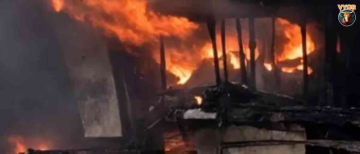
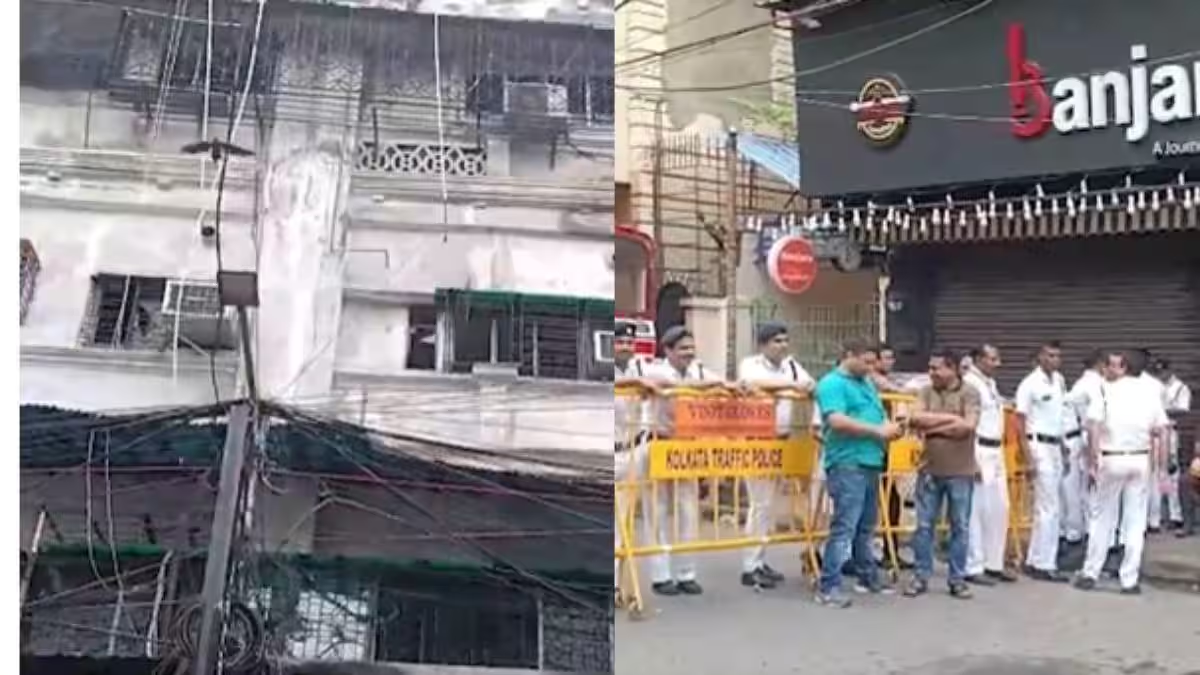
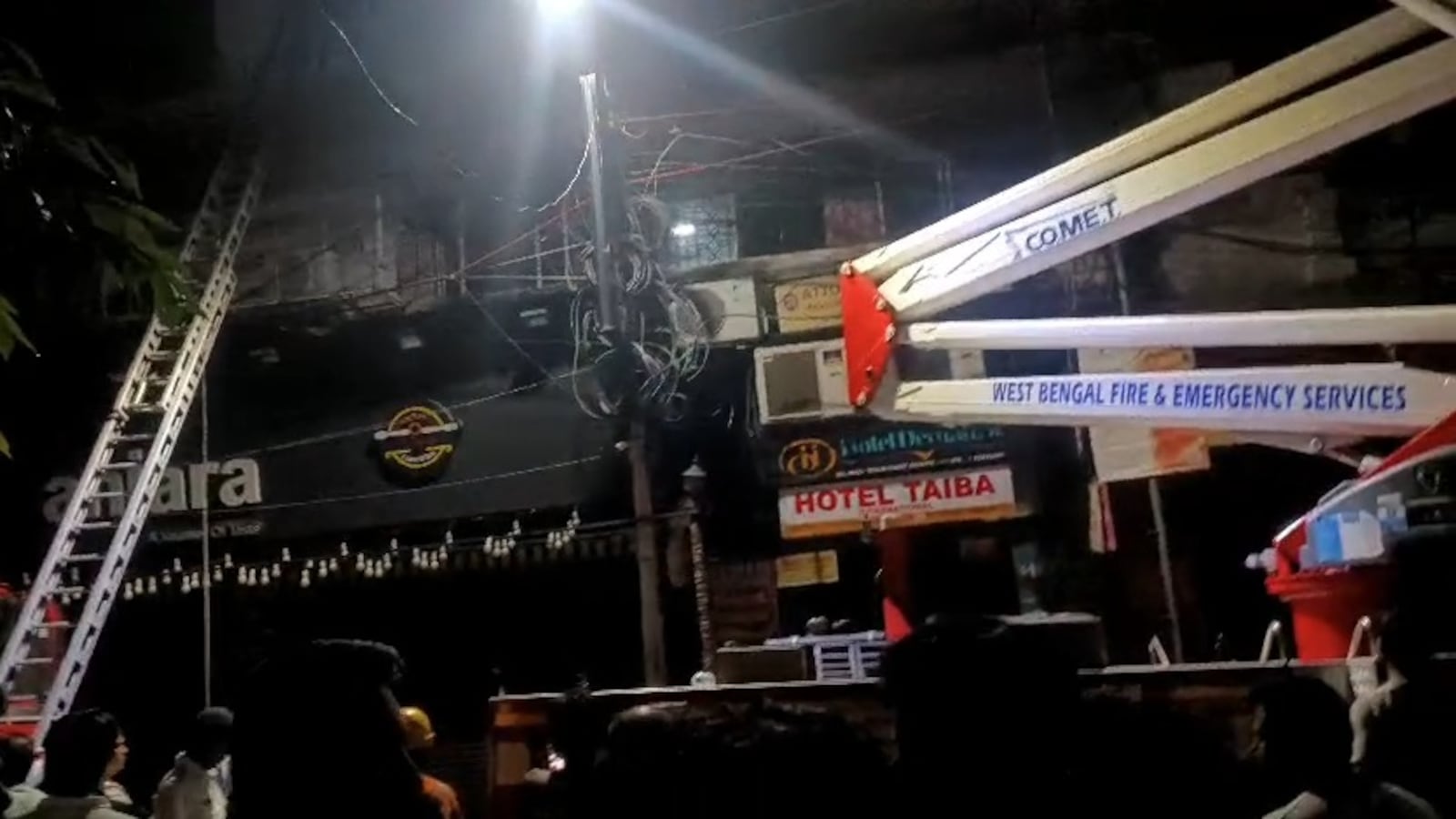
A late-night fire at a hotel in central Kolkata has claimed nine lives, including that of a four-year-old child, and injured six others, turning what should have been a temporary stay in the city into a devastating tragedy. The blaze broke out in the early hours of Wednesday, August 19, at a hotel on Mirza Ghalib Street, also known as Free School Street, near the busy New Market area.
The incident has not only raised questions about the circumstances that led to the fire but has also brought renewed scrutiny on fire safety standards in Kolkata's densely packed budget-hotel belt.
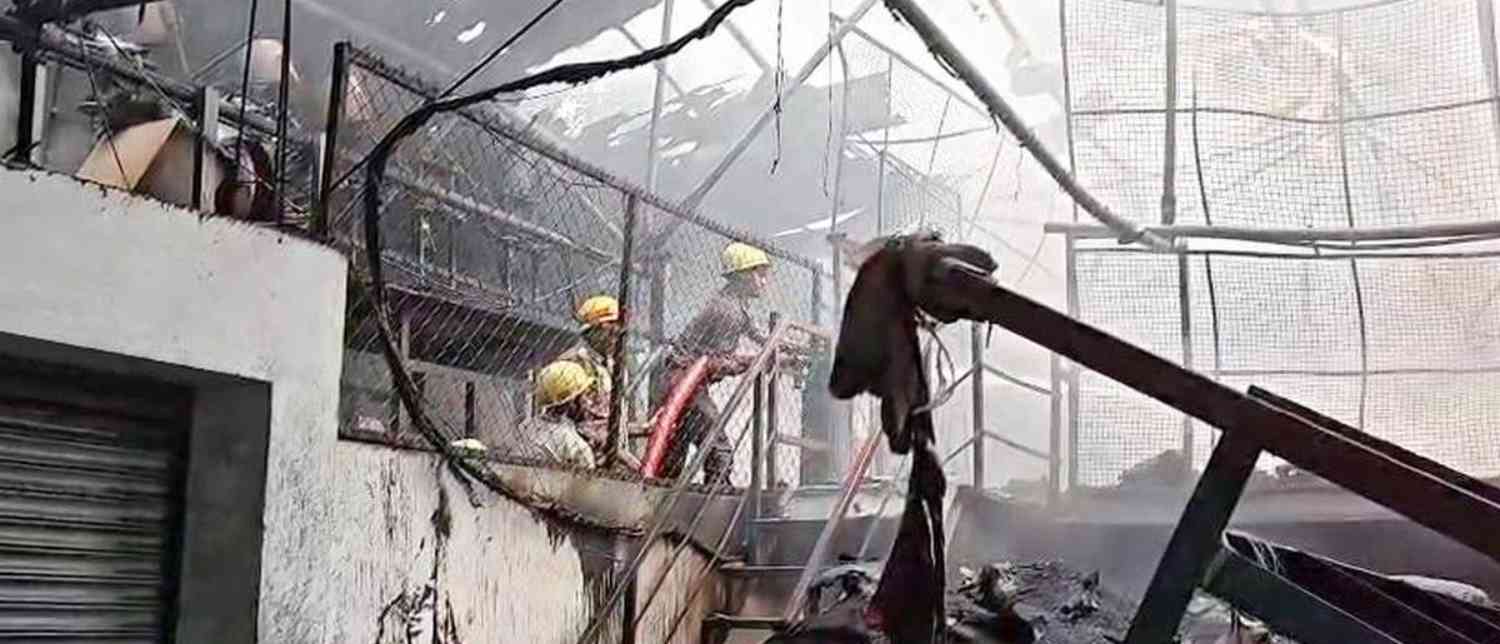
According to initial reports, the fire started at around 2 am. Firefighters were alerted at approximately 2:07 am, following which fire tenders, police personnel and disaster management teams rushed to the spot. Thick smoke quickly spread through the building, making it difficult for rescuers to reach people trapped on the upper floors.
Around 60 people were reportedly rescued from the building. Six others were injured and taken to hospital for treatment.
The deaths have added to a growing sense of concern in West Bengal, where another fatal hotel fire had occurred just two days earlier in Tarapith, Birbhum.
Kolkata Hotel Fire: What Happened in the Early Hours
The fire erupted when many of the hotel's occupants were asleep, leaving them with little time to react. Initial reports suggested that the blaze may have originated on the third floor.
An air-conditioner explosion was cited as one possible trigger in the early reports. However, the cause has not been officially established, and investigators are also examining the possibility of an electrical fault.
The distinction is important because determining how the fire began will be central to establishing whether the incident was caused by an isolated technical failure or whether larger safety and maintenance failures contributed to the disaster.
As the flames spread, smoke rapidly filled the building. Firefighters reportedly faced considerable difficulty moving through the staircase because of the dense smoke. In a multi-storey building, especially at night, such conditions can turn an otherwise survivable fire into a deadly emergency within minutes.
The fire was eventually brought under control and rescue teams searched the building for people who may have remained trapped inside.
Among those killed was a four-year-old child. The victims reportedly included six men, two women and the child.
Bangladeshi Nationals Among the Victims
The tragedy has also drawn attention in Bangladesh because several of the victims were Bangladeshi nationals.
Kolkata's central hotel districts around Free School Street, Mirza Ghalib Street and Marquis Street are popular with visitors from Bangladesh, particularly those travelling to the city for medical treatment. For many such visitors, inexpensive hotels in this part of Kolkata serve as temporary accommodation during hospital visits and extended treatment.
Reports from Bangladesh initially stated that all nine deceased were Bangladeshi nationals who had travelled to Kolkata for medical treatment. However, subsequent reporting indicated that the nationality of all nine victims had not been conclusively established, with one victim later identified as a resident of Jharkhand.
That discrepancy underlines the need for authorities to complete formal identification before the nationalities of all victims are definitively reported.
Nevertheless, the presence of Bangladeshi medical visitors among the victims makes the incident particularly significant for both Kolkata and Bangladesh.
For families who cross the border seeking medical care, the safety of the hotels where they stay is just as important as the safety of the hospitals they visit.
Why Smoke May Have Made the Fire Deadlier
While the cause of the fire remains under investigation, the circumstances of the deaths raise another critical question: how quickly could guests escape once the fire started?
Early reports and subsequent analysis have pointed to poor ventilation and narrow exits as possible factors that made evacuation more difficult.
That matters because fire deaths are not always caused directly by flames. Smoke can spread through enclosed spaces extremely quickly, reducing visibility, causing breathing difficulties and leaving people disoriented before they can find an exit.
For a sleeping guest, the danger is even greater.
A person awakened by smoke in the middle of the night may have only seconds to understand what is happening. If corridors are narrow, exits are poorly marked, staircases are inaccessible or alternative escape routes are unavailable, the chances of getting out safely can fall dramatically.
The Kolkata fire therefore raises questions that go beyond the source of ignition.
Were the emergency exits adequate?
Were fire alarms functioning?
Were extinguishers and other firefighting equipment available and accessible?
Was the building compliant with fire-safety requirements?
Could firefighters easily reach the upper floors?
These questions will be central to any meaningful investigation into the tragedy.
Budget Hotels Under the Spotlight
The incident has also reopened a much wider debate about the safety of budget hotels in Kolkata.
The Free School Street-Mirza Ghalib Street-Marquis Street area is one of the city's established budget accommodation clusters. Its location near New Market and other central commercial areas makes it convenient for tourists, business travellers and medical visitors.
Affordable accommodation plays an important role in Kolkata's tourism and medical-travel ecosystem. But affordability cannot come at the cost of basic safety.
The problem becomes particularly serious in older and densely occupied buildings, where alterations, limited ventilation, narrow staircases and inadequate emergency access can make evacuation difficult.
A hotel may appear perfectly functional during normal conditions. Fire, however, tests every part of a building's design at once.
An alarm must work.
Emergency lighting must remain visible.
Exits must be accessible.
Fire equipment must be operational.
Staff must know what to do.
And guests must have a realistic route to safety.
If even one of these links fails, the consequences can be severe.
A Second Hotel Fire in West Bengal in Two Days
The timing of the Kolkata incident has made the tragedy even more disturbing.
Just two days earlier, on August 17, another hotel fire in Tarapith in Birbhum district killed several people, including children. Five members of a family from Meghalaya were among those who died in that incident.
Authorities subsequently moved to inspect hotels in the area, with several establishments reportedly ordered to shut after deficiencies involving fire-safety certificates and other statutory clearances were identified.
The two incidents occurred in different locations and their causes may ultimately prove unrelated. It would therefore be premature to conclude that they represent a single statewide failure.
But their close timing has inevitably intensified questions about whether fire-safety compliance is being adequately monitored across hotels and guesthouses in West Bengal.
For hotel operators, the message is straightforward: compliance cannot be treated as paperwork that matters only during inspections. Fire safety is a continuous responsibility.
Investigation Will Determine Accountability
Kolkata Police have registered a case and an investigation is underway to determine the cause of the fire and the circumstances surrounding the deaths.
The investigation will need to establish whether the building met the required safety standards, whether the hotel's fire-safety systems were operational and whether any violations or negligence contributed to the loss of life.
The cause of the fire will also be closely examined. Early references to an air-conditioner explosion have not been confirmed, while the possibility of an electrical fault has also emerged.
Until forensic and official investigations are completed, assigning a definitive cause would be premature.
What is already clear, however, is the scale of the human loss.
Nine people who had checked into a Kolkata hotel did not walk out of it alive. A child was among the dead. Six others were injured. Dozens more had to be rescued in the middle of the night.
Kolkata Hotel Fire: A Warning That Cannot Be Ignored
The tragedy on Mirza Ghalib Street should not become just another headline that disappears after the flames are extinguished.
The immediate priority is to identify the victims, support the injured and determine exactly what happened. But the larger responsibility lies with authorities and hotel operators to ensure that the same questions do not have to be asked after another fire.
Hotels, particularly those accommodating large numbers of visitors in older urban buildings, must be subjected to meaningful and regular safety inspections. Fire exits must remain usable, alarms and extinguishers must function, electrical systems must be maintained and emergency evacuation procedures must be more than formal requirements.
For Kolkata's large population of domestic and international visitors, these are not luxury standards. They are basic safeguards.
The nine deaths in the Kolkata hotel fire have exposed the frightening gap between a building being available for accommodation and a building being genuinely safe for people to sleep in.
The investigation may eventually tell us what sparked the flames.
But the more important question is whether the system will learn why those flames were able to become a fatal trap.
With input from agencies
Image Source: Multiple agencies
© Copyright 2026. All Rights Reserved. Powered by Vygr Media.