 By
By 
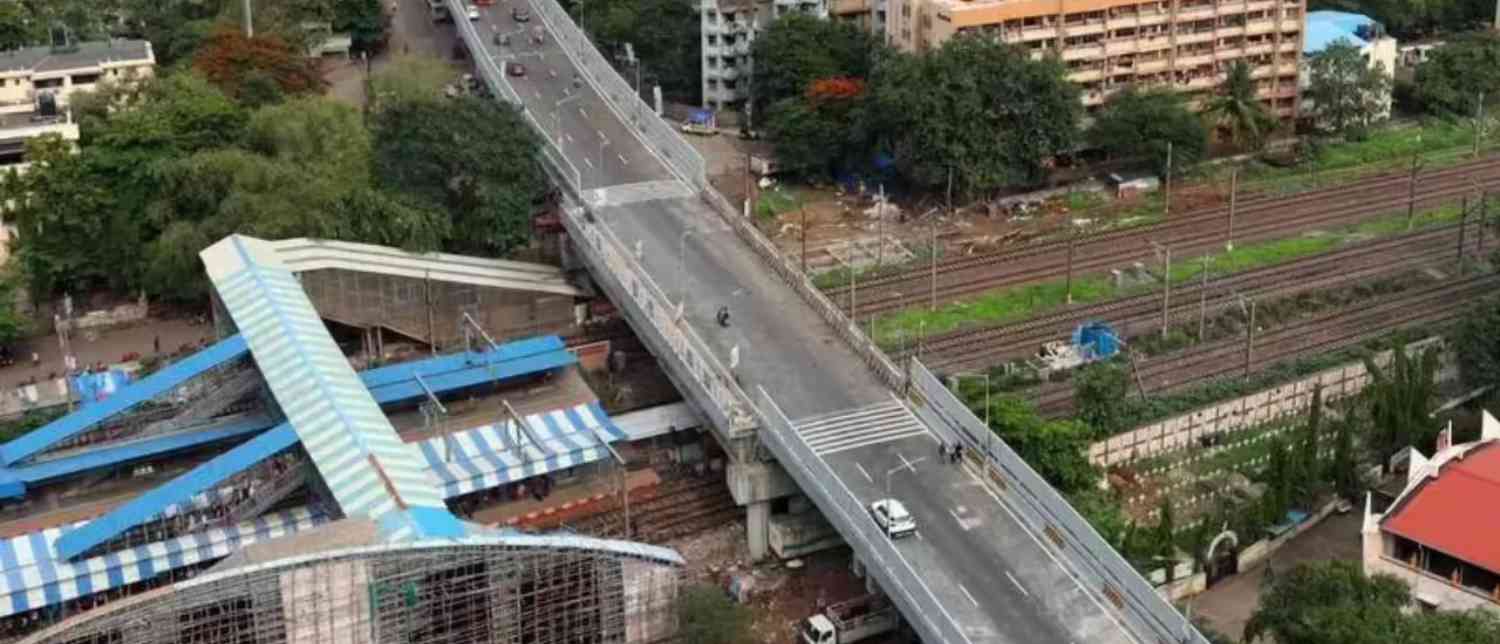
Mumbai: Mumbai is set for a major road infrastructure overhaul as four new road overbridges are being constructed at some of the city's busiest railway crossings. The projects, spread across Dadar, Byculla, Ghatkopar and Prabhadevi, are expected to improve east-west connectivity, expand road capacity and ease congestion that has long plagued key stretches of the city.
The four bridges are being developed jointly by the Brihanmumbai Municipal Corporation (BMC) and the Maharashtra Rail Infrastructure Development Corporation (MRIDC), with a combined estimated cost of Rs 1,179 crore. Three of the structures will use cable-stayed designs, while the Prabhadevi project will become Mumbai's first double-decker road overbridge.
The projects are particularly significant because they replace ageing bridges, several of which date back to the British era. With Mumbai's road traffic continuing to grow alongside one of the country's busiest suburban railway networks, authorities are attempting to increase road capacity without disrupting train operations.
The four bridges are expected to be completed in phases, with the first major relief potentially arriving later this year.
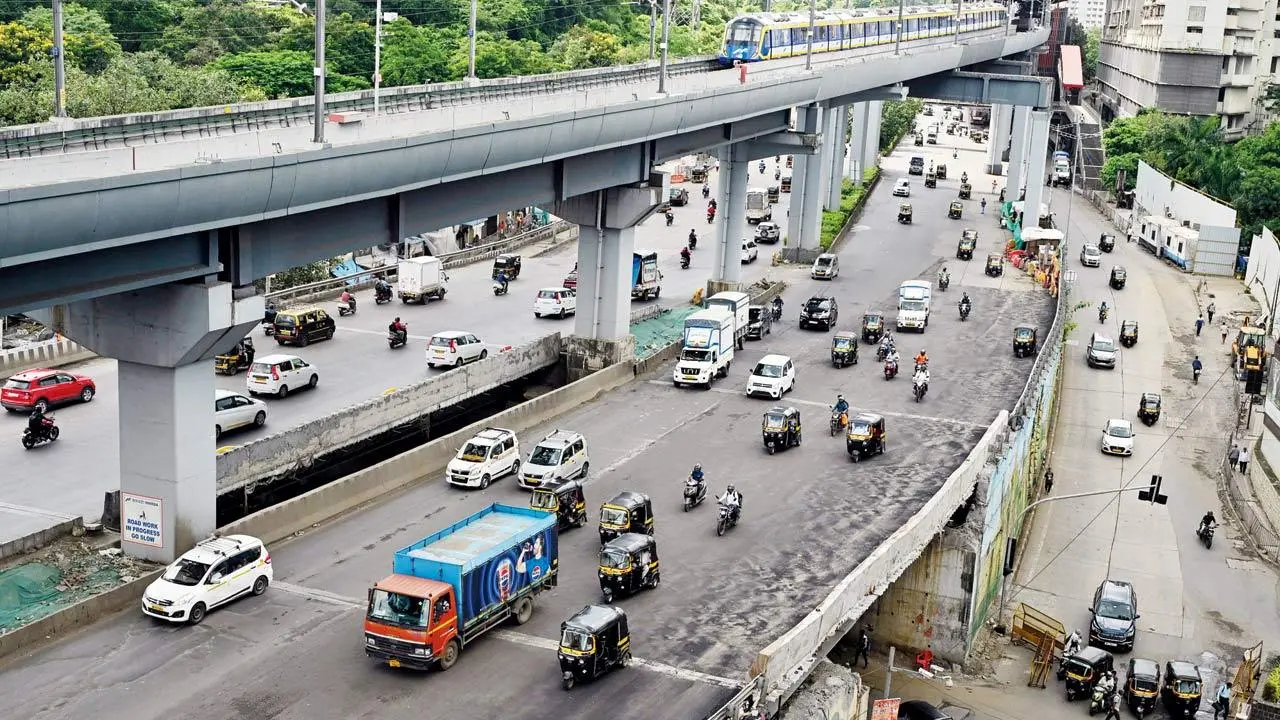
Four bridges, four key traffic bottlenecks
The projects are not simply replacements of old structures. In several locations, the new bridges will substantially increase the number of lanes and alter how traffic moves between neighbourhoods on either side of the railway tracks.
The Tilak Bridge at Dadar, the Y Bridge at Byculla, the Ghatkopar road overbridge and the Prabhadevi-Elphinstone Bridge replacement address four different but interconnected congestion points.
Together, they are intended to strengthen road links between Mumbai's eastern and western sides while reducing pressure on existing crossings.
Dadar's Tilak Bridge to become a six-lane crossing
At Dadar, the century-old Tilak Bridge is undergoing a complete transformation.
Commissioned in 1925, the existing structure has become inadequate for the volume of traffic it handles. A structural audit in 2019 recommended that the bridge be replaced. The new structure will be a 600-metre-long cable-stayed bridge with six traffic lanes, compared with only two lanes on the existing bridge.
That represents a substantial increase in capacity at one of Mumbai's most important east-west connections.
Construction is being carried out in two stages. The first three-lane arm is around 70 per cent complete and is expected to open by April 2027, while the entire bridge is scheduled for completion by May 2027. Once operational, the expanded crossing is expected to reduce pressure around Dadar railway station and improve movement towards areas such as Prabhadevi, Worli and the eastern parts of the city.
For motorists who currently rely on a narrow, ageing crossing, the additional lanes could make one of the city's most congested transport hubs considerably easier to navigate.
Byculla's Y Bridge expected to open by December 2026
In south Mumbai, the century-old Y Bridge at Byculla is also being replaced.
The new bridge will stretch approximately 916 metres and will feature a cable-stayed design with a dual-carriageway configuration. It is intended to improve connectivity along the Byculla-Dadar corridor, where traffic frequently slows because of the area's dense road network and proximity to railway infrastructure.
The construction has involved an unusually complicated engineering operation. One of the major challenges was launching a 1,500-tonne steel span above the Central Vegetable Market without disrupting either market activity or railway operations.
The new bridge is currently expected to open by December 2026.
If that timeline holds, the Byculla project could become the first of the four major bridges to provide motorists with a new crossing. Its completion would also strengthen an important north-south road corridor through south and central Mumbai.
Ghatkopar bridge to improve east-west movement
Further north, Ghatkopar is getting a new six-lane cable-stayed road overbridge along the Andheri-Ghatkopar Link Road, crossing LBS Marg and connecting Ghatkopar East with Ghatkopar West.
The project carries an estimated cost of Rs 350 crore and is set to become the first cable-stayed road bridge in Mumbai's suburbs.
The bridge is being designed with longer spans so that fewer supports are required over the railway corridor. That approach is important in a city where railway operations cannot simply be stopped for extended construction work.
Construction is being undertaken in phases to keep traffic moving during the project. The bridge is targeted for completion in 2027 and is expected to ease congestion on LBS Marg, one of the important road corridors connecting eastern and western Ghatkopar.
The additional capacity could be particularly significant during peak hours, when traffic movement around Ghatkopar is affected by a combination of road traffic, railway activity and high pedestrian volumes.
Mumbai's first double-decker road overbridge coming up at Prabhadevi
Perhaps the most distinctive project among the four is the replacement of the 112-year-old Elphinstone Bridge at Prabhadevi.
The old bridge has already been demolished and is being replaced with Mumbai's first double-decker road overbridge. The new structure will also form part of the upcoming Sewri-Worli Connector, giving the project significance beyond simply replacing an ageing railway crossing.
The design essentially creates two road levels.
The lower deck will carry local traffic across the railway tracks, while the upper deck will connect with the upcoming road corridor. Each deck will have four lanes, while footpaths will be provided on the lower level.
Foundation work and girder assembly are already underway, with authorities targeting completion by November 2026.
The project could eventually provide a major boost to connectivity between central Mumbai and the western corridor while integrating with the broader Sewri-Worli road network.
Why cable-stayed bridges are being used
Three of the four new bridges use cable-stayed designs, a choice that is particularly suited to Mumbai's railway environment.
Building a conventional bridge over active railway tracks can require numerous supports within or near the railway corridor. Cable-stayed structures, by contrast, can achieve longer spans with fewer supports.
According to MRIDC, this reduces the need for construction activity within railway premises and can improve operational safety. The design can also reduce future maintenance requirements.
That matters in Mumbai, where railway services operate continuously at a scale that leaves little room for prolonged disruption.
The construction itself has therefore required extensive coordination between civic authorities, railway agencies, traffic police and utility departments. Large steel components have to be moved into position over live railway lines, often during night blocks when railway traffic can be temporarily restricted.
A replacement programme driven by Mumbai's changing traffic needs
The four projects reflect a larger problem facing Mumbai: several of the city's important road bridges were built for a much smaller and slower-moving city.
The older structures were designed decades ago, when traffic volumes, vehicle sizes and the overall intensity of road movement were substantially lower. Many have since become bottlenecks rather than efficient links.
The new bridges are being designed with wider carriageways, higher load-bearing capacity and improved road alignment. Depending on the location, the new structures will provide between two and six lanes, significantly expanding capacity compared with the bridges they replace.
But the benefits are not limited to motorists.
Mumbai's road and rail networks are deeply interconnected. A congested railway crossing can create queues that spill into surrounding roads, while heavy road traffic can slow buses, taxis, emergency vehicles and other forms of local transport. Improving these crossings can therefore have a wider effect on movement around adjoining neighbourhoods.
When will Mumbai get relief?
Based on the current project timelines, commuters are likely to see improvements in stages rather than all at once.
The Prabhadevi double-decker bridge is targeted for completion by November 2026, while the Byculla Y Bridge is expected to open by December 2026. The Dadar Tilak Bridge is scheduled to begin opening in phases from April 2027, with the complete structure expected by May 2027. The Ghatkopar bridge is also targeted for completion in 2027.
That means the coming 12 to 18 months could bring a gradual reshaping of traffic patterns across several parts of Mumbai.
For a city where a few hundred metres of road can determine whether a commute takes 20 minutes or an hour, the impact of these projects could be considerable.
Still, the bridges are not a standalone solution to Mumbai's traffic problem. New road capacity can provide immediate relief at bottlenecks, but sustained improvements will depend on how these bridges connect with other roads, public transport systems and upcoming infrastructure projects.
For now, however, the message is clear: Mumbai is replacing some of its oldest railway crossings with structures designed for a very different city.
The four new bridges at Dadar, Byculla, Ghatkopar and Prabhadevi are not merely construction projects. They represent an attempt to bring critical road infrastructure in line with the scale of movement that defines modern Mumbai — and, potentially, to make some of the city's most frustrating daily journeys a little more manageable.
With input from agencies
Image Source: Multiple agencies
© Copyright 2026. All Rights Reserved. Powered by Vygr Media.