
 By
By 
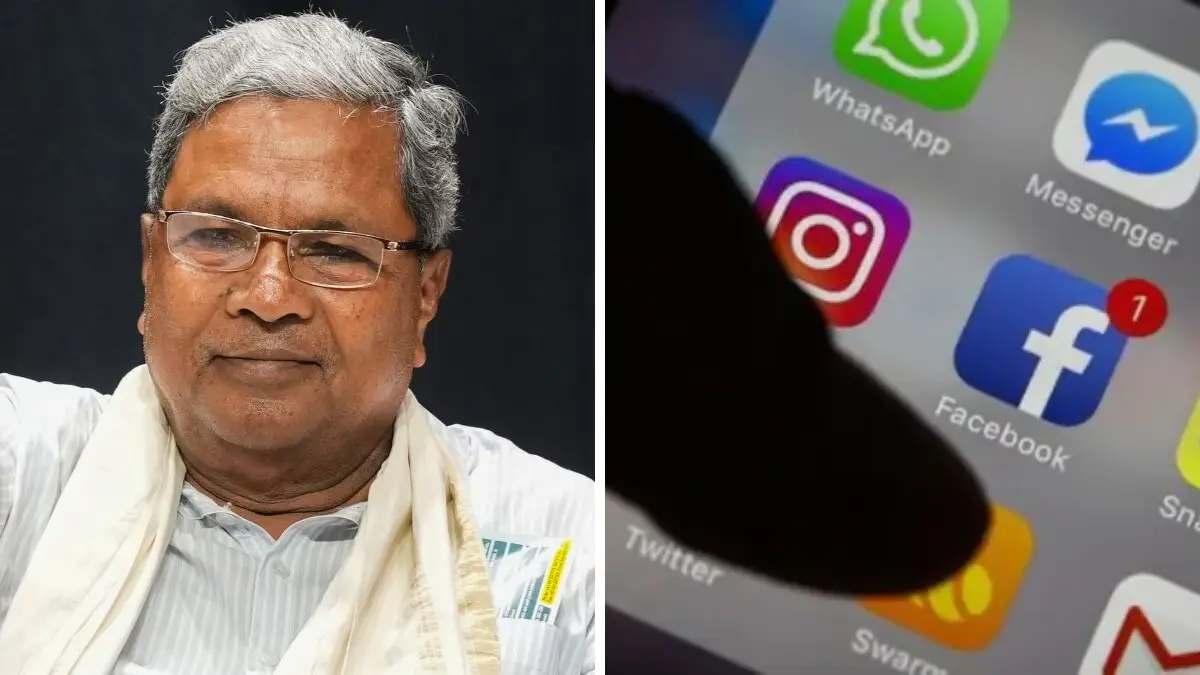
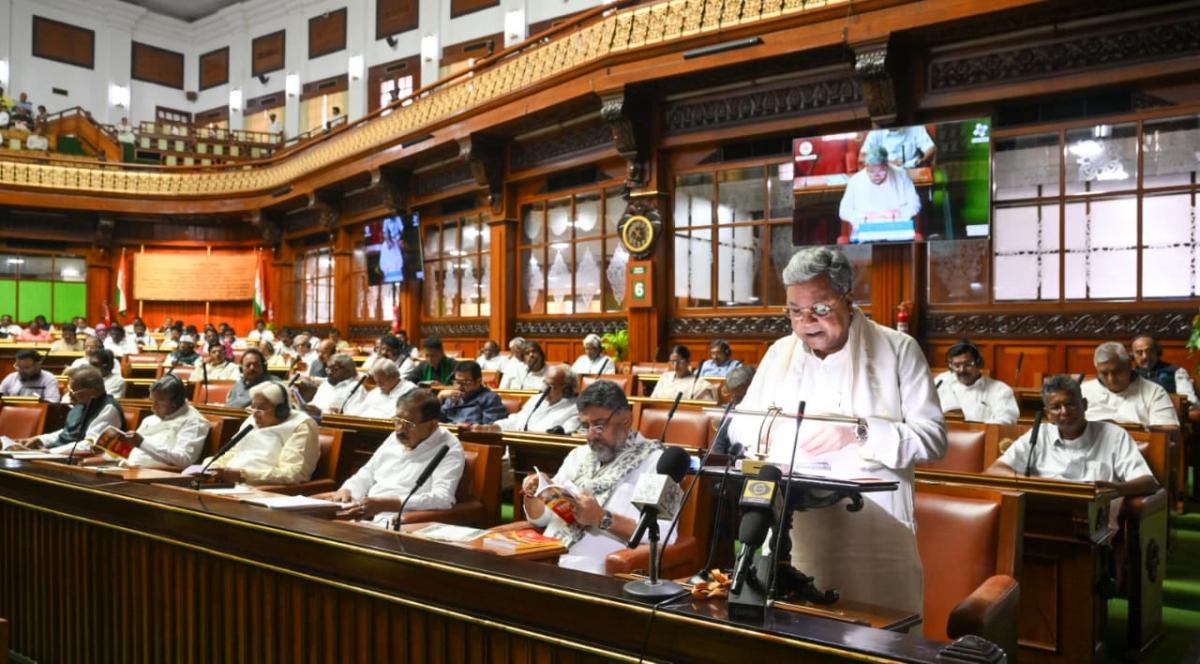
Karnataka Chief Minister Siddaramaiah announced a major policy decision during the presentation of the state’s 2026–27 budget—a proposed ban on social media use for children below the age of 16. The move aims to address growing concerns about excessive mobile phone usage, digital addiction, and the negative impact of social media on young people’s mental health and development.
The announcement was made while presenting the government’s 17th state budget, which outlines technology-driven development, infrastructure expansion, and environmental initiatives for the coming financial year.
Karnataka’s Plan to Ban Social Media for Under-16s
During the budget presentation, Siddaramaiah stated that social media access will be prohibited for children under 16 to prevent the harmful consequences of increasing mobile phone usage among minors.
According to the chief minister, the ban is intended to reduce the adverse effects of excessive screen time, including its impact on children’s learning, behaviour, and mental health. Policymakers and education leaders have increasingly expressed concern over the role social media platforms play in shaping young users’ habits and emotional well-being.
The restriction is expected to cover major social media platforms such as Facebook, Instagram, and X (formerly Twitter). However, the government has not yet clarified the mechanism for implementing the ban.
Key questions remain unresolved, including:
-
How platforms will verify users’ ages
-
Whether parental controls will be mandated
-
Possible penalties for violations
-
Collaboration with technology companies to enforce the policy
Since these operational details are still unclear, the proposal may require new legislation or regulatory guidelines at the state level before it can be implemented.
If enacted, Karnataka would become the first Indian state to formally ban social media access for children below 16 years of age.
Rising Concerns About Digital Addiction Among Children
The decision comes amid increasing evidence that excessive smartphone use and social media addiction are affecting young people’s mental health and academic performance.
India’s Economic Survey 2025–26 highlighted the growing problem of digital addiction among children and adolescents. The report noted a complex relationship between social connectivity and suicide rates, pointing out that states with stronger in-person social networks tend to record lower suicide death rates.
The survey suggested that policymakers should consider age-based restrictions on digital platforms to address mental health concerns related to prolonged screen time.
Data also reveals the scale of smartphone dependence in India. According to a report by the consulting firm Ernst & Young (EY), Indians collectively spent more than one trillion hours on smartphones in 2024, averaging about five hours daily—much of it on social media, gaming, and online videos.
How Social Media Impacts Young Minds
For many teenagers today, smartphones function as their primary source of information, entertainment, and social interaction. Devices often act as a library, mall, playground, and social circle combined. In some cases, young people rely on digital spaces as a way to cope with emotions.
However, experts warn that this constant engagement can have negative consequences.
The Economic Survey highlighted several risks linked to excessive social media use:
-
Declining academic performance
-
Anxiety and depressive symptoms
-
Social comparison and self-esteem issues
-
Exposure to cyberbullying
Multiple Indian and global studies cited in the report show that social media addiction is strongly associated with anxiety, depression, and low self-esteem, particularly among people aged 15 to 24 years.
Researchers also point out that the design of many social media platforms encourages continuous engagement. A blog published by Harvard Health Publishing explains that platforms such as Instagram rely on sophisticated algorithms and visually appealing content to keep users interacting with an endless stream of posts.
This rapid-reward system stimulates repeated usage, which can make it difficult for young users to disconnect.
Health Effects of Excessive Screen Time
Medical experts have repeatedly warned that overuse of digital devices can harm both mental and physical health.
Dr. Astik Joshi, Child, Adolescent, and Forensic Psychiatrist at Fortis Hospital in Shalimar Bagh, New Delhi, notes that spending long hours on screens is linked to multiple health issues.
These include:
-
Eye fatigue and vision problems
-
Poor posture and physical inactivity
-
Weight gain
-
Sleep disturbances
-
Difficulty regulating emotions
Internet addiction has also been associated with reduced attention span, weaker working memory, and impaired decision-making. Studies suggest that frequent digital stimulation may negatively affect the developing brain’s ability to maintain focus.
Given these risks, policymakers argue that protective measures for minors are becoming increasingly necessary.
Global Trend: Countries Restricting Social Media for Children
Karnataka’s proposal reflects a growing global movement to regulate social media access for minors.
Several countries have already implemented or proposed similar restrictions:
Australia
Australia became the first country in the world to enforce a nationwide social media ban for children under 16 in December 2025. The policy restricts access to major platforms including Facebook, Instagram, TikTok, Snapchat, X, YouTube, Reddit, Threads, Twitch, and Kick. Messaging services like WhatsApp and the child-friendly YouTube Kids remain exempt.
Since enforcement began, social media companies have deactivated millions of underage accounts.
Malaysia
Malaysia announced plans in late 2025 to implement a similar ban for users under 16, with mandatory age-verification systems expected as part of the rollout in 2026.
Spain
In February 2026, Spain declared that it would also ban social media access for minors under 16, requiring platforms to implement age verification measures.
France
France passed legislation in January 2026 banning social media for children under 15. The law is scheduled to take effect in the next school year.
Denmark
Denmark secured parliamentary support in November 2025 for a similar ban on under-15s, which is expected to become law by mid-2026. Authorities are considering the use of a digital age-verification app.
Portugal
Portugal has already implemented restrictions limiting social media access for users under 16.
In addition, countries such as Norway, Greece, and Indonesia, along with several U.S. states, are discussing similar policies.
Karnataka’s ₹4.48 Lakh Crore Budget
The proposed social media ban was announced as part of Karnataka’s ₹4,48,004-crore budget for the financial year 2026–27.
According to Siddaramaiah, the state continues to play a significant role in national and global trade and remains one of the largest contributors of tax revenues in India.
The government’s development strategy aims to balance welfare programmes with infrastructure investments and long-term economic transformation.
The chief minister also criticised the Union government, stating that it was not adhering to the federal system of governance outlined in the Constitution and urged it to be more sensitive to Karnataka’s demands.
However, the state government also acknowledged challenges in revenue growth following changes in the Goods and Services Tax (GST) rates in September 2025.
Before the revisions, Karnataka’s average monthly GST revenue growth stood at about 10% in 2025–26 after refunds. After the new rates came into effect, the growth rate slowed to around 4%.
The restructuring is expected to reduce the state’s GST collections by approximately ₹10,000 crore in the current financial year and around ₹15,000 crore in the next year.
Technology and Innovation Initiatives in the Budget
Despite fiscal challenges, the Karnataka government announced several initiatives to strengthen the state’s position as a technology and innovation hub.
One of the major proposals is the creation of a Robotics and Artificial Intelligence campus under the Indian Institute of Science (IISc). The campus will be known as the Bangalore Robotics and AI Innovation Zone and will be developed in collaboration with Indian Space Research Organisation (ISRO) and Karnataka State Electronics Development Corporation (Keonics).
In addition, the government plans to establish two Centres of Excellence for Artificial Intelligence in partnership with:
-
Institute of Bioinformatics and Applied Biotechnology
-
Centre for Cellular and Molecular Platforms
-
NASSCOM
These centres will be created at a cost of ₹16 crore.
Environmental and Urban Development Measures
The budget also includes several initiatives related to environmental protection and urban resilience.
One such project is the establishment of a leopard rehabilitation centre at Bannerghatta Biological Park. The facility, costing ₹5 crore, will house and rehabilitate leopards captured from residential areas on the outskirts of Bengaluru.
To address urban flooding, the state will implement disaster-management projects in Bengaluru under the Karnataka Water Security and Resilience Programme, funded by the World Bank.
The five-year programme is expected to cost ₹5,000 crore and aims to strengthen water management and flood mitigation infrastructure in the city.
Administrative Reforms and Digital Governance
Another administrative reform announced in the budget involves improving transparency in government departments.
The excise department has introduced digital counselling for the transfer of Group-C cadre officers, including excise inspectors and constables. This system will now be extended to deputy superintendents and superintendents, with the goal of making the transfer process more transparent and efficient.
Experts Stress Balanced Approach to Digital Safety
While restricting social media use may help protect young users, experts caution that long-term solutions require a broader strategy.
The Economic Survey recommends several additional measures:
-
Cyber-safety education for students
-
Parental training on managing children’s screen time
-
Stronger accountability for online platforms hosting harmful content
The report also advocates introducing “screen-time literacy” and a digital wellness curriculum in schools.
According to Dr. Astik Joshi, limiting social media access could help support children’s emotional development and reduce anxiety. However, sustainable progress will require digital literacy programmes, parental supervision, and open conversations about online safety, rather than relying solely on restrictions.
A Major Policy Shift in India’s Digital Landscape
Karnataka’s proposed ban signals a significant shift in India’s approach to regulating children’s digital lives. As concerns over social media addiction, mental health, and online safety continue to grow, the state’s move could influence similar policies across the country.
Whether the proposal ultimately becomes law will depend on how the government designs enforcement mechanisms and balances digital freedom with child protection.
What is clear, however, is that the debate over children, technology, and social media regulation is likely to intensify in the coming years.
With inputs from agencies
Image Source: Multiple agencies
© Copyright 2025. All Rights Reserved. Powered by Vygr Media.