

 By

A fresh legal development in the controversial Gurpatwant Singh Pannun case has brought India's national security establishment and the US judicial system into focus. A federal court in New York has formally requested the assistance of three Delhi district courts to serve summons and other judicial documents on India's National Security Adviser (NSA) Ajit Doval and former Research and Analysis Wing (RAW) chief Samant Goel in connection with a civil lawsuit filed by Sikh separatist Gurpatwant Singh Pannun.
The development marks another step in a legal dispute that has drawn considerable diplomatic and political attention since 2024. However, India has strongly rejected the allegations against its senior officials, describing the lawsuit as fabricated, malicious and baseless.
The latest US court order does not establish the allegations or determine the liability of any individual named in the lawsuit. Instead, it addresses the procedural question of how legal documents can be delivered to the two Indian officials through the Indian judicial system.
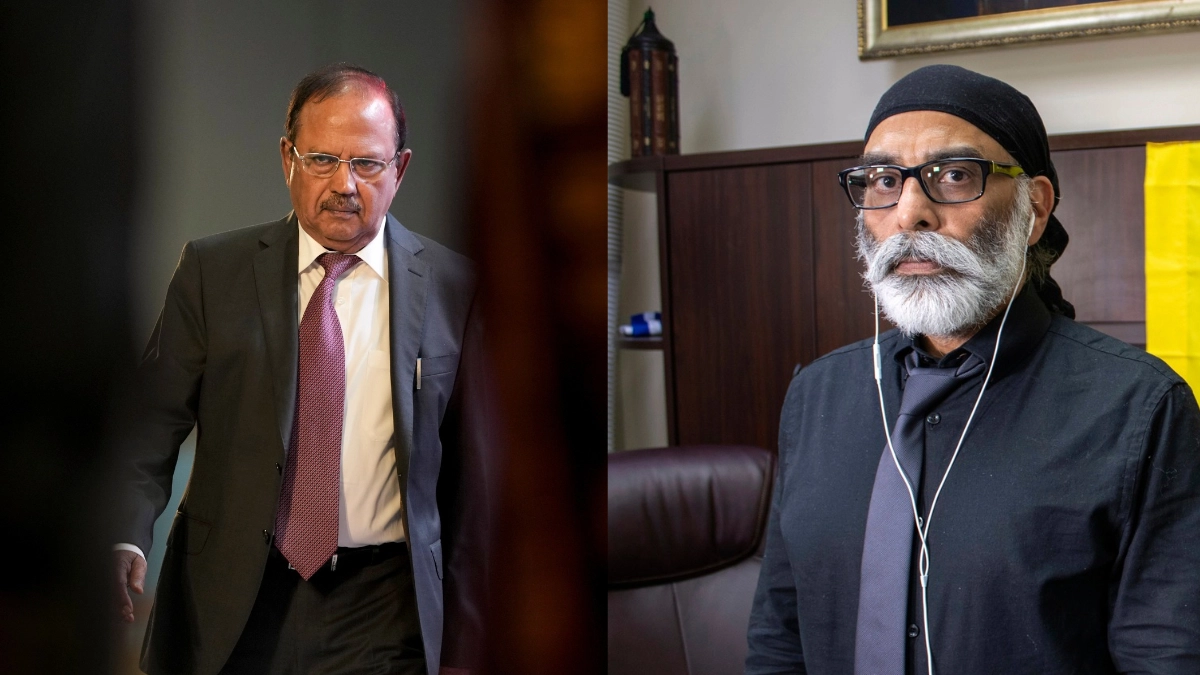
US Court Requests Three Delhi District Courts to Serve Summons
The United States District Court for the Southern District of New York has issued an order dated November 13, 2026, directing its Clerk to transmit summons and accompanying judicial documents to three district courts in Delhi.
The courts identified in the order are:
-
Patiala House District Court: Requested to facilitate service of summons on National Security Adviser Ajit Doval.
-
Dwarka District Court: Requested to assist with service on former RAW chief Samant Goel.
-
Tis Hazari District Court: Also requested to facilitate service on Samant Goel.
The order was issued by US District Judge Katherine Polk Failla in the civil proceedings initiated by Pannun.
Through this arrangement, the American court has sought assistance from the Indian judicial system to ensure that the legal documents reach the respective defendants. It has also requested the receiving courts to provide a written record of the proceedings undertaken while attempting to serve the summons.
The documents are to be transmitted through international mail or courier, along with supporting judicial records, relevant legal provisions and a copy of the US court's order.
The request represents a significant procedural development in the case, particularly because earlier attempts to serve the documents through other channels had encountered difficulties.
Why Has the US Court Invoked the Hague Convention?
An important aspect of the latest development is the US court's reliance on the Hague Convention on the Service Abroad of Judicial and Extrajudicial Documents.
The Hague Service Convention is an international framework designed to facilitate the transmission and delivery of judicial documents across international borders in civil and commercial matters.
When a court in one country needs to serve legal documents on an individual residing in another country, the convention provides procedures for carrying out that process.
In the present case, the US court has relied on Article 19 of the Hague Convention, read alongside Section 29(c) and Order V Rule 21 of India's Code of Civil Procedure, 1908.
Section 29(c) of the CPC provides a mechanism through which summons issued by foreign civil courts can be transmitted to Indian courts for service. The relevant provision was extended to civil courts in countries that are parties to the Hague Convention, including the United States, through a Government of India notification dated January 13, 2009.
Order V Rule 21 also provides for the transmission of summons to a court having jurisdiction over the place where the defendant resides.
Relying on these provisions, the American court concluded that service through the designated Delhi district courts could be pursued under Article 19 of the convention.
The order further requests the Indian courts to return a written record of the steps taken to serve the documents.
Earlier Attempts to Serve Summons on Ajit Doval
The latest order follows multiple unsuccessful attempts by Pannun's legal team to serve judicial documents on Ajit Doval.
According to the proceedings, Pannun's lawyers had previously attempted to deliver the summons personally during Doval's official visits to the United States.
One such attempt reportedly took place during his visit to Washington in February 2025. However, in April 2025, the US court rejected the claim that the summons and accompanying legal documents had been successfully delivered to Doval during that visit. It clarified that the complaint had not been properly served on him.
Pannun subsequently explored alternative methods of serving the documents through India's judicial system.
There were also unsuccessful attempts to route the documents through India's designated Central Authority, the Ministry of Law and Justice.
On November 9, 2026, Judge Katherine Polk Failla accepted the argument that Article 19 of the Hague Convention could permit an alternative method of service authorised under the receiving country's domestic law.
The November 13 order subsequently provided the procedural directions for transmitting the documents to the specified Delhi courts.
It is important to understand that authorising an alternative method of service does not amount to accepting the allegations made in the lawsuit. Nor does it represent a judicial finding that the named officials were involved in the alleged conspiracy.
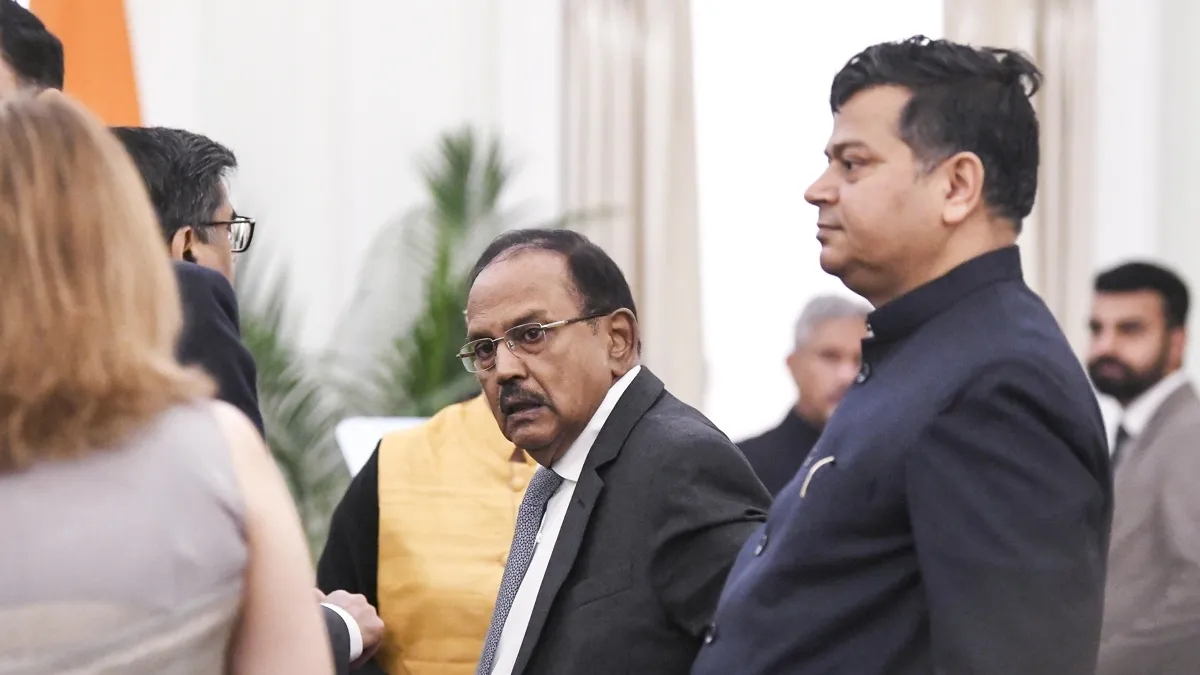
What Is the Gurpatwant Singh Pannun Lawsuit About?
The civil lawsuit was filed by Gurpatwant Singh Pannun in September 2024 before the US District Court for the Southern District of New York.
Pannun, who serves as the general counsel of the banned organisation Sikhs for Justice (SFJ), has alleged that Indian officials and other individuals were involved in a conspiracy to assassinate him at his residence in New York in 2023.
According to his allegations, the purported assassination plot was connected to his advocacy for an independent Sikh state, commonly referred to as Khalistan.
The lawsuit names several individuals and entities, including:
-
The Government of India
-
National Security Adviser Ajit Doval
-
Former RAW chief Samant Goel
-
Former Indian government employee Vikash Yadav
-
Nikhil Gupta
-
Around 50 unnamed defendants
Pannun is seeking damages over the alleged assassination conspiracy.
However, these claims remain allegations in a civil proceeding and have not been established through a judicial determination against the named Indian officials.
The distinction is particularly important because the latest order concerns the delivery of legal documents, not the merits of the accusations.
India Strongly Rejects the Allegations Against Its Senior Officials
India has maintained a firm position against the lawsuit and the allegations directed at its senior government officials.
Responding to questions about the US court proceedings, Ministry of External Affairs (MEA) spokesperson Randhir Jaiswal rejected the claims, describing them as fabricated and malicious attacks against India's high-ranking officials.
The government also dismissed the civil lawsuits as frivolous.
India has separately raised an objection concerning the procedure through which foreign judicial documents are being served within the country.
According to the MEA, requests for serving judicial documents in India can only be routed through the country's designated Central Authority, which is the Ministry of Law and Justice.
This position highlights a procedural disagreement between the Indian government and the approach adopted by the US court.
While the American court has invoked Article 19 of the Hague Convention and relevant provisions of Indian civil procedure to request assistance from Delhi's district courts, India has reiterated its position on the designated Central Authority mechanism.
The disagreement adds another dimension to an already sensitive legal and diplomatic issue involving allegations against senior Indian officials.
The Civil Lawsuit Is Separate From the US Criminal Case
Another important aspect of the controversy is the distinction between Pannun's civil lawsuit and the separate criminal proceedings initiated by the US Department of Justice.
The criminal investigation concerns an alleged murder-for-hire conspiracy targeting Pannun in the United States.
US prosecutors accused Nikhil Gupta of conspiring with Vikash Yadav and others to arrange the killing.
Gupta pleaded guilty in February 2026 in connection with the criminal case.
However, his guilty plea should not be interpreted as establishing the allegations against Ajit Doval, Samant Goel or the Government of India in Pannun's separate civil lawsuit.
The two proceedings involve different legal questions and must be assessed independently.
The criminal case concerns alleged individual participation in a murder-for-hire conspiracy, while the civil lawsuit seeks damages and raises allegations of a broader conspiracy involving multiple defendants.
The distinction is essential to understanding the latest legal development without conflating allegations, criminal proceedings and civil liability.
What Happens Next in the Ajit Doval-Pannun Case?
With the US court formally requesting assistance from the Patiala House, Dwarka and Tis Hazari district courts, the next procedural step concerns the transmission and handling of the judicial documents in India.
The receiving courts have been requested to facilitate service on the respective defendants and provide a written account of the proceedings to the US court.
The development could therefore determine how the civil lawsuit progresses procedurally, particularly regarding the service of summons on the two senior Indian officials.
However, several important questions remain.
The legal and diplomatic disagreement over the appropriate channel for serving foreign judicial documents in India could influence how the request is handled. The outcome of the service process will also be relevant to the subsequent proceedings in the American court.
For now, the November 13 order should be viewed in its proper legal context: it facilitates a mechanism for delivering judicial documents and does not decide whether the allegations against the defendants are true.
A Legal Battle Far From Over
The US court's decision to seek assistance from Delhi's district courts in serving summons on Ajit Doval and former RAW chief Samant Goel represents a fresh development in the Gurpatwant Singh Pannun case.
While the proceedings have intensified attention on India's national security establishment and its legal engagement with the United States, the Indian government has firmly rejected the allegations, calling them fabricated and malicious.
The case also highlights the complexities of cross-border litigation, particularly when foreign judicial proceedings involve serving legal documents on individuals in another country's jurisdiction.
As the matter moves forward, the central questions will concern the handling of the summons, the applicable international and domestic legal procedures, and the subsequent course of the civil proceedings.
Ultimately, the latest order is a procedural step rather than a verdict on the allegations. Any determination of liability will depend on the legal proceedings and evidence presented before the competent court.
© Copyright 2026. All Rights Reserved. Powered by Vygr Media.