 By
By 
Uttarakhand remained on high alert on Tuesday as intense monsoon rainfall raised the threat of flash floods, landslides and sudden surges in rivers and streams across the state.
The India Meteorological Department's Flash Flood Guidance Cell has issued a flash flood risk bulletin covering catchment areas and adjoining regions in all 12 districts of Uttarakhand. The warning is valid until 5:30 pm on August 11, with parts of the state facing a low to moderate risk of flash flooding over the next 24 hours.
The districts named in the warning include Almora, Bageshwar, Chamoli, Champawat, Dehradun, Tehri Garhwal, Haridwar, Nainital, Pithoragarh, Rudraprayag, Uttarkashi and Pauri Garhwal.
While the forecast does not mean that every part of these districts will experience flooding, officials have warned that localised and rapidly developing situations remain possible, particularly in mountain catchments, seasonal streams and areas already vulnerable to landslides.
Uttarakhand flash flood alert: Why the warning is significant
Flash floods in the Himalayan region can develop with very little warning. Unlike conventional river flooding, which may allow water levels to rise gradually, a flash flood can send a sudden and powerful surge through a narrow valley or stream channel.
That is why Uttarakhand authorities have urged residents and tourists not to underestimate apparently small watercourses during the current spell of rain.
Vinod Kumar Suman, Secretary of Disaster Management and Rehabilitation in Uttarakhand, said the state's disaster management system had been placed on high alert following warnings from the meteorological department and other technical agencies.
The State Emergency Operation Centre is monitoring developments around the clock while coordination is being maintained with district-level emergency operation centres, according to the state administration. Vulnerable locations are also under increased surveillance, with rescue and relief agencies being kept prepared for emergencies.
The administration has also warned people against unnecessary travel during periods of continuous or intense rainfall. Residents and visitors have been advised to stay away from rivers, streams, ravines and seasonal water channels.
The warning is particularly important for tourists travelling through mountainous routes, where a road that appears safe at one moment can quickly become hazardous because of falling rocks, debris, waterlogging or a sudden rise in a nearby stream.
Chamoli flash flood raises fresh concerns
The latest warning comes barely a day after a flash flood struck the Tamak Nala area along the Jyotirmath-Malari road in Chamoli district.
The incident highlighted just how quickly weather conditions can turn dangerous in the high-altitude terrain.
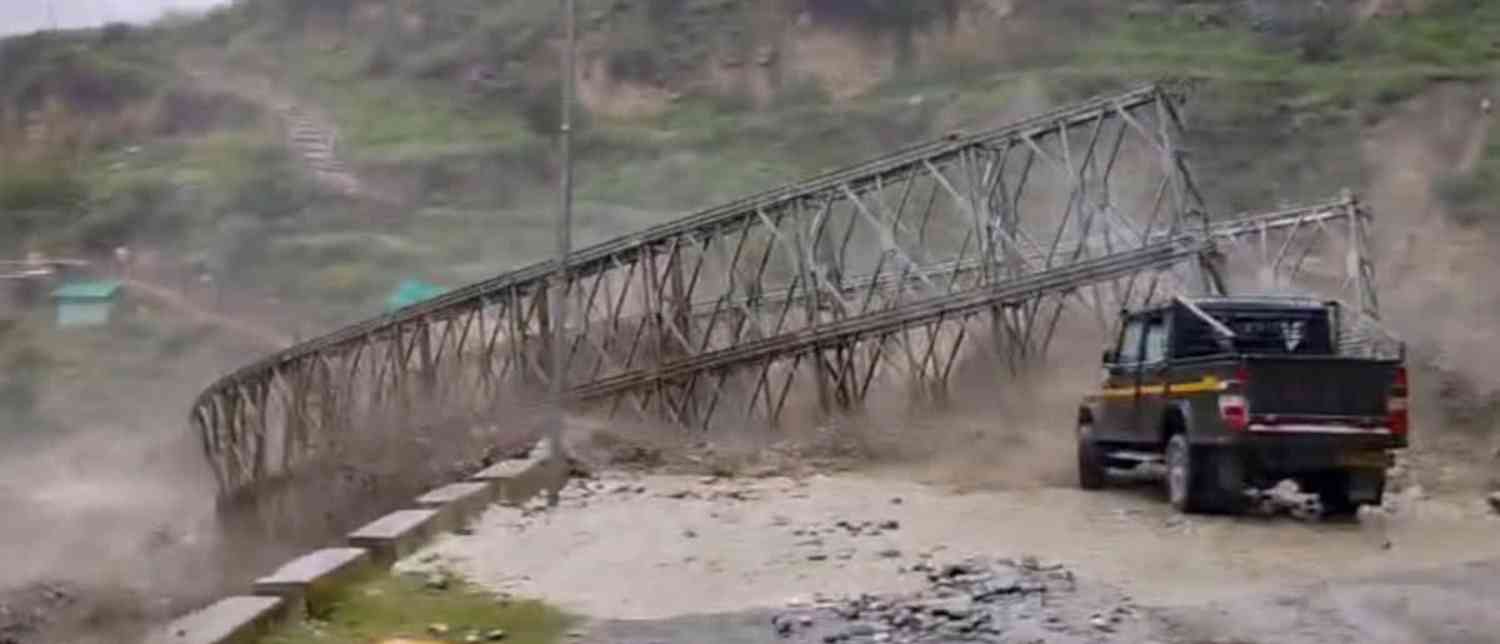
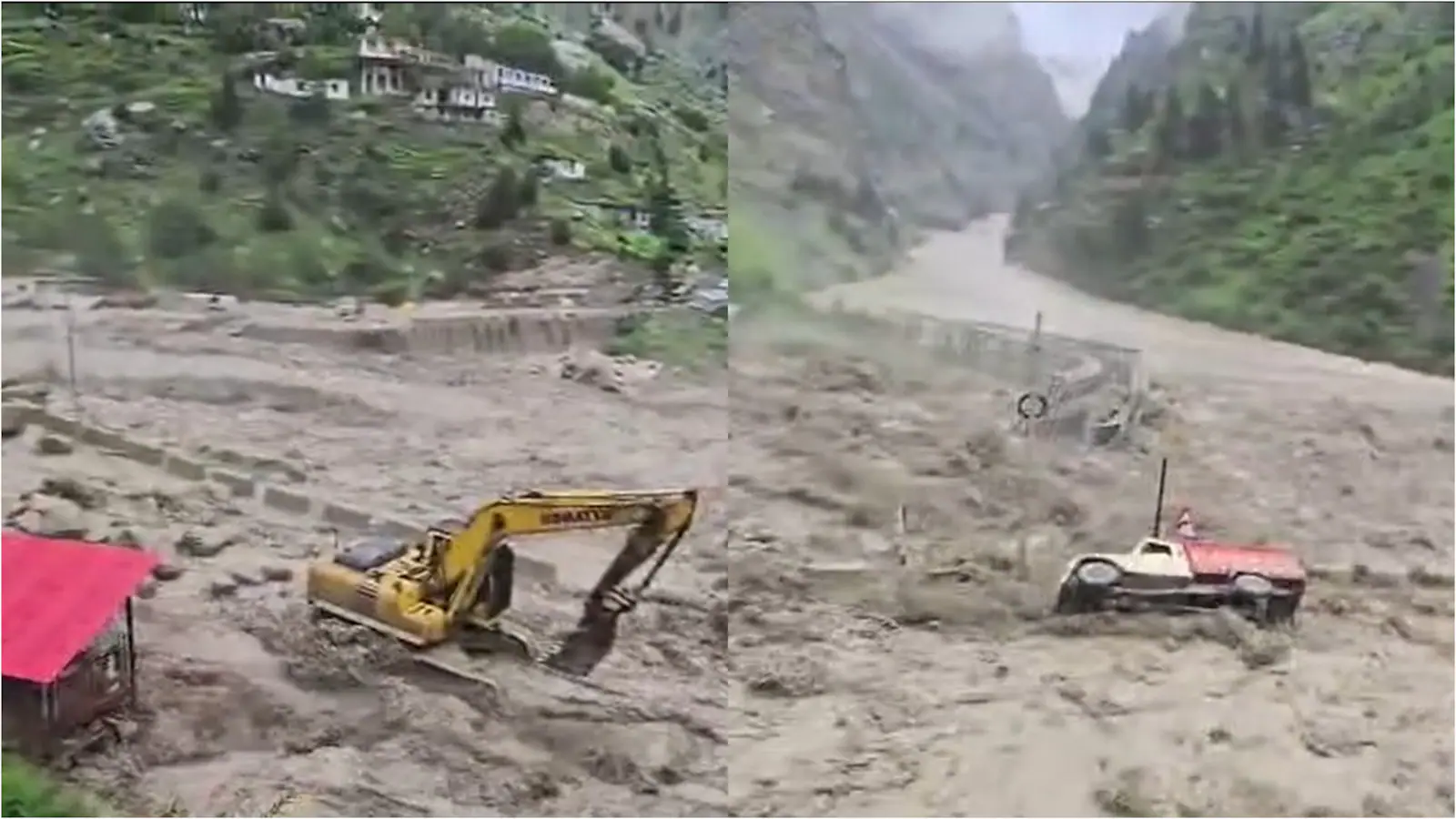
According to reports, a sudden surge of water swept away a vehicle and a valley bridge, while a Border Roads Organisation (BRO) worker was reported missing. The flash flood also disrupted movement beyond Malari and cut off road connectivity to villages located towards the border.
The incident has added urgency to the latest statewide alert because Chamoli is among the districts where terrain, narrow valleys and fast-flowing mountain streams can amplify the impact of intense rainfall.
Visuals emerging from the Chamoli region have also drawn widespread attention online. Videos circulating on social media show large volumes of muddy water rushing down the mountain landscape around Tamak Nala near Joshimath.
The footage captures the force of the water as it moves through the mountainous terrain, underscoring the danger posed by sudden flash flooding in the region. The Times of India reported that the heavy rainfall and flash flood resulted in the collapse of a Bailey bridge, while police operations were underway amid the difficult weather conditions.
For communities dependent on mountain roads and bridges, such incidents are more than temporary disruptions. A damaged bridge can isolate villages, affect the movement of essential supplies and complicate access for emergency teams.
This is how a cloudburst turns into a flash flood.
Terrifying visuals from Tamak, Niti Valley, Chamoli, after a cloudburst on August 10 sent a sudden surge of water through the valley. https://t.co/FOpshJY7s8 pic.twitter.com/QUSSrlqoED— Kumaon Jagran (@KumaonJagran) August 10, 2026
Rivers, streams and bridges remain vulnerable
Officials have specifically warned that even small streams can become dangerous during intense rainfall.
A seasonal stream that normally carries relatively little water can experience a rapid increase in flow when heavy rain falls over its upstream catchment. In steep Himalayan terrain, that water can travel downhill at considerable speed, carrying mud, rocks, trees and other debris along with it.
This makes crossing streams, culverts and temporary bridges particularly risky during heavy rain.
Authorities have therefore advised people not to attempt to cross flooded stretches, riverbanks or bridges when water levels begin to rise. Travellers have also been asked to check weather and road conditions before starting journeys and to exercise additional caution on routes historically prone to landslides.
The precaution is especially relevant in Uttarakhand, where roads frequently run alongside steep slopes, rivers and narrow valleys. Landslides triggered by saturated soil and intense rainfall can block roads without warning, leaving travellers stranded and making rescue operations more difficult.
Disaster response machinery placed on alert
With the flash flood warning extending across the entire state, Uttarakhand's disaster management machinery has moved into a preventive-response mode.
District administrations have been directed to take measures according to local conditions, while vulnerable locations are being monitored more closely. Agencies responsible for relief and rescue have been kept ready to respond should the situation deteriorate.
The emphasis on preparedness is significant because the most effective response to flash flooding often begins before floodwaters arrive.
Keeping emergency teams ready, monitoring rivers and streams, maintaining communication between district control rooms and identifying vulnerable settlements can help reduce response times when an incident occurs.
For residents, however, official preparedness can only go so far. Individual caution remains critical, particularly for people living near rivers, travelling through mountain roads or visiting waterfalls and streams during the monsoon.
Devastation in Uttarakhand. 💔
A chilling video from Chamoli shows a valley bridge being uprooted and swept away by a powerful flash flood triggered by a cloudburst.
Nature’s fury can be absolutely terrifying. Stay safe, Uttarakhand. 🙏#Uttarakhand pic.twitter.com/p9tscQFSPd— Crow Dhillon 🦢 (@CrowDhillon8) August 11, 2026
Wider monsoon threat extends beyond Uttarakhand
The Uttarakhand warning forms part of a broader period of heightened monsoon activity across several parts of India. A separate assessment cited in reports on the latest IMD warnings has also highlighted flash-flood risks across multiple states, reflecting the wider weather threat associated with intense and concentrated rainfall.
For Uttarakhand, however, the immediate concern remains the combination of heavy rain and highly sensitive mountain terrain.
The state has already experienced the consequences of sudden water surges, and the latest warning arrives at a time when authorities are particularly concerned about rivers, streams, landslide-prone roads and vulnerable settlements.
What residents and tourists should do
Authorities have urged people to avoid unnecessary movement during intense or continuous rainfall. Those already travelling should monitor official weather and road advisories before continuing their journey.
People should also avoid standing near swollen rivers or streams to take photographs or videos. A watercourse that appears manageable can become dangerous within minutes.
Bridges, culverts and low-lying crossings should not be used if water is flowing over them. Travellers should also avoid routes affected by active landslides and follow instructions issued by local authorities.
The broader message from the administration is simple: do not wait for a flash flood to become visible before taking precautions.
As rainfall continues, the situation can change rapidly from one valley to another. Monitoring systems and emergency agencies remain on alert, but timely public cooperation is equally important.
For Uttarakhand, the latest IMD warning is therefore not simply a forecast of rain. It is a reminder of how quickly intense monsoon weather can transform the state's rivers, streams and mountain roads into potential hazards.
With all 12 districts under a flash flood risk warning until Tuesday evening, authorities are urging residents and tourists to remain cautious, avoid unnecessary travel and stay away from water channels during heavy rain. The developments in Chamoli have already demonstrated the destructive force that a sudden surge can unleash — and the latest alert makes clear that vigilance remains essential across the state.
With input from agencies
Image Source: Multiple agencies
© Copyright 2026. All Rights Reserved. Powered by Vygr Media.