 By

A routine flight to the Bahamas turned into a devastating aviation disaster on Sunday afternoon after a Learjet 60 business jet crashed into a residential area in Florida's Palm Beach County, killing all nine people aboard. The aircraft reportedly plunged thousands of feet in just over a minute before slamming into the ground and erupting into a massive fireball, leaving behind a crater, scattered debris and widespread panic among nearby residents.
The deadly Florida plane crash occurred in the Greenacres area near West Palm Beach, close to Military Trail. What makes the incident particularly disturbing are the final air traffic control recordings, which captured the pilots reporting ice accumulation, moderate turbulence and rapidly worsening flight conditions before repeatedly issuing desperate Mayday calls.
Videos recorded by motorists and dash cameras also captured the terrifying moments when the aircraft descended sharply towards the ground before exploding on impact. As federal investigators begin examining the wreckage and flight data, questions remain about what caused the sudden loss of control.
Florida Plane Crash: What Happened to the Bahamas-Bound Learjet 60?
According to the Federal Aviation Administration (FAA), the aircraft was a Learjet 60 that had departed from Austin-Bergstrom International Airport in Texas and was heading towards North Eleuthera Airport in the Bahamas.
The business jet, registered as N722BD and operated by LR60271 LLC, was carrying nine people when it crashed at approximately 12:50 pm local time on Sunday, November 1.
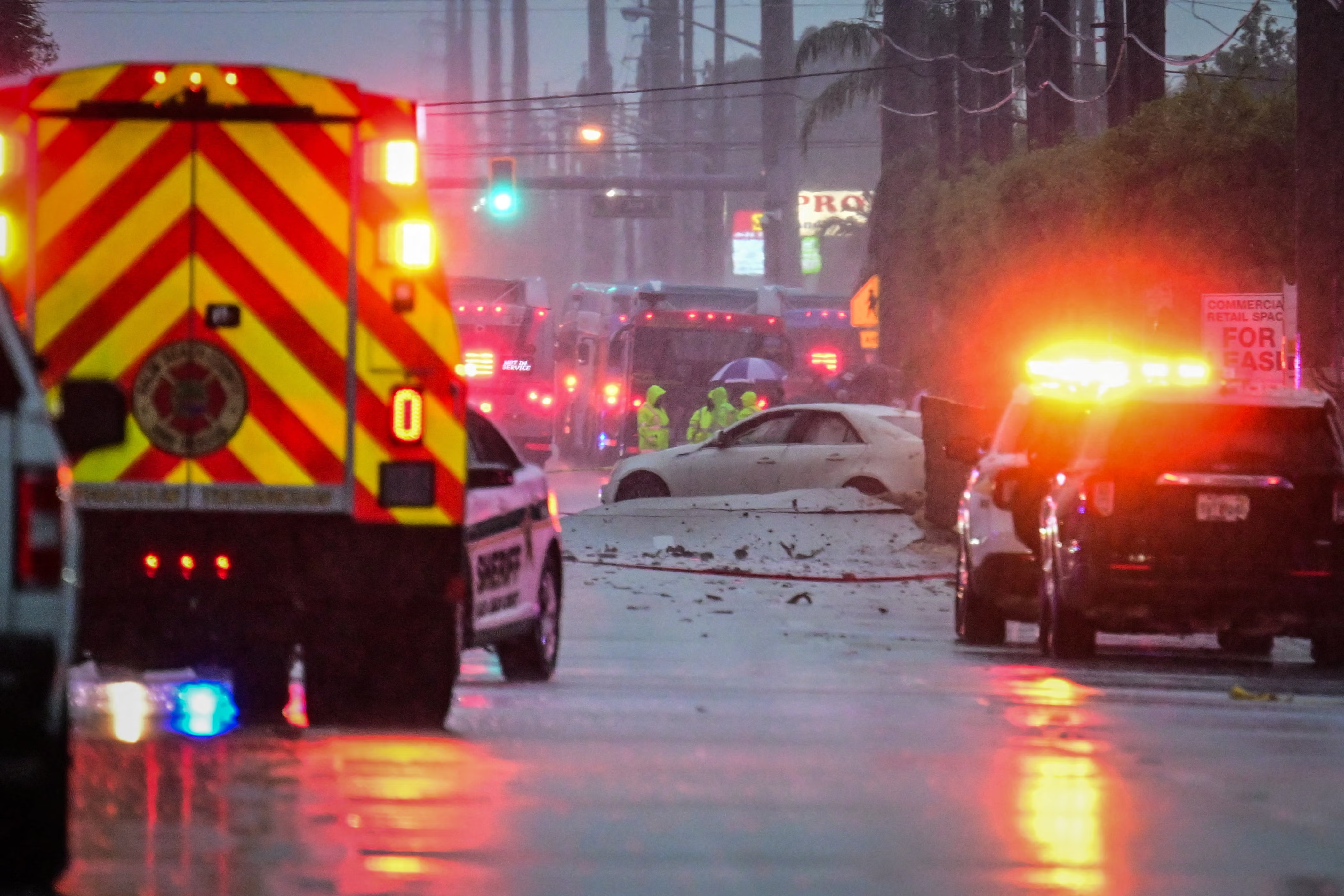
The aircraft went down near Military Trail, between Cresthaven Boulevard and 10th Avenue North, in Palm Beach County. The location is close to a residential neighbourhood and a mobile home community.
US Transportation Secretary Sean Duffy confirmed that all nine people aboard the aircraft had died. However, authorities had not immediately released the victims' identities or clarified how many were passengers and how many were crew members.
There were no immediate reports of fatalities among people on the ground.
Florida Governor Ron DeSantis, who visited the area following the disaster, described the aircraft's final descent as resembling a missile falling from the sky. The impact created a large crater in the roadway, damaged nearby property, brought down power lines and triggered fires.
The crash also left a significant debris field across the surrounding area.
'Mayday, Mayday': Chilling Final Radio Calls Before the Crash
Perhaps the most disturbing aspect of the Florida Learjet crash is the sequence of emergency communications between the aircraft's crew and air traffic controllers.
Recordings of the radio transmissions reveal that the pilots were facing increasingly difficult flying conditions in the minutes leading up to the disaster.
While travelling east at approximately 35,000 feet, the crew reported moderate turbulence and ice accumulating on the aircraft. The pilot initially described the icing as manageable but also informed controllers that the aircraft was experiencing turbulence.
The outside air temperature was reportedly around minus 47 degrees Celsius, while the turbulence was said to be causing the aircraft to bounce by as much as 700 feet.
As conditions deteriorated and precipitation began, the crew requested permission to climb approximately 2,000 feet in search of better conditions.
However, the situation appeared to worsen dramatically.
In one of the most alarming transmissions, the pilot declared an emergency and reported that the aircraft was descending at an extraordinary rate.
The pilot's Mayday call included the words, "We're descending 8,000 – mayday, mayday – we're descending 10,000 feet per minute."
The situation continued to spiral out of control. In another transmission, the pilot reported an overspeed condition as the aircraft descended at approximately 20,000 feet per minute.
The crew then warned air traffic controllers that they were going to crash into the ground.
A female crew member was also heard expressing the urgency of the situation in a final, desperate transmission: "Holy f**k, we're out of time."
Air traffic controllers continued attempting to communicate with the aircraft, with one controller urging the crew to respond.
But the aircraft was already in a catastrophic descent.
The final communications reportedly included information about the aircraft banking sharply as it continued losing altitude. The recordings offer a deeply unsettling account of the crew's struggle during the final moments of the flight.
Learjet 60 Plunges More Than 30,000 Feet Per Minute
Flight-tracking data has provided further insight into the extraordinary speed at which the aircraft descended before crashing.
The Learjet 60 was initially flying at approximately 35,000 feet. After encountering worsening weather conditions, it reportedly climbed to around 41,000 feet before entering a steep and increasingly rapid descent.
According to available flight-tracking information, the descent rate initially reached approximately 10,000 feet per minute before accelerating to 20,000 feet per minute.
It eventually exceeded 30,000 feet per minute, with some tracking data indicating a rate of more than 32,000 feet per minute.
The aircraft also made a sharp right turn during its descent.
Another account of the flight's tracking data indicated that the jet lost approximately 27,000 feet of altitude in just one minute before its signal disappeared.
These figures highlight the severity of the emergency. The aircraft was no longer following what would normally be considered a controlled descent.
However, investigators have not yet established what caused the sudden and dramatic loss of control.
Florida Jet Crash Video Shows Aircraft Exploding Into Fireball
The final moments of the Florida plane crash were captured in several videos recorded by motorists and other people in the surrounding area.
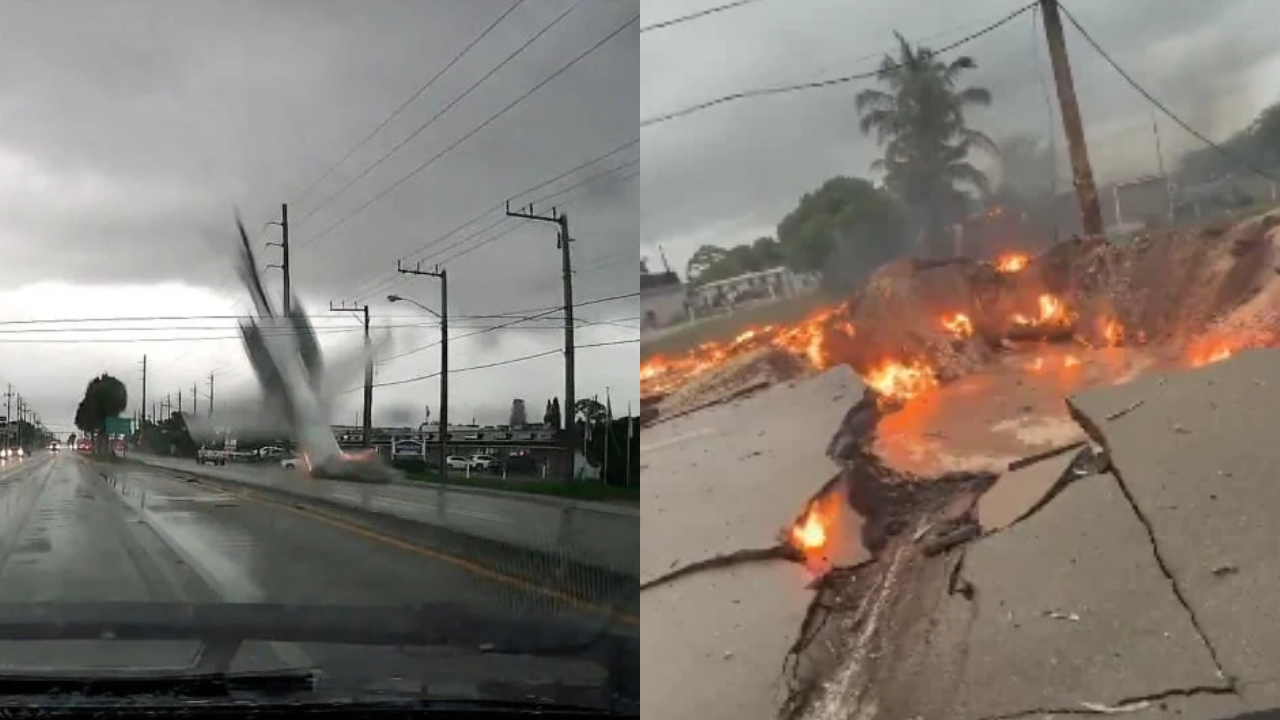
One widely circulated, unverified dashcam recording appears to show vehicles travelling along a suburban road when the aircraft suddenly plunges towards the ground.
Within moments, the jet strikes the ground and erupts into a massive fireball.
Other footage reportedly captured the aircraft descending steeply before the impact, followed by thick black smoke rising above the neighbourhood.
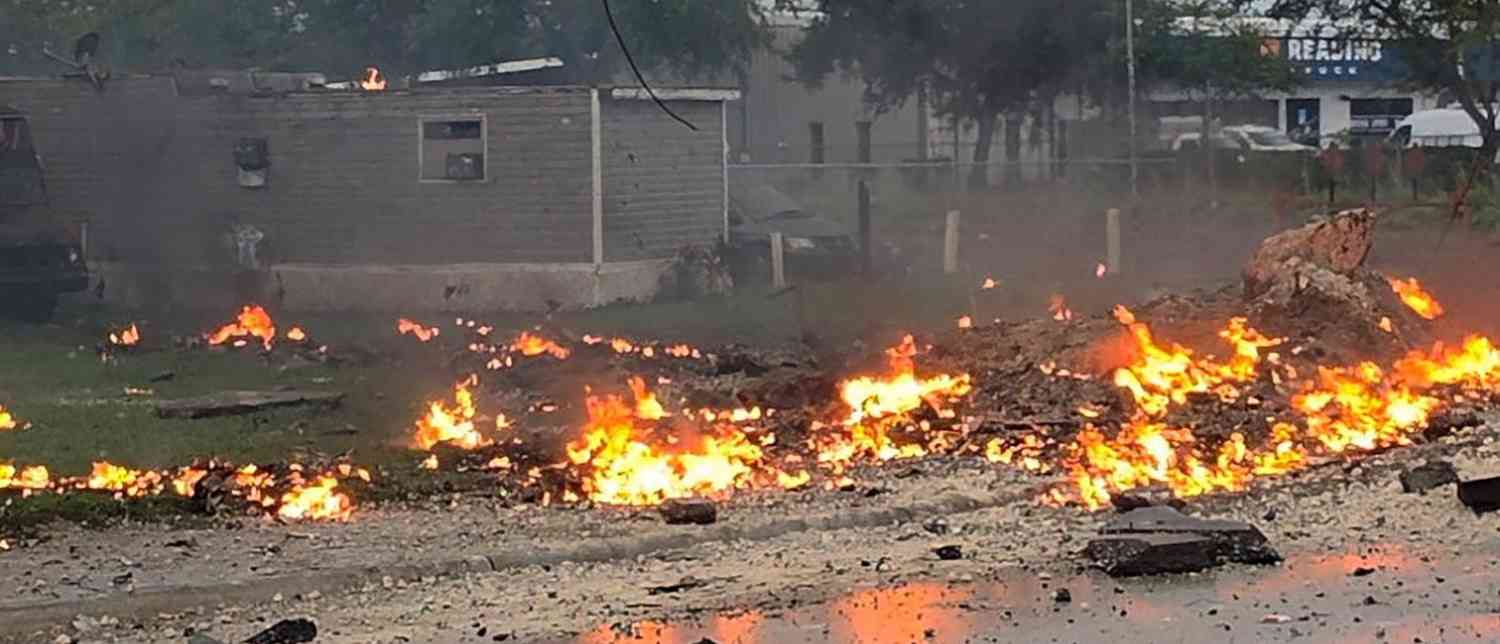
Images from the crash site showed a crater-sized hole in the roadway, burning debris, broken concrete and damaged sections of the surrounding road.
The impact was so powerful that it also affected nearby infrastructure.
For residents living in the area, the incident was an overwhelming shock.
One local resident described hearing and feeling a massive explosion, after which the electricity supply immediately went out. Thick black smoke could be seen rising into the sky.
Another account described a mother and her son being frightened by the powerful blast, which reportedly rattled their apartment windows and disrupted the electricity supply.
The videos are expected to provide investigators with important visual evidence as they attempt to reconstruct the aircraft's final movements.
Around 600 Florida Residents Displaced After Learjet Crash
The disaster had consequences beyond the nine fatalities aboard the aircraft.
The crash site was located near a mobile home community, and the impact blocked the entrance to the residential area, preventing hundreds of residents from accessing their homes.
Approximately 600 people were affected and required temporary shelter while authorities secured the area and conducted emergency operations.
Palm Beach County Commissioner Joel Flores said residents were being directed to two shelters as officials assessed the situation.
Military Trail was also closed in both directions, with authorities advising motorists to avoid the area and use alternative routes.
Emergency personnel continued working around the crash site as investigators prepared to examine the wreckage.
Although there were no immediate reports of ground fatalities, the incident raised serious concerns because the aircraft crashed close to homes, vehicles and a busy roadway.
A crash of this magnitude in a residential neighbourhood could have resulted in an even greater loss of life.
Did Ice Accumulation and Severe Weather Cause the Florida Plane Crash?
One of the biggest questions surrounding the Learjet 60 crash is whether severe weather and ice accumulation contributed to the disaster.
Available flight communications indicate that the crew encountered icing, moderate turbulence and precipitation before declaring an emergency.
There were scattered thunderstorms across the region around the time of the crash. The aircraft had reportedly passed through a stronger storm cell shortly before its rapid descent began.
The flight was also operating in an area covered by an FAA warning known as a Convective Significant Meteorological Information (SIGMET), which alerts pilots to thunderstorms and potentially hazardous weather conditions.
Ice accumulation is a particularly important factor in aviation safety.
When ice builds up on an aircraft's wings and other critical surfaces, it can interfere with the airflow required to generate lift. It may also affect an aircraft's handling, airspeed and ability to maintain a stable flight path.
The National Transportation Safety Board (NTSB) has previously warned that in-flight icing can create serious flight-control challenges and, under certain circumstances, contribute to a loss of aircraft control.
Nevertheless, it would be premature to conclude that icing or thunderstorms caused Sunday's accident.
Investigators will need to examine multiple possibilities, including weather conditions, aircraft systems, mechanical performance, flight-control responses and the crew's actions.
The exact sequence of events leading to the crash remains unknown.
FAA and NTSB Launch Investigation Into Deadly Learjet 60 Crash
The Federal Aviation Administration and the National Transportation Safety Board are investigating the deadly Florida aircraft accident.
The NTSB will lead the investigation, with the FAA providing assistance.
Investigators are expected to examine the wreckage, available flight-tracking information, weather conditions, aircraft maintenance records and any recoverable onboard recording devices.
Dashcam footage and recordings of communications between the pilots and air traffic controllers could also prove valuable in reconstructing the final moments.
Aviation experts have noted that the aircraft's extraordinary descent rate suggests a serious loss of control. However, only a detailed technical investigation can establish what happened and why.
There are also questions about the condition of the flight recorders. The force of the impact and the resulting fire could have damaged or destroyed important recording equipment.
The aircraft was reportedly listed as available for charter flights, although authorities had not established whether it was operating as a charter service at the time of the crash.
The accident is particularly significant in aviation history because it has been described as the deadliest recorded crash involving a Learjet 60.
It is also the second-deadliest aviation accident in the United States in 2026 so far, following a skydiving aircraft crash in Butler, Missouri, in June that killed 12 people.
Florida Plane Crash Raises Fresh Questions About Aviation Safety
The tragic Learjet 60 accident has once again drawn attention to the risks associated with severe weather, in-flight icing and sudden aircraft emergencies.
While modern business jets are equipped with sophisticated systems designed to help pilots manage challenging conditions, aviation emergencies can develop rapidly when multiple risk factors occur together.
The most important task now is to establish what happened during the aircraft's final minutes and whether the tragedy could have been prevented.
For the families of the nine people who lost their lives, the investigation will hopefully provide answers about the circumstances surrounding the disaster.
For residents of Palm Beach County, the sight of a business jet plunging into a residential area and exploding will remain a deeply disturbing experience.
As the FAA and NTSB continue their investigation, the final Mayday calls, flight-tracking records and eyewitness videos may hold crucial clues to understanding one of the most devastating aviation accidents in the United States this year.
© Copyright 2026. All Rights Reserved. Powered by Vygr Media.