 By

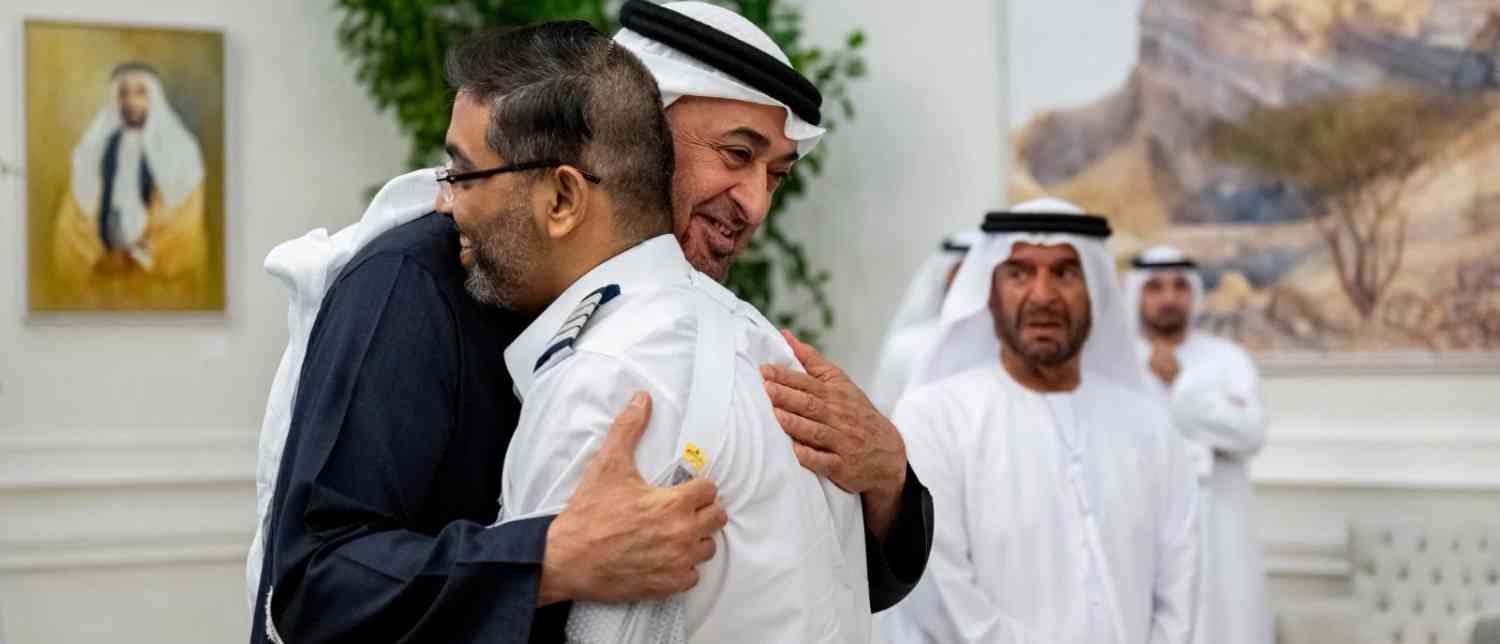
The United Arab Emirates has honoured Indian pilot Captain Smit Machchhar and fellow flydubai crew members for their extraordinary courage during a mid-air attack that threatened the safety of more than 170 people aboard a Dubai-to-Tel Aviv flight. Their actions during the terrifying September incident have received official recognition, highlighting the importance of presence of mind, teamwork and professional responsibility in an aviation emergency.
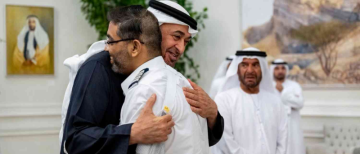
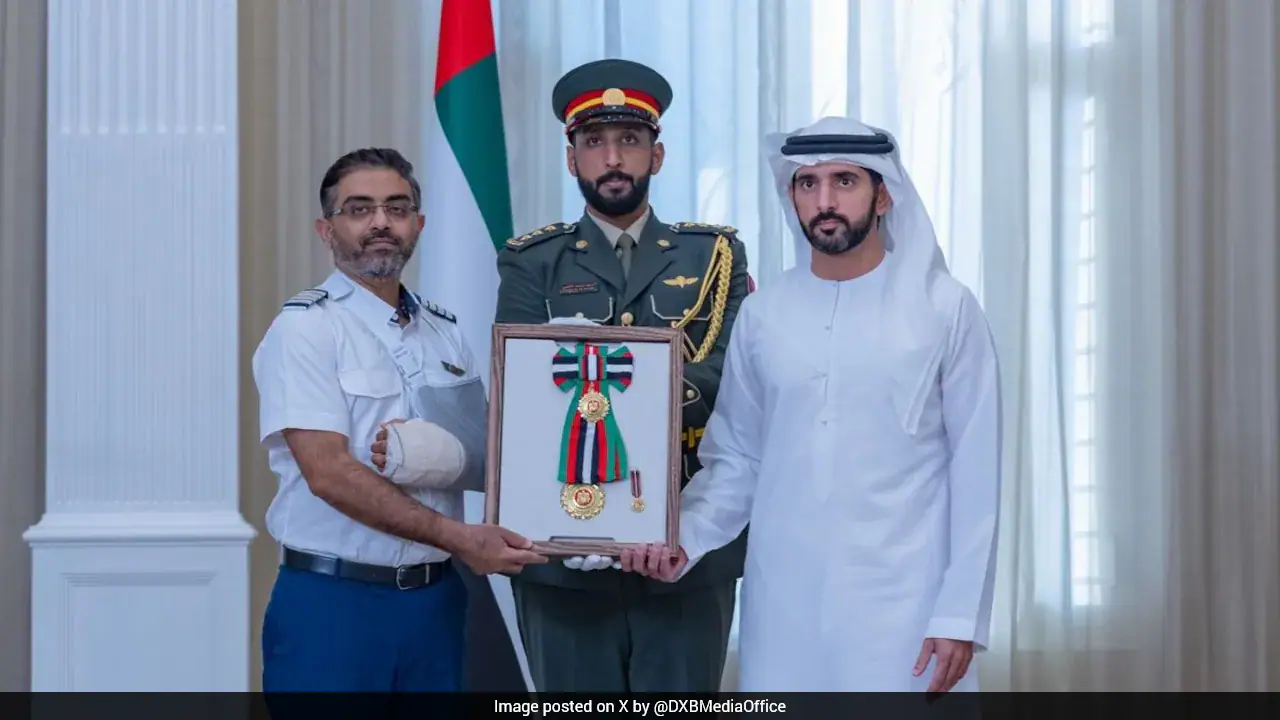
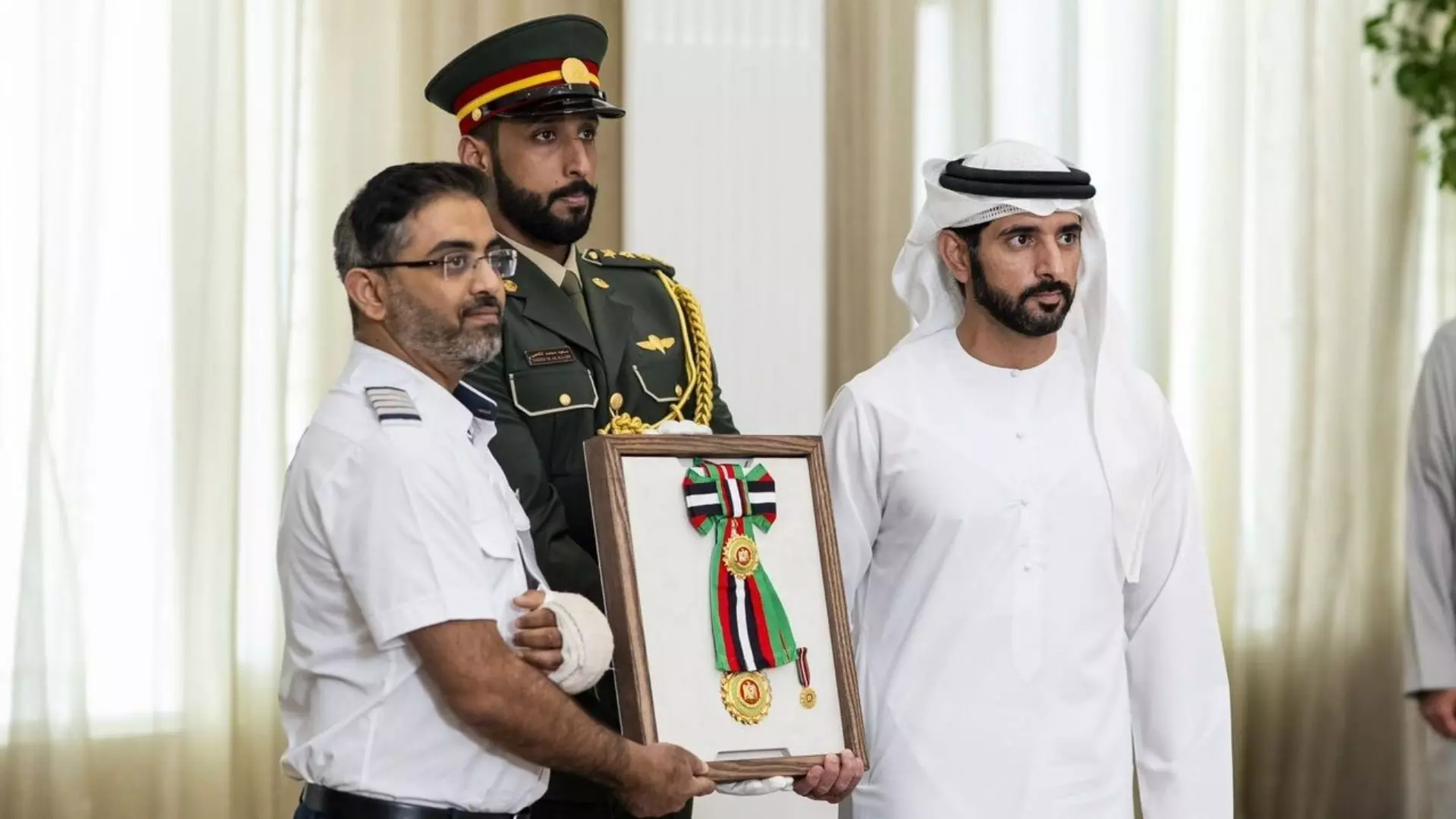
UAE President Sheikh Mohamed bin Zayed Al Nahyan conferred the First Class Order of Zayed II on Captain Machchhar and the crew members in recognition of their courageous efforts to protect passengers. The medals were presented by Sheikh Hamdan bin Mohammed bin Rashid Al Maktoum, Crown Prince of Dubai, Deputy Prime Minister and Minister of Defence, during a presidential reception.
The honour follows a frightening incident on September 30, 2026, aboard flydubai Flight FZ1073. During the Dubai-to-Tel Aviv journey, Captain Machchhar was seriously injured in an alleged attack by his co-pilot. The aircraft reportedly plunged nearly 14,000 feet in less than 30 seconds, turning an ordinary flight into a potentially catastrophic emergency.
Despite his injuries, the Indian captain managed to open the cockpit door, allowing others to intervene. Passengers, cabin crew and two additional flydubai pilots travelling aboard the aircraft helped bring the situation under control before the plane landed safely in Tabuk, Saudi Arabia.
The UAE's recognition celebrates not only the captain's bravery but also the collective effort that helped protect everyone aboard the aircraft.
UAE President Honours Captain Smit Machchhar for Exceptional Courage
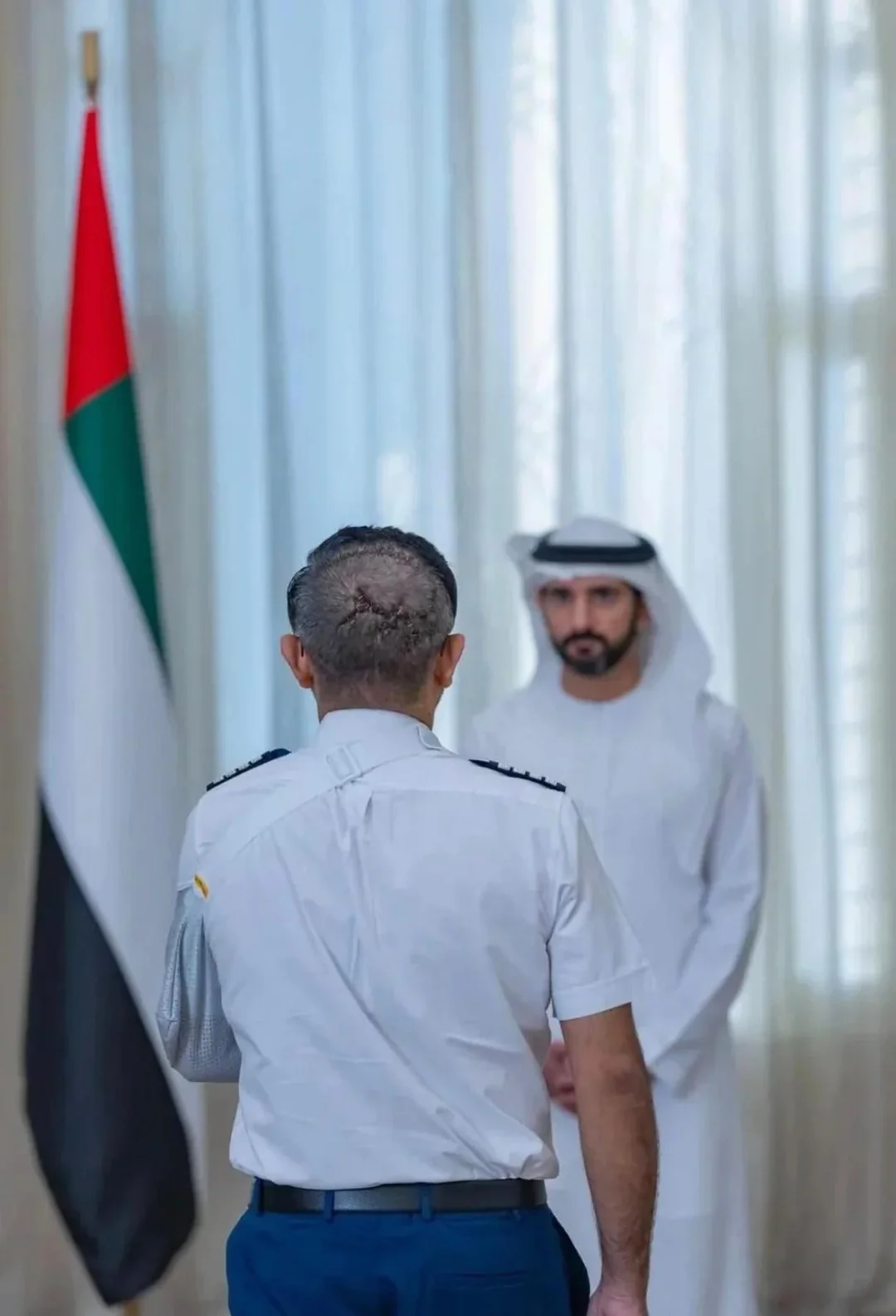
Captain Smit Machchhar's recognition carries particular significance because his actions came while he was himself facing a life-threatening situation. Despite suffering serious injuries during the cockpit confrontation, he managed to release the cockpit door, creating an opportunity for others to assist and help contain the emergency.
The First Class Order of Zayed II is a distinguished civil decoration of the United Arab Emirates, awarded in recognition of notable service, courage and significant contributions. By conferring the honour on Captain Machchhar and his colleagues, the UAE leadership acknowledged their commitment to passenger safety during an extraordinary in-flight crisis.
Sheikh Hamdan bin Mohammed bin Rashid Al Maktoum presented the medals on behalf of the UAE President. The crew members were praised for their professionalism, sense of responsibility and dedication to their duties.
The presidential reception also reflected the UAE leadership's appreciation for people whose actions demonstrate courage and service under pressure. For the aviation industry, the recognition underscores the human qualities that remain essential even as modern aircraft become increasingly sophisticated.
Captain Machchhar's achievement is also a significant moment for India's aviation community. His actions demonstrate the responsibilities pilots carry beyond routine flight operations, particularly when unexpected circumstances demand quick decisions and extraordinary composure.
The other crew members were recognised for their contribution to the collective response. The safe outcome depended on several people working together during a rapidly developing emergency.
What Happened Aboard flydubai Flight FZ1073?
The incident occurred on September 30, 2026, when flydubai Flight FZ1073 was travelling from Dubai to Tel Aviv with more than 170 people on board.
During the journey, the co-pilot allegedly attacked Captain Machchhar inside the cockpit using a crash axe, an emergency tool carried on aircraft. The assault left the Indian pilot seriously injured and created an immediate threat to the safety of the aircraft and everyone travelling in it.
Reports indicated that the aircraft lost approximately 14,000 feet of altitude in less than 30 seconds. Such a rapid descent, combined with the confrontation inside the cockpit, made the situation especially dangerous.
The cockpit is the operational centre of an aircraft, and a violent incident involving a pilot can severely complicate flight control, communication and emergency management. In this case, the injured captain faced the additional challenge of responding while dealing with serious wounds.
Despite his condition, Machchhar managed to activate the cockpit-door release. His action enabled passengers and crew members to enter and intervene.
The co-pilot was subsequently subdued and taken into custody. Israeli officials identified him as an Omani national, although the motive behind the attack had not been established in the reports surrounding the UAE honour.
The incident has raised wider questions about the challenges of managing emergencies that originate inside the cockpit rather than from technical faults or external conditions.
Passengers Step Forward During the Cockpit Emergency
While Captain Machchhar's actions created an opportunity for intervention, passengers also played an important role in bringing the crisis under control.
Among those reported to have assisted were Yaniv Hayun, a plumber; Asaf Rajuan, an insurance agency owner; Zvika Manes, an executive associated with a banking group's underwriting business; and Shota Musaev, a dentist.
Their contributions varied according to the immediate needs of the situation. Hayun reportedly helped overpower the attacker and used knowledge gained from watching aviation emergency programmes to assist with stabilising the aircraft. Rajuan helped restrain the co-pilot, while Manes reportedly used earphones to help secure him.
Musaev, described as the only doctor on board, provided first aid to the badly injured captain.
Two additional flydubai pilots who were travelling as passengers also became involved in the emergency response. Their aviation experience was particularly valuable as the situation was brought under control and arrangements were made for a safe landing.
The episode demonstrates how people with different backgrounds can find themselves united by an urgent need to protect others. These passengers had boarded the flight expecting an ordinary journey, but their willingness to act became an important part of the response.
Their actions should not be mistaken for a substitute for formal aviation emergency procedures. Rather, they illustrate how extraordinary circumstances can demand cooperation between trained professionals and others who are able to provide immediate assistance.
The incident ultimately became a story of collective courage, with the injured captain, fellow pilots, cabin crew and passengers contributing to the effort to protect those aboard.
Emergency Landing in Tabuk, Saudi Arabia
Following the cockpit confrontation, the aircraft was diverted to Tabuk in northwestern Saudi Arabia, where it landed safely.
The landing brought the immediate airborne emergency to an end and enabled medical personnel and authorities to respond. Captain Machchhar initially received treatment at a hospital in Tabuk before being transferred to Abu Dhabi for further medical care.
The co-pilot was taken into custody following the incident. The motive behind the alleged attack remained unclear in the available reports.
The safe landing was a critical outcome after an episode involving serious injuries, a rapid loss of altitude and the need to regain control of the situation inside the cockpit.
The incident also highlighted the importance of emergency coordination between flight crews and the wider aviation system. When an aircraft faces a serious in-flight threat, the priority is to protect passengers, stabilise the situation and reach a suitable airport as safely as possible.
For the people aboard Flight FZ1073, the arrival in Tabuk marked the end of an ordeal that could have had far more serious consequences.
Why the UAE Honour Matters for Aviation Safety
The recognition of Captain Smit Machchhar and the flydubai crew extends beyond individual bravery. It draws attention to the importance of aviation safety, professional preparedness and coordinated decision-making when unexpected emergencies arise.
Commercial aviation relies on multiple layers of protection, including pilot training, operational procedures, communication protocols and emergency response planning. These safeguards help crews manage situations that can change rapidly.
The September incident was particularly unusual because the reported threat originated inside the cockpit. Unlike a technical malfunction or severe turbulence, a confrontation involving a pilot can create complex challenges for flight control and coordination.
Captain Machchhar's actions, despite his injuries, and the subsequent intervention by passengers and fellow pilots illustrate how human judgement can become critical in an unpredictable emergency.
For the UAE, a major international aviation hub, confidence in air travel depends on the professionalism of airline personnel and the systems designed to protect passengers. Publicly recognising the crew reinforces the importance of responsibility, preparedness and service.
The episode also serves as a reminder that aviation safety is not solely about aircraft technology. It depends on the people who operate aircraft, respond to emergencies and work together to protect lives.
A Proud Moment for India's Aviation Community
Captain Machchhar's recognition has particular significance for India, whose aviation professionals work across domestic and international airline networks.
The UAE President's decision to honour an Indian pilot highlights the contribution of Indian professionals to the global aviation industry. It also brings attention to a situation in which one pilot's determination helped create an opportunity to protect passengers during a dangerous in-flight emergency.
For aspiring pilots and experienced aviation personnel, the incident is a powerful reminder of the responsibilities associated with the profession. Flying requires technical expertise, discipline, sound judgement and the ability to remain focused when circumstances become difficult.
The recognition also acknowledges the contributions of the wider flydubai crew. In aviation, successful emergency management often depends on coordination among people performing different roles, each contributing to a shared objective.
The passengers who intervened also deserve recognition for their willingness to help in an extraordinary situation. Their assistance to the injured captain and their efforts to restrain the alleged attacker formed part of the collective response that helped bring the aircraft safely to the ground.
Together, these actions transformed a dangerous situation into a story of courage, cooperation and survival.
A Story of Courage When Every Second Mattered
The UAE's decision to honour Indian pilot Smit Machchhar and the flydubai crew recognises their extraordinary response to a mid-air attack aboard Flight FZ1073.
The September 30 incident placed more than 170 people at risk. Captain Machchhar was seriously injured, the aircraft lost altitude rapidly, and the situation demanded immediate action. His effort to open the cockpit door allowed others to intervene, while passengers, cabin crew and additional pilots helped contain the emergency and bring the aircraft safely to Tabuk, Saudi Arabia.
By conferring the First Class Order of Zayed II, UAE President Sheikh Mohamed bin Zayed Al Nahyan has formally acknowledged the courage and commitment demonstrated by the captain and his colleagues.
For Captain Machchhar, the honour recognises his actions under extreme pressure. For the aviation industry, the incident reinforces the importance of preparedness, teamwork and a commitment to passenger safety.
Ultimately, the story is about more than a cockpit attack. It is about a badly injured pilot who continued to act, passengers who stepped forward to help and a collective response that protected the people aboard the aircraft.
Their recognition serves as a reminder that behind every safe journey are individuals whose professionalism and courage can matter most when the unexpected happens.
© Copyright 2026. All Rights Reserved. Powered by Vygr Media.