 By

Elections are supposed to settle political battles. Israel's October 2026 election has done almost the opposite. Instead of delivering a decisive verdict, it has left the country facing another round of uncertainty, coalition bargaining and questions about the future of its longest-serving prime minister, Benjamin Netanyahu.
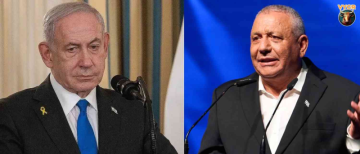
Netanyahu's political camp has emerged with the largest bloc of seats, but it remains short of the parliamentary majority required to form a government. His principal rival, Gadi Eisenkot, has failed to secure an independent path to power, while Arab political parties have recorded an unprecedented electoral breakthrough. The result is a contest in which neither side can confidently claim victory.
For Netanyahu, however, a disappointing election result does not necessarily mean the end of his political career. He remains prime minister in a caretaker capacity, commands a substantial parliamentary bloc and has considerable experience navigating Israel's notoriously complicated coalition politics.
The central question following the Israel election 2026 is therefore not simply who won the most votes or seats. It is whether Netanyahu's opponents can turn their collective opposition into a functioning government before their disagreements, political calculations and ideological differences undermine them.
The election has weakened Netanyahu's position. Whether it ends his rule will depend on what happens next.
Israel Election Results 2026: The Numbers Behind the Deadlock
The preliminary results reveal the scale of the challenge facing both major political camps.
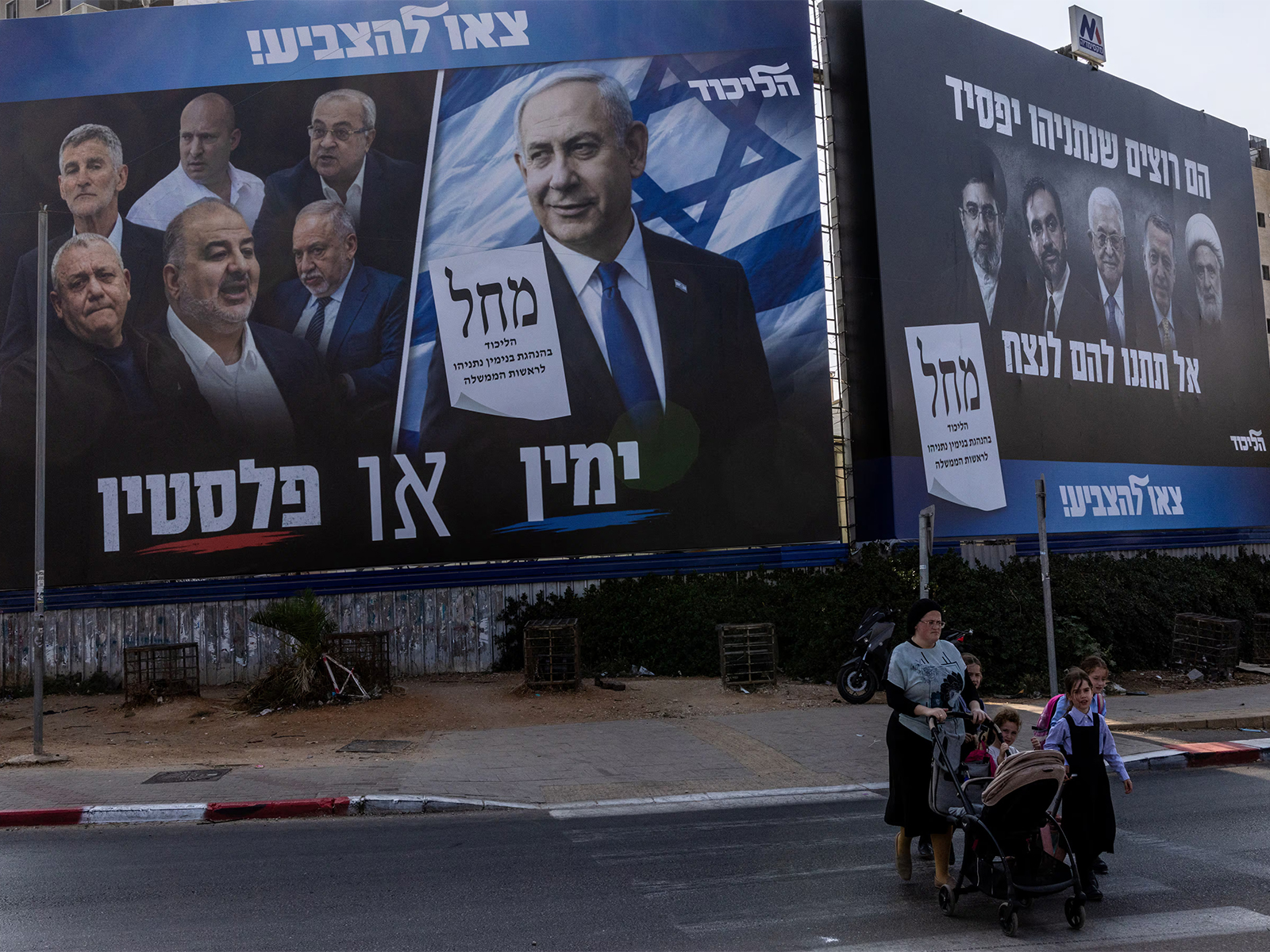
With nearly 99% of votes counted in the figures reported on October 29, Netanyahu's right-wing, religious and nationalist bloc held approximately 53 seats in the 120-member Knesset. The opposition bloc led by Eisenkot had around 48 seats, while parties representing Israel's Arab minority were projected to win a record 19 seats.
A government requires the support of at least 61 lawmakers to command a parliamentary majority. Neither of the principal blocs has reached that threshold.
On paper, the opposition could potentially assemble enough support to form a government with backing from Arab parties. In practice, however, the arithmetic is considerably more complicated than the numbers suggest. Several opposition leaders have expressed reservations about relying on Arab parties, reflecting deep ideological divisions within the alliance itself.
Netanyahu faces a different problem. His bloc has performed better than some anticipated, but it cannot govern comfortably without attracting additional support or negotiating a political arrangement that changes the existing balance.
This distinction matters. Winning the largest bloc can strengthen a leader's claim to form a government, but it does not automatically provide the votes needed to govern.
The Israeli political deadlock is consequently not an accidental technicality. It is the result of a fragmented electorate, competing visions of national identity and political parties that agree on whom they oppose more readily than on what they would do together.
Netanyahu's Biggest Advantage May Be His Opponents' Weakness
Netanyahu has spent decades demonstrating an extraordinary ability to survive political crises. His latest challenge may prove no different.
The election was widely viewed as a referendum on his leadership, particularly following the Hamas-led attacks of October 7, 2023, and the wars that followed. Questions about the government's security failures, prolonged military campaigns, corruption allegations and controversial judicial reforms have all contributed to the pressure on his leadership.
Yet his political camp has not collapsed.
That resilience is significant. A leader can face public anger and lose parliamentary strength without losing the ability to shape the political outcome. Netanyahu's Likud remains the largest individual party, and his established alliances provide him with a foundation from which to negotiate.
His opponents, meanwhile, face a difficult balancing act. They must convince voters that a change of leadership is necessary while persuading ideologically different parties to cooperate on a common programme.
Eisenkot's coalition brings together political forces that do not necessarily share the same positions on security, religion, national identity or relations with Arab parties. Their opposition to Netanyahu is a powerful organising principle, but it is not a substitute for an agreed governing agenda.
This is where Netanyahu's experience could prove decisive. He does not necessarily need to win over the entire opposition. He may only need to persuade a few lawmakers or factions that joining him, supporting a unity arrangement or abandoning the opposition's preferred strategy is less risky than the alternatives.
The election has created an opening for political change. It has not guaranteed that the opposition can exploit it.
Arab Parties in Israel Emerge as Unexpected Kingmakers
Perhaps the most consequential development in the Israel election 2026 is the historic performance of Arab political parties.
Their projected 19 seats represent an unprecedented result, driven in part by strong turnout among Arab citizens of Israel. The outcome gives these parties a potentially decisive role in negotiations over the next government.
Their success also challenges a long-standing assumption in Israeli politics: that Arab parties can be treated as peripheral to the formation of national governments.
The arithmetic is striking. Eisenkot's bloc, with 48 seats, cannot reach a majority without significant additional support. The Arab parties' combined strength could theoretically provide that support, creating a parliamentary route to a government that excludes Netanyahu.
But political possibilities and political willingness are different things.
Several opposition leaders have previously ruled out forming a government with Arab parties or depending on their parliamentary backing. These reservations reflect ideological disagreements and the broader tensions surrounding Israel's national identity, security and treatment of its Arab minority.
Netanyahu's response to the Arab electoral gains has further intensified the controversy. On October 29, he alleged that voter fraud had contributed to the Arab parties' success, without publicly providing evidence to substantiate the broader claims. Arab leaders rejected the allegations, while election officials indicated that there was no basis for concluding that the integrity of the election had been systematically compromised.
Suspected individual offences warrant investigation through proper legal procedures. They do not justify casting collective suspicion on an entire community.
The larger political concern is whether allegations surrounding election integrity will be used to delegitimise Arab citizens' participation in democratic life.
A democracy cannot credibly celebrate high voter turnout while treating an unfavourable electoral outcome as inherently suspicious because of the identity of those who voted.
The Arab parties have demonstrated that their voters can influence the balance of power. Whether that influence translates into meaningful political participation remains an open question.
Netanyahu's Attack on Arab Parties Could Reshape Coalition Negotiations
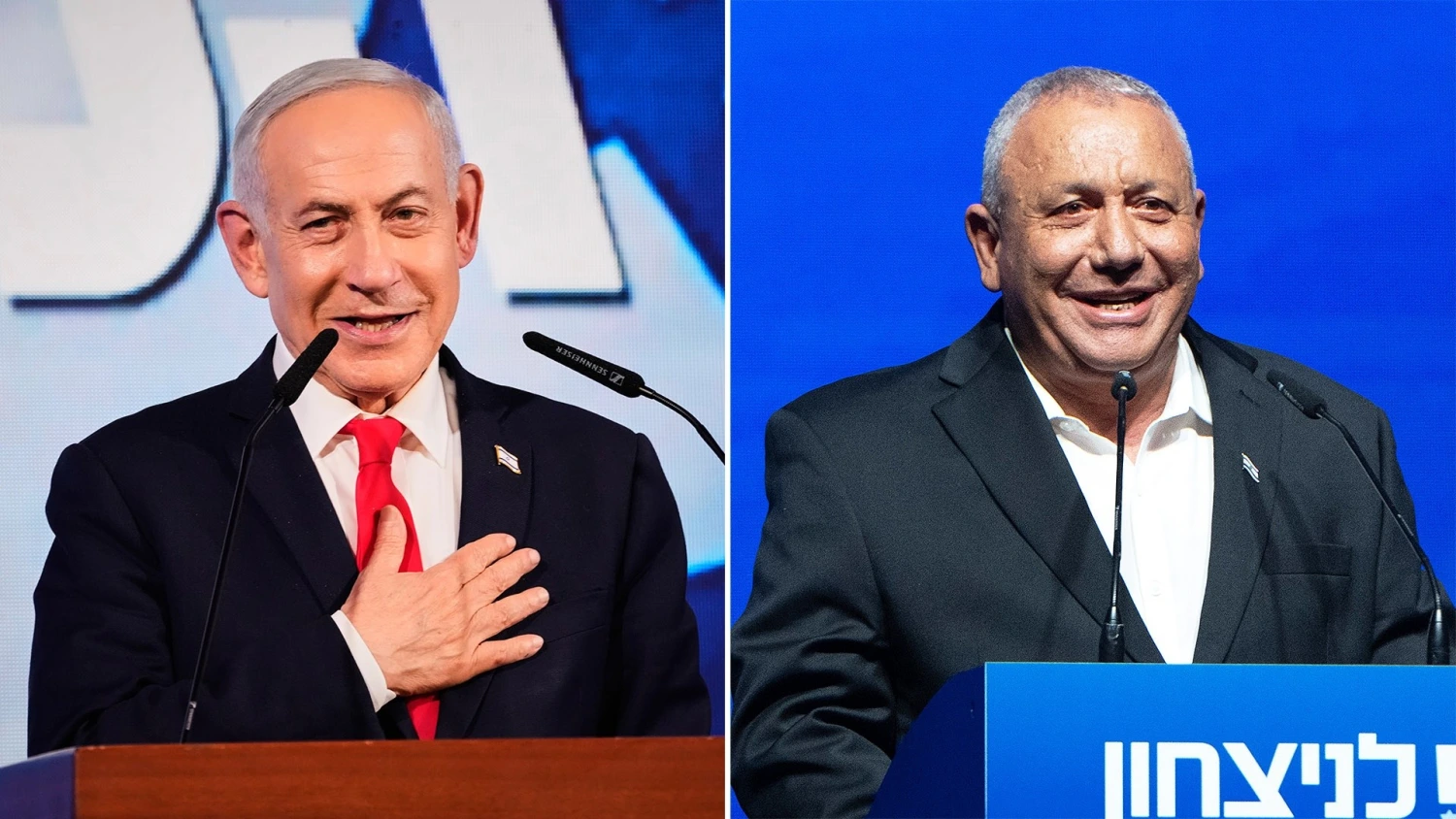
Netanyahu's rhetoric against Arab parties should be understood in the context of the negotiations now taking shape.
If Eisenkot and his allies can secure Arab backing, they may have a potential route to replacing the incumbent prime minister. By portraying such cooperation as illegitimate or dangerous, Netanyahu can increase the political cost for opposition leaders who consider pursuing it.
This strategy could be effective even without changing a single seat in parliament.
An opposition leader who fears alienating Jewish voters, losing coalition partners or being accused of compromising national security may decide that an arrangement involving Arab parties is simply too politically expensive. That hesitation would narrow the opposition's options and improve Netanyahu's chances of remaining in office.
However, the strategy carries risks.
Attempts to delegitimise Arab political participation could deepen divisions within Israeli society and undermine confidence in democratic institutions. They could also reinforce the determination of Arab voters who believe that their representation has been systematically marginalised.
Israel's Arab citizens possess the right to participate in elections, and their votes are part of the country's democratic process. Whether political leaders welcome their choices is irrelevant to the legitimacy of those choices.
The challenge for Israel's opposition is to decide whether its commitment to political change extends to accepting the parliamentary consequences of Arab citizens exercising their democratic rights.
If that commitment disappears when the numbers become politically uncomfortable, the opposition's claim to represent a more inclusive democratic alternative will be difficult to sustain.
Can Gadi Eisenkot Unite Israel's Fragmented Opposition?
Eisenkot now faces a test that extends beyond defeating Netanyahu.
As a former military chief, he brings security credentials and leadership experience to the political arena. His emergence as the principal challenger has given Netanyahu's opponents a focal point around which to organise.
But winning an election campaign and building a government require different skills.
Eisenkot must reconcile competing demands from parties that may agree on the need for political change but disagree about how to achieve it. Some want a decisive break with Netanyahu's leadership. Others may prefer a broad national-unity government that avoids dependence on Arab parties.
These choices are not interchangeable.
A government built around cooperation with Arab parties would carry symbolic and political significance, potentially challenging established boundaries around who is considered an acceptable partner in Israeli national politics. A unity government involving Netanyahu's camp, by contrast, could offer greater parliamentary stability but risk preserving much of the political order the opposition campaigned to change.
Eisenkot must also consider the credibility of any agreement. If his coalition enters government only to reproduce the compromises, rivalries and policy disputes that weakened previous administrations, voters may conclude that the election changed the faces at the negotiating table without changing the underlying system.
His immediate task is therefore to establish whether the opposition has a shared programme that extends beyond removing Netanyahu.
Can it agree on judicial independence, military-service obligations, national security, relations with Arab citizens and the country's international standing? Can it establish a governing arrangement capable of surviving disagreements over these issues?
Until those questions are answered, the opposition's numerical potential remains just that: potential.
A Unity Government Could Save Netanyahu's Political Career
One possible outcome is a national-unity government bringing together Netanyahu's Likud and major opposition parties.
Such an arrangement might appear contradictory after an election fought over the future of Netanyahu's leadership. Yet Israel has a history of governments formed through cooperation between political rivals, particularly when no stable majority emerges from the ballot box.
For Netanyahu, a unity government could provide a route to political survival. It would allow him to remain prime minister while presenting the arrangement as a response to national instability.
For his opponents, the appeal would be more complicated. A broad government could reduce immediate political uncertainty and provide a platform for addressing urgent national challenges. But joining Netanyahu in government might also dilute their mandate for change and alienate voters who supported them specifically to end his tenure.
The distribution of power would be crucial. Would Netanyahu retain the premiership throughout the government's term? Would senior positions be shared? Would the coalition agree to meaningful changes in policy and governance, or would unity simply become a justification for preserving the status quo?
These questions cannot be answered by invoking national stability alone.
A unity government is not inherently a betrayal, nor is it automatically a solution. Its legitimacy would depend on what it delivers and whether the compromises involved are transparent to voters.
The possibility of another election adds further pressure. If negotiations fail, Israel could face yet another campaign, prolonging uncertainty while Netanyahu continues in a caretaker role.
That prospect could favour an experienced incumbent whose political organisation is already established. It could also frustrate voters who have repeatedly been asked to resolve a crisis that the electoral system and party leaderships have struggled to settle.
The October 7 Attack and the Question of Political Accountability
No serious assessment of Netanyahu's political future can ignore October 7, 2023.
The Hamas-led assault, which killed approximately 1,200 people in Israel and resulted in 251 people being taken hostage, exposed catastrophic failures in the country's security preparedness. It also transformed Israel's political debate and contributed to the wars that followed.
For Netanyahu's critics, the attack raises fundamental questions about responsibility, intelligence failures and the government's ability to protect its citizens. The subsequent military campaigns, the humanitarian devastation in Gaza and Israel's deteriorating international reputation have intensified those concerns.
Yet the election has demonstrated that security failures do not automatically produce political defeat.
Voters do not evaluate leadership through a single issue. Security fears, ideological commitments, religious identity, attitudes towards military service and distrust of political alternatives can all influence electoral choices.
Netanyahu's continued strength suggests that a substantial section of the electorate remains unconvinced that his opponents offer a sufficiently credible alternative, even amid widespread criticism of his record.
This creates a difficult problem for the opposition. It cannot rely indefinitely on public anger against Netanyahu. It must explain how a different government would improve security, establish accountability and prevent the repetition of failures that have shaken public confidence.
Political accountability also requires more than a change of prime minister. It involves credible investigations, institutional safeguards and a willingness to confront uncomfortable findings, regardless of which party holds office.
If the election produces a new coalition without addressing those underlying questions, Israel may change its leadership arrangements while leaving its deeper governance problems unresolved.
What the Israel Election 2026 Means for Israeli Democracy
The election's most important lesson may be that democratic participation is not enough on its own. The political system must also be willing to translate voters' choices into legitimate representation.
The strong turnout among Arab citizens of Israel has demonstrated the potential influence of a community that has often faced political marginalisation and discrimination. Their electoral gains could strengthen their bargaining power on public services, equality and other domestic concerns.
However, representation without influence can quickly become symbolic.
If Arab parties win an unprecedented number of seats but are excluded from meaningful coalition negotiations solely because their participation is politically inconvenient, questions about the practical limits of democratic inclusion will become harder to avoid.
At the same time, Israel's wider political fragmentation reflects competing visions of the country's future. Disputes over judicial reform, the role of religion, military-service exemptions for ultra-Orthodox Jews, settlement policy and national security have divided voters and political leaders alike.
These disagreements cannot be resolved simply by declaring one bloc the winner.
Democratic resilience requires political leaders to respect electoral outcomes, investigate credible allegations through independent institutions and negotiate without treating entire communities as illegitimate participants.
The coming weeks will test whether Israel's political leadership can meet that standard.
The country needs a government capable of making difficult decisions, restoring public confidence and confronting its security and governance challenges. Another round of polarisation, mutual delegitimisation and short-lived political arrangements would do little to meet those needs.
Netanyahu Is Weakened, but His Political Story Is Not Over
The Israel election 2026 has delivered a warning to Benjamin Netanyahu, but it has not delivered a clear successor.
His bloc remains short of a majority, his opponents have failed to establish an uncontested route to government, and Arab political parties have emerged with unprecedented leverage. These developments have created a genuine opportunity for political change.
Whether that opportunity becomes reality depends on the decisions made after the votes have been counted.
Netanyahu could struggle to assemble a coalition, face an increasingly assertive opposition or be forced into a unity arrangement that limits his freedom of action. He could also exploit divisions among his rivals, remain in office as caretaker prime minister for an extended period or benefit from another election if negotiations collapse.
None of these outcomes is guaranteed.
The central irony is that Netanyahu's political survival may depend less on his own electoral strength than on whether his opponents can overcome their disagreements. The election has exposed the limits of his mandate, but it has also exposed the limits of the coalition seeking to replace him.
For Israel, the stakes go beyond the future of one politician. They concern democratic representation, political accountability, the role of Arab citizens, the country's international standing and the direction of its domestic and security policies.
The ballot box has opened the door to change. It has not decided who will walk through it.
And until Israel's political leaders turn an inconclusive election into a workable government, one conclusion remains unavoidable: Benjamin Netanyahu may be down, but he is far from out.
© Copyright 2026. All Rights Reserved. Powered by Vygr Media.