 By

A routine voyage home to Gujarat ended in tragedy on Monday afternoon when an Indian-flagged cargo vessel was struck by what the government describes as an “unidentified aerial object” near the coast of Oman, killing one sailor and setting the ship on fire. The vessel, the mechanised sailing vessel (MSV) Al Jusufi, was carrying 14 Indian seafarers. Thirteen were pulled to safety by the Omani Coast Guard. The fourteenth, Gandhar Nahim Ajij of Gujarat, died of his injuries.
The attack, confirmed on Tuesday by Union Shipping Minister Sarbananda Sonowal, is one of the rare incidents in which a ship flying the Indian flag, and not a foreign-flagged vessel with an Indian crew, has been hit amid the ongoing conflict in the Gulf region. It has left a coastal community grieving, a handful of survivors awaiting their journey home, and a pressing question hanging over the waters of the Arabian Sea: how safe are India’s seafarers?
What Happened to the Indian-Flagged MSV Al Jusufi?
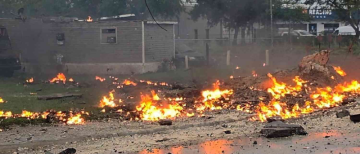
According to the details available so far, the vessel left Hamriyah Port in the United Arab Emirates on October 31 and was heading for Porbandar in Gujarat. On the afternoon of November 2, at around 4 pm, it was struck while sailing near the Omani coast. A fire broke out on board.
The vessel’s association, the Indian Sailing Vessels Association (ISVA), said that 14 Indian sailors were on board, including the tandel, as the captain of such vessels is known. Preliminary information suggests that rockets or drones may have been used in the attack, though this is not confirmed, and the government has said only that the object was unidentified.
Sonowal said in a statement that 13 crew members safely evacuated and were rescued by the Omani Coast Guard, and that he was deeply saddened to report that one of the seafarers had “tragically succumbed to his injuries.”
Who Was the Sailor Killed in the Attack?
The sailor who died has been named by the minister as Gandhar Nahim Ajij, a resident of Gujarat. Beyond his name and home state, little has been made public about him. Reports do not yet say which town or village he came from, how long he had worked on the vessel, or the details of his family. Sonowal offered his condolences to the family and loved ones in what he described as a moment of immense grief.
For families in Gujarat’s coastal belt, where seafaring is often a family trade passed from one generation to the next, news like this arrives with a particular weight. These are communities that send men to sea knowing the risks of storms, but not expecting to lose them to a conflict happening hundreds of kilometres away.
How Were the 13 Survivors Rescued?
The Omani Coast Guard evacuated the surviving crew from the burning vessel. The Indian Embassy in Oman and the Ministry of Ports, Shipping and Waterways are in touch with local authorities to ensure immediate help for the 13 survivors and to arrange the swift return of both the crew and Ajij’s mortal remains to India.
The ISVA has also stepped in. Its general secretary, Adam Bhaya, has reportedly approached the Ministry of External Affairs and the Indian Embassy in Oman, asking for urgent intervention and for coordination with the Omani government so that the surviving sailors can be brought home safely.
What Was the “Unidentified Aerial Object”?
The phrase itself is a measure of how little is known. The government has not said whether the object was a drone, a missile, a rocket, or something else, nor who launched it. No country or group has been named, and no one is known to have claimed responsibility.
Early accounts from the vessel’s association mention rockets or drones. Such details should be treated carefully until an official account is given. Investigators would normally look at the wreckage, the nature of the damage, and the vessel’s navigation records, but there has been no public word on whether any such examination is underway.
Why Is This Attack Significant?
There are three reasons the incident has drawn attention.
First, it involves an Indian-flagged ship. Attacks on Indian-flagged vessels are rare, even with the regional tensions of recent months. Most earlier incidents involved tankers and cargo ships registered in other countries but crewed in large part by Indians.
Second, it adds to a rising toll. India is one of the world’s largest suppliers of seafarers, with more than 320,000 active in 2025, according to the shipping ministry. Several of them have been killed in attacks in and around the Strait of Hormuz since the United States and Israel launched strikes on Iran on February 28.
Third, it comes only days after other close calls. On October 29 and 30, two tankers, MT Arzanah and MT Louise 1, were hit, with 29 Indians on board between them. All survived. The sailors of the Al Jusufi were not so fortunate.
What Is an MSV, and Why Does This Trade Matter?
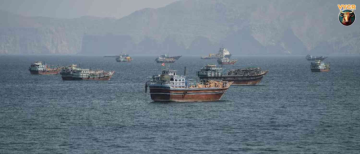
A mechanised sailing vessel is a wooden, dhow-style cargo ship that carries an engine alongside traditional sails. These boats are the lifeblood of an ancient trade between Gujarat’s ports, such as Porbandar, Mandvi and Mundra, and the harbours of the Gulf and East Africa. Mandvi in Kutch has a shipbuilding tradition said to stretch back around 400 years, and its dhows once carried goods across the Arabian Sea and beyond.
Today the boats carry general cargo and are crewed largely by men from coastal Gujarat. They are small and slow; they sail close to shore, and they lack the defences of larger ships. Their crews have faced hazards for years. Somali pirates hijacked several Gujarati dhows in 2010, and in December 2024 two sailing vessels sank in the Arabian Sea in rough weather, with the Indian Coast Guard rescuing their crews. A strike like Monday’s, in waters now caught up in a regional conflict, exposes a vulnerability that this livelihood has never had to confront in quite this way.
What Is India Doing?
So far, the government’s response has focused on the human side: support for the survivors, repatriation of Ajij’s remains and consular help in Oman. Sonowal has said that the Ministry and the Embassy are working with local authorities on both counts.
Larger questions of policy remain open, including whether additional advisories will be issued to sailing vessels on Gulf routes, how crews can be better protected and what diplomatic steps India will take. These are the issues that industry bodies, families and seafarers’ unions are likely to press in the coming days.
What Questions Remain?
-
Who carried out the attack, and with what? No official attribution has been made.
- Where exactly did it happen? Reports say near the Omani coast, and one names an area near Lima Port.
- What is the condition of the vessel? No one has reported its condition after the fire.
- Will the family and crew be compensated and supported? No announcement has been made.
- Will Indian vessels continue to sail the route? That depends on the risk, the insurance, and what guidance the authorities give.
What Happens Next?
In the immediate term, attention will turn to bringing the 13 survivors home and returning Ajij’s body to his family so that he can be given a final farewell. Beyond that, the government will likely face pressure to clarify the safety of Indian seafarers in the region and to say whether it will name those responsible if their identities become known.
The attack on the MSV Al Jusufi is a reminder that the conflict in West Asia is not only a story of oil prices and geopolitics. It is also a story of ordinary men on small wooden ships, doing a job their families have done for generations, who found themselves in the wrong place at the wrong time. For the family of Gandhar Nahim Ajij, the investigation, the diplomacy, and the statistics will matter less than getting him home.
© Copyright 2026. All Rights Reserved. Powered by Vygr Media.