 By
By 
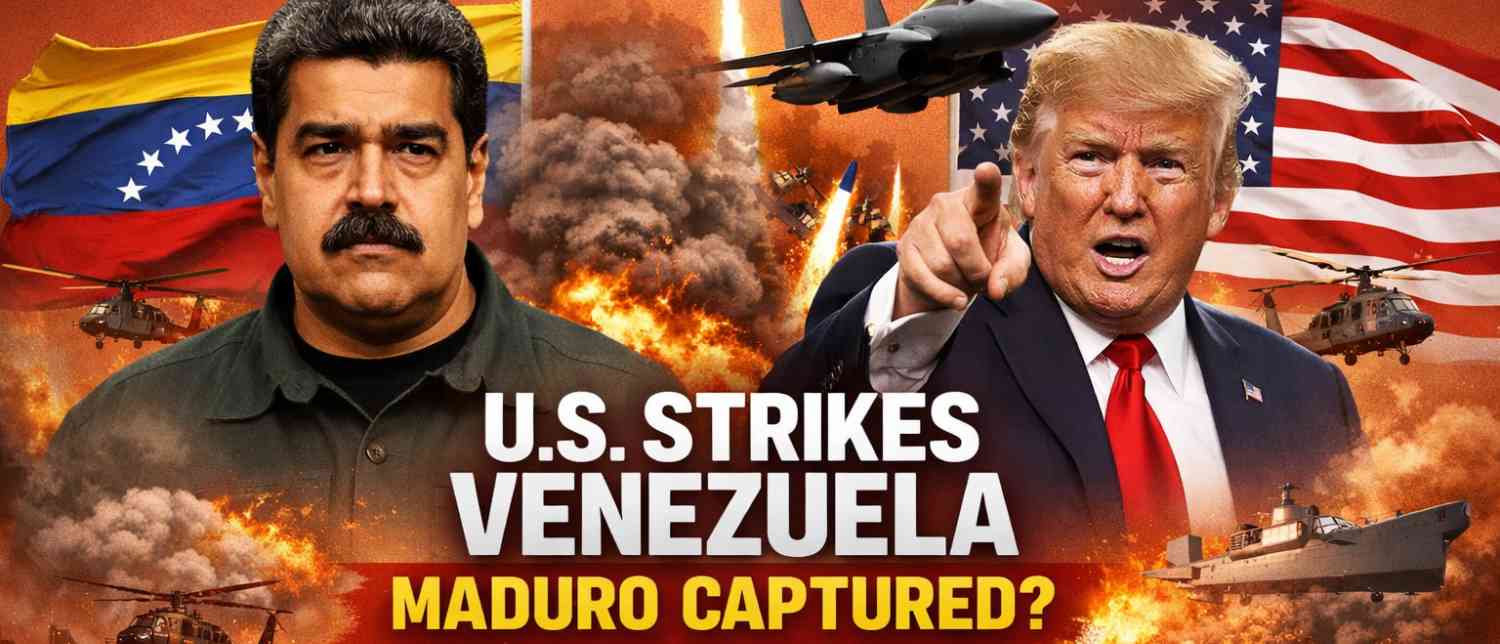
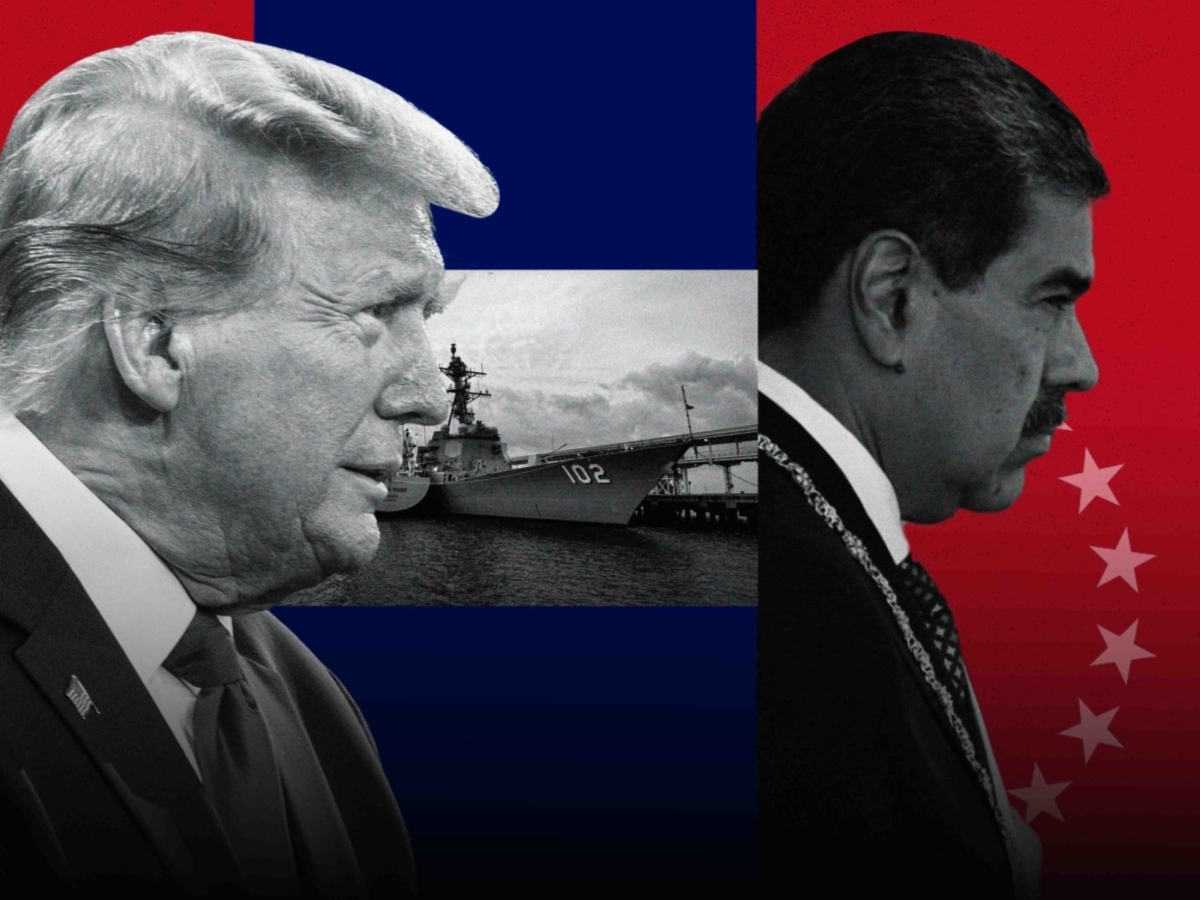
In the early hours of Saturday morning, Venezuela — and much of the world — awoke to alarming reports from Caracas. Explosions echoed across the capital, low-flying aircraft roared overhead, parts of the city were plunged into darkness, and thick plumes of smoke rose from key military installations. Within hours, US President Donald Trump claimed that American forces had launched a “large-scale strike” against Venezuela and that President Nicolás Maduro and his wife had been captured and flown out of the country.
If confirmed, the operation would mark the most direct US military intervention in Latin America since the 1989 invasion of Panama that ousted Manuel Noriega. Yet even as dramatic footage spread across social media and world leaders reacted, uncertainty clouded almost every aspect of what had unfolded — from the precise nature of the strikes to Maduro’s whereabouts, and what this escalation means for regional and global stability.
A City Shaken Awake by Explosions
The first reports emerged around 2 am local time on Saturday. Residents across Caracas described hearing at least seven explosions, accompanied by the unmistakable sound of low-flying aircraft. Eyewitnesses said the blasts were powerful enough to shake buildings and rattle windows.
“The whole ground shook. This is horrible. We heard explosions and planes in the distance,” said Carmen Hidalgo, a 21-year-old office worker quoted by the Associated Press. Another witness, a journalist, told CNN that one explosion was so strong that his window continued shaking even after the blast had passed.
Videos later obtained by CNN and shared widely on social media showed two large plumes of smoke rising into the night sky. An orange glow burned at the base of one column, followed by a visible flash elsewhere and a dull, booming sound. Other footage captured multiple buildings on fire, thick smoke billowing across neighbourhoods, and what appeared to be secondary explosions as flames continued to spread.
Reports also suggested that a massive blast was heard near Higuerote Airport in Miranda state, north of Caracas. Meanwhile, large sections of the capital temporarily lost power, deepening the sense of chaos.
Military Sites Targeted in the Capital
Eyewitness accounts and video evidence pointed to damage at two of Venezuela’s most strategically significant military locations.
Smoke was seen rising from La Carlota military airfield, located in the heart of Caracas, and from Fuerte Tiuna, the country’s main military base — long believed to be where President Maduro resides. Another military installation reportedly lost electricity following the blasts.
Residents poured into the streets from various neighbourhoods, some running, others filming from a distance, trying to understand what was happening as sirens and aircraft sounds continued overhead.
Multiple secondary explosions seen, while flames and smoke emanate from the Port of Caracas in Venezuela. pic.twitter.com/R8OJ4CsdHO— OSINTdefender (@sentdefender) January 3, 2026
Venezuela Declares Emergency and Accuses the US
Within hours, the Maduro government declared a state of emergency, citing what it described as an “extremely serious military aggression” against Venezuelan territory.
In a strongly worded statement, the government said:
“Venezuela rejects, repudiates, and denounces before the international community the extremely serious military aggression perpetrated by the current Government of the United States of America against Venezuelan territory and people.”
The statement went further, calling the attack a flagrant violation of the United Nations Charter, particularly Articles 1 and 2, which enshrine sovereignty, legal equality of states, and the prohibition of the use of force. Caracas warned that the assault threatened international peace and stability, especially in Latin America and the Caribbean, and placed millions of lives at risk.
Maduro ordered all national defence plans to be implemented, declared a “state of external disturbance,” and urged supporters to mobilise.
“People to the streets!” the government said, calling on all social and political forces to activate mobilisation plans and repel what it described as an imperialist attack.
Trump Claims Maduro Has Been Captured
As Venezuelan officials denounced the strikes, US President Donald Trump took to Truth Social with an explosive claim.
“The United States of America has successfully carried out a large-scale strike against Venezuela and its leader, President Nicolás Maduro, who has been, along with his wife, captured and flown out of the country,” Trump wrote, adding that the operation was conducted in conjunction with US law enforcement. He said further details would follow and announced a press conference at 11 am at Mar-a-Lago.
The Venezuelan government, however, has not confirmed Maduro’s capture. Vice President Delcy Rodríguez said authorities did not know the whereabouts of Maduro or First Lady Cilia Flores and demanded “immediate proof of life” for both.
Adding another layer of complexity, sources in the Venezuelan opposition told Sky News that the operation may have been part of a “negotiated exit” between Maduro and Washington — a claim neither side has officially acknowledged.
Footage showing a massive explosion earlier at Higuerote Airport in the State of Miranda, Northern Venezuela, with the secondary explosions and fire suggesting a strike against a surface-to-air missile launcher with the Venezuelan Air Force. pic.twitter.com/VlSRMMdgE1— OSINTdefender (@sentdefender) January 3, 2026
Why Is the US Targeting Venezuela?
Trump has long framed Venezuela as a national security threat, accusing Maduro of leading what he calls a “narco-dictatorship.” The US has offered a $50 million reward for information leading to Maduro’s arrest, alleging ties to drug trafficking — claims Maduro has consistently denied.
Trump has argued that Venezuelan drug cartels threaten US national security and has accused Caracas of sending prisoners, including individuals from mental health facilities, into the United States. He has also blamed Maduro for the influx of Venezuelan migrants, nearly eight million of whom have fled the country’s economic collapse since 2013, according to the BBC.
While Trump has offered no evidence for claims that Maduro “emptied prisons and insane asylums,” he has repeatedly used them to justify escalating pressure.
Maduro, for his part, has accused Washington of using the “war on drugs” as a pretext to overthrow his government and gain access to Venezuela’s vast oil reserves — the largest proven reserves in the world.
Years of Escalation Before the Strikes
Saturday’s explosions did not occur in isolation. Tensions between Washington and Caracas have been intensifying, particularly during Trump’s second presidency.
In recent months, the US has:
-
Targeted alleged Venezuelan drug boats, killing dozens of people
-
Deployed warships near Venezuela’s coast
-
Rerouted the USS Gerald R Ford, the Navy’s most advanced aircraft carrier, to the Caribbean
-
Stationed more than 15,000 US troops in the region — the largest American military presence there in decades
In early December, Trump designated Venezuela a foreign terrorist organisation and ordered a blockade of US-sanctioned oil tankers servicing the country. Washington has also imposed new sanctions, seized Venezuelan oil tankers, and informally restricted Venezuelan airspace.
Earlier this week, Trump claimed US forces destroyed a docking facility used by drug traffickers along Venezuela’s coast — what may have been the first US land strike in the campaign.
How Strong Is Venezuela’s Military?
Despite fiery rhetoric, analysts agree Venezuela cannot match US military power in a conventional conflict.
According to Global Firepower’s 2025 Military Strength Ranking, Venezuela ranks 50th globally and seventh in Latin America, behind Brazil, Mexico, and Argentina.
Venezuela’s armed forces include:
-
Around 120,000 active personnel
-
100,000 reservists
-
Over 220,000 National Guard members
Its arsenal is a mix of aging Western hardware and more recent Russian systems, including Su-30 fighter jets, S-300, Buk and Pechora air defence missiles, T-72 tanks, Iranian drones, and Kalashnikov rifles. Many naval assets, analysts say, may be inoperable.
The Role of the Bolivarian Militia
Beyond the formal military, Venezuela relies heavily on the Bolivarian Militia, a paramilitary force created by Hugo Chávez in 2008 and directly loyal to the president.
Maduro has claimed the militia numbers 4.5 million to eight million, though analysts dispute this. The International Institute of Strategic Studies estimates around 220,000 militia members, many of whom lack combat training.
Defence analyst Andrei Serbin Pont told CNN that the militia would be ineffective in direct combat but could play a role in urban resistance.
What Comes Next?
Sources told Reuters that Venezuela’s response to a US invasion would focus on prolonged guerrilla resistance, with small units operating from over 280 locations, carrying out sabotage rather than conventional warfare.
Meanwhile, the US Federal Aviation Administration has barred American commercial flights over Venezuela for 23 hours, citing risks linked to military activity.
A Broader Pattern of US Interventionist Rhetoric
The Venezuela crisis fits into a wider pattern of Trump’s confrontational foreign policy. This week, Iran’s foreign minister Abbas Araghchi condemned Trump’s threats to intervene if Iranian protesters were harmed, calling them “reckless and dangerous.”
Araghchi warned that Iran’s armed forces were on standby and accused Trump of hypocrisy, urging the UN Security Council to respond. The remarks underscore growing global concern over the US president’s willingness to threaten military action across multiple regions simultaneously.
An Unfolding Crisis With Global Stakes
As of now, Maduro’s fate remains unclear, US claims remain unverified by Caracas, and the international community is scrambling to understand the implications of what may be a historic escalation.
Whether Saturday’s events mark the collapse of Maduro’s rule, the beginning of a prolonged conflict, or the opening move in a dangerous new phase of US interventionism remains to be seen. What is certain is that Venezuela — and the world — stands at a critical and volatile crossroads.
With inputs from agencies
Image Source: Multiple agencies
© Copyright 2025. All Rights Reserved. Powered by Vygr Media.