 By
By 
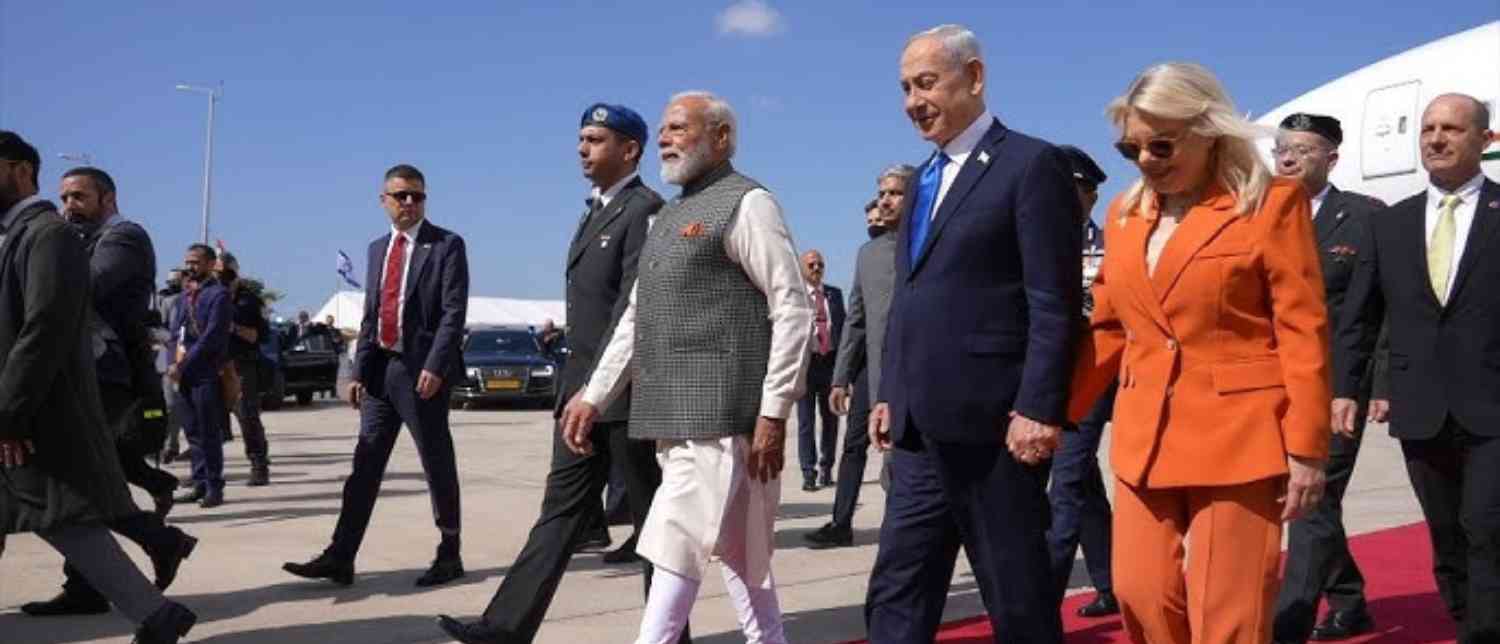
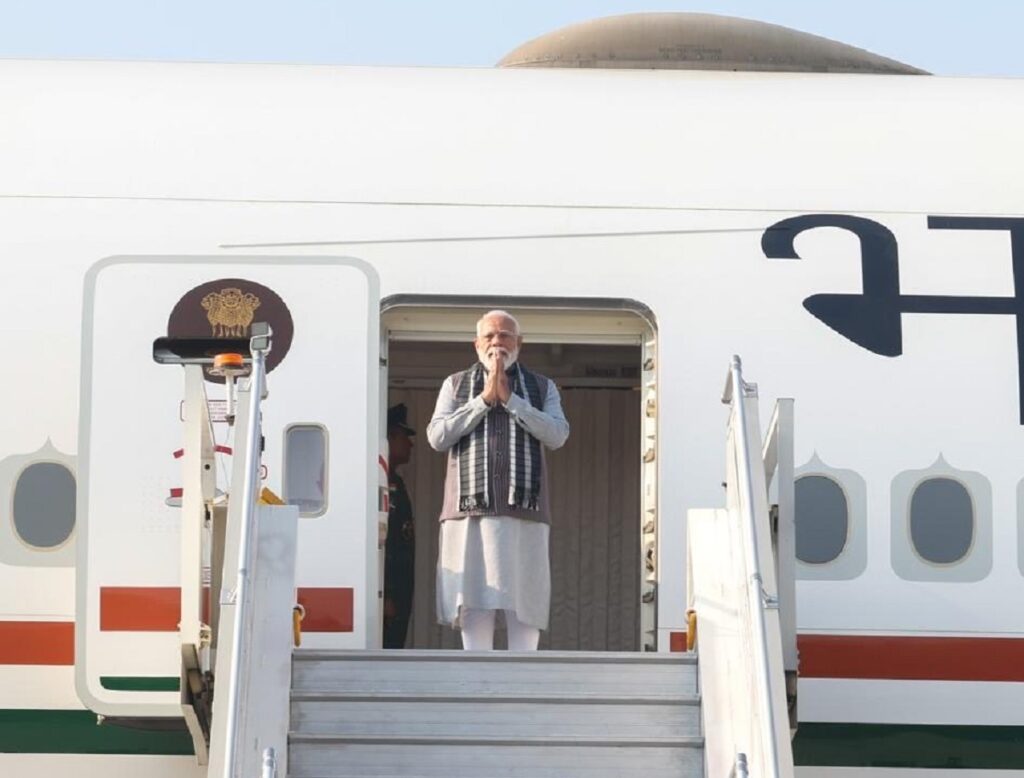
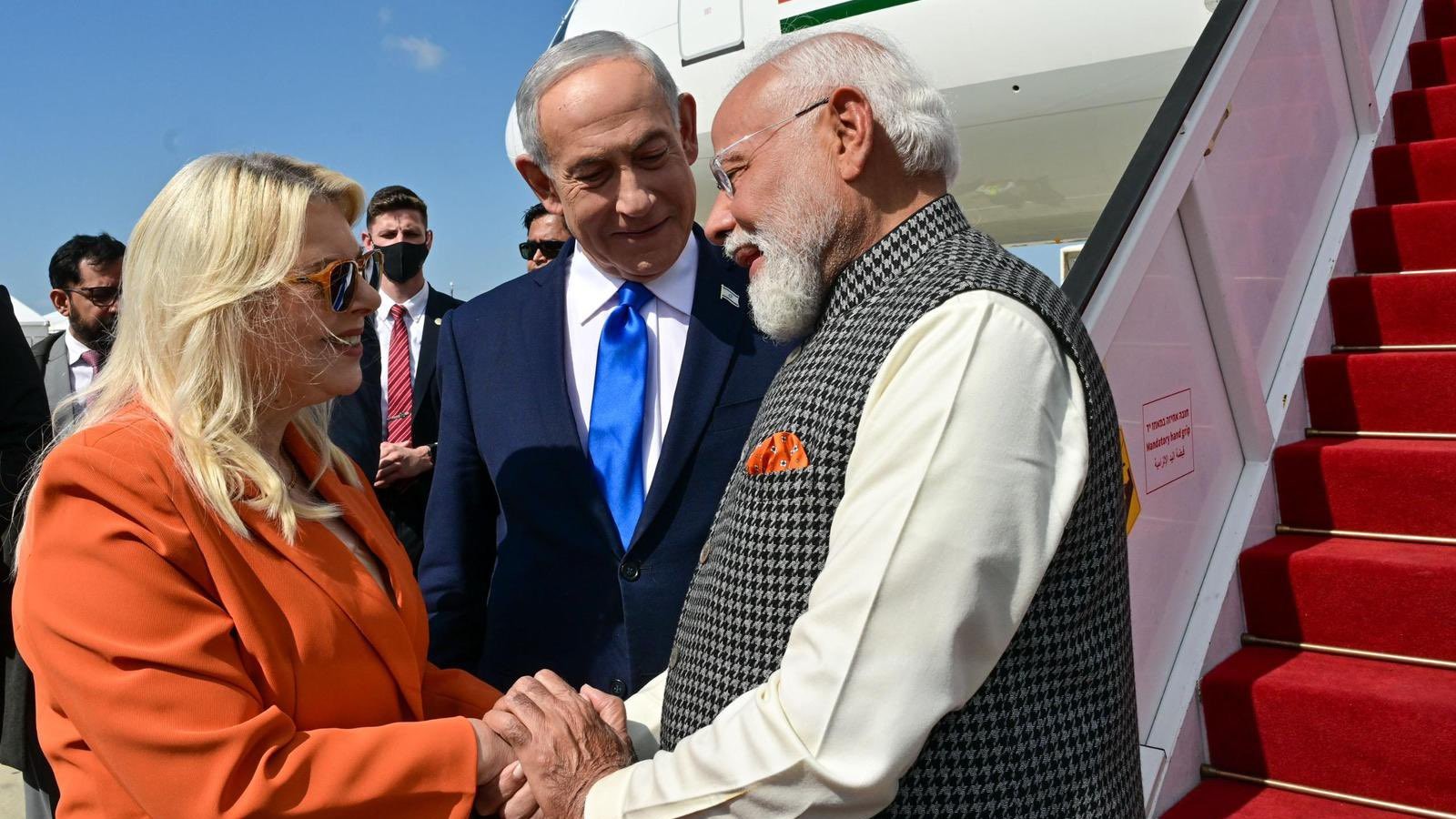
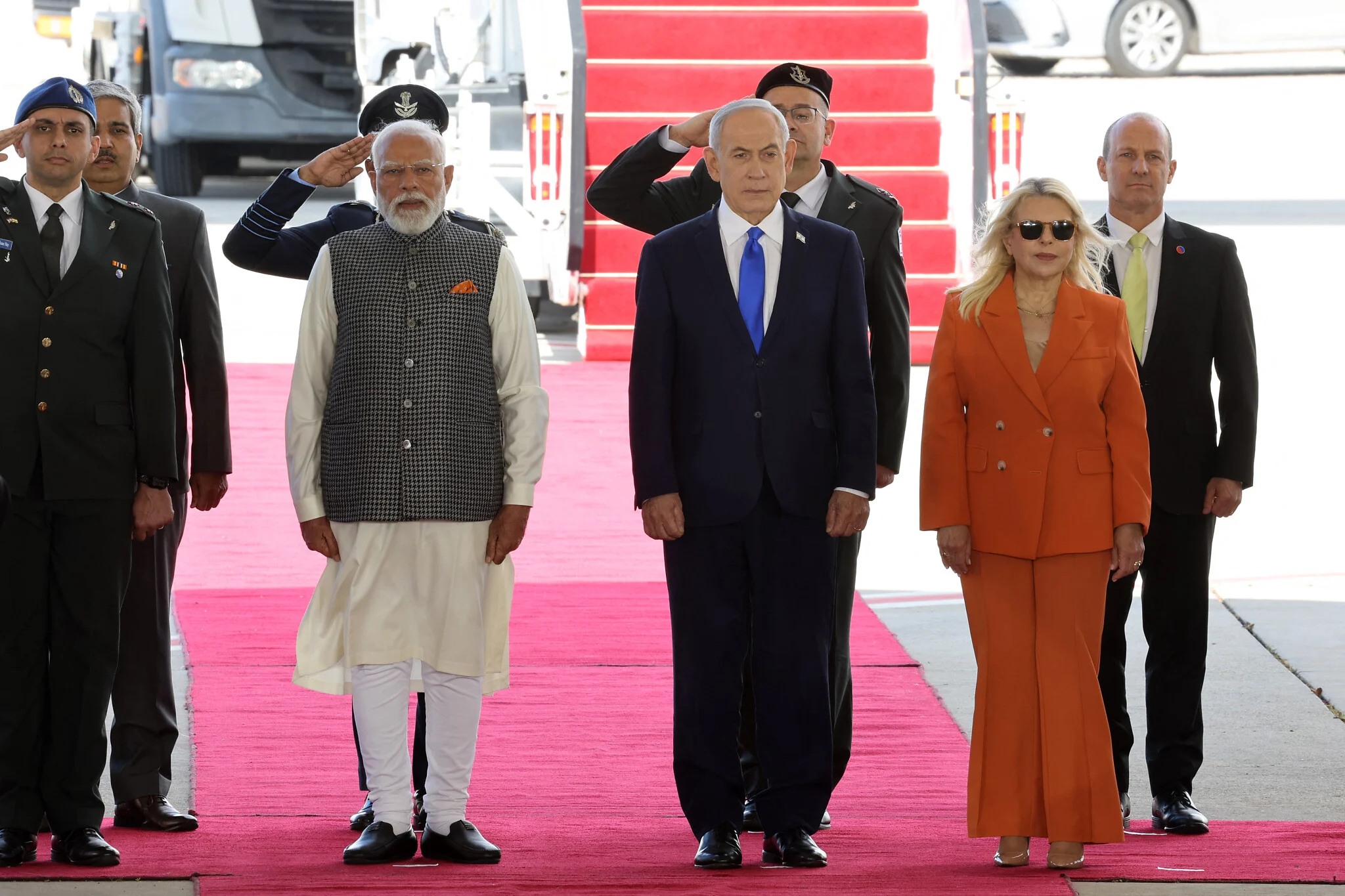
Prime Minister Narendra Modi’s visit to Israel comes at a moment when West Asia is teetering on the edge. The Gaza war grinds on. US–Iran tensions are escalating. Missile exchanges have redrawn the region’s security architecture. American aircraft carrier groups — including the formidable USS Gerald R. Ford — have moved into launch positions. In Geneva, Washington and Tehran are locked in high-stakes diplomacy over Iran’s nuclear and missile programmes, with an American deadline reportedly dictated by former US President Donald Trump hanging ominously over negotiations.
Against this febrile backdrop, Modi’s decision to travel to Israel appears, at first glance, risky. But beneath the optics lies a far more consequential strategic recalibration — one that could significantly enhance India’s military capabilities, deepen high-technology cooperation, and position New Delhi as an autonomous stabilising power in an increasingly volatile region.
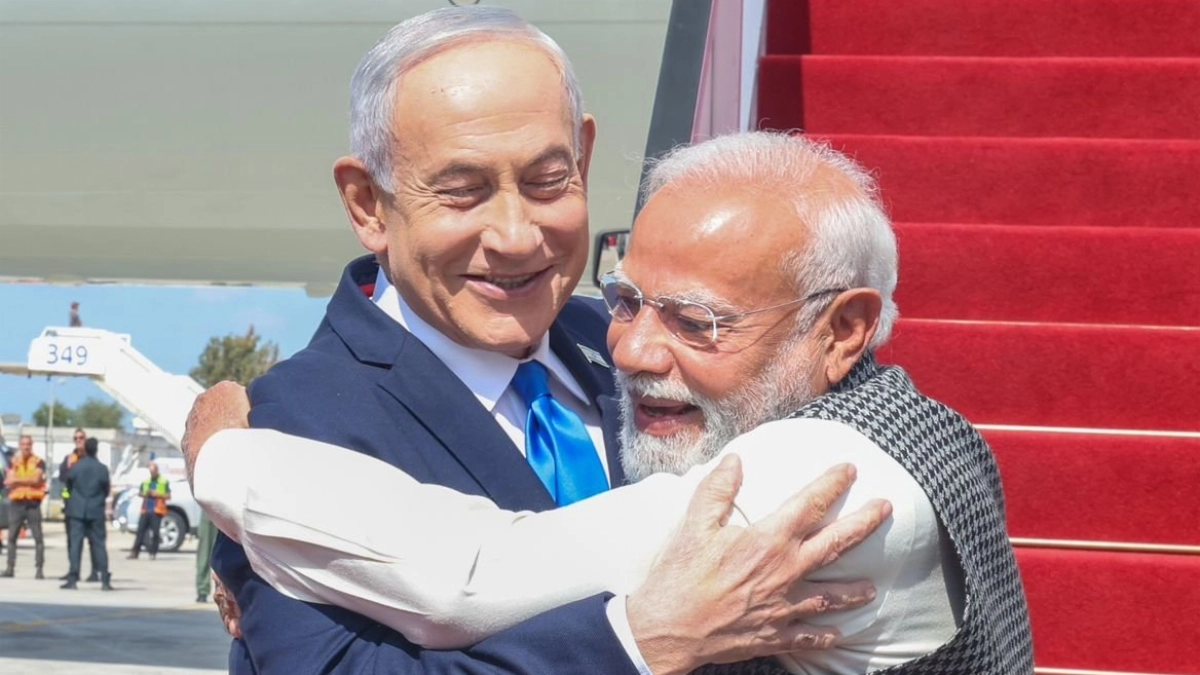
Walking Into the Storm, Not Away From It
Hindustan Times Executive Editor Shishir Gupta has argued that Modi’s presence in Israel is not an act of recklessness, but of intent. Instead of issuing cautious statements from New Delhi, the Prime Minister is stepping into the heat of the moment — signalling that India seeks to be present, engaged, and influential.
Modi’s diplomatic footprint across West Asia is unusually broad. He has cultivated working relationships with Iran, Saudi Arabia, the UAE, Israel, Jordan and other Gulf capitals. Unlike many global leaders who are seen as operating within bloc politics, Modi has attempted to speak to all sides without being owned by any. This is what New Delhi now terms “strategic autonomy” — engagement without entanglement.
India has drawn its red lines clearly. It called the October 7, 2023 attacks a terrorist act. It continues to support a two-state solution. It maintains dialogue channels even with difficult actors, including the Taliban. In conflicts from Ukraine to Gaza, India has offered its “good offices” as a bridge.
Modi’s Israel visit must therefore be seen not as a tilt, but as a calibration.
The Defence Partnership: From Buyer to Co-Developer
Behind the symbolism lies substance. India–Israel defence cooperation is neither new nor superficial. It is rooted in moments of crisis when trust was tested — and proven.
During the 1971 India–Pakistan war, despite the absence of formal diplomatic ties, Israel secretly supplied India with 105 mm mortars, ammunition and specialised training. Israeli Prime Minister Golda Meir reportedly facilitated assistance through an arms manufacturer, even defying pressure from its most powerful ally, the United States. Israel also assisted the Mukti Bahini, contributing indirectly to the creation of Bangladesh.
This episode, documented in the papers of PN Haksar and later chronicled by American journalist Gary J. Bass in his book The Blood Telegram, remains a foundational chapter in bilateral trust.
In the early 1980s, Israel went even further. It offered to assist India in destroying Pakistan’s Kahuta nuclear facility, even seeking access to Indian airspace and refuelling facilities for its fighter jets. The plan was shelved due to fears of escalation and intense US pressure — Washington at the time relied heavily on Islamabad for its Afghanistan operations. Yet the offer itself was audacious, driven by Israeli concerns over an “Islamic bomb.”
Diplomatic ties were formally established only in 1992. But the trust had already been built in moments of vulnerability.
Kargil to Operation Sindoor: Tested in Fire
The partnership deepened visibly during the 1999 Kargil War. Israel supplied laser-guided munitions, UAVs, and precision targeting systems that enabled the Indian Air Force to strike entrenched Pakistani positions with accuracy.
More recently, during Operation Sindoor — conducted after the Pahalgam terror attacks — India reportedly deployed Israeli-origin systems including PALM-200/400 loitering munitions, Harpy and Harop drones, and Rampage long-range missiles. These were used in conjunction with BrahMos strikes to target terror infrastructure in Bahawalpur and Muridke, long associated with Jaish-e-Mohammed and Lashkar-e-Taiba.
Israel’s support during Operation Sindoor was not merely transactional. It reflected a shared worldview: terrorism is not a regional irritant but a civilisational threat.
Prime Minister Benjamin Netanyahu has reportedly suggested that as India rises within the UN system, Israel may increasingly look to New Delhi as a dependable partner — possibly even more than Washington in certain contexts. That is a striking marker of trust.
Ladakh, Anti-Tank Missiles, and Air Defence
During the 2020 Ladakh standoff with China, India inducted Israeli-origin anti-tank weapons to bolster forward defences. Israel has also supplied advanced long-range stand-off missiles capable of neutralising enemy air defence systems — critical in a scenario where Pakistan has enhanced its shield with Chinese radar support.
Emerging systems such as the Iron Beam laser weapon are closely watched in New Delhi. Israeli missile technologies are widely considered top-tier. Modi’s visit is expected to unlock new supplies and, crucially, joint development frameworks.
The relationship is no longer a simple buyer-seller arrangement. It is becoming a layered partnership anchored at the highest political level.
Mission Sudarshan Chakra: India’s Shield
Perhaps the most strategic dimension of this visit is missile defence cooperation, linked directly to Modi’s “Mission Sudarshan Chakra” announced during his Independence Day address.
The trigger was Operation Sindoor. Pakistan reportedly launched nearly a thousand missiles, including ballistic variants. Though damage was minimal, the scale exposed India’s vulnerability to saturation attacks.
Pakistan’s Ababeel missile — a 2,000-km class system equipped with multiple independently targetable re-entry vehicles (MIRVs) — presents a formidable challenge. Once warheads separate, interception becomes exponentially more difficult.
India’s response is to build a layered missile defence grid:
-
Early detection via radars, aircraft and satellites.
-
Interceptors covering ranges of roughly 100 km, 250 km and 400 km.
-
Boost-phase and terminal-phase interception capabilities.
-
Long-range stand-off weapons to neutralise launch sites at source.
Israel’s experience is instructive. During Iran’s large-scale strike last year, Israel reportedly neutralised 498 of 500 incoming missiles using a layered system comprising Iron Dome, David’s Sling and Arrow-3.
Mission Sudarshan Chakra aims to replicate — and indigenise — such a shield. The plan involves joint development within India to ensure self-reliance and scalability. In an era of loitering munitions, swarm drones and kamikaze UAVs, this architecture is not optional. It is foundational.
From Vote-Bank Diplomacy to Strategic Engagement
India recognised Israel in 1950 but maintained distance for decades, largely due to domestic political sensitivities and alignment with the Palestinian cause. Public warmth was muted, even after formal ties began in 1992.
Since 2014, Modi has shifted the paradigm. He engages Israel openly while maintaining support for Palestinian statehood. The Delhi Declaration at the India-Arab League meeting reiterated India’s backing of a two-state solution.
History reveals that peace efforts have often faltered. From the 1937 Peel Commission and the 1947 UN Partition Plan to the 2000 Camp David Summit, the 2001 Taba talks, and the 2008 proposal by then Israeli Prime Minister Ehud Olmert — which reportedly offered nearly 94% of the West Bank with land swaps — opportunities were missed over disagreements on the Right of Return and Jerusalem’s status.
India’s balanced policy encourages realism over absolutism.
Simultaneously, regional frameworks such as the Abraham Accords, I2U2, and the India–Middle East Economic Corridor (IMEC) reflect a new connectivity vision. Netanyahu has floated the idea of a “hexagon alliance” involving India, Israel, Greece and Cyprus alongside Middle Eastern partners — less a military bloc than an economic network.
The envisioned corridor would link Indian ports to Fujairah in the UAE, move overland through Saudi Arabia and Jordan to Haifa, and onward to Mediterranean hubs such as Cyprus, Greece, Naples and Marseilles — possibly Beirut if conditions stabilise. The October 7 attacks disrupted momentum, but the logic remains compelling.
Beyond Defence: Agriculture, Innovation and AI
The most humane dimension of India–Israel ties lies in agriculture and development.
Through MASHAV — Israel’s international development cooperation agency — and the Indo-Israel Agricultural Project, 30 Centres of Excellence have been established across India. Over a million farmers have been trained in water-efficient, high-yield techniques. In states like Gujarat, water usage has reportedly fallen by 80% even as yields rise.
The India–Israel Innovation Fund (I4F) is supporting AI-based tuberculosis detection in rural areas. Cooperation extends to drone systems for border security and solar-powered water pumps for underserved villages.
This is strategic partnership grounded in everyday impact.
India’s Unique Leverage in a Fragmented West Asia
Energy security, diaspora safety, and trade routes tie India deeply to West Asia. Millions of Indians live in the Gulf. Escalation between the US and Iran could disrupt oil supplies and remittance flows.
Yet India’s advantage is rare: it can speak to all sides. It maintains relations with Iraq, Saudi Arabia, the UAE, Bahrain, Kuwait, Jordan and Iran — and separately sustains a close counter-terrorism partnership with Israel.
In a region defined by binaries, India resists alignment traps.
Hard Power, Soft Balance
Modi’s Israel visit is not a symbolic photo-op in turbulent times. It is a strategic node in a larger architecture.
It seeks to:
-
Deepen joint development of cutting-edge defence systems.
-
Operationalise Mission Sudarshan Chakra.
-
Expand economic and connectivity corridors.
-
Reinforce counter-terror cooperation.
-
Sustain India’s autonomous diplomatic positioning.
The India–Israel relationship today is not built merely on trade figures or defence contracts. It is built on moments when each showed up for the other in times of crisis — from 1971 to Kargil to Operation Sindoor.
As West Asia stands at the brink, India is not retreating into caution. It is stepping forward — armed not only with missiles and interceptors, but with balance, memory and strategic clarity.
If executed wisely, this visit will not only add muscle to India’s military might. It may also strengthen India’s claim to be what it increasingly aspires to become: a steady, autonomous power in an unstable world.
With inputs from agencies
Image Source: Multiple agencies
© Copyright 2025. All Rights Reserved. Powered by Vygr Media.