
 By
By 
Violence against women remains one of the most persistent challenges confronting modern India. It cuts across homes, streets, workplaces, and increasingly the digital world. Over the past decade, India has expanded its legal framework, strengthened institutions, and introduced new technologies aimed at preventing gender-based violence and supporting survivors. Yet the scale and complexity of the problem—reflected in crime statistics, survey data, and real-life experiences—reveal a stark reality: progress is uneven, and the gap between policy design and on-ground implementation remains significant.
India’s response to crimes against women today reflects a layered system of legal reform, institutional innovation, and citizen participation. From the newly enacted Bharatiya Nyaya Sanhita, 2023 to national helplines, forensic advancements, and One Stop Centres, the country has attempted to move toward a more survivor-centric justice ecosystem. But statistics and case studies continue to highlight systemic challenges—underreporting, low conviction rates, resource gaps, and cultural barriers that hinder access to justice.
Understanding this landscape requires examining three interconnected dimensions: the evolving legal framework, empirical trends in crimes against women, and the institutional mechanisms designed to address them.
The Scale of the Challenge
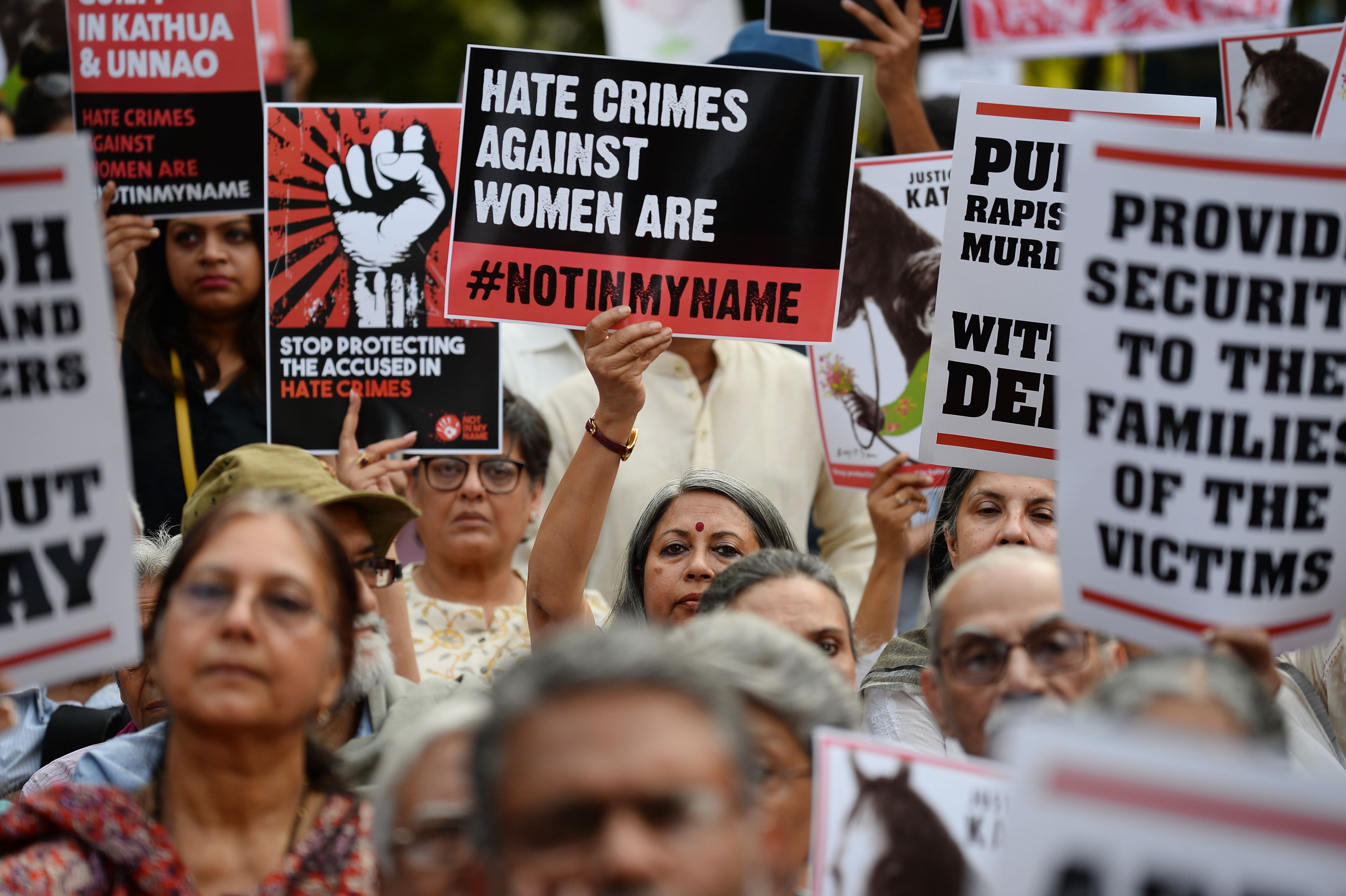
Recent data underline the magnitude of violence against women in India. According to the National Crime Records Bureau (NCRB) 2022, India recorded 4,45,256 cases of crimes against women, representing a 4% increase over 2021. On average, this translates to 51 complaints every hour. The national crime rate stood at 66.4 per lakh women, up from 64.5 in 2021.
State-level variations reveal stark disparities. Delhi (144.4), Haryana (118.7), and Telangana (117.6) recorded crime rates far above the national average, suggesting both regional risk patterns and differences in reporting mechanisms.
However, administrative data capture only a fraction of the actual violence experienced by women. Findings from the National Family Health Survey (NFHS-5, 2019–21) show that 32% of ever-married women in India have experienced physical, sexual, or emotional violence by their husbands, while 6.1% reported sexual violence specifically. These figures demonstrate a significant gap between lived experiences and officially reported cases.
The divergence between survey data and police records highlights one of the most persistent challenges in addressing gender-based violence: systemic underreporting driven by stigma, fear of retaliation, and limited access to formal complaint mechanisms.
Shifting Patterns of Violence
Between 2018 and 2022, NCRB data show both continuity and change in crime patterns against women.
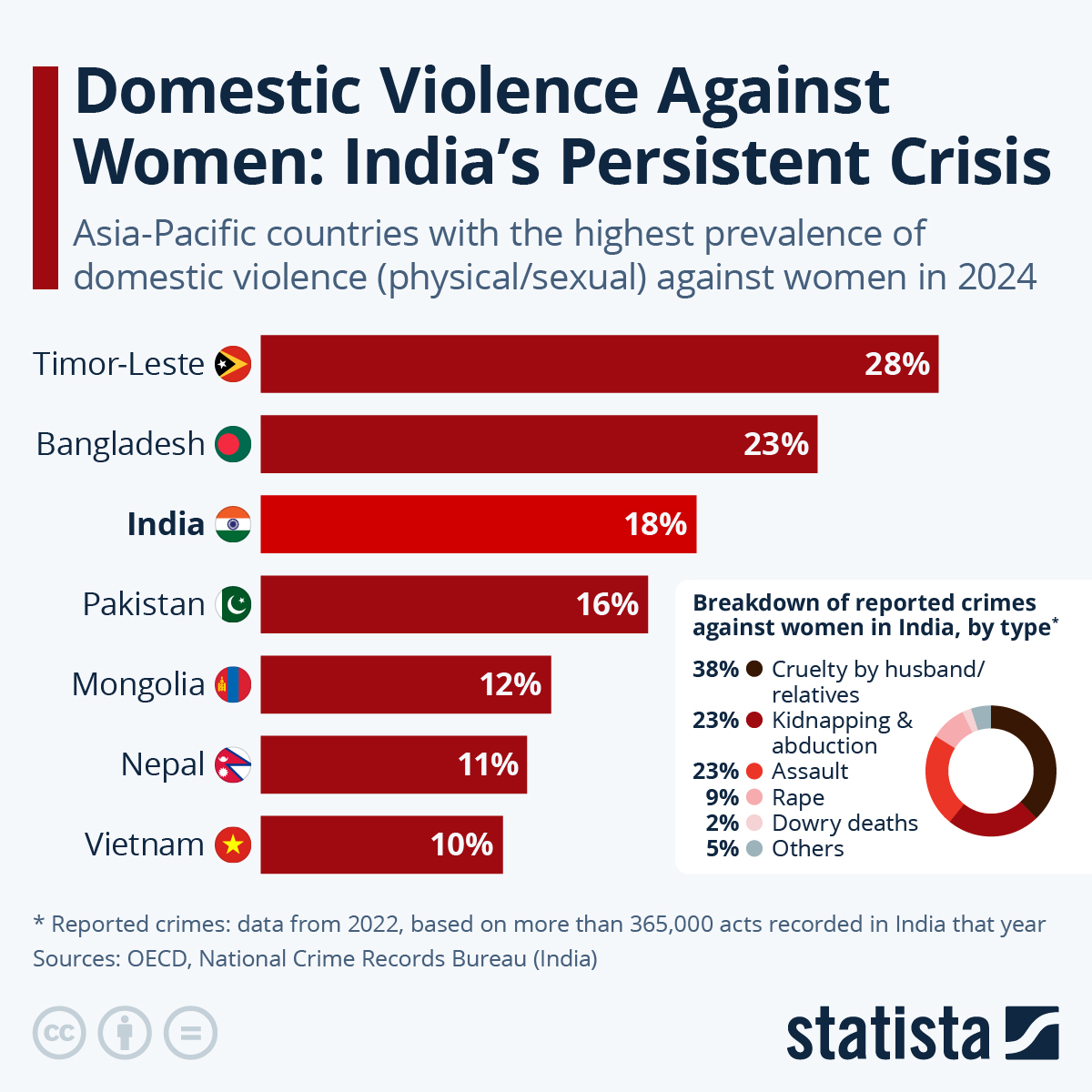
Total cases rose from 3,78,277 in 2018 to 3,71,503 in 2020, before increasing sharply to 4,28,278 in 2021 and 4,45,256 in 2022. The majority of cases in 2022 fell into four categories:
-
Cruelty by husband or relatives – 31.4%
-
Kidnapping and abduction – 19.2%
-
Assault with intent to outrage modesty – 18.7%
-
Rape – 7.1%
Kidnapping and abduction cases have shown a steady increase. There were 1,05,734 cases in 2018 and 1,07,588 in 2019, with Haryana recording the highest rate during these years. By 2022, such crimes constituted nearly one-fifth of all cases involving women.
Sexual assault statistics also remain troubling. Recorded rape victims numbered 24,544 in 2018, 27,283 in 2019, and 30,965 in 2022. Despite legislative reforms following the 2012 Nirbhaya case, the persistence of these figures underscores ongoing challenges in deterrence, investigation, and survivor support.
Another notable shift is the rise in non-physical and cyber-enabled harassment. Cases under insult to modesty provisions rose dramatically—from 6,992 cases in 2018 to 83,344 cases in 2022. Meanwhile, cybercrimes against women—including online stalking, harassment, and circulation of intimate imagery—have more than doubled between 2018 and 2022.
These patterns reveal that violence against women now spans domestic, public, and digital spheres, requiring policy responses that evolve alongside social and technological change.
Urban–Rural Differences in Violence
The geography of gender-based violence in India reveals contrasting trends.
Urban centres report higher levels of sexual harassment, stalking, workplace harassment, and cybercrime. Metropolitan cities such as Delhi, Mumbai, Bengaluru, and Hyderabad account for a disproportionate share of reported crimes, partly due to higher population density and greater access to reporting systems.
Rural areas, by contrast, often show lower official crime numbers but higher hidden prevalence. According to NFHS-5, 34% of rural women report experiencing intimate partner violence, compared with 27% in urban areas. Limited access to police stations, social stigma, and lack of awareness about support services contribute to significant underreporting.
These spatial disparities indicate that crime patterns are shaped by cultural norms, reporting infrastructure, and technological exposure. Urban environments see more digital and workplace-related offences, while rural regions remain burdened by domestic violence and dowry-related crimes.
India’s Evolving Legal Framework
In response to these challenges, India has steadily expanded its legal and institutional architecture for women’s safety.
Earlier laws such as the Dowry Prohibition Act, 1961, the Protection of Women from Domestic Violence Act, 2005, and the Sexual Harassment of Women at Workplace (Prevention, Prohibition and Redressal) Act, 2013 form the foundation of the country’s legal protections.
However, major reforms were catalysed by public outrage following the 2012 Nirbhaya case, which led to the Criminal Law (Amendment) Act, 2013. This legislation broadened definitions of sexual assault, introduced stronger penalties, and established victim-centric procedural safeguards.
Recent reforms represent an even more significant shift. The Bharatiya Nyaya Sanhita (BNS), 2023—part of India’s new criminal law framework—places offences against women and children in a dedicated Chapter V, giving them precedence over other offences.
Key provisions include:
-
Severe punishments up to the death penalty for serious crimes against women.
-
Gang rape of a woman below 18 years punishable by life imprisonment for the remainder of the convict’s natural life or death.
-
Removal of earlier distinctions between victims below 12 and 16 years, treating all victims below 18 years under the same stringent provision.
-
Recognition of women as adult members of the household eligible to receive summons, replacing earlier references to “adult male members”.
-
Criminalisation of sexual intercourse obtained through false promises of marriage, employment, or promotion, or by concealing identity.
These provisions reflect an attempt to strengthen deterrence and recognise emerging forms of exploitation.
Technology in the Justice System
India’s new criminal laws also emphasise technological transformation to improve the speed and transparency of investigations and trials.
All proceedings—including summons issuance, witness examination, evidence recording, and appellate hearings—can now be conducted electronically using audio-visual communication systems.
Several digital platforms have been introduced:
-
e-Summons – facilitates electronic delivery of legal summons.
-
e-Sakshya – enables secure collection and submission of digital evidence.
-
Nyaya-Shruti (Video Conferencing) – allows remote participation of accused persons, witnesses, police officials, prosecutors, and experts.
These tools aim to reduce procedural delays and create a more efficient, technology-driven justice system.
Forensic capacity has also been strengthened through expanded DNA analysis units and standardised sexual assault evidence kits, reinforcing the role of scientific evidence in criminal investigations.
Strengthening Victim Protection
The new criminal laws introduce several survivor-centric provisions designed to make investigations more sensitive and transparent.
Among the most important measures are:
-
Audio-video recording of rape victims’ statements by police, improving transparency and evidence reliability.
-
Victim statements to be recorded by a woman magistrate wherever possible, or by a male magistrate in the presence of a woman.
-
Mandatory submission of medical examination reports within seven days by medical practitioners.
-
Free first-aid and medical treatment for victims of crimes against women and children at all hospitals.
The law also ensures that vulnerable individuals—including women, persons with disabilities, and men under 15 or above 60 years—are not required to attend police stations unless they choose to do so.
Additionally, employing a child to commit a crime is now punishable under Section 95 of BNS, carrying seven to ten years of imprisonment, aiming to deter criminal networks from exploiting minors.
Institutional Mechanisms and Support Systems
Alongside legal reforms, India has created several institutional mechanisms to support survivors.
Women Help Desks
Women Help Desks have been established in every police station across the country, aimed at making law enforcement more accessible and approachable for women.
Emergency Response Systems
The Emergency Response Support System (ERSS) integrates services around the national helpline number 112, improving response times through computer-aided dispatch and coordinated field operations.
Safe City Projects
Major urban centres are implementing Safe City initiatives, combining surveillance technology, smart policing, and data-driven safety management.
One Stop Centres
The One Stop Centre Scheme, operated by the Ministry of Women and Child Development, provides integrated services including legal assistance, medical care, counselling, and temporary shelter.
Women’s Helplines and Community Initiatives
The Women Helpline (181) connects survivors with emergency services and support systems. Meanwhile, grassroots initiatives such as Mahila Police Volunteers aim to bridge the gap between communities and law enforcement.
Under the Mission Shakti framework, the Samarthya umbrella programme integrates several women-centric schemes:
-
Shakti Sadans – rehabilitation homes for trafficking survivors.
-
Sakhi Niwas – safe accommodation for working women.
-
Palna Creches – childcare facilities supporting working mothers.
-
Pradhan Mantri Matru Vandana Yojana (PMMVY) – wage compensation during pregnancy.
-
Beti Bachao Beti Padhao – promoting gender equality and education.
Institutional Challenges and Resource Gaps
Despite this expanding infrastructure, implementation challenges remain significant.
The National Commission for Women (NCW) recorded 28,650 complaints in 2023–24, with the largest categories including:
-
Right to live with dignity – 8,271 complaints
-
Domestic violence – 6,487
-
Dowry harassment – 4,815
-
Molestation – 2,217
-
Rape/attempt to rape – 1,521
-
Cybercrime – 657
These numbers represent only a fraction of total crimes, as the NCW primarily receives escalated complaints.
Another critical issue is the conviction gap. NCRB data show that the conviction rate for rape cases in 2022 was 27.8%, reflecting long trials, evidentiary challenges, and witness intimidation.
Resource inefficiencies further complicate implementation. Among 35 major projects funded under the Nirbhaya Fund, only 33% of sanctioned funds have been utilised, leading to delays in infrastructure development and staff payments.
Case Studies: Policy vs Reality
Real-world examples illustrate the uneven impact of institutional initiatives.
In Patna, a One Stop Crisis Centre inaugurated in 2024 reportedly operates as a bare room with four beds and limited medical or legal support. Survivors must often travel elsewhere for essential services, undermining the centre’s purpose.
In Delhi, the High Court flagged serious operational issues in several One Stop Centres, including unpaid staff, missing infrastructure, and lack of public awareness.
By contrast, a Sakhi Niwas hostel in Indore has emerged as a successful example, offering safe accommodation with security and accessibility for working women.
Similarly, One Stop Centres in Coimbatore and Pollachi assisted over 3,000 women in recent years, handling 1,058 cases in 2024 alone, demonstrating the potential impact of well-resourced and coordinated interventions.
Rethinking Institutional Responses
A 2025 research report titled “Violence Against Women and Girls: Strengthening Institutional Mechanisms Combating”, published by the Centre for Public Policy Research (CPPR), analysed institutional responses in Kerala, Telangana, Goa, Rajasthan, and Jharkhand.
The study identified systemic gaps such as institutional apathy, patriarchal attitudes among frontline officials, and weak coordination between departments.
To address these challenges, the report proposed an expanded analytical framework: 3P + 2R + C.
-
Prevention – community awareness and engagement of men and boys.
-
Protection – accessible shelters and support services.
-
Prosecution – effective investigations and timely trials.
-
Rehabilitation – medical, legal, and psychological care.
-
Reintegration – long-term support for survivors’ livelihoods and education.
-
Coordination and Governance – improved inter-agency cooperation and accountability.
Among its recommendations were the creation of “Nirbhaya Saathis” at the grassroots level, state-level Women Safety Boards, integrated VAWG dashboards, and increased women’s representation in police forces to 33% or more.
The Role of Citizens
Even the most sophisticated institutions cannot prevent every crime. With India’s vast population, law enforcement alone cannot provide omnipresent protection.
Public awareness, willingness to report crimes, and community vigilance play a crucial role in amplifying institutional efforts. Cultural attitudes that normalise harassment or discourage reporting must change if legal reforms are to translate into real safety.
Laws can provide protection and accountability—but societal participation is essential for prevention.
The Road Ahead
India’s response to crimes against women has evolved significantly in recent years. Legal reforms, technological innovations, and institutional mechanisms demonstrate a growing commitment to survivor-centric justice.
Yet the persistence of violence—and the gaps between policy intent and implementation—show that the journey is far from complete.
Strengthening data systems, improving rural access to services, enhancing forensic capacity, ensuring consistent funding, and promoting gender-sensitive policing will be critical. Equally important is the need for preventive strategies that address the cultural and economic structures enabling violence.
Ultimately, women’s safety cannot depend solely on reactive legislation triggered by crises. It must emerge from a coordinated ecosystem of law, governance, and social responsibility.
When institutions function effectively and citizens actively support them, safety becomes more than a policy objective—it becomes a shared civic commitment. Only then can India’s expanding legal framework truly fulfil its promise of dignity, equality, and justice for every woman.
With inputs from agencies
Image Source: Multiple agencies
© Copyright 2025. All Rights Reserved. Powered by Vygr Media.