

 By

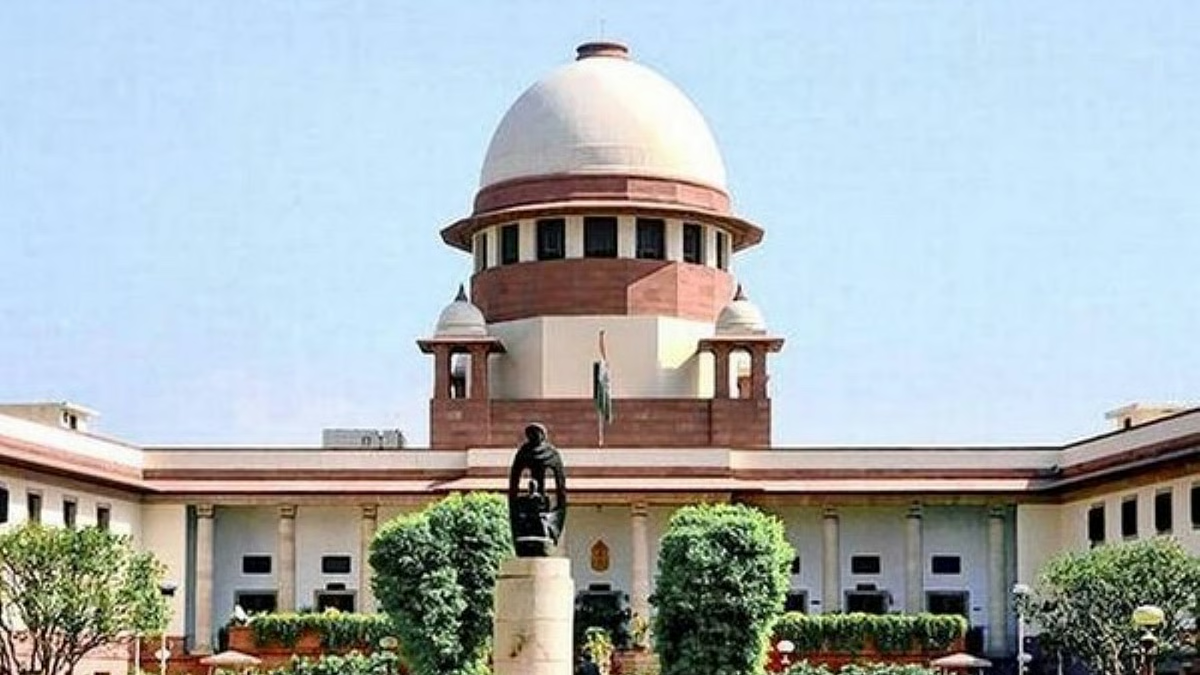
The Supreme Court of India has raised an important question about the relationship between traditional marriage practices, individual choice and the health of future generations. On November 20, 2026, the apex court asked the Central government to consider whether suitable legislation should be introduced to regulate marriages between close blood relatives, commonly known as consanguineous marriages.
The court's intervention comes while hearing a Public Interest Litigation (PIL) filed by a Bengaluru-based law student who has experienced serious genetic health complications. The petition highlights concerns about the increased risk of inherited genetic disorders among children born to closely related parents.
While the Supreme Court has not ordered an immediate ban on such marriages, it has sought the Centre's response on two important issues: the possibility of introducing appropriate legislation and the need for widespread public awareness about the potential medical consequences.
The development has brought renewed attention to cousin marriages in India, existing legal exceptions, genetic counselling and the government's responsibility to promote informed decisions about marriage and reproductive health.
Why Has the Supreme Court Raised Concerns About Marriage Between Blood Relatives?
The Supreme Court's observations stem from a PIL filed by Charvi S, a Bengaluru-based law student whose parents are first cousins.
The petitioner reportedly suffers from approximately 40% visual impairment, photophobia and cone dystrophy, conditions associated in her case with genetic complications linked to her parents' close biological relationship.
Her petition questions whether existing laws should continue to recognise exceptions allowing marriages between close blood relatives, particularly when medical evidence indicates an increased possibility of inherited health conditions in their children.
The central argument is that social customs and long-standing traditions should not prevent individuals from receiving information about foreseeable health risks before making important family decisions.
The petitioner has also raised concerns about the rights of children born from such unions, arguing that they should not be exposed to avoidable medical disadvantages simply because a particular marriage practice is socially or culturally accepted.
During the hearing, the Supreme Court acknowledged the seriousness of the concerns and decided to seek the Union government's response.
What Did the Supreme Court Say About Consanguineous Marriages?
A three-judge bench comprising Chief Justice of India Surya Kant and Justices Joymalya Bagchi and V Mohana heard the matter.
The bench observed that regulating marriages between close blood relatives through social reform legislation falls within the legislature's domain. In other words, the Supreme Court cannot independently introduce a nationwide restriction on such marriages through judicial directions.
However, the court considered it appropriate to sensitise the government about the issue and seek its views on whether suitable legislation or awareness initiatives were necessary.
The judges indicated that the Centre should examine the desirability of introducing a legal framework or ensuring widespread publicity about the potential negative consequences of consanguineous marriages.
The bench also highlighted the importance of informed consent in marriage.
Marriage is a matter of personal choice, and individuals should have the freedom to make their decisions. However, the court's observations emphasised that such choices should be informed by adequate knowledge of relevant health risks.
Importantly, the Supreme Court has not announced a blanket prohibition on cousin marriages or declared existing marriages invalid.
Its intervention is currently limited to seeking the government's response and encouraging consideration of possible preventive measures.
What Are Consanguineous Marriages and Why Are They a Health Concern?
Consanguineous marriages refer to unions between individuals who are biologically related by blood. These commonly include marriages between first cousins and other close relatives.
Although such marriages have existed in different societies for generations, medical experts have raised concerns about the potential genetic consequences for children born to closely related parents.
The primary concern involves recessive genetic disorders.
Every individual carries certain genetic variations, many of which may not cause any noticeable health problems. However, when two biologically related individuals have children, there is a greater possibility that both parents carry the same inherited genetic variation.
If a child inherits two copies of a harmful recessive variant, one from each parent, the condition may become clinically apparent.
This increases the possibility of certain inherited disorders, congenital abnormalities, developmental complications and other health problems.
Potential risks associated with close-relative marriages include:
-
Autosomal recessive disorders: Children may inherit two copies of a disease-causing genetic variant from their parents.
-
Congenital abnormalities: Certain inherited genetic conditions can contribute to birth defects and developmental complications.
-
Sensory impairments: Some genetic disorders can affect vision and hearing.
-
Developmental disabilities: Particular inherited conditions may affect physical, intellectual or neurological development.
-
Infant morbidity and mortality: Some severe genetic conditions can increase the risk of serious illness or early death.
However, it is important to understand that these outcomes are not inevitable. Not every child born to related parents develops a genetic disorder. The actual risk depends on several factors, including the degree of biological relationship and the family's genetic history.
This distinction is important because the objective of medical awareness should be to help people understand and assess potential risks rather than create fear or stigma.

What Does Existing Indian Law Say About Marriage Between Close Relatives?
The legal position surrounding marriages between blood relatives in India is complex because different personal laws and customary practices govern marriage.
The Hindu Marriage Act, 1955, establishes conditions regarding prohibited relationships and sapinda relationships.
Under Section 5(iv) of the Act, marriage between individuals within prohibited degrees of relationship is generally not permitted unless an established custom or usage governing both parties allows it.
Similarly, Section 5(v) restricts marriage between individuals who fall within the definition of sapinda relationships, subject to applicable customary exceptions.
A sapinda relationship generally extends to three generations through the mother's line and five generations through the father's line, with the individuals concerned counted as the first generation.
These provisions demonstrate how Indian marriage laws recognise certain restrictions while also accommodating specific customs and traditions.
The petition has questioned whether these exceptions should continue in their existing form, given the potential genetic health risks associated with marriages between close relatives.
It has also raised concerns about provisions under the Special Marriage Act, 1954, and the need to reconsider the broader legal framework.
The issue has consequently reopened discussions about whether existing marriage laws adequately balance personal liberty, cultural practices, public health and the welfare of future generations.
Supreme Court Seeks Centre's Response on Legislation and Public Awareness
One of the most significant aspects of the proceedings is that the Supreme Court has not restricted its observations to the possibility of introducing a new law.
The bench has also highlighted the importance of making people aware of the medical implications of consanguineous marriages.
The petition proposes several preventive measures, including:
1. Premarital genetic counselling
Individuals considering marriage to close relatives could receive professional counselling to understand possible inherited health risks and the implications for future children.
2. Voluntary genetic screening
Medical screening could help identify certain inherited genetic conditions, particularly in families or geographical regions where consanguineous marriages are more prevalent.
3. Nationwide awareness campaigns
Government authorities could use educational programmes, healthcare facilities and community-level initiatives to communicate scientific information about genetic disorders.
4. Education in schools and colleges
The petitioner has suggested including relevant information in educational curricula so that young people understand basic genetic health risks before making important life decisions.
5. Community-level outreach
Awareness initiatives could be extended to Anganwadi centres, Panchayats and other local institutions to reach communities where access to genetic counselling and medical information may be limited.
The Supreme Court has also referred to Article 51A of the Constitution, which includes the fundamental duty to develop scientific temper, humanism and the spirit of inquiry and reform.
The reference reinforces the importance of using scientific knowledge and public education to address socially sensitive issues.
How Common Are Consanguineous Marriages in India?
Consanguineous marriages are not equally prevalent across India. Their frequency varies considerably depending on geographical location, community practices and cultural traditions.
Figures cited in the petition from the National Family Health Survey indicate that approximately 11% of marriages in India are consanguineous, while around 13% of ever-married women reported being related to their husbands before marriage.
First-cousin marriages reportedly account for approximately 8% of all marriages.
The survey data also points to notable regional variations.
Consanguineous marriages are considerably more prevalent in several southern states, particularly Tamil Nadu, Andhra Pradesh and Karnataka. More than one-fourth of women in these states reported being in such marriages, while Telangana and Puducherry also recorded relatively high proportions.
The figures highlight why a uniform public awareness strategy may need to account for regional differences.
Rather than treating the issue exclusively as a legal question, policymakers may also need to consider healthcare accessibility, community engagement and the availability of genetic counselling services.
Does the Supreme Court's Move Mean Cousin Marriages Will Be Banned in India?
No. The Supreme Court has not announced any immediate ban on marriages between close blood relatives.
Its observations should not be interpreted as a final judicial decision prohibiting cousin marriages across the country.
The court has specifically acknowledged that introducing social reform legislation is a matter for Parliament and the legislature.
The present proceedings are intended to seek the Centre's response on whether new legislation or broader awareness initiatives should be considered.
The petition itself has proposed preventive safeguards, including genetic counselling, voluntary screening and disclosure of potential health risks. It has also clarified that its suggested measures are not intended to criminalise existing marriages or retrospectively invalidate their legal status.
Whether the government eventually proposes amendments to existing marriage laws, introduces new safeguards or launches awareness programmes remains to be seen.
Any future changes would require appropriate legislative and policy consideration.
What Lies Ahead?
The Supreme Court's intervention has opened an important conversation about how Indian society approaches marriage, tradition, reproductive health and genetic awareness.
At the heart of the issue is a difficult but necessary question: should long-standing customs continue without adequate consideration of the potential health consequences for future generations?
The challenge for policymakers will be to address legitimate public health concerns without undermining individual autonomy, discriminating against particular communities or stigmatising people living with genetic conditions and disabilities.
Education, accessible healthcare and voluntary genetic counselling could play an important role in helping individuals make informed decisions.
The Centre's response will therefore be significant in determining how the issue develops legally and socially.
For now, the Supreme Court's message is clear: scientific awareness and informed decision-making deserve greater attention when discussing marriage between blood relatives.
Whether this eventually leads to changes in Indian marriage laws or a nationwide awareness initiative, the proceedings could mark an important step in the broader discussion about public health, social reform and the rights of future generations.
© Copyright 2026. All Rights Reserved. Powered by Vygr Media.