 By

Imagine driving along the highway between Delhi and Lucknow when the familiar rhythm of a long journey is interrupted by an irresistible sight: rows of sweet shops, large vessels filled with glossy brown sweets, and the promise of freshly prepared gulab jamuns served warm in traditional earthen pots. Welcome to Maigalganj, the small village in Uttar Pradesh that has earned a remarkable reputation as the Village of Gulab Jamuns.
Situated in Lakhimpur Kheri district, Maigalganj is not the sort of destination that initially appears on every traveller's itinerary. It does not depend on grand monuments or elaborate tourist attractions to draw attention. Instead, its identity rests on something wonderfully familiar: one of India's most cherished desserts.
Here, gulab jamun is more than a festive indulgence or the final course at a wedding feast. It is a local speciality, a source of livelihood and a tradition that has helped an otherwise unassuming settlement become a talking point among food lovers.
What makes Maigalganj particularly fascinating is that its fame did not emerge from an ambitious tourism campaign. It grew gradually, through generations of sweet makers, passing travellers and customers who returned for another taste. In an age when destinations compete for attention through carefully curated experiences, this village offers a compelling reminder that sometimes the simplest pleasures create the strongest reputations.
How Maigalganj Became Famous for Gulab Jamun
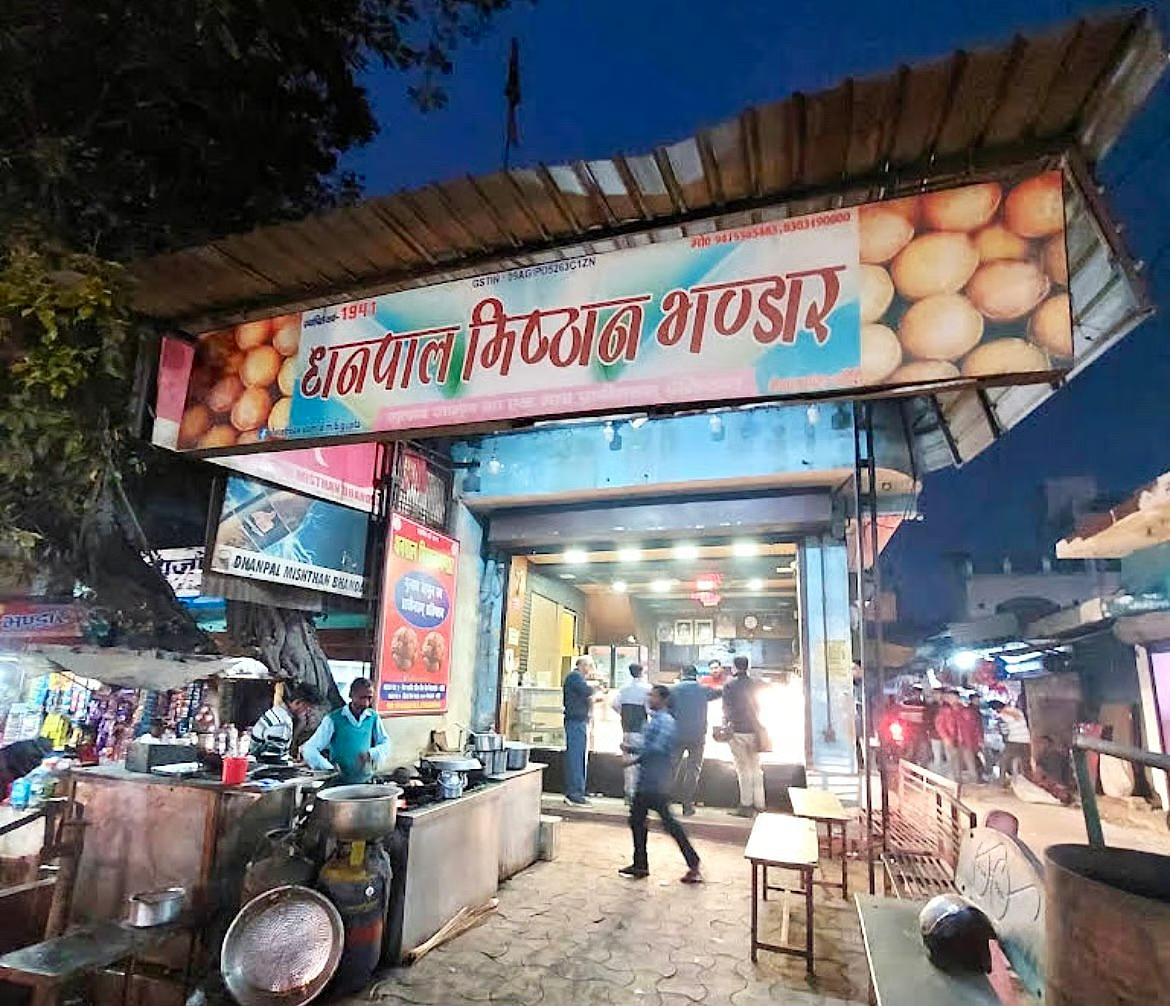
The story of Maigalganj's transformation into a gulab jamun hotspot is generally traced to 1941, when Dhanpal Misthan Bhandar began selling the sweet in the area. At the time, the surroundings were far less developed than they are today, and the road network did not resemble the busy transport corridor that travellers now recognise.
The shop's appeal gradually extended beyond the immediate neighbourhood. People travelling through the region began stopping to enjoy the freshly prepared sweets, turning a modest roadside business into a destination in its own right.
As demand grew, other vendors established their own shops nearby. Over time, what began as one family's enterprise developed into a concentrated stretch of sweet shops, each hoping to attract customers with its interpretation of the beloved dessert.
By the 1970s, Maigalganj had become increasingly associated with gulab jamun. The village's reputation continued to spread, and its sweets attracted everyone from everyday commuters to prominent visitors travelling between major cities.
Today, descriptions of the number of shops vary. Some accounts refer to a few dozen established outlets, while others describe more than a hundred sellers or sweet shops associated with the village and its surrounding stretch. The precise count is less important than the extraordinary concentration of businesses built around a single speciality.
There is also an appealing mystery at the heart of this success. No definitive explanation establishes why Maigalganj became synonymous with gulab jamun rather than another traditional sweet. Perhaps it was the quality of the original preparation, the convenience of the location or the simple power of word-of-mouth recommendations.
Whatever the combination of circumstances, the outcome is undeniable: a humble dessert helped shape the identity of an entire locality.
What Makes Maigalganj Gulab Jamun Special?
Across India, gulab jamun is prepared in countless sweet shops, restaurants and home kitchens. Yet the version associated with Maigalganj has acquired a distinct appeal through its preparation, serving style and connection with local tradition.
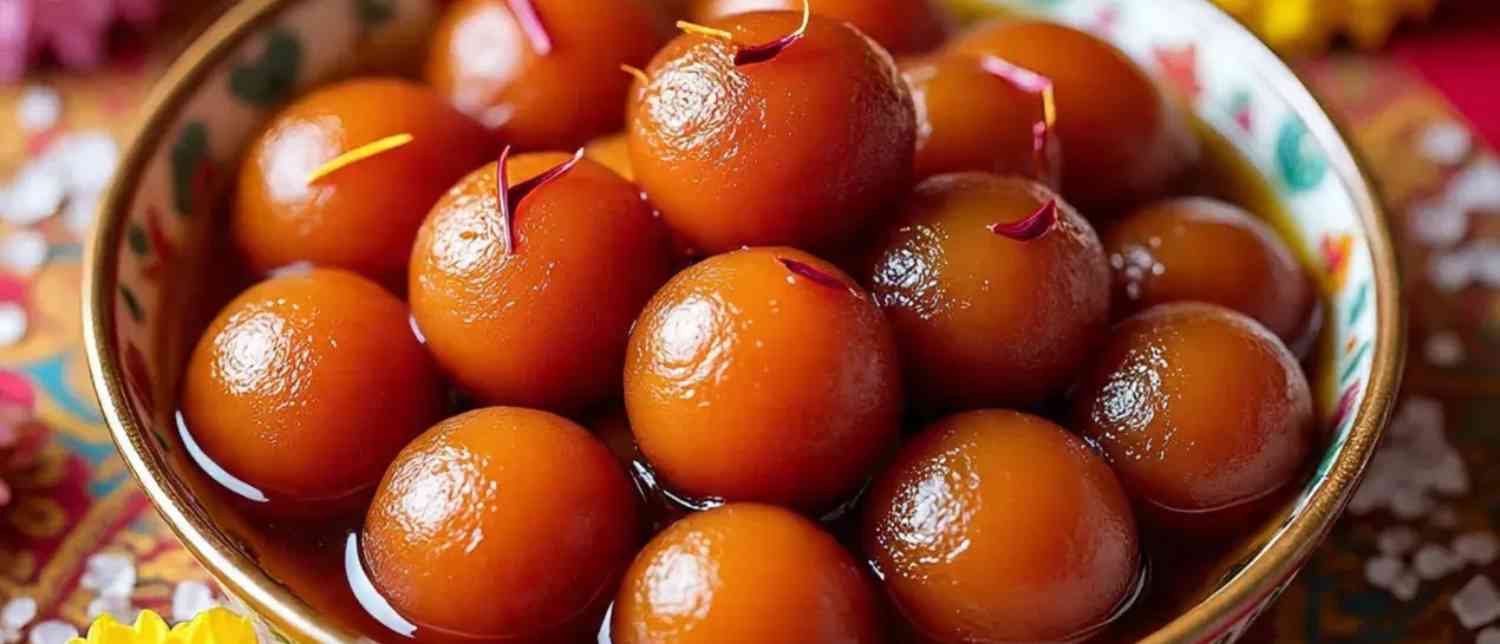
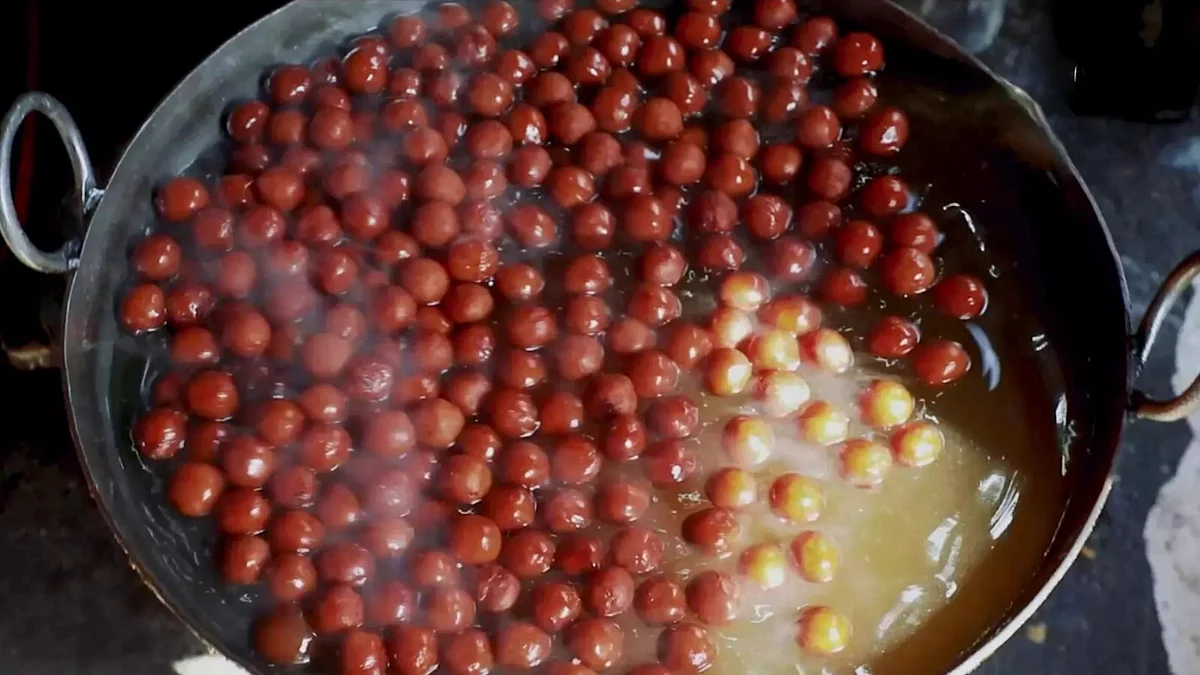
The classic recipe begins with khoya, also known as mawa, made by reducing milk until its moisture evaporates and concentrated milk solids remain. The khoya is combined with flour and, in some preparations, a little leavening agent. The mixture is kneaded into a soft dough, shaped into small balls and carefully fried before being immersed in sugar syrup.
Although the ingredient list is relatively straightforward, the technique demands considerable attention.
The dough must be smooth enough to form without cracks. The balls need to be fried gently at first so that they cook through, after which the heat can be adjusted to develop their characteristic golden-brown to deep-brown exterior. Once fried, they are soaked in syrup until they absorb the sweetness and develop their familiar soft, moist texture.
The syrup is equally important. Its consistency determines how well the sweets absorb it without becoming excessively sticky or falling apart. Depending on the recipe, cardamom and rosewater may add fragrance and depth.
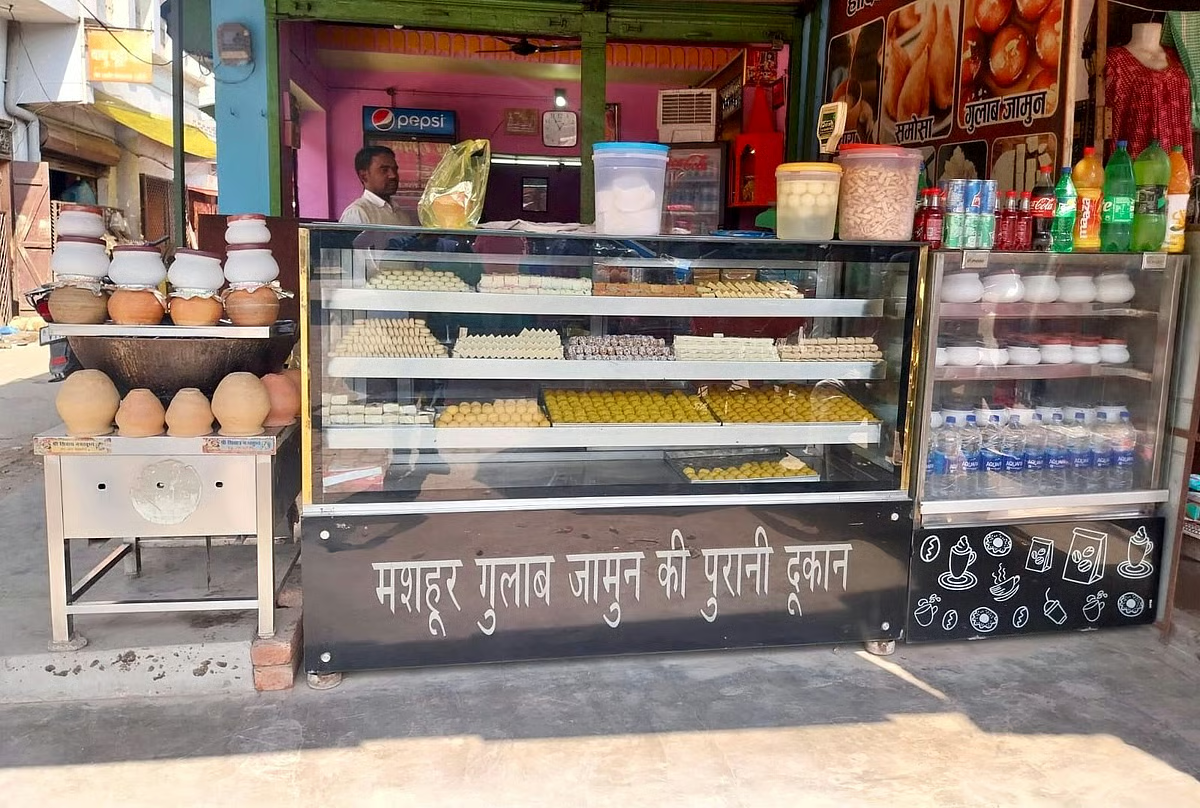
At Maigalganj, the traditional presentation adds another layer to the experience. Gulab jamuns are commonly served fresh and warm in earthen pots, popularly called matkas. The contrast between the dark, syrup-coated sweets and the rustic clay vessel gives this roadside speciality a character that is difficult to replicate through packaging alone.
There is something reassuring about this approach. While modern dessert culture frequently celebrates novelty, Maigalganj's enduring attraction lies in the careful execution of a familiar recipe.
The Fascinating History of India's Favourite Sweet
The history of gulab jamun is considerably more complex than its familiar place in Indian celebrations might suggest.
Although the dessert is now deeply embedded in Indian food culture, its ancestry is often linked to culinary traditions from Persia and the wider Middle East. Food historians have drawn comparisons between gulab jamun and sweets such as luqmat al-qadi, a fried-dough preparation served with syrup or honey.
The exact route through which gulab jamun developed into its present form is not conclusively established. However, one widely discussed explanation connects its evolution with Persian culinary influences and the movement of food traditions during the Mughal period.
According to one historical account, the dessert's popularity in India was influenced by culinary exchanges associated with the Mughal court, including those that followed Emperor Humayun's return from Persia in the sixteenth century. The precise details remain open to interpretation, but the broader story illustrates how food evolves when people, ingredients and techniques travel across borders.
The name itself offers a small linguistic clue. Gulab is associated with rose, while jamun refers to the dark, oval or round fruit familiar across the Indian subcontinent. Together, the words evoke the sweet's colour, shape and traditionally rose-scented syrup.
Over time, Indian cooks adapted the preparation to local ingredients and preferences. Khoya became central to many versions, giving gulab jamun its rich, milky character.
This evolution is worth remembering because it challenges the idea that culinary heritage must have a single, uncomplicated origin. Many traditional foods are products of exchange, experimentation and adaptation. Their authenticity lies not necessarily in remaining unchanged, but in becoming meaningful within the communities that embrace them.
Maigalganj represents precisely this kind of cultural transformation. A dessert shaped by centuries of culinary exchange has found a distinctive home in a Uttar Pradesh village, where generations of sweet makers have made it part of their everyday economy.
More Than a Dessert: A Source of Livelihood
The real significance of Maigalganj's gulab jamun trade extends well beyond its popularity among food enthusiasts.
Every successful sweet shop represents a network of work: sourcing milk and khoya, purchasing sugar and cooking ingredients, preparing dough, managing frying and syrup-making, serving customers and packing orders for people travelling home.
These activities support families and sustain practical skills that are often learned through experience rather than formal training. A shop's reputation may depend on a recipe, but maintaining that reputation requires consistency, patience and a detailed understanding of the cooking process.
The growth of neighbouring businesses also illustrates an important aspect of local enterprise. Instead of making the original shop's success a one-off story, the popularity of gulab jamun encouraged other sellers to participate in the same market.
Competition exists, naturally, but the concentration of sweet shops can also strengthen the destination's overall appeal. Travellers do not stop only because one establishment is famous; they stop because Maigalganj itself promises a memorable food experience.
This creates a powerful relationship between place and product. The village helps the sweet stand out, while the sweet gives the village a recognisable identity.
In a country where countless small businesses struggle to distinguish themselves, Maigalganj offers an instructive example of how a specialised local product can generate economic opportunity. Its story also underlines the value of preserving traditional food-making skills rather than treating them as relics of the past.
Matka Gulab Jamun and the Appeal of Authentic Food Experiences
One of the most distinctive aspects of the Maigalganj experience is the tradition of serving gulab jamun in earthen pots.
The matka is not merely a decorative alternative to a disposable container. It connects the food with familiar Indian serving traditions and lends the experience a rustic, recognisable character.
For travellers, the appeal lies partly in the contrast between the simplicity of the setting and the richness of the dessert. There may be no elaborate restaurant interiors or complicated menus. Instead, there are fresh sweets, bustling roadside shops and the opportunity to enjoy a regional speciality where it has become part of everyday life.
This is also why food tourism can be so compelling. Travellers increasingly seek experiences that reveal something about a place beyond its conventional attractions. A local market, a family-run establishment or a regional delicacy can provide an intimate glimpse into the routines, tastes and livelihoods of a community.
Maigalganj fits naturally into this category. Its gulab jamun street offers a culinary experience rooted in continuity rather than spectacle.
For anyone travelling between Delhi and Lucknow, the village presents an appealing opportunity to explore a lesser-known side of Uttar Pradesh's food heritage. Visitors should check current road conditions, shop timings and availability before planning a dedicated stop, particularly if they hope to visit a specific establishment.
From Traditional Mithai to Modern Food Culture
Gulab jamun has never been confined to a single region or occasion. It remains a familiar presence at weddings, festivals, birthday celebrations and family gatherings throughout India and among South Asian communities abroad.
Its versatility has also encouraged contemporary experimentation. Variations such as kala jamun offer a darker exterior and a somewhat different texture, while modern dessert menus feature creations including gulab jamun cheesecake and other fusion preparations.
Such innovations demonstrate the dessert's continuing relevance, but they also raise an interesting question: does every traditional sweet need a modern reinvention to remain desirable?
Maigalganj suggests otherwise. The enduring popularity of its traditional preparation shows that familiarity, craftsmanship and a strong sense of place can be just as compelling as novelty.
That does not mean tradition should resist change. Local sweet makers can expand their offerings, improve packaging and explore digital marketing while retaining the qualities that established their reputation. Better visibility could help introduce the village to new audiences, while responsible food tourism could create additional opportunities for local businesses.
The challenge is to encourage growth without turning a distinctive food tradition into a generic commercial product.
Why Maigalganj Deserves a Place on India's Food Map
The story of the Village of Gulab Jamuns is ultimately about more than sugar syrup, khoya and perfectly fried dough.
It is about how an ordinary roadside business can become the beginning of a shared identity. It is about the accumulated knowledge of sweet makers, the loyalty of customers and the unexpected ways in which food can transform a place's reputation.
Maigalganj may not possess the grandeur of India's most celebrated tourist destinations, but it offers something equally meaningful: a living culinary tradition that people can experience firsthand.
Its gulab jamun street reminds us that India's food heritage is not preserved only in royal kitchens, famous restaurants or carefully documented recipes. It also survives in small shops, family businesses and villages where a particular preparation has become inseparable from local life.
Perhaps that is what makes Maigalganj so appealing. The village does not need to reinvent its identity. It has already found one in a sweet that millions of Indians recognise, love and associate with celebration.
The next time a journey takes you through Uttar Pradesh, consider looking beyond the usual stops. Somewhere along the road, a warm earthen pot filled with freshly made gulab jamuns may offer a more memorable introduction to regional food culture than any elaborate itinerary.
After all, in Maigalganj, gulab jamun is not simply something to eat before continuing the journey. It is the reason to stop in the first place.
Image Source: Homegrown
© Copyright 2026. All Rights Reserved. Powered by Vygr Media.