 By
By 
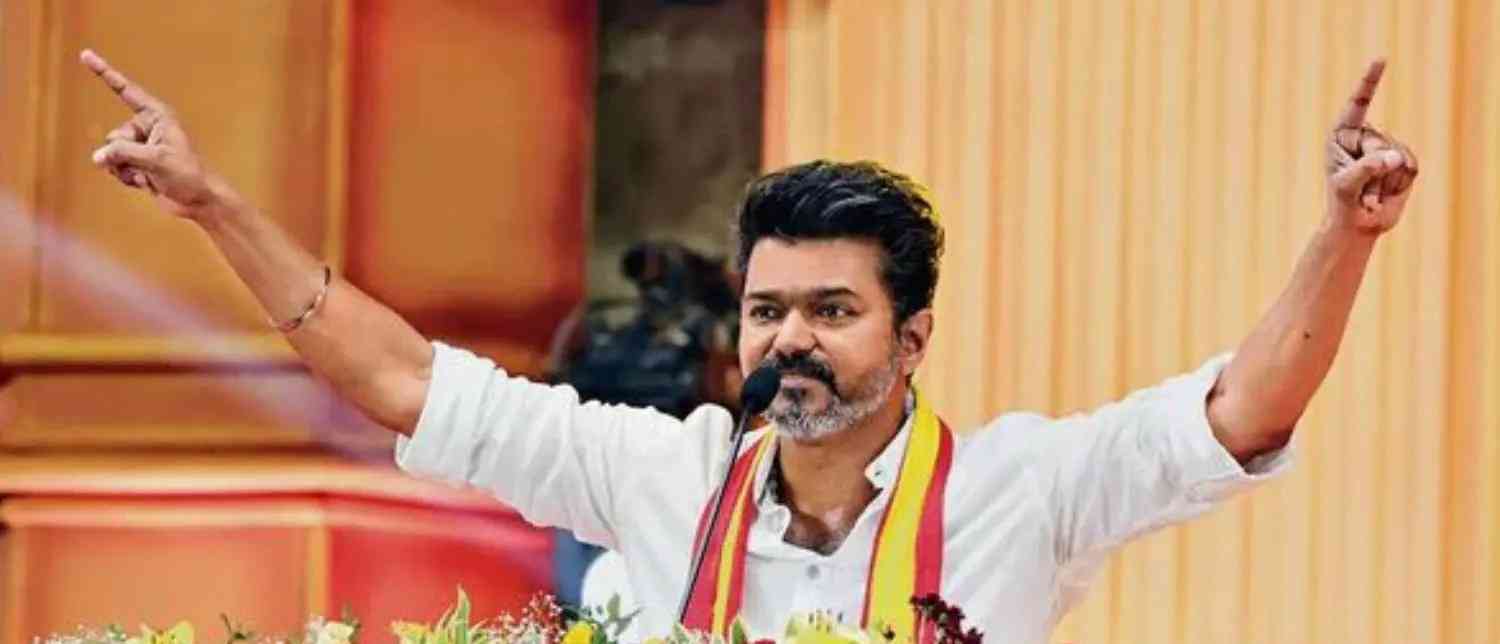
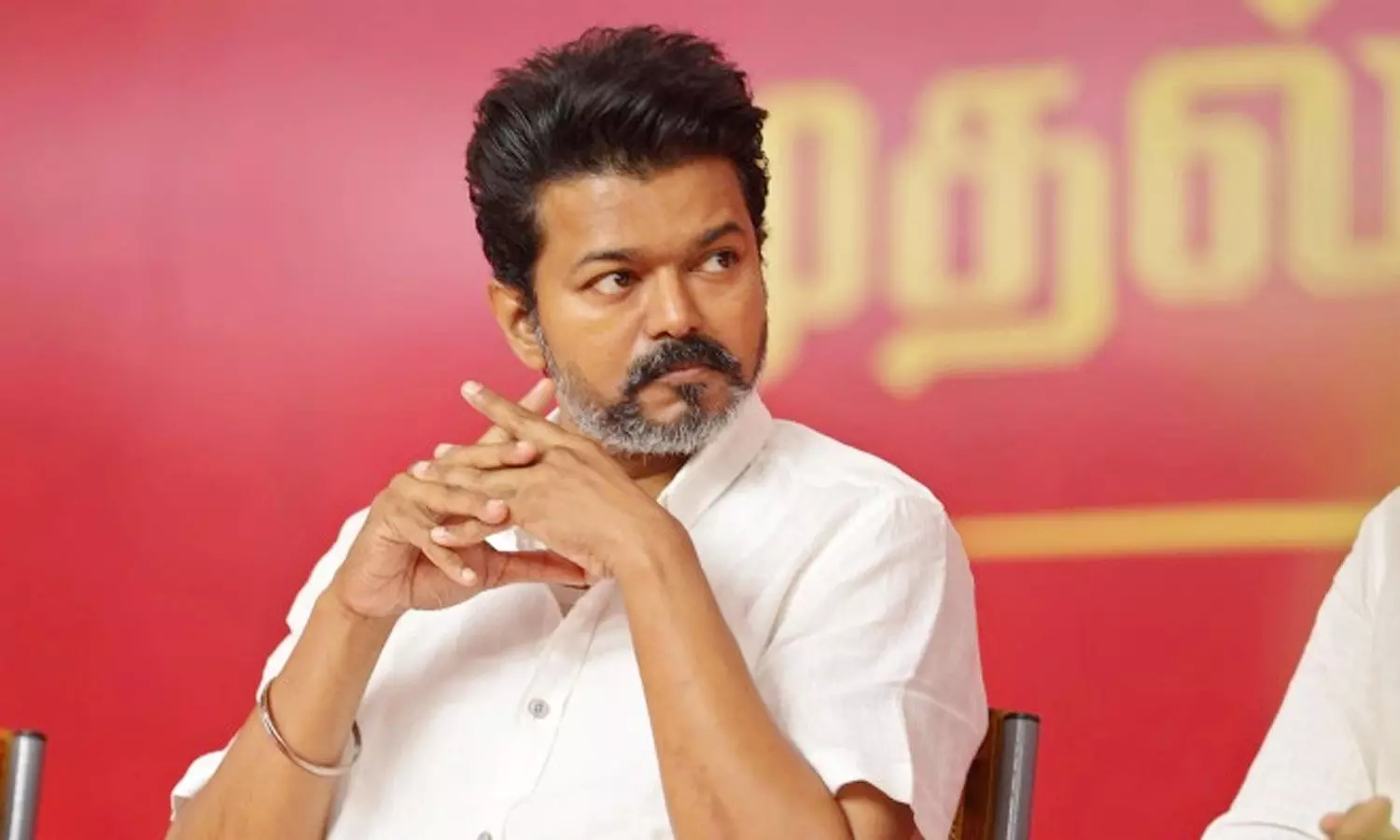
In one of the first major welfare announcements of his tenure, C. Joseph Vijay has unveiled a large-scale crop loan waiver scheme aimed at easing the financial burden on farmers across Tamil Nadu. The announcement, made after a high-level review meeting at the Secretariat in Chennai on May 25, is expected to benefit more than 14 lakh farmers and cost the state exchequer over ₹2,044 crore.
The scheme primarily targets marginal and small farmers who borrowed crop loans through cooperative banks between May 2025 and February 2026. Under the new policy, outstanding crop loans up to ₹50,000 will be completely waived for eligible marginal farmers. Farmers with larger loans will receive graded relief ranging from ₹5,000 to ₹40,000, depending on the size of the loan.
The announcement marks a significant political and economic move for the newly elected Tamilaga Vettri Kazhagam (TVK) government, especially as farm distress, rising cultivation costs, erratic rainfall, and debt accumulation continue to trouble the state’s agrarian economy.
What the Loan Waiver Scheme Includes
According to details shared by the Chief Minister and government officials, the waiver applies specifically to crop loans obtained from cooperative banks. Marginal farmers with loans up to ₹50,000 will receive a full waiver of their dues.
For farmers whose outstanding loans exceed ₹50,000, the government has introduced a slab-based relief structure. While the complete breakup has not yet been officially published in detail, reports indicate that relief amounts could vary between ₹5,000 and ₹40,000 depending on the loan category. Larger farmers, meanwhile, will receive a flat relief amount of ₹5,000 toward repayment of their crop loans.
The Tamil Nadu government estimates that nearly 14.22 lakh farmers will directly benefit from the initiative. Officials further stated that around 16.92 lakh farmers had availed agricultural loans overall, with the majority now receiving some form of relief under the new scheme.
Speaking to reporters, Tamil Nadu minister CTR Nirmalkumar said the waiver fulfilled one of the major promises made during the election campaign. He highlighted that over 14 lakh farmers had effectively received loan relief through the scheme.
Government Says Scheme Will Ease Rural Financial Stress
Announcing the package, Chief Minister Vijay said the measure was designed to support farmers struggling with mounting debt and increasing cultivation expenses. Rising input costs, fluctuating crop prices, and recurring weather-related disruptions have severely affected agricultural incomes across Tamil Nadu in recent years.
Government sources said the relief package is intended to stabilize the rural economy while preventing small and marginal farmers from falling deeper into debt traps. Cooperative banks, which are often the primary source of agricultural credit in Tamil Nadu’s rural districts, have seen rising pressure due to delayed repayments linked to crop losses and unstable farm earnings.
Officials also indicated that the scheme could help improve credit circulation in the cooperative banking system by reducing the burden of overdue accounts.
The state government has not yet announced a detailed timeline for implementation or clarified how quickly the waiver amount will be credited or adjusted against existing loans. Operational guidelines are expected to be released by the cooperation and agriculture departments in the coming days.

Review Meeting Held at Secretariat
Before making the announcement, Chief Minister Vijay chaired a review meeting at the Tamil Nadu Secretariat along with senior ministers and top bureaucrats. The meeting included Agriculture and Farmers’ Welfare Minister R. Vinoth, Cooperation Minister V. Gandhiraj, Finance Minister N. Maria Wilson, and senior departmental officials.
Officials reportedly examined the financial implications of various waiver models before finalizing the present structure. The government eventually opted for a targeted approach rather than a blanket waiver, citing the state’s fiscal situation and the need to balance welfare spending with long-term financial sustainability.
The final scheme is expected to create an additional burden of ₹2,044.46 crore on the Tamil Nadu government.
Opposition Questions “Diluted” Promise
Even as the scheme received praise from sections of the farming community, opposition parties quickly accused the government of scaling back its original election promise.
Former Deputy Chief Minister Udhayanidhi Stalin criticized the TVK government, alleging that the administration had diluted its poll commitment of a complete crop loan waiver. He described the revised structure as a “massive breach of trust” and claimed farmers had expected broader relief based on promises made during the election campaign.
Criticism also surfaced widely on social media platforms and online discussion forums. Several users pointed out that the TVK manifesto had reportedly promised a 100 percent waiver for cooperative crop loans for farmers owning less than five acres of land and a 50 percent waiver for larger farmers.
Many farmers and political observers argued that limiting the full waiver only to loans below ₹50,000 significantly narrowed the scope of the original assurance. Some users described the slab-based relief model as inadequate for farmers carrying larger debt burdens.
At the same time, supporters of the government defended the move, arguing that Tamil Nadu’s current debt situation makes a blanket waiver financially difficult. Some commentators noted that the state is already carrying debt exceeding ₹10 lakh crore, and a total waiver could have sharply increased fiscal pressure.
Farmers React With Mixed Responses
Initial reactions from farmers across the state have been mixed. Marginal farmers with smaller loans welcomed the decision, saying the waiver could provide immediate relief and help them restart cultivation activities ahead of the next agricultural season.
However, farmers with higher outstanding loans expressed disappointment over the limited assistance available to them. Several farming groups argued that rising fertilizer costs, diesel prices, labour expenses, and climate-related crop failures have pushed agricultural debt far beyond ₹50,000 for many cultivators.
Some also questioned why the waiver was restricted to cooperative bank loans, pointing out that a large number of farmers rely on commercial banks and private lenders for agricultural credit.
Simultaneous Announcement on Film Screenings
Alongside the farm loan waiver, the Tamil Nadu government also announced a policy change related to the film industry — a move that drew significant public attention because of Vijay’s longstanding association with cinema.
The Chief Minister declared that newly released Tamil films would now be allowed to screen five shows per day for the first week after release, particularly during weekends, festivals, and government holidays, without requiring special permission.
While the film industry welcomed the move, critics questioned the timing of the announcement alongside the farm relief package. Opposition voices and social media users argued that the simultaneous focus on cinema and agriculture created an avoidable political controversy.
A Defining Early Test for the Vijay Government
The crop loan waiver announcement is being viewed as one of the earliest and most politically significant decisions of the Vijay-led administration. It reflects the government’s attempt to balance electoral commitments with financial realities while responding to growing rural distress.
For the ruling TVK government, the success of the scheme will likely depend on how quickly it is implemented and whether it delivers meaningful relief on the ground. For opposition parties, however, the announcement has already opened a new political battle over whether the government has fully honoured its election promises to farmers.
With Tamil Nadu’s rural economy under pressure and expectations from the new government running high, the implementation of the waiver scheme may become a major benchmark for the administration’s credibility in the months ahead.
With inputs from agencies
Image Source: Multiple agencies
© Copyright 2026. All Rights Reserved. Powered by Vygr Media.