
 By
By 
Congress leader and Leader of Opposition in the Lok Sabha Rahul Gandhi is facing an FIR in Uttarakhand’s Haldwani over remarks he made about a controversial “purification” ritual carried out at a venue where Congress president Mallikarjun Kharge had addressed a public meeting earlier this month.
The case has added a fresh legal and political dimension to an already charged dispute involving caste, religion and allegations of untouchability. Police registered the FIR following a complaint by Amit Kumar, a member of the Scheduled Caste community, who alleged that Gandhi gave a caste-based interpretation to the ritual and hurt the sentiments of the Valmiki community.
The FIR invokes provisions of the Bharatiya Nyaya Sanhita, including those relating to promoting enmity between groups and deliberate acts intended to outrage religious feelings. Provisions of the Scheduled Castes and Scheduled Tribes (Prevention of Atrocities) Act, 1989, have also been invoked.
The development is particularly significant because Gandhi himself had demanded police action against those who carried out the purification ritual. The controversy has therefore taken an unexpected turn: a political dispute that began over an alleged act of “purification” at a Congress rally venue has now resulted in a criminal case against the senior Congress leader who publicly criticised it.

How the Haldwani purification row began
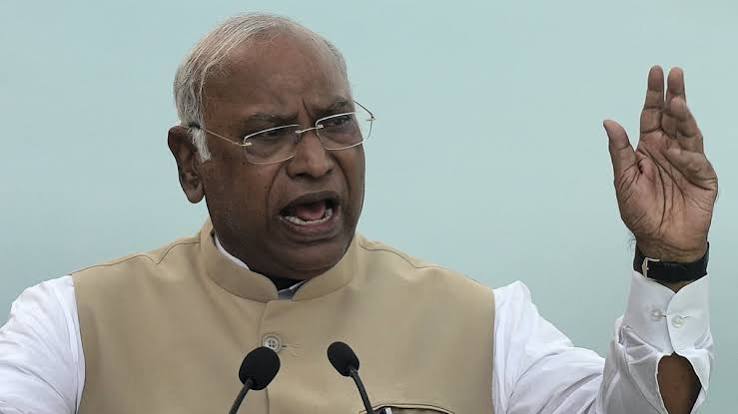
The dispute centres on the Ramlila Ground in Haldwani, where Mallikarjun Kharge addressed a Congress public meeting on August 8.
Days later, on August 11, members associated with the Shri Ram Sena Dharmarth Seva Nyas reportedly carried out a havan or “shuddhikaran” ritual at the ground. The stated purpose of the ritual became the centre of the political dispute.
According to the explanation offered by those defending the ritual, the venue had been left littered after the Congress gathering. They also alleged that slogans raised during the political meeting were inappropriate for a religious site. The purification ritual was presented by them as an effort to cleanse the premises following the Congress event.
The Congress, however, interpreted the incident very differently. Party leaders argued that conducting a purification ritual after a programme addressed by Kharge carried a casteist and anti-Dalit message.
The issue quickly moved beyond a local dispute over the condition of a public ground. It became a political confrontation over whether the ritual itself reflected discriminatory attitudes towards a Dalit leader.
Kharge subsequently raised the matter in Parliament and sought action against those responsible, including under laws dealing with untouchability and atrocities against Scheduled Castes. Congress leaders also staged protests over the issue in Uttarakhand.
Rahul Gandhi enters the controversy
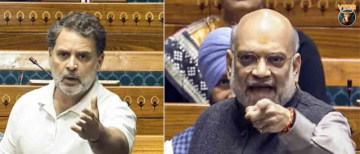
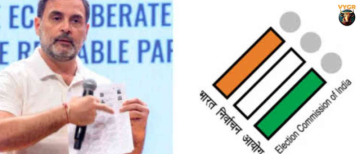
The controversy intensified on August 29 when Rahul Gandhi addressed a press conference in New Delhi and criticised the purification ritual.
Gandhi demanded that an FIR be registered against those responsible and argued that the incident should be examined under the SC/ST Act. His intervention elevated the Haldwani controversy from a state-level political dispute to a national issue.
Congress MP Priyanka Gandhi Vadra also backed the demand for action. She described the incident as reflecting what she characterised as a deeply objectionable mindset and alleged that the episode amounted to a violation of protections available under the SC/ST Act.
But Gandhi’s comments also triggered a counter-complaint.
Amit Kumar, who said he belongs to the Scheduled Caste community and was present during the ritual and cleanliness drive, alleged that Gandhi had wrongly portrayed the participants as practising untouchability and being anti-Dalit.
According to the complaint, people belonging to different sections of society, including members of Scheduled Castes, participated in the activity. Kumar maintained that the ritual had no connection with Kharge’s caste and objected to what he described as Gandhi’s caste-based interpretation of the event.
What does the complaint against Rahul Gandhi allege?
The complaint essentially challenges Gandhi’s interpretation of the Haldwani ritual.
Kumar alleged that Gandhi characterised what he described as a cleaning and religious ritual as an act of untouchability and an offence against the Scheduled Caste community. He argued that the remarks were based on what he considered incomplete or incorrect information and that they hurt caste sentiments.
The complainant also submitted material intended to support his allegations, including a video of Gandhi’s August 29 press conference as well as photographs and videos connected with the August 8 political gathering and the August 11 ritual.
Police subsequently registered the case.
The FIR was filed at the Haldwani Kotwali police station under Sections 196 and 299 of the Bharatiya Nyaya Sanhita, along with a provision of the SC/ST (Prevention of Atrocities) Act. Police have said the investigation will examine the allegations raised in the complaint and the evidence submitted with it.
The registration of an FIR, however, does not establish guilt. It marks the beginning of a criminal investigation into the allegations.
Why the SC/ST Act matters in the case
The involvement of the SC/ST (Prevention of Atrocities) Act gives the controversy an added legal dimension.
The legislation provides protections against specific forms of discrimination, humiliation and offences directed at members of Scheduled Castes and Scheduled Tribes. Its invocation in the Haldwani case means that the allegations against Gandhi are not being treated merely as a political disagreement or a dispute over public remarks.
At the same time, the precise applicability of the provisions invoked will ultimately depend on the investigation and, if the matter proceeds further, the judicial process.
This distinction is important because the political language surrounding the controversy is already intense. Both sides have framed the incident in fundamentally different ways: Congress has presented the original purification ritual as evidence of an anti-Dalit mindset, while the complainant has argued that Gandhi himself gave the episode an unwarranted caste dimension.
BJP and Congress offer sharply different versions
The political divide over the incident has remained clear from the beginning.
Congress leaders have argued that performing a purification ritual after Kharge’s rally was not an innocent act of cleaning but a symbolic gesture directed at a Dalit political leader. The party has described the episode as reflecting an objectionable attitude towards Dalits and demanded legal action.
The BJP and supporters of the purification ritual have rejected that interpretation.
Their argument has been that the Ramlila Ground was left dirty after the Congress event and that certain slogans were raised during the programme that were considered inappropriate for a religious venue. From this perspective, the subsequent havan was presented as a religious or cleanliness-related act rather than an attack based on Kharge’s caste.
The disagreement over the motive behind the ritual is at the heart of the controversy.
If the act was merely intended to clean or ritually restore the venue, the caste-based interpretation challenged by the complainant gains significance. But if the ritual was specifically motivated by the identity of the person who addressed the rally, the Congress argument about caste discrimination becomes central.
Those competing interpretations are now part of a police investigation.
The political irony behind the FIR
The latest development has created an unusual political sequence.
Rahul Gandhi publicly demanded an FIR against those who carried out the purification ritual. He argued that the incident warranted legal action under the SC/ST Act.
Days later, an FIR was registered against Gandhi himself after a complainant alleged that his comments about the ritual amounted to a casteist portrayal of the participants and harmed the sentiments of the Valmiki community.
That reversal has naturally intensified the political debate.
For the Congress, the FIR against Gandhi is likely to be viewed as an attempt to shift attention away from the original controversy. The party had already described the purification incident as evidence of an anti-Dalit mindset.
For Gandhi’s critics, however, the FIR reinforces their argument that his interpretation of the Haldwani episode crossed a line by attributing a caste dimension to an event that, according to the complainant, involved people from multiple social backgrounds.
The legal process will now have to separate political claims from facts established through evidence.
A controversy involving caste, religion and political symbolism
The Haldwani dispute is more complicated than a disagreement over a public meeting venue.
At its core are three overlapping questions.
The first concerns caste. Mallikarjun Kharge is a prominent Dalit political leader, and any act perceived as symbolically rejecting or “purifying” a place after his presence inevitably carries a sensitive social meaning.
The second concerns religion. The people who performed the ritual have described it as a havan or purification exercise, while opponents have questioned the meaning and intent behind conducting it immediately after a political programme.
The third concerns political communication. Gandhi’s intervention transformed a regional controversy into a national political issue, but his description of the event has itself become the basis of a police complaint.
That combination makes the case politically sensitive as well as legally significant.
What happens next?
With the FIR now registered, the immediate focus will shift to the police investigation.
The authorities are expected to examine the complaint, the material submitted by the complainant and the circumstances surrounding both the August 8 Congress meeting and the August 11 ritual. Gandhi’s August 29 remarks are also central because the complaint specifically concerns his public characterisation of the incident.
The investigation will have to determine whether the remarks satisfy the legal requirements of the provisions invoked in the FIR.
It will also have to establish the context in which the purification ritual was performed and whether there is evidence supporting either side’s interpretation of its purpose.
For now, the FIR should not be confused with a finding of guilt. A criminal case can move through investigation, further legal scrutiny and potentially court proceedings before any conclusion is reached.
Why the Haldwani row could have wider political implications
The controversy comes at a time when caste representation, Dalit rights and the political meaning of social discrimination remain major themes in Indian politics.
For the Congress, the episode provides another opportunity to highlight what it sees as discrimination against Dalits and to position itself as a defender of constitutional protections.
For its opponents, the FIR against Gandhi offers an opportunity to challenge the Congress leader’s framing of caste-related controversies and accuse him of politicising religious or social practices.
The dispute could therefore continue well beyond the immediate legal proceedings.
What began with a Congress rally at a Haldwani ground has now produced competing allegations, demands for criminal action and an FIR against one of India’s most prominent opposition leaders.
The central facts remain relatively straightforward: Kharge addressed a Congress gathering at Haldwani’s Ramlila Ground on August 8; a purification ritual was subsequently conducted there; Congress leaders condemned the act and sought legal action; Rahul Gandhi publicly demanded an FIR on August 29; and an FIR was then registered against Gandhi following a complaint alleging that he gave the ritual a casteist interpretation.
The larger questions, what motivated the ritual, whether Gandhi’s description of it was legally actionable, and whether the alleged remarks meet the threshold of the provisions invoked — will now be determined through the investigative and legal process.
Until then, the Haldwani purification row remains a striking example of how quickly a local political incident can evolve into a national confrontation over caste, religion, constitutional protections and political accountability.
With input from agencies
Image Source: Multiple agencies
© Copyright 2026. All Rights Reserved. Powered by Vygr Media.